
Blower or compressor?
Below about 1 bar a blower does the work for a fraction of the energy.
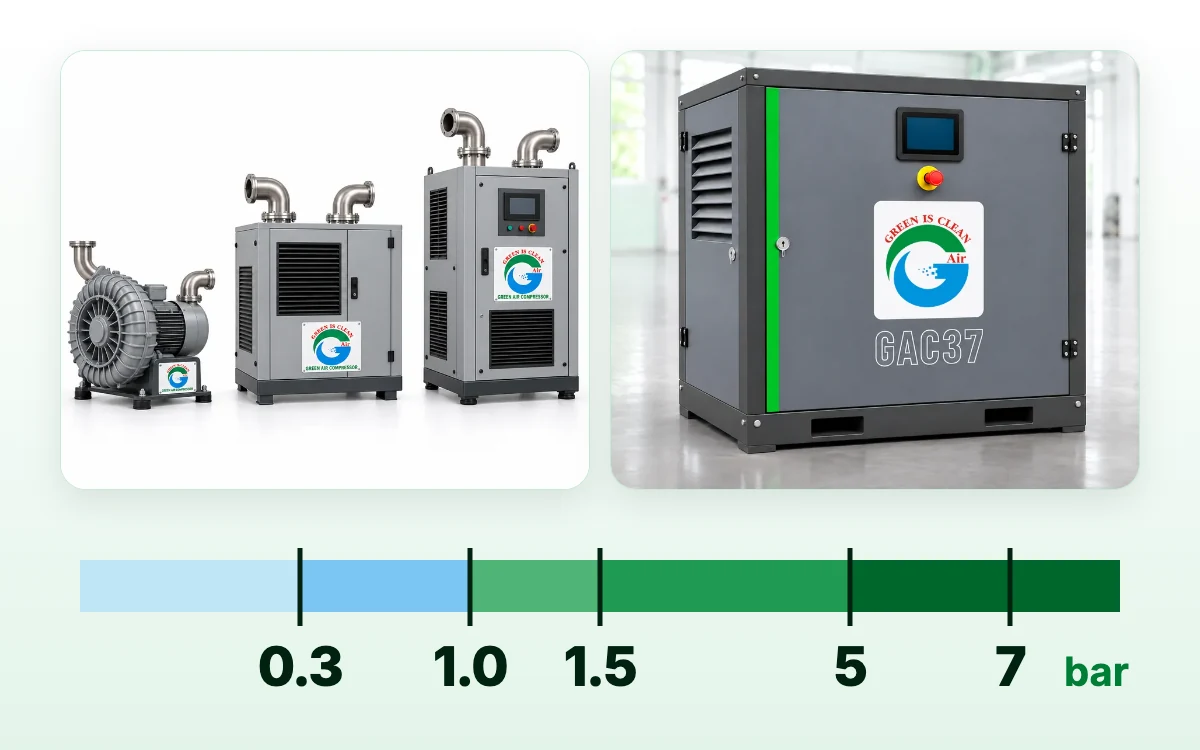
Pressure picks the machine
A blower moves a large volume of air at a low pressure, typically 0.3 to 1.0 bar. A compressor moves a smaller volume at seven or more. The mistake is to make air at 7 bar and then let it down to 0.5 through a regulator, because all of the energy between the two is thrown away.
For blowing, cooling and drying, a blower does the same job for roughly one eighth of the energy. It is one of the larger savings in a factory, and it usually hides behind a small nozzle.
Between the two lies a band where neither is a good answer, from about 0.5 to 1.5 bar, and there an oil-free screw blower is the right machine. Above it, up to about 5 bar, comes the low pressure screw compressor. So the question has four answers and the pressure picks one.
Which machine at which pressure
Up to about 0.3 bar
A side channel blower. Small, light duties: drying, lifting, light conveying.
0.3 to 1.0 bar
A centrifugal, turbo, air suspension or magnetic levitation blower. Aeration, air knives, conveying.
0.5 to 1.5 bar
An oil-free screw blower, above all on continuous work: 20 to 35% less energy than a roots blower at the same duty.
1.5 to 5 bar
A low pressure screw compressor, on a main of its own. Feeding these from an 8 bar system throws away roughly a third of the energy.
7 bar and above
A compressor. Tools, cylinders, instruments, everything that has to push.
Suction instead
Where the job is lifting or holding, a vacuum pump or a side channel blower often costs less to run than a jet of air.
Find the low pressure users
Walk the plant and look for open pipes and nozzles: blowing parts clean, cooling, stirring a tank, drying bottles, moving powder, aerating water. None of them needs 7 bar, and most work better with more air at less pressure.
Write down what each one takes now. An open 6 mm pipe at 7 bar takes about 2.1 m³/min, which is about 13 kW of compressor.
Replace the largest first. Where compressed air has to stay, fit an engineered nozzle, and a valve that closes when there is nothing in front of it.
- Open pipes used for blowing
- Air stirring a tank
- Bottle and conveyor drying
- Powder and grain conveying
- Aeration of water
- Cooling of parts or cabinets
- Regulators set far below the main
- Anything that blows with nothing in front of it
Compare them fairly
Compare at the same duty: flow at your site's conditions, and pressure at the blower including the pipe, the valves and the diffusers. Sizing on the pressure on paper is why so many blowers run throttled.
Compare the power taken from the supply, with the drive, the filter and the cooling counted, at full load and at part load. Most aeration runs at part load for most of its life.
On continuous work the price is soon the small number. A magnetic levitation blower takes 20 to 30% less energy than the roots blower it usually replaces, and on a wastewater plant the difference is repaid in about three years.
- Flow at site temperature and altitude
- Pressure at the blower, not in the tank
- Power from the supply, everything counted
- Part load as well as full load
- Noise with the pipe connected
- Oil-free air where the process needs it
- Turndown for a process that changes
- Cost over ten years
Where compressed air is still right
Where something has to push: cylinders, tools, clamps, valves. Force comes from pressure, and a blower has none to give.
Where the use is tiny or a long way from everything else, so that a pipe and a nozzle cost less than another machine.
And in a hazardous area, where a jet of air is safer than a motor.
- Cylinders, tools and clamps
- Instruments and valves
- A small use, now and then
- Hazardous areas
- A safety nozzle that shuts by itself
- Pressure lowered at the point of use
Frequently asked questions
What is the difference between a blower and a compressor?
Pressure. A blower moves a large volume at under about one bar. A compressor moves a smaller volume at seven or more.
When should I use a blower?
When the job needs volume and not force, below about 1 bar: aeration, drying, conveying, cooling and blowing off.
How much does a blower save?
For blowing, cooling and drying it does the same job for roughly one eighth of the energy of compressed air.
What pressure can a blower reach?
Typically 0.3 to 1.0 bar. An oil-free screw blower goes to 1.5 bar. Above that you are in low pressure compressor territory.
Can I just fit a regulator on my compressed air?
It will work and it will waste most of the energy. The air was paid for at 7 bar and the regulator throws the difference away.
Which machine for 3 bar?
A low pressure screw compressor with a main of its own. Feeding 3 bar from an 8 bar system throws away roughly a third of the energy.
Roots, screw or turbo?
Roots for low pressure and short hours. An oil-free screw above about 0.7 bar on continuous work. Turbo, air suspension or magnetic levitation for large flows that run all day.
Is blower air clean?
On oil-free designs, yes. It still carries the dust of the place it was drawn from, so the inlet filter matters.
Does blower air need drying?
Usually not. It is warm and at low pressure, so the water stays as vapour. Where the pipe is cold, allow for a drain.
How do I know what a nozzle is costing me?
Measure the hole. An open 6 mm pipe at 7 bar takes about 2.1 m³/min, which is about 13 kW. Multiply by the hours it blows.
More guides
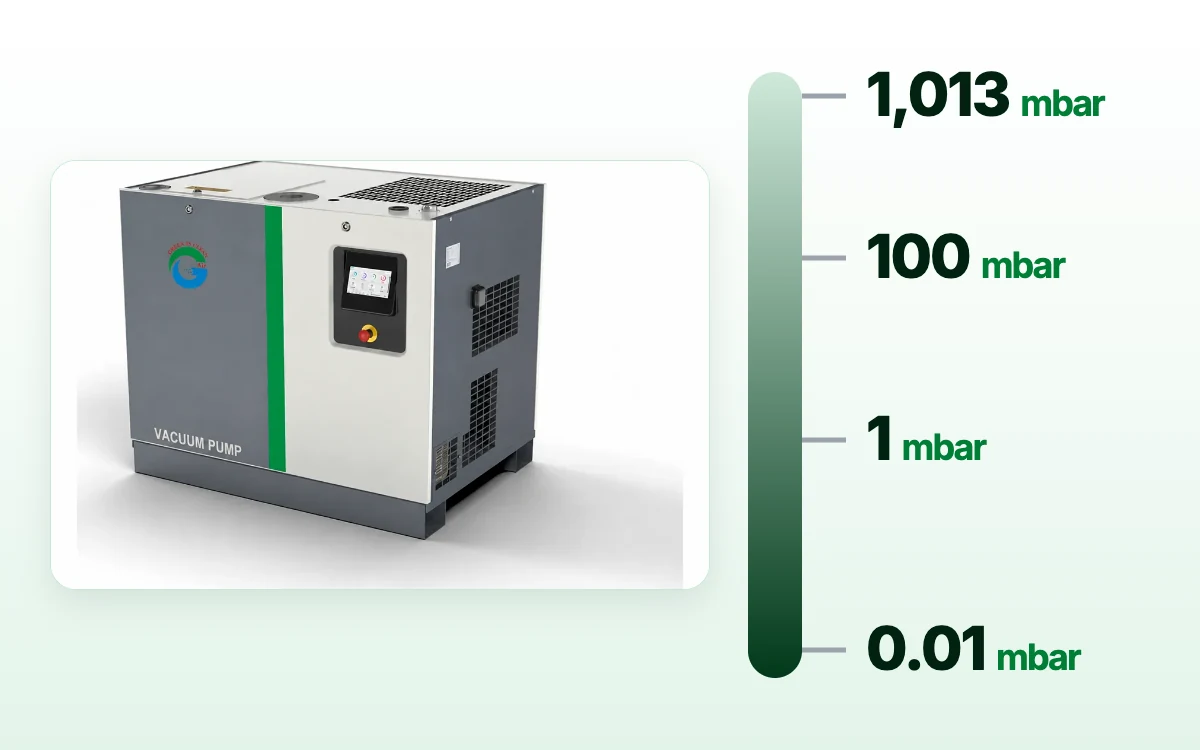
Choosing a vacuum pump
Capacity says how fast, ultimate pressure says how deep, and the vapour decides the type.
Learn more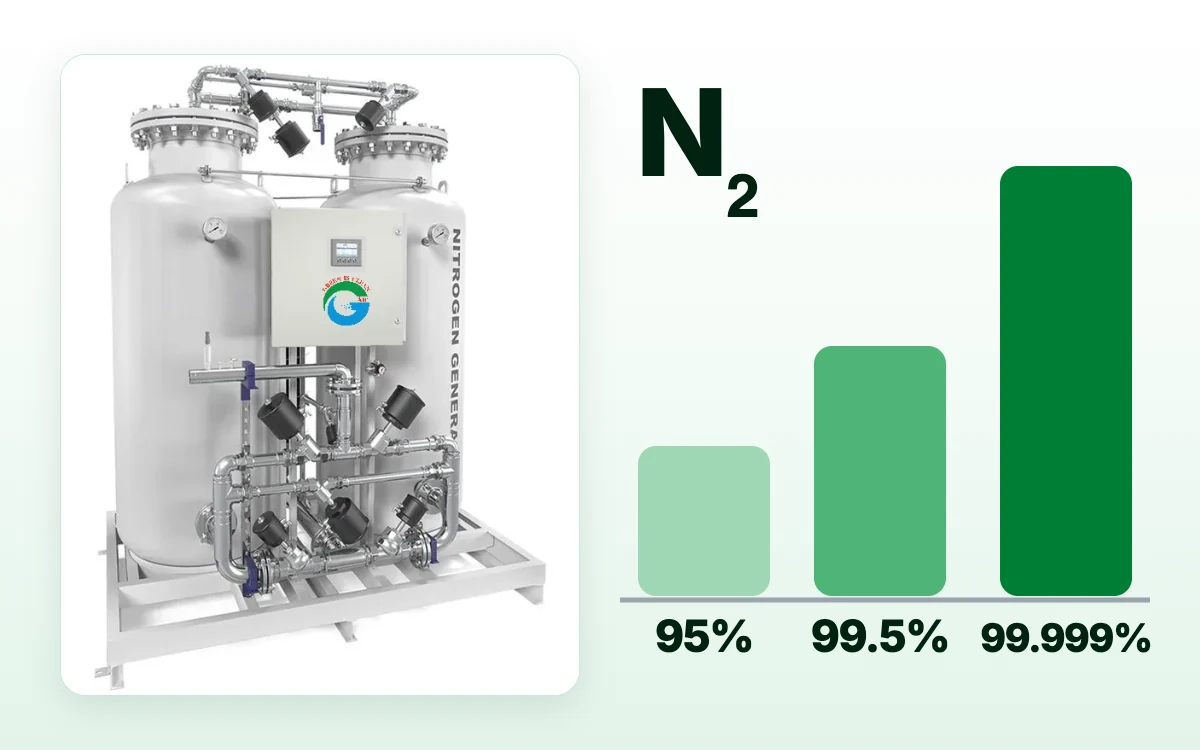
Nitrogen: generator or cylinders?
What each one costs you, how pure it has to be, and when cylinders still win.
Learn more
Choosing a towable compressor
How to size a site machine without guessing.
Learn more
What size air compressor do I need?
Flow first, pressure second and kilowatts last, with the arithmetic shown.
Learn moreNot sure which model you need?
Send us your air demand, working pressure and running hours. Our engineers will size the machine and send a written recommendation, no cost, no obligation.