
Variable speed compressors explained
What VSD actually saves, and when it saves nothing at all.
Overview
A fixed-speed compressor has two states: making air, or not making air. When demand falls, it unloads. It keeps spinning but stops compressing. An unloaded machine still draws somewhere between 25 and 35% of full power while producing nothing at all.
A variable speed machine instead slows the motor down to match demand. Less air needed, slower rotors, less power. The waste disappears rather than being managed.
The saving in a real plant is typically 25 to 35% of compressed air energy. But, and this matters, that only holds if demand actually varies. A machine running fully loaded twenty-four hours a day will save almost nothing with a variable speed drive, and the drive itself adds a small loss. Anyone who tells you VSD always saves energy is selling something.
Key benefits
Removes off-load waste
The largest single saving: power consumed while producing no air simply goes away.
Stable pressure
Holding ±0.1 bar allows the whole system pressure setting to be lowered, saving again.
Soft starting
No inrush current, so the machine can start repeatedly and runs happily on a generator.
Not always the answer
On a constant, fully loaded duty a fixed-speed machine is cheaper to buy and marginally more efficient.
When it pays and when it does not
Where demand swings, which in most factories it does, payback is typically fourteen to twenty four months on two shifts.
On a constantly loaded process line it may never pay, and we will say so. A variable speed machine held at full speed all day is simply a more expensive fixed speed machine.
The honest way to decide is to log the demand for a week. Everything else is an opinion, including ours.
- Pays where demand swings
- Typically 14 to 24 months on two shifts
- May never pay on a constant load
- Logged for a week before deciding
- Best used as the trim machine
- Fixed speed machines carry the base load
- Soft starting on every start
- Lower starting current on weak supplies
What else it changes
Starting current drops sharply, which matters on a generator or a weak grid connection and sometimes decides the whole electrical design.
System pressure can usually be held in a narrower band, and a narrower band means a lower average pressure, which is another saving on top.
There is a drive cabinet filter to service. It is the item most often forgotten and the one that causes drive trips in dusty plants.
- Much lower starting current
- Suits generators and weak grid supplies
- Narrower pressure band, lower average
- Additional saving from the lower pressure
- Drive cabinet filter on the schedule
- Specific energy shown on the screen
- Trims alongside fixed speed machines
- Measured before and after
Frequently asked questions
What does a fixed-speed machine do when demand drops?
It unloads: keeps spinning but stops compressing. An unloaded machine still draws 25–35% of full power while producing nothing at all.
What does variable speed do instead?
It slows the motor to match demand. Less air needed, slower rotors, less power. The waste disappears rather than being managed.
How much does it typically save?
25–35% of compressed air energy in a plant where demand varies. That is the honest range, not a best case.
When does it save nothing?
On a machine running fully loaded around the clock. The drive itself adds a small loss, so on constant duty a fixed-speed machine is the better buy.
How do I find out which I have?
Log the compressor for a week. If it is unloaded for more than about a third of its running hours, variable speed pays. We do that measurement free.
What is the payback?
Usually 14 to 24 months in a two-shift plant with varying demand. On a continuously loaded plant it may never pay, and we will say so in writing.
Does it help with pressure stability?
Yes: ±0.1 bar instead of a pressure band. That lets you lower the system setpoint, which saves about 7% per bar removed on top of the drive saving.
Is it better on a generator?
Considerably. Soft starting removes the inrush spike, so the generator can be sized for the running load instead of the starting surge.
What extra maintenance does the drive need?
Cabinet filters and cooling fans at each service. Drives fail from heat and dust, so where the enclosure sits in the plant room matters.
Can a drive be retrofitted to my existing machine?
Sometimes, but it is rarely as good as a machine designed around variable speed. We will assess it honestly rather than sell a retrofit that disappoints.
Related products
Air compressor troubleshooting
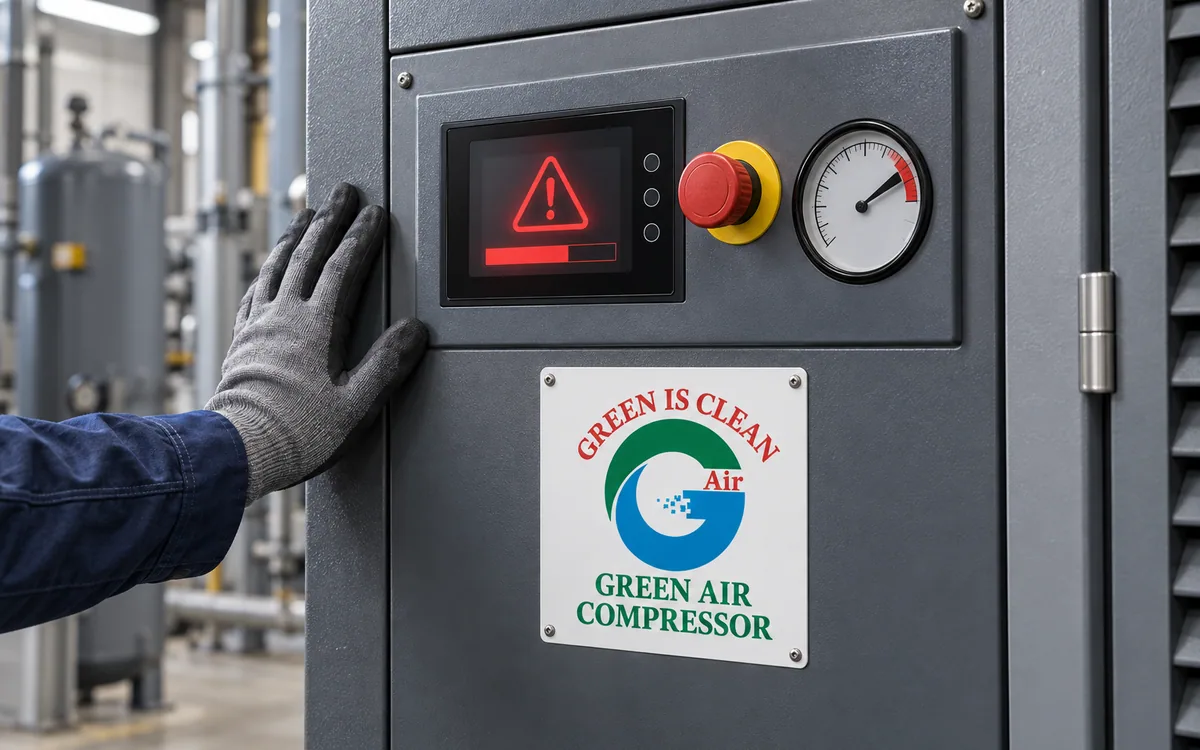
The fault you can see, what usually causes it, and what to check before calling anyone.
Learn more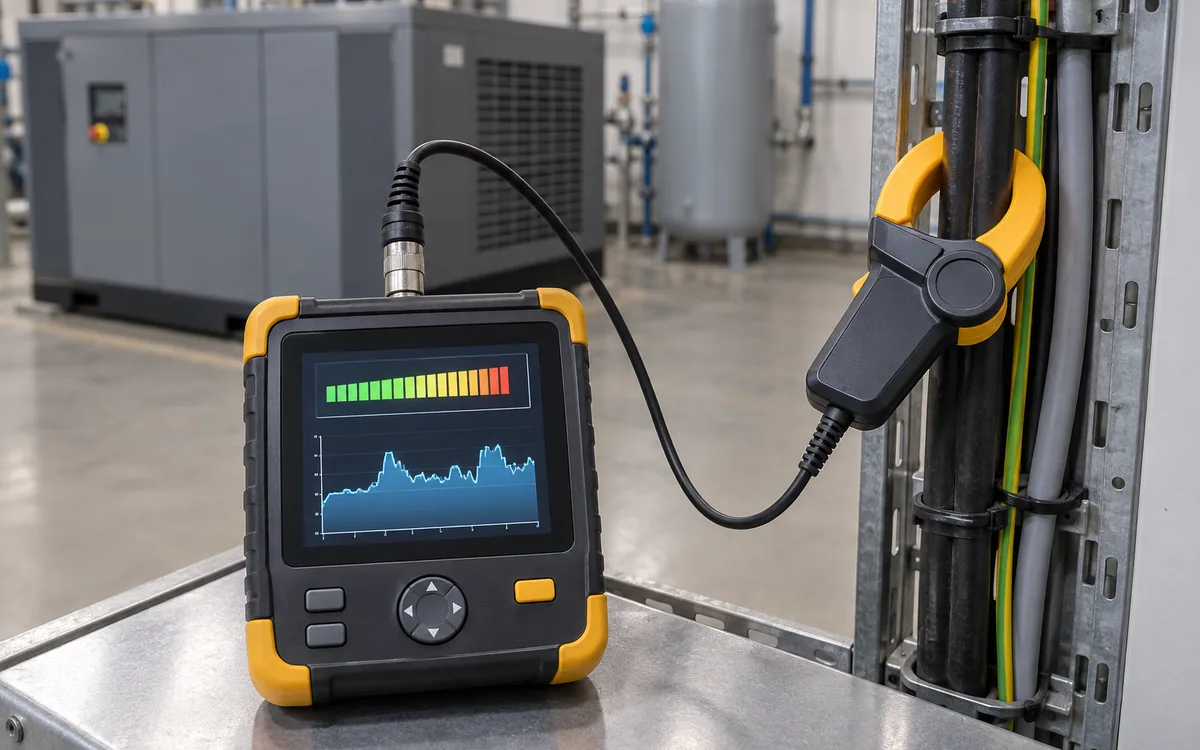
What an air compressor really costs
Why the purchase price is the small number, and what the other two are.
Learn more
What is compressed air?
Why it is called the fourth utility, and why it costs more than you think.
Learn more
How a rotary screw compressor works
Two rotors, one continuous flow, and why it replaced the piston machine.
Learn moreNot sure which model you need?
Send us your air demand, working pressure and running hours. Our engineers will size the machine and send a written recommendation, no cost, no obligation.