
Compressed air quality classes explained
ISO 8573-1 in plain words: three numbers, what they mean and which you need.
Three numbers, not one
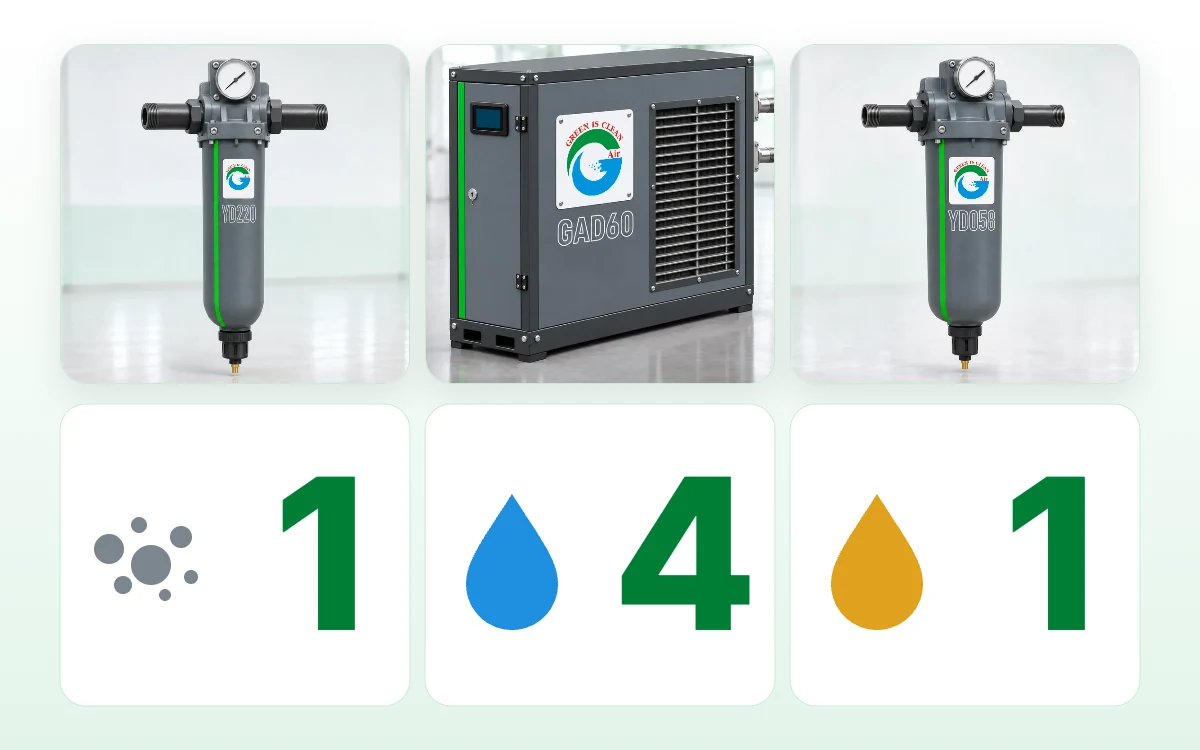
Air quality is written as three numbers separated by points, such as 1.4.1. The first is solid particles, the second is water and the third is oil. A single number on its own, as in class 1 air, tells you nothing until you know which of the three it refers to.
The smaller the number, the cleaner the air, and the more it costs to make and to keep. Each step is another filter or a different dryer, and both take pressure, which is electricity.
So the useful question is not how clean the air can be. It is what the air touches. Air that drives a cylinder has to protect the cylinder. Air that touches food, medicine or paint has to protect the product.
What each number measures
Particles, the first number
Counted by size in each cubic metre. Class 1 allows no more than 20,000 of the finest, 0.1 to 0.5 µm, 400 of 0.5 to 1 µm and 10 of 1 to 5 µm. Class 3 allows 1,000 of 1 to 5 µm and is good factory air.
Water, the second number
Stated as a pressure dew point. Class 4 is +3 °C, which a refrigerant dryer reaches. Class 2 is −40 °C and class 1 is −70 °C, and those need a desiccant dryer.
Oil, the third number
Total oil: liquid, mist and vapour together. Class 1 is 0.01 mg/m³, class 2 is 0.1 and class 3 is 1.
Class 0
Stricter than class 1, to a limit that has to be stated. Ask for the limit and the test behind it. Our oil-free machines are certified to class 0 for oil, and the certificate comes with the machine.
Where it was measured
A class is only true at the point of measurement. Air that leaves the dryer at 1.4.1 and travels down forty metres of old steel pipe does not arrive at 1.4.1.
What a class costs
Every filter takes pressure from the day it is fitted, and more as it blocks. The filters that take the oil out of lubricated air cost about 0.4 bar between them, all the time.
Which class for which job
General factory air for cylinders, hand tools and machines is typically 3.4.3. That protects the equipment, and it is what most plants need on most of their pipework.
Painting, powder coating, laser cutting and instruments need cleaner and drier air than that, because a drop of water or a trace of oil shows in the work. Air that touches food or a medicine is 1.2.1 or better.
Specify the clean class for the line that needs it and not for the whole plant. A small dryer and a filter set at one machine cost far less to buy and to run than treating all of the air to the highest class.
- General factory air: typically 3.4.3
- Food and medicine contact: 1.2.1 or better
- Pipework indoors: water class 4
- Pipework outdoors or in the cold: water class 2
- Breathing air: a standard of its own
- Oil-free compressor: oil class 0
- Clean class only on the line that needs it
- All three numbers written in the enquiry
How each number is reached
Particles are taken out by filters, in steps. A coarse filter protects a fine one, and a fine one protects the process.
Water is taken out by the dryer, and only the dryer lowers the dew point. A filter removes water that is already liquid and lets the vapour through, to condense further along the pipe.
Oil is either kept out from the beginning by an oil-free compressor or taken out afterwards by coalescing filters and activated carbon. The second way reaches class 1 for as long as the elements are changed on time.
- Filters for particles and oil mist
- The dryer for water, and only the dryer
- Activated carbon for oil vapour
- Coarse filter before the fine one
- Elements changed on time, not only on pressure drop
- Drains checked, or the filter wets the air again
- Oil-free compressor where a failure is not acceptable
- Air tested at the point of use
What to write in an enquiry
Write the three numbers and the point where they apply, for example 1.4.1 at the outlet of the filter set, at 7 bar and with 35 °C air going in.
Write the flow. A filter or a dryer is sized on flow, pressure and temperature together, and one that is too small never reaches its class.
Write who will test it and how often. A certificate shows what the air was on one day. An auditor asks for the history.
- Three numbers, in order
- The point where they apply
- Flow, pressure and inlet temperature
- The standard your customer names
- Who tests it, and how often
- Spare elements in the same order
Frequently asked questions
What is ISO 8573-1?
The international standard that grades compressed air by how much solid matter, water and oil is in it. The result is written as three numbers, in that order.
What does class 1.4.1 mean?
Particles to class 1, a pressure dew point of +3 °C or lower, and no more than 0.01 mg/m³ of oil.
What class is normal factory air?
Typically 3.4.3, which is enough to protect cylinders, valves and tools.
What class does food or pharmaceutical air need?
For air in contact with the product, 1.2.1 or better is usual. Your auditor or your customer's standard has the last word.
Is class 0 the same as zero oil?
It means stricter than class 1, to a limit that has to be stated. Ask for the limit and the certificate. Our oil-free machines come with theirs.
Can filters make lubricated air oil-free?
They can bring it to class 1 for oil while every element is in good order. The difference is what happens when one is not changed. With an oil-free compressor there is no oil to get through.
Does a filter remove water?
Only water that is already liquid. Vapour passes straight through and condenses later. Removing vapour is the dryer's job.
Does a better class cost more to run?
Yes. Every filter takes pressure, and a lower dew point takes purge air or power. One class too high is paid for every hour the plant runs.
How is air quality tested?
By sampling at the point of use: a particle count, a dew point meter and an oil measurement that includes vapour. Keep the reports together, because an auditor asks for the history and not for one good day.
Which class do I need for breathing air?
None of these alone. Breathing air has a standard of its own, EN 12021, which also limits carbon monoxide and carbon dioxide. Never take breathing air from an ordinary plant line.
More guides
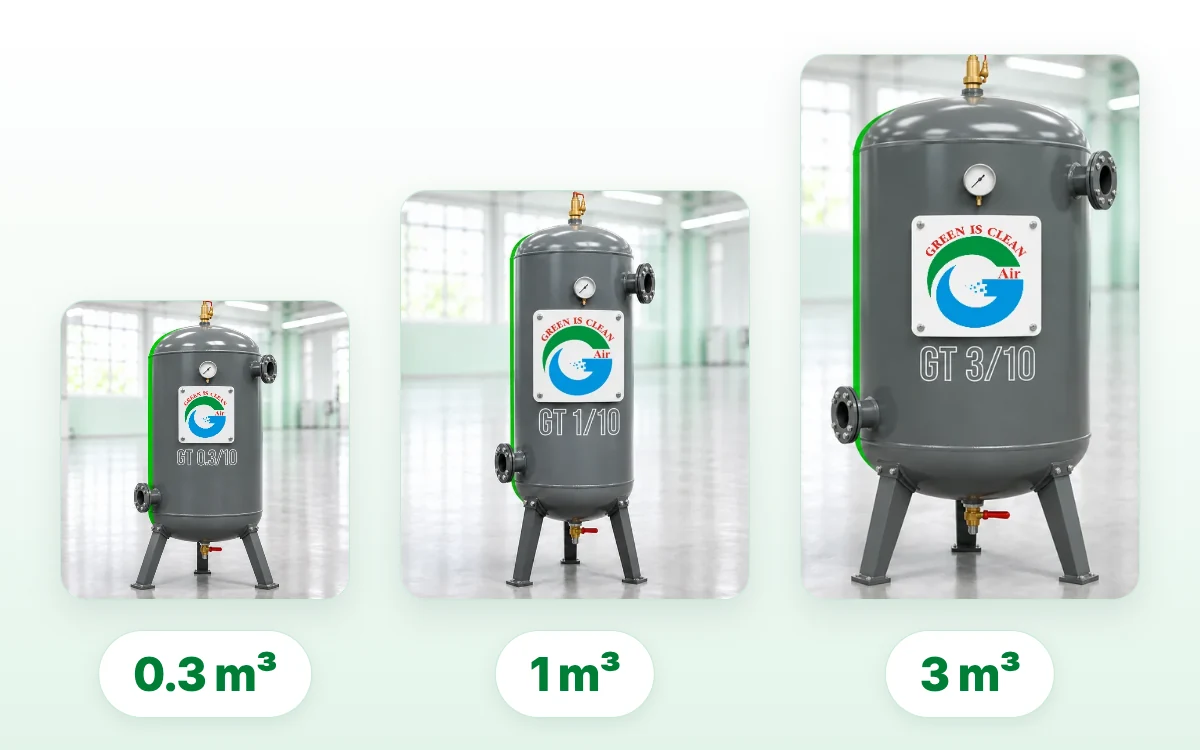
What size air receiver do I need?
The rule, the reason behind it, and when to put the tank somewhere else.
Learn more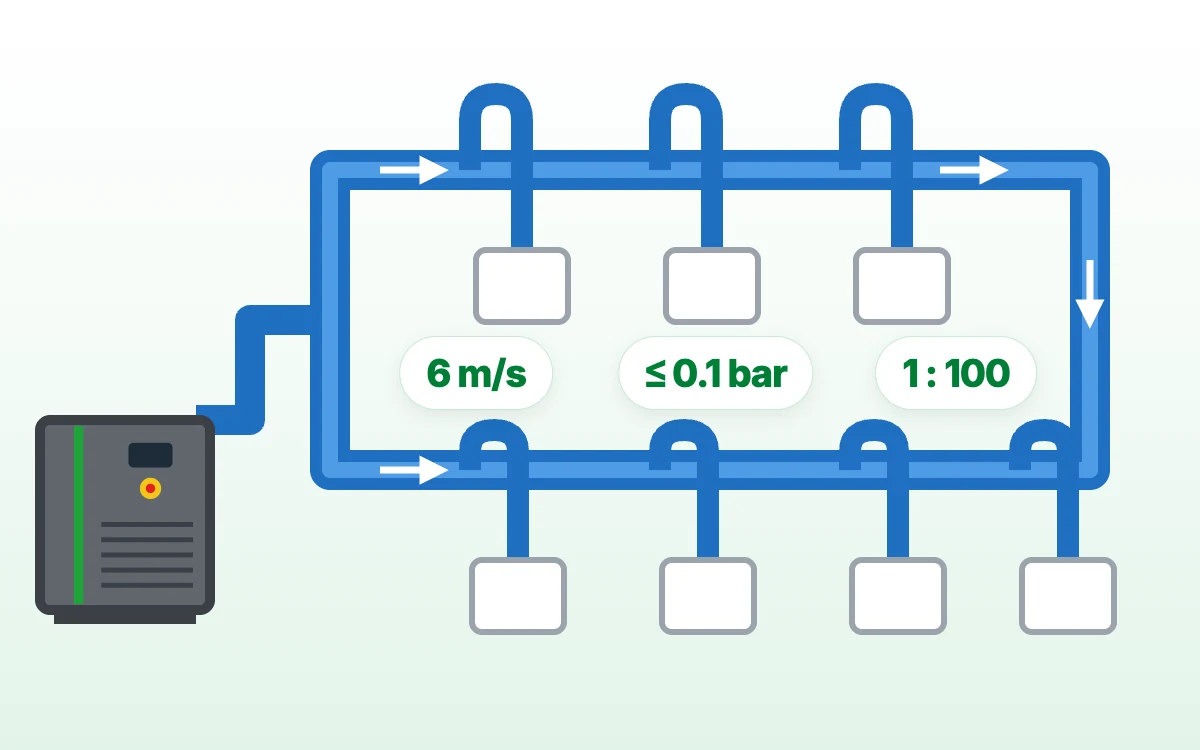
Compressed air pipework: size, ring and slope
The sums that decide the pipe, and the details that keep water out of the machines.
Learn more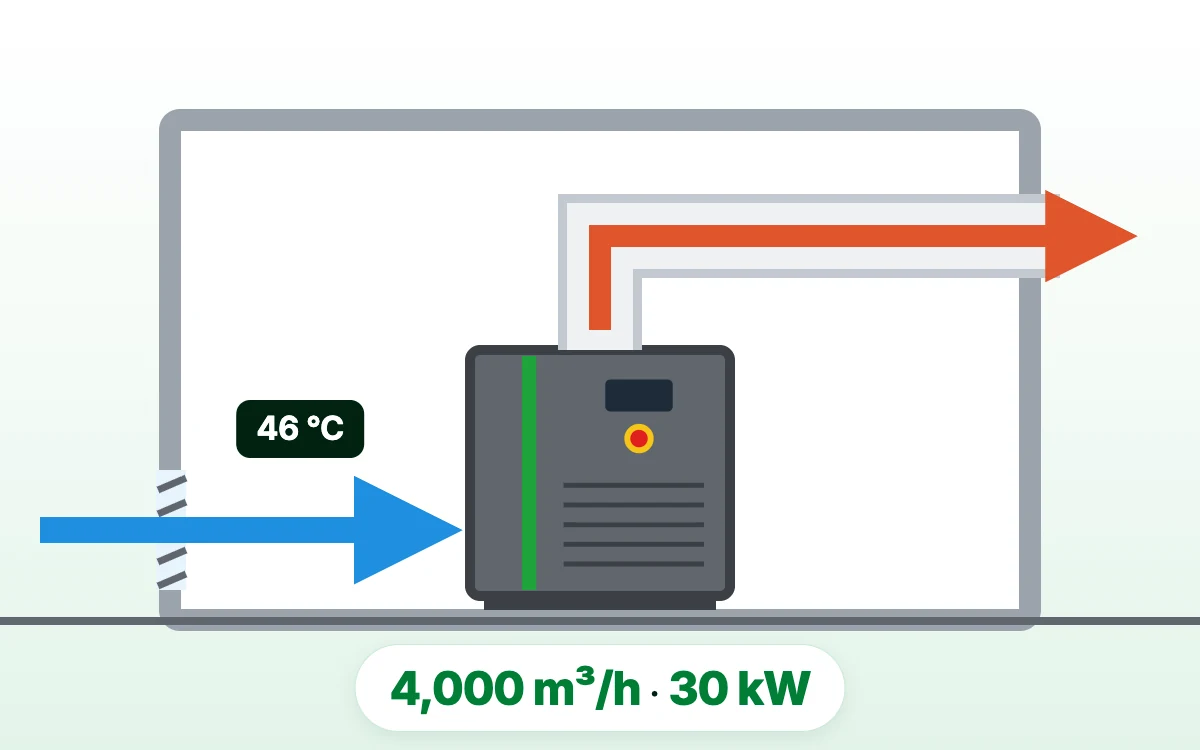
Compressor rooms in hot climates
Where the heat goes, how much air the room needs, and why machines trip in August.
Learn more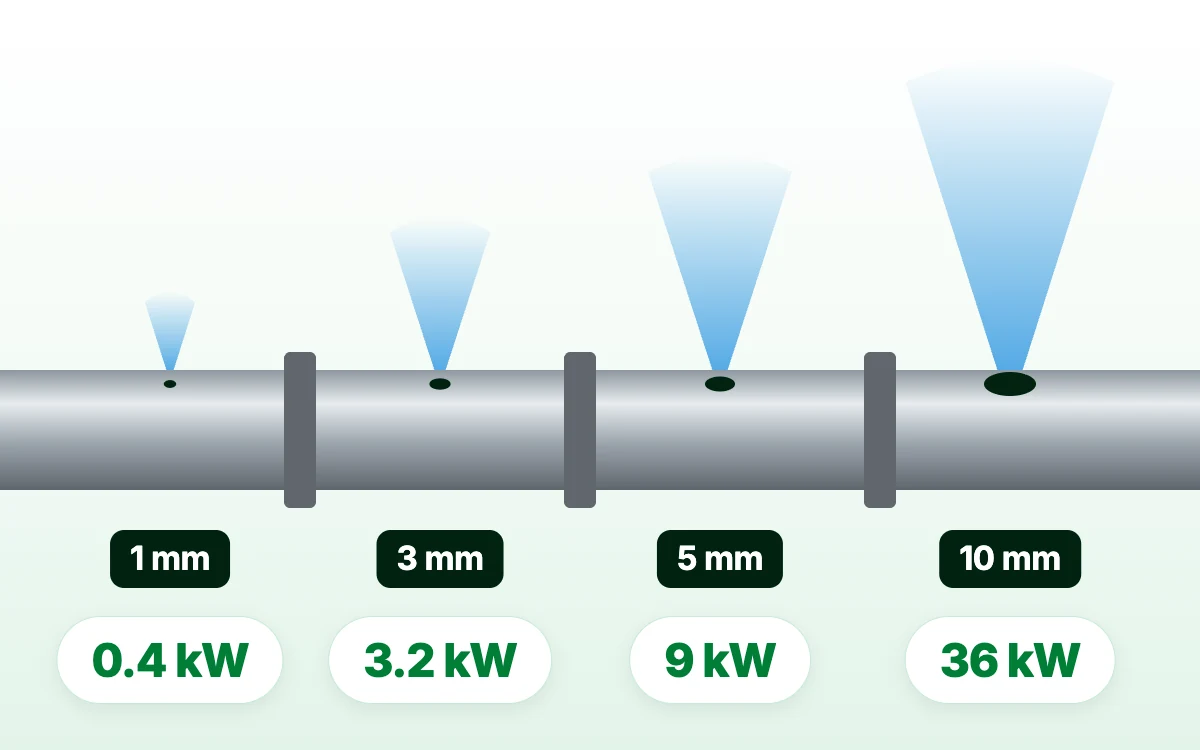
Compressed air leaks: find them and count the cost
What a hole costs, how to measure your own leaks in an evening, and what to repair first.
Learn moreNot sure which model you need?
Send us your air demand, working pressure and running hours. Our engineers will size the machine and send a written recommendation, no cost, no obligation.