
Compressed air pipework: size, ring and slope
The sums that decide the pipe, and the details that keep water out of the machines.
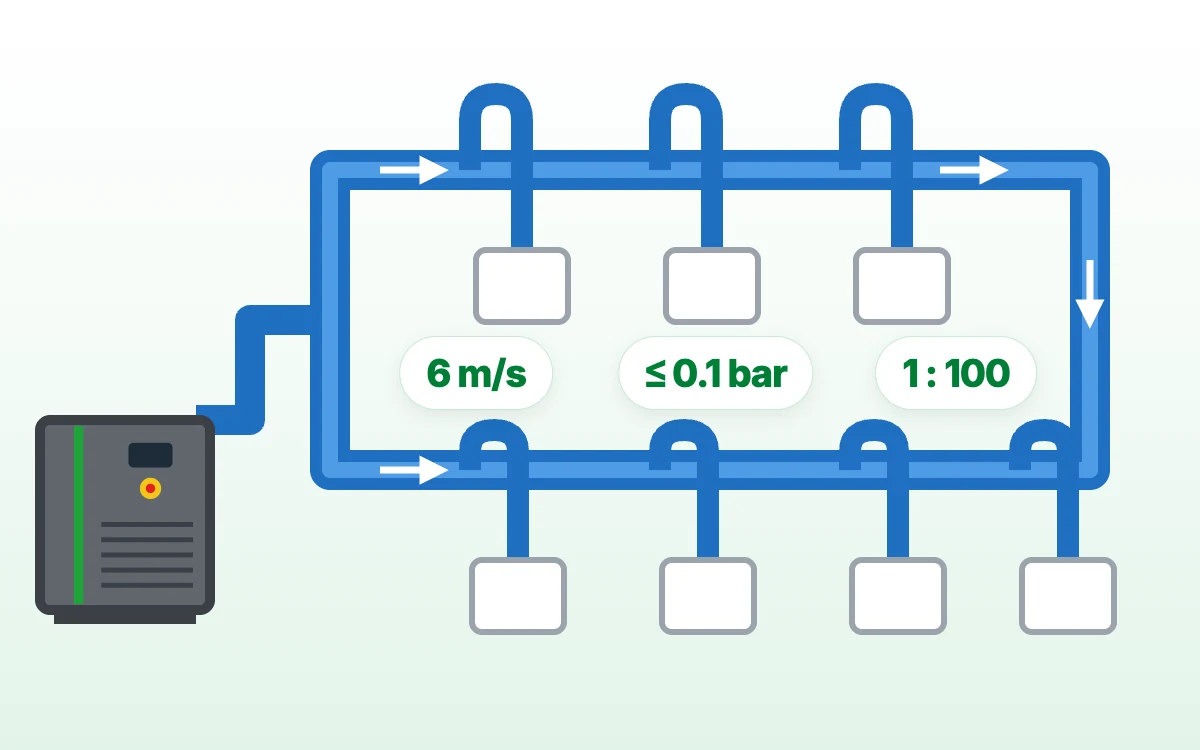
Keep the air slow and the main in a ring
Pipework is the cheapest part of a system to get right on the drawing and the dearest to change afterwards. A pipe one size too small costs pressure every hour for twenty years, and pressure is electricity, about 7% for each bar.
A good system loses no more than about 0.1 bar from the compressor room to the farthest machine. Setting the compressor higher to make up for a thin pipe charges you for the loss at every machine in the building.
Two ideas do most of the work. Keep the air slow, about 6 metres a second in the main. And make the main a ring, so that every machine is fed from both sides.
Six rules that do most of the work
Speed decides the size
6 m/s or less in a main, and up to about 15 m/s in a short drop to one machine.
A ring feeds from both sides
Each branch takes its air from two directions, and one section can be closed without stopping the plant.
Slope and drain
About 1 in 100, away from the compressor, with a drain at every low point, so that water goes where you chose.
Take off from the top
A branch leaves the main upwards and then turns down, so the water running along the bottom stays in the main.
Choose the material
Aluminium and stainless steel stay clean inside. Black and galvanised steel shed rust and zinc into your filters. Ordinary plastic pipe such as PVC is not safe for compressed air, because it shatters.
Hoses are pipe too
Most of the loss is often in the last three metres. A 19 mm hose at 30 metres drops meaningful pressure, and 25 mm often cures the complaint.
Working out the bore
The air in the pipe is compressed, so it takes less room. At 7 bar gauge there are 8 bar absolute, and 10 m³/min of free air is only 1.25 m³/min inside the pipe.
1.25 m³/min is 0.0208 m³ a second. At 6 metres a second it needs an area of 0.00347 m², which is a bore of 66 mm, so an 80 mm pipe.
The same sum for other flows is in the list. It is for a straight main at 7 bar. A long run, many bends or growth you already know about takes it one size up. The pipe calculator on our sizing tools page shows the pressure drop for your own length.
- 1 m³/min: bore 21 mm, pipe 25 mm
- 3 m³/min: bore 36 mm, pipe 40 mm
- 6 m³/min: bore 52 mm, pipe 65 mm
- 10 m³/min: bore 66 mm, pipe 80 mm
- 20 m³/min: bore 94 mm, pipe 100 mm
- 30 m³/min: bore 115 mm, pipe 125 mm
- 40 m³/min: bore 133 mm, pipe 150 mm
- One size up for long runs and many bends
Where the pressure really goes
The dryer, the filters and the last hose usually take more than the main does. A clean filter takes 0.1 to 0.2 bar, and a blocked one several times that.
Measure it with two gauges that agree, one at the compressor and one at the farthest machine, while the plant is busy. The difference is what the pipework and everything in it costs you.
Put the largest single drop right first. Raising the compressor's setting hides the problem and spreads the cost to every machine.
- Two gauges, checked against each other
- Measured while the plant is busy
- Filters changed on time
- Regulators and couplings large enough
- Hose bore matched to the tool
- Valves that open full bore
- Bends instead of elbows
- Compressor setting lowered afterwards
Planning a new line
Draw every user with its flow and its pressure. Put the ring where the users are, not where the roof is easiest.
Leave a tee with a valve for what comes next, an isolating valve on every branch and a gauge at the far end. They cost little while the pipe is open and a great deal afterwards.
Pressure test it before it goes into service, and mark it with the pressure, the medium and the direction of flow.
- Every user drawn, with flow and pressure
- Ring main where the users are
- Valve on every branch
- Tees left for what comes next
- Drains at every low point
- Gauge at the far end
- Pressure tested and recorded
- Pipes marked
Frequently asked questions
What size pipe do I need?
One that keeps the air at about 6 m/s. At 7 bar that is a 40 mm pipe for 3 m³/min, 80 mm for 10 and 100 mm for 20, one size larger on long runs.
How much pressure drop is acceptable?
About 0.1 bar from the compressor room to the farthest machine. More than that is paid for every hour the plant runs.
Why a ring main?
Every branch is fed from both sides, so the pipe can be smaller, the pressure is steadier, and one section can be closed while the rest keeps working.
Which material is best?
Aluminium or stainless steel for clean air and easy changes. Galvanised steel is cheaper and sheds particles with age. Never ordinary plastic.
Can I use PVC pipe for compressed air?
No. It becomes brittle and shatters, and the pieces injure people. Plastic pipe made and approved for compressed air is a different product.
Why take branches from the top of the pipe?
Because water and dirt run along the bottom. A branch from the top leaves them in the main, where a drain can deal with them.
Do I need a slope if I have a dryer?
A small one and drains, yes. Dryers fail, and a drain valve is cheaper than a wet production line.
How do I measure the loss in my pipework?
Two gauges that agree, one at the compressor and one at the farthest machine, read at the same moment while the plant is busy.
Is it worth replacing old steel pipe?
If it is rusty inside, yes. Rust blocks filters and valves, and the rough bore takes pressure. Replace the main first.
Should I connect two compressor rooms?
Often, through a pipe large enough to share the load. It gives cover when one room stops, and one controller can run both.
More guides
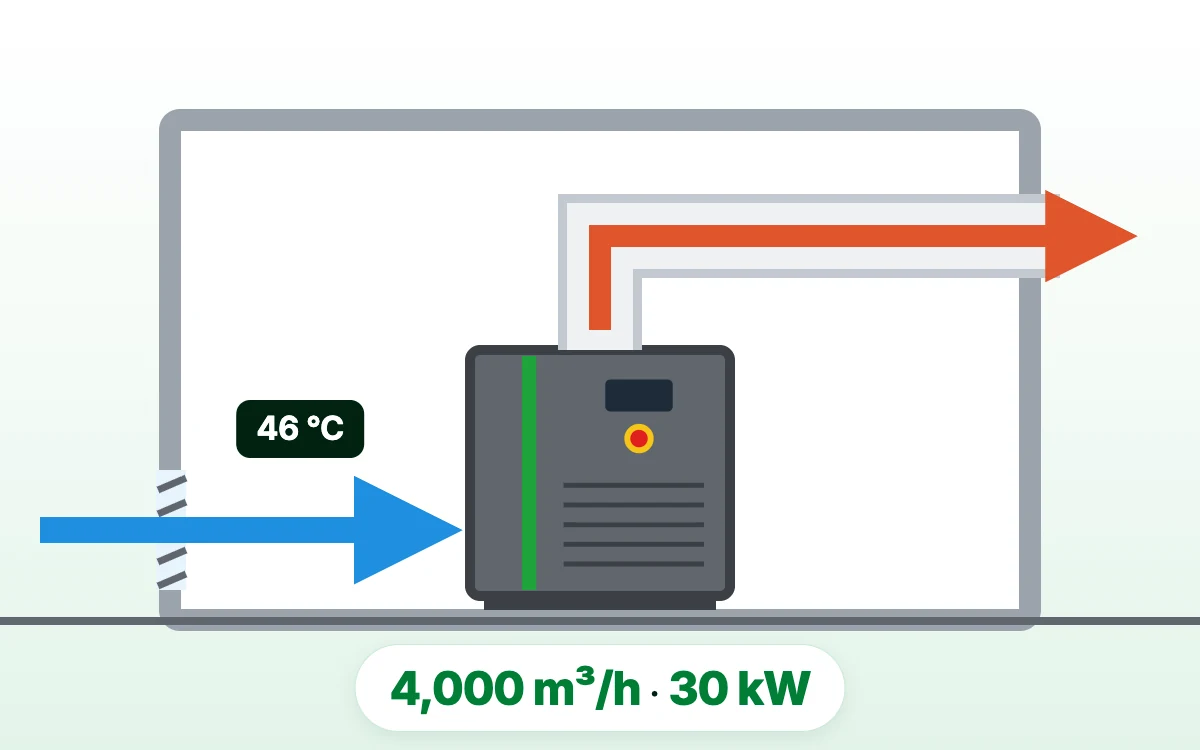
Compressor rooms in hot climates
Where the heat goes, how much air the room needs, and why machines trip in August.
Learn more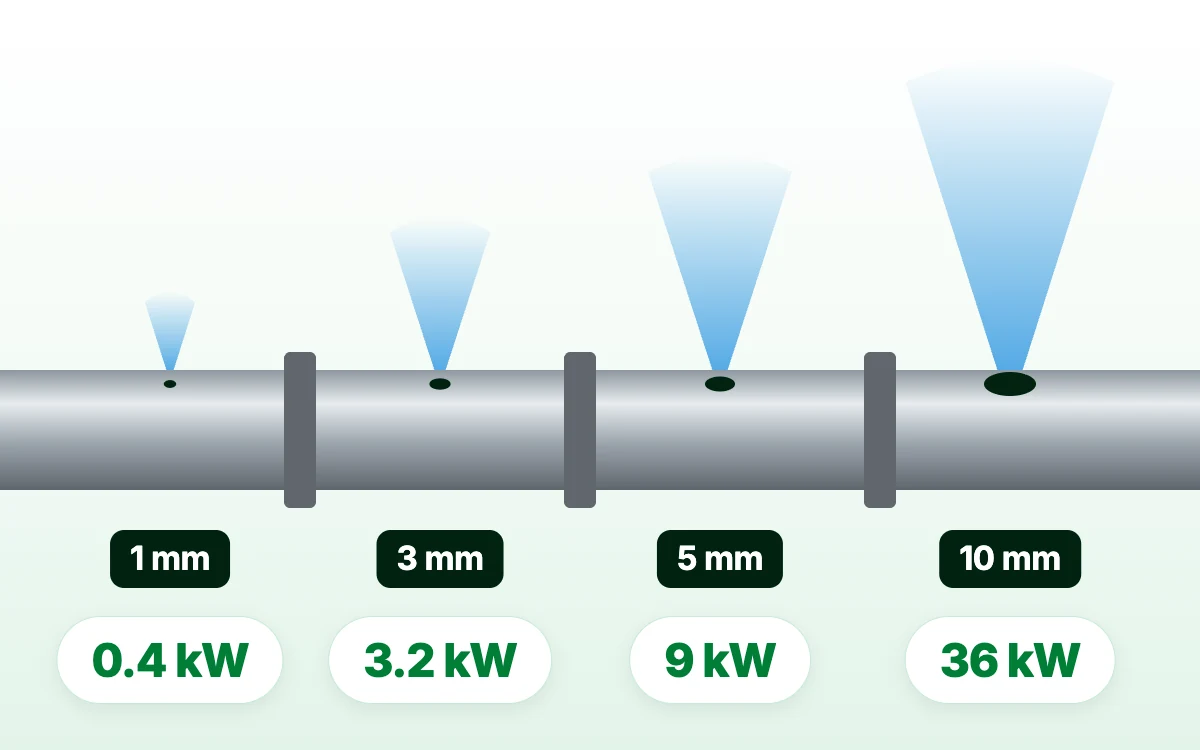
Compressed air leaks: find them and count the cost
What a hole costs, how to measure your own leaks in an evening, and what to repair first.
Learn more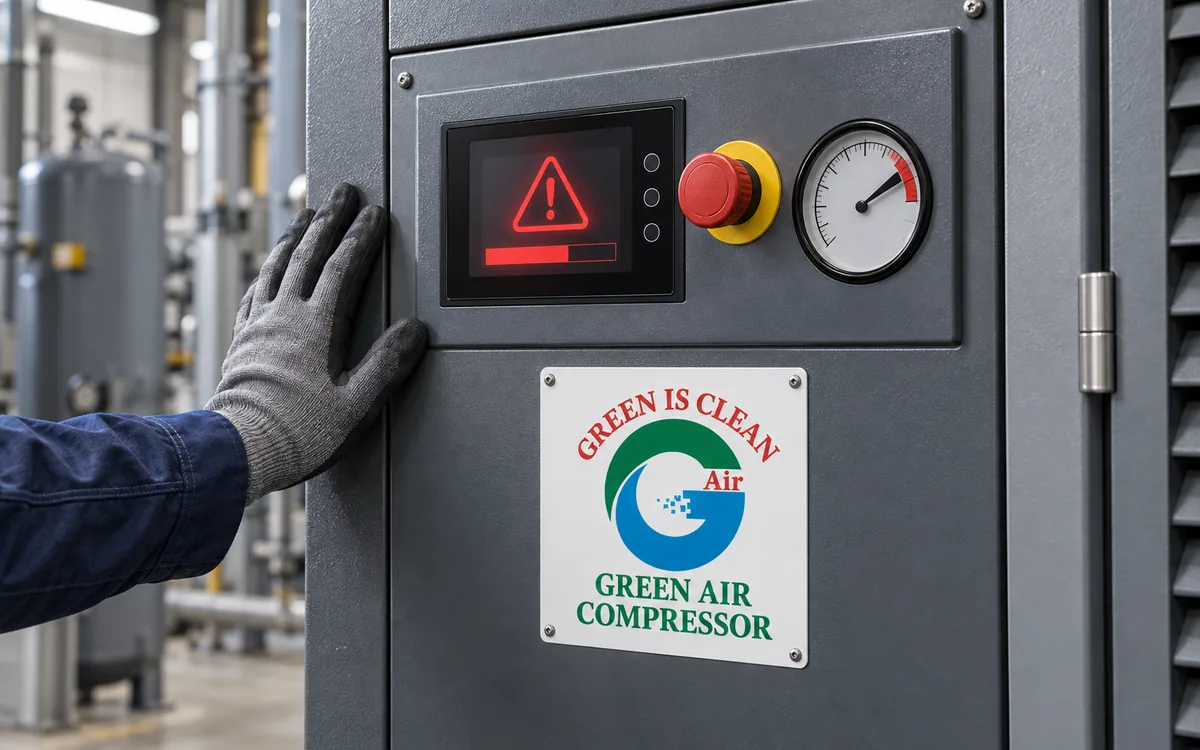
Air compressor troubleshooting
The fault you can see, what usually causes it, and what to check before calling anyone.
Learn more
Variable speed compressors explained
What VSD actually saves, and when it saves nothing at all.
Learn moreNot sure which model you need?
Send us your air demand, working pressure and running hours. Our engineers will size the machine and send a written recommendation, no cost, no obligation.