
Choosing a vacuum pump
Capacity says how fast, ultimate pressure says how deep, and the vapour decides the type.
Two numbers and one question
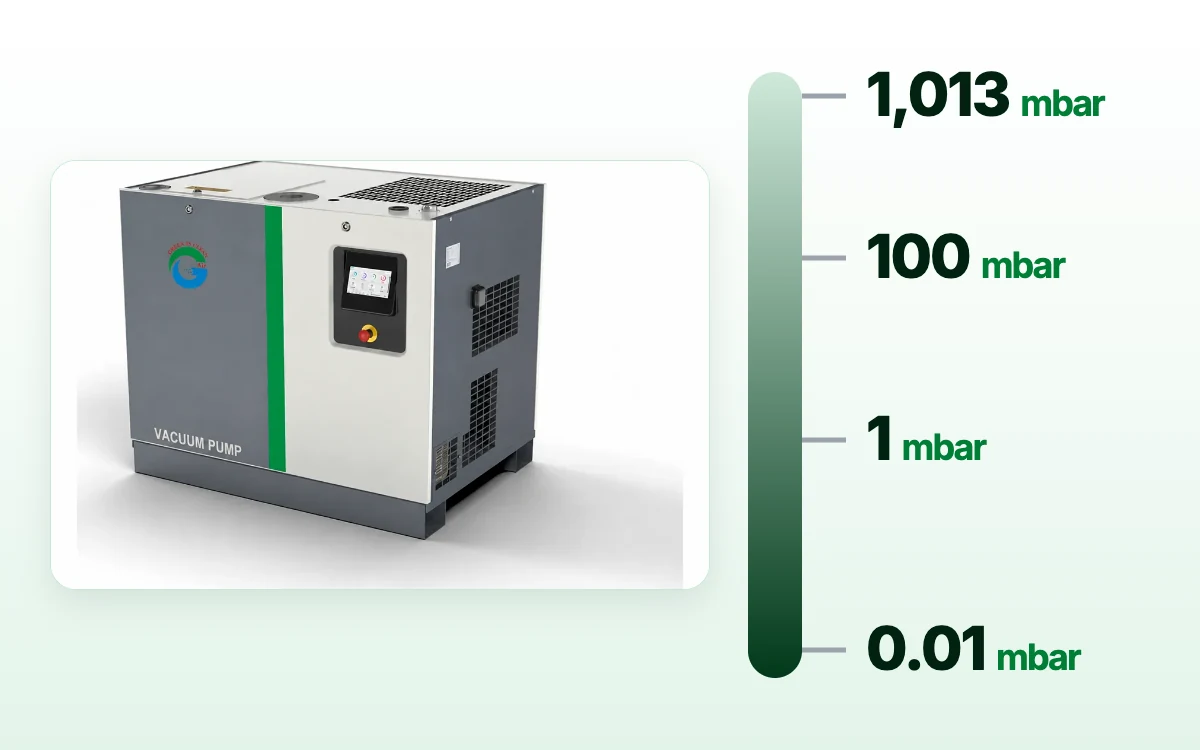
Two numbers describe a vacuum pump. Capacity, in m³/h, is how fast it moves gas. Ultimate pressure, in mbar, is the deepest vacuum it can reach. A pump can have a fine ultimate figure and still take an hour to empty your vessel.
Capacity is not constant. Every pump slows down as the pressure falls, until at its ultimate pressure it moves nothing at all. So the useful figure is the capacity at the pressure your process works at, read from the curve and not from the front page.
The question is what goes through it. Dry gas, water vapour, solvent, dust or liquid decides the type of pump long before price does.
The types in a few words
Dry claw
Continuous and oil-free, down to about 100 to 150 mbar. Packaging, conveying, central vacuum.
Dry screw
Nothing in the chamber, down to 0.01 mbar. Chemical and pharmaceutical processes.
Oil sealed rotary vane
The workhorse. A deep vacuum at a modest price, where a trace of oil does no harm.
Liquid ring
Almost indifferent to water, dirt and slugs of condensate. Wet processes.
Dry scroll
Around 0.01 to 0.1 mbar in a small, quiet package. Laboratories and small clean chambers.
Side channel blower
A light vacuum over a large flow. Holding, lifting and conveying.
How deep do you really need?
Packaging works at 100 to 200 mbar. Vacuum drying and distillation need 0.1 mbar or lower. Most of industry lies between, and every step deeper costs more pump, more power and tighter pipework.
The air around you is 1,013 mbar and a perfect vacuum is zero. A gauge that reads −0.9 bar means about 110 mbar absolute. Write mbar absolute, because at the deep end a small difference on a gauge is a very large one in the process.
If the process already works with a pump that reaches 1 mbar, do not ask for 0.01 to be safe. It is a different pump.
- 1,013 mbar: the air around you
- 100 to 200 mbar: packaging and lifting
- About 100 mbar: the limit of a single claw
- 0.1 mbar and lower: drying and distillation
- 0.01 mbar: dry screw and scroll
- Always in mbar absolute
- Working pressure, not the deepest possible
- What the process does today, measured
Working out the capacity
To empty a vessel, take its volume, multiply by the natural logarithm of the starting pressure over the final pressure, and divide by the time. A 2 m³ vessel from 1,013 to 10 mbar in ten minutes needs about 55 m³/h of real capacity.
Then add for leaks and for vapour. One kilogram of water evaporating every hour at 10 mbar is about 130 m³/h of vapour on its own, which is why a wet vessel needs a far larger pump than the same vessel dry.
And mind the pipe. A long thin pipe between the vessel and the pump can take half of the capacity at low pressure, and a bigger pump does not cure it.
- Volume of everything to be emptied
- Time allowed
- Starting and final pressure
- Vapour, in kg an hour
- Leaks, measured by shutting the valve
- Pipe short and wide
- Capacity read at the working pressure
- Gas temperature at the inlet
What spoils a good pump
Most vacuum problems are not pump problems. Leaks, thin pipework, blocked filters and the wrong fluid account for most complaints, and replacing the pump cures none of them.
Water and solvent condense inside a cold oil sealed pump and ruin the oil. Warm the pump up before opening the valve, use the gas ballast, or choose a type that does not mind.
Dust wears whatever it touches. A filter at the inlet costs a little capacity and saves the pump.
- Leak test before blaming the pump
- Inlet filter checked
- Right fluid, changed on time
- Gas ballast used on wet duty
- Pump warm before the process starts
- Pipework checked for low points
- Pump down time recorded when new
- Exhaust taken outside
Frequently asked questions
How do I choose a vacuum pump?
By the pressure the process works at, then by what goes through the pump, then by how fast it has to be done. Price comes after those three.
What is the difference between capacity and ultimate pressure?
Capacity is how fast the pump moves gas. Ultimate pressure is the deepest vacuum it reaches, where its capacity is nothing.
What vacuum do I need for packaging?
Usually 100 to 200 mbar absolute. Deeper than that costs money and adds nothing to most packs.
Dry or oil sealed?
Dry where nothing from the pump may reach the process, and for clean continuous work. Oil sealed where a deep vacuum is needed at a modest price and a trace of oil does no harm.
When is a liquid ring pump the right one?
When the gas is wet or dirty. It accepts water, vapour and even slugs of liquid that would wreck another pump.
Why is my vacuum getting worse?
Usually a leak, a blocked filter or old oil. Shut the valve at the pump and watch the gauge. If the pump alone reaches its figure, the problem is in the system.
What does mbar absolute mean?
Pressure counted from a perfect vacuum. The air around us is 1,013 mbar absolute and a gauge reading of −0.9 bar is about 110.
Can I put two pumps together?
Yes. A booster in front of a backing pump gives far more capacity at low pressure for less power than one large pump.
How often does a vacuum pump need service?
By hours and by duty. Oil sealed pumps depend on the oil, which goes first on wet or dirty work. Dry pumps go longer and should still be measured once a year.
Is one central system better than several small pumps?
Where many machines use a similar vacuum, usually. Where one needs it much deeper than the rest, give that one a pump of its own.
More guides
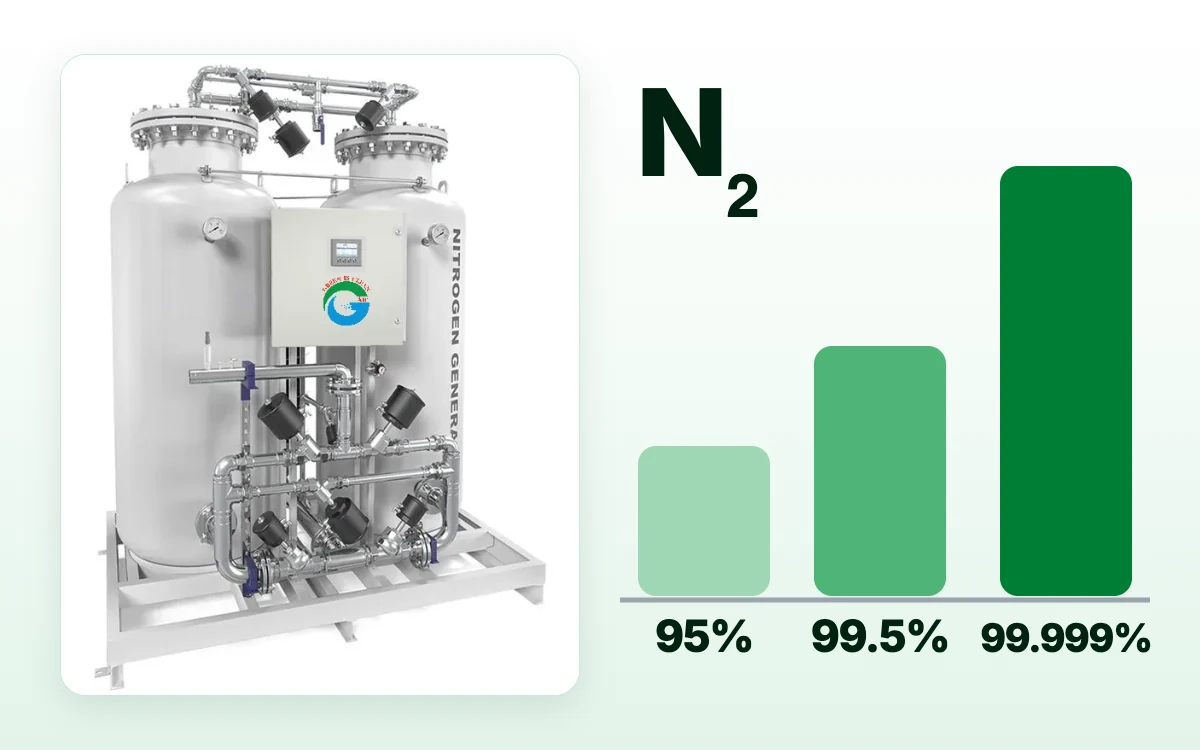
Nitrogen: generator or cylinders?
What each one costs you, how pure it has to be, and when cylinders still win.
Learn more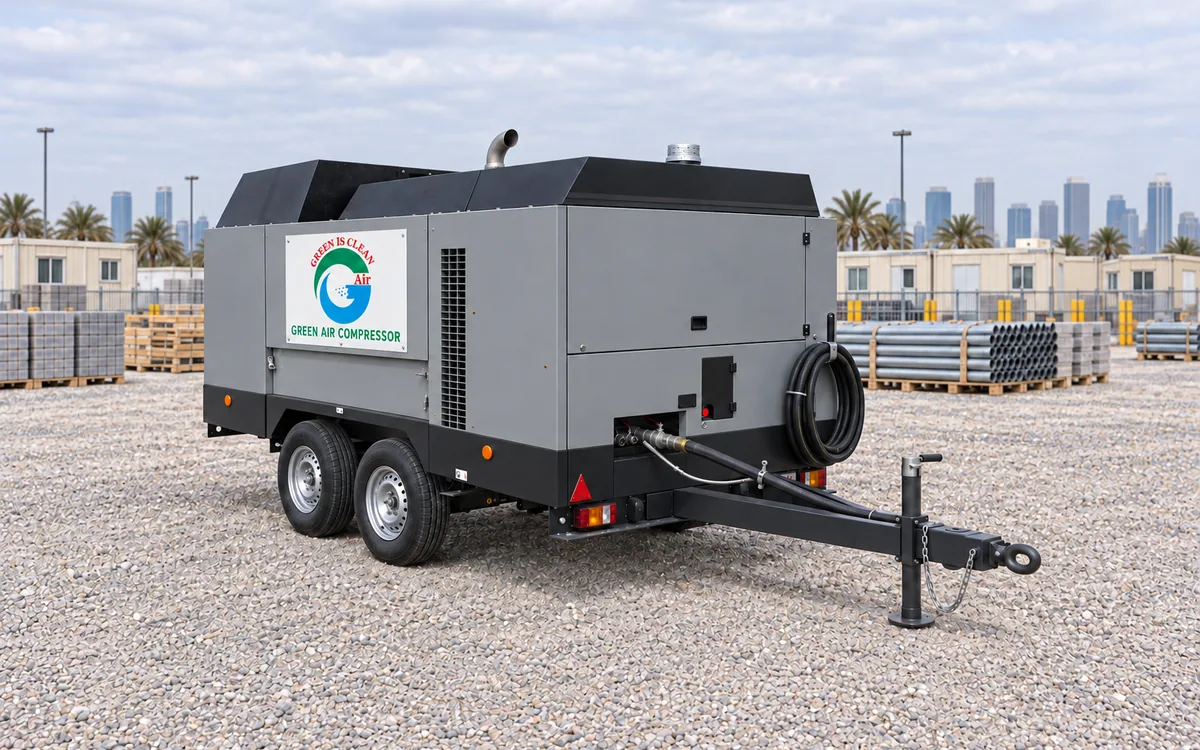
Choosing a towable compressor
How to size a site machine without guessing.
Learn more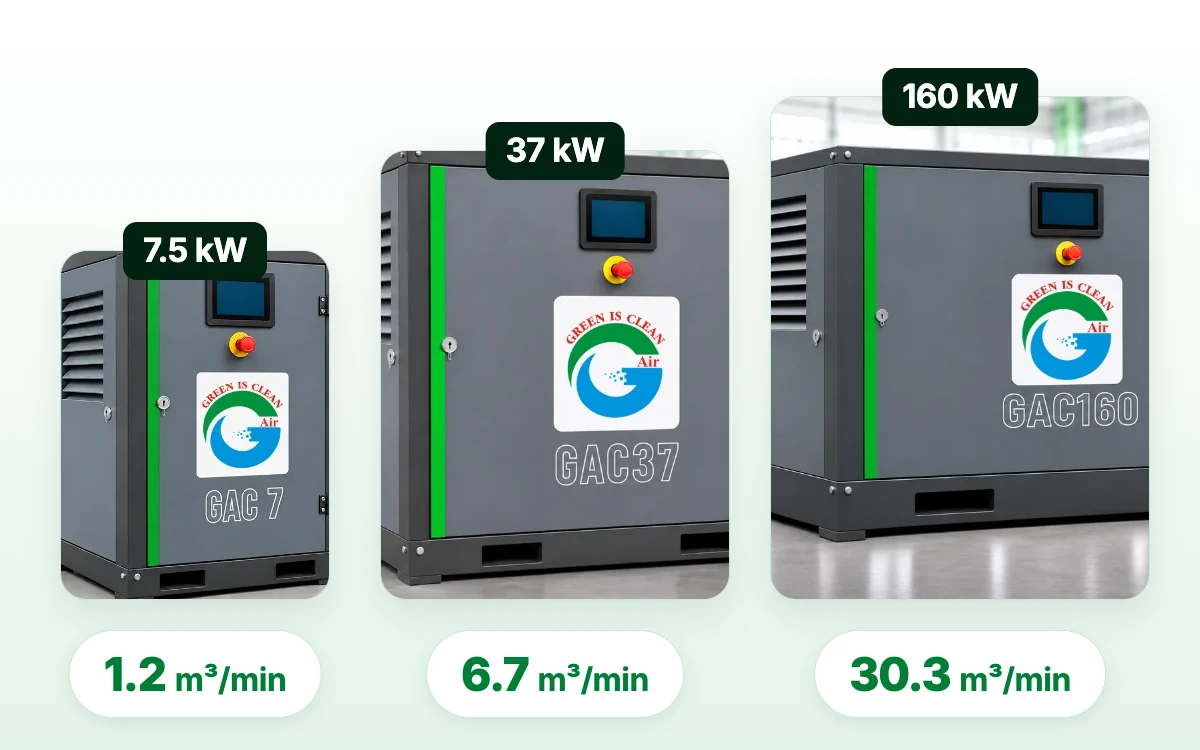
What size air compressor do I need?
Flow first, pressure second and kilowatts last, with the arithmetic shown.
Learn more
Screw or piston compressor?
How long it runs each day decides it, and here is where the line falls.
Learn moreNot sure which model you need?
Send us your air demand, working pressure and running hours. Our engineers will size the machine and send a written recommendation, no cost, no obligation.