
Screw or piston compressor?
How long it runs each day decides it, and here is where the line falls.
The question that decides it
Both machines do the same job. A piston compressor squeezes air in strokes, like an engine in reverse, and a screw compressor squeezes it continuously between two rotors. Nearly every difference between them follows from that.
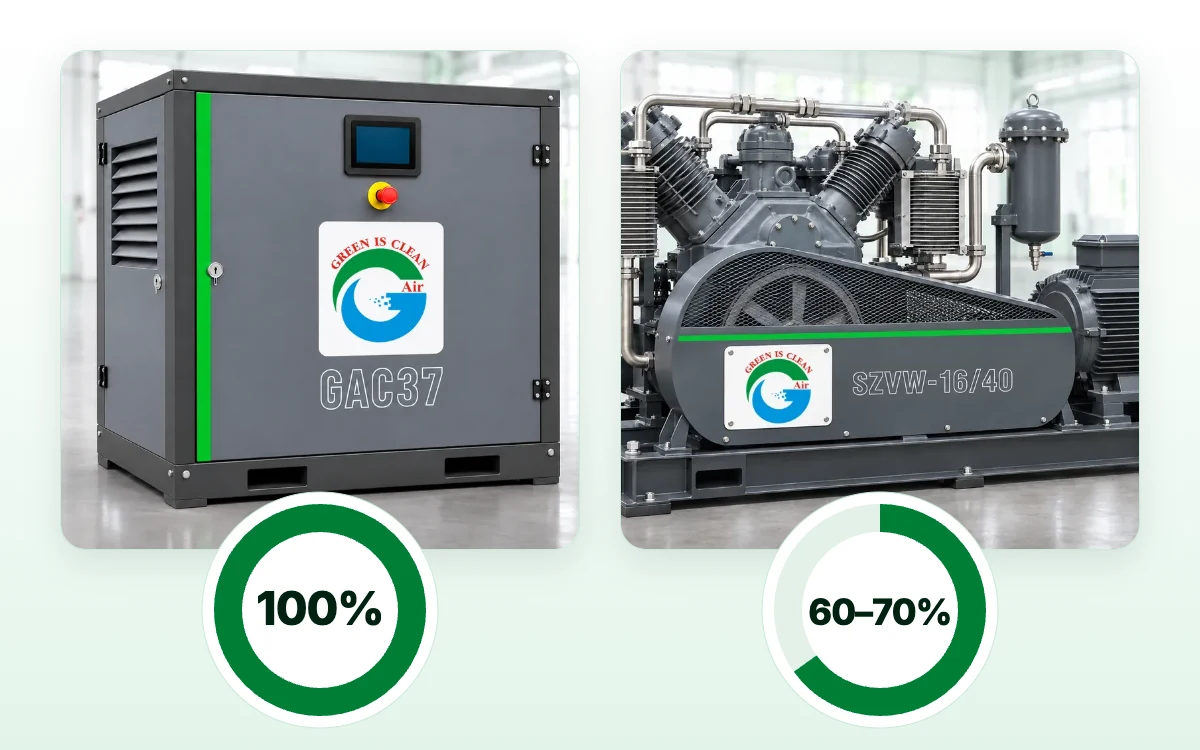
A piston machine has to rest. It sheds its heat while it is stopped, and it is built on the assumption that it will be stopped for 30 to 40% of the time. A screw machine is rated to run at full load all day, every day.
So the first question is not the price or the power. It is how many hours a day you need air. A few short bursts suit a piston machine very well. Beyond about two hours a day a screw is the right machine, and usually the cheaper one to own.
Side by side
Duty
Piston: a rest for 30 to 40% of the time. Screw: 100%, with no cooling off periods.
Price
A piston machine is much cheaper to buy. Over a few years of daily running, electricity and replacements take that saving back.
Noise
A screw in its canopy is typically 66 to 72 dB(A) at one metre, quiet enough to talk beside. An open piston machine is often above 85 dB(A) and needs ear protection or a room of its own.
Air
A piston machine delivers hotter air, in pulses, and passes more oil as its rings wear. A screw delivers steadily, with 1 to 3 mg/m³ of oil left after its separator.
Life
A screw runs 40,000 to 60,000 hours before a major overhaul. A piston machine used within its duty lasts about a decade, and one that runs all day can be worn out inside two years.
Pressure
Above about 35 bar the piston machine takes over again. High pressure, small flow and short running are what it does best.
Where a piston compressor is right
A tyre bay, a garage with one impact wrench, a small site, a farm, a standby unit that runs twice a month. The machine is off for most of the day, and when it runs it runs for minutes.
It is simple, and almost any workshop can repair it with ordinary tools. Where the nearest trained engineer is a day away, that counts for a great deal.
It is also the machine for high pressure. PET bottle blowing at 40 bar, cylinder filling and leak testing rigs all use pistons, built in stages with cooling between them.
- Less than about two hours a day
- Air used in short bursts
- Small flow
- Pressure above about 35 bar
- Repair possible anywhere
- A receiver large enough to let it rest
- A place where the noise does no harm
- A fixed budget and few hours
Where a screw compressor is right
Any plant that uses air as a utility: production lines, packaging, machine shops, spray booths, laundries, clinics. If somebody would notice within a minute that the air had stopped, it is a job for a screw.
Screws start at 2.2 kW, so the choice is no longer between a small piston and a large screw. On a single phase supply there are screw machines as well, up to about 7.5 kW.
Compare cost over five years, not price today. Electricity is the largest part of it, and a machine that has to rest a third of the time must be half as big again to deliver the same air.
- More than about two hours a day
- Air that must not stop
- Steady delivery without pulsation
- People working close by
- A dryer and filters downstream
- Changing demand, with a speed drive
- From 2.2 kW upwards
- Service planned by the hour meter
Signs you have outgrown a piston compressor
It never switches off. When the machine runs from the first hour to the last it is working outside what it was built for, and the wear is not gradual.
The air comes out hot and wet. A piston machine that never rests sends hot air down the pipe, the water follows it, and the tools begin to suffer.
You have replaced it before. If this is the second one in five years, work out what the third will cost before you order it.
- Runs the whole shift without stopping
- Pressure falls when two tools work together
- Hot outlet, and water at the tools
- More oil in the air than there used to be
- Valves and rings changed every year
- Ear protection needed nearby
- Second machine in five years
- A new machine or a second shift on the way
Frequently asked questions
Which is better, a screw or a piston compressor?
Neither in general. A piston machine is better for short, occasional use and for high pressure. A screw is better for anything that runs more than about two hours a day.
What is duty cycle?
The share of the time a machine may spend compressing. A piston compressor is typically good for 60 to 70% and has to rest for the remainder. A screw is rated for 100%.
Can a piston compressor run all day?
It will, for a while. It overheats, the valves and rings wear, and a machine that should have lasted ten years can be finished inside two.
Is a screw compressor worth it for a small workshop?
If air is used through the day, yes. Screws start at 2.2 kW, and at that size one outlasts two or three piston machines doing the same work.
Which is quieter?
The screw, by a wide margin. In its canopy it is typically 66 to 72 dB(A) at one metre, against 85 dB(A) or more for an open piston machine.
Which uses less electricity?
On continuous work the screw. It runs cooler and does not have to be oversized to allow for rest. On ten minutes a day you would not notice the difference.
Do both need a receiver?
Yes. On a piston machine the receiver is what lets it stop and cool. On a screw it prevents short cycling and drops water out of the air.
Do both need a dryer?
If water in the pipe would do harm, yes. Both draw in the same humid air, and neither one removes the moisture by itself.
Which is easier to maintain?
A piston machine is simpler and almost anybody can work on it. A screw needs less attention between services, but the services should be done by somebody trained, on the hour meter.
When does a piston compressor win on pressure?
Above about 35 bar. PET blowing at 40 bar, cylinder filling and pressure testing are work for pistons and boosters.
More guides
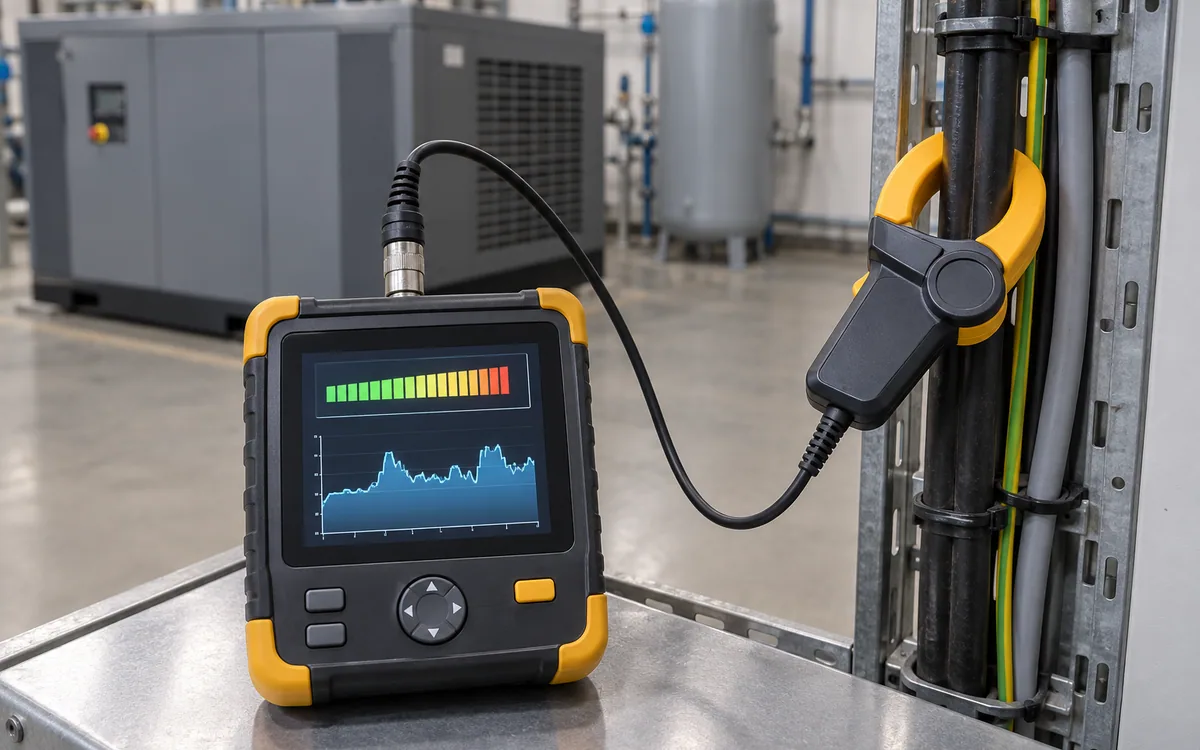
What an air compressor really costs
Why the purchase price is the small number, and what the other two are.
Learn more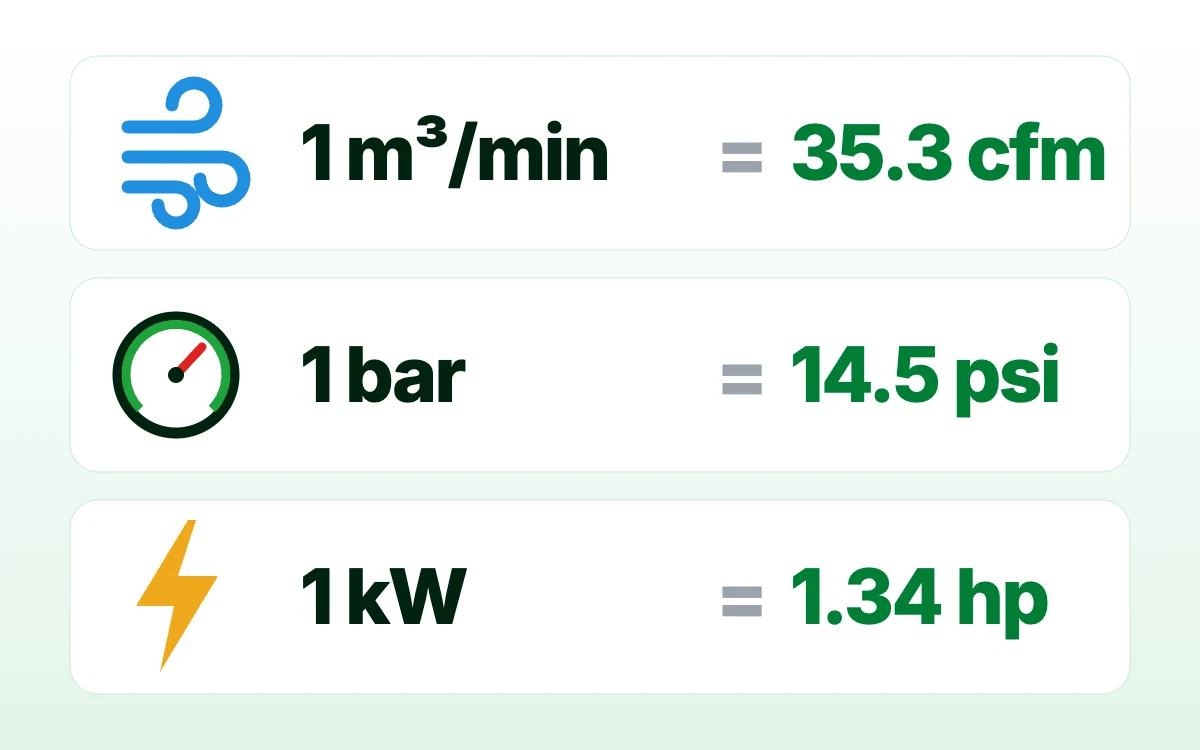
Bar, cfm, FAD and kW: the units on a quotation
What each unit means, how to convert it, and which ones hide the answer.
Learn more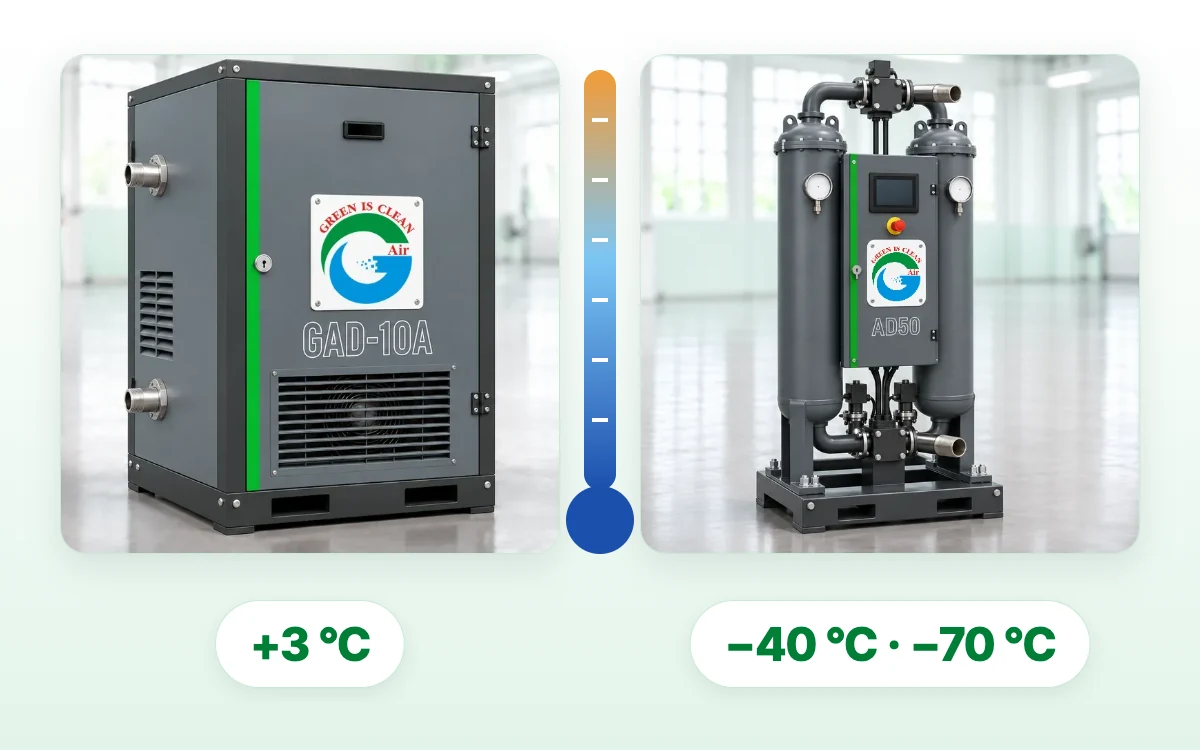
Which air dryer do I need?
Dew point in plain words, and the one temperature that decides the type.
Learn more
Compressed air quality classes explained
ISO 8573-1 in plain words: three numbers, what they mean and which you need.
Learn moreNot sure which model you need?
Send us your air demand, working pressure and running hours. Our engineers will size the machine and send a written recommendation, no cost, no obligation.