
Oil-free air compressors
Certified Class 0 air for food, pharma, electronics and textiles.
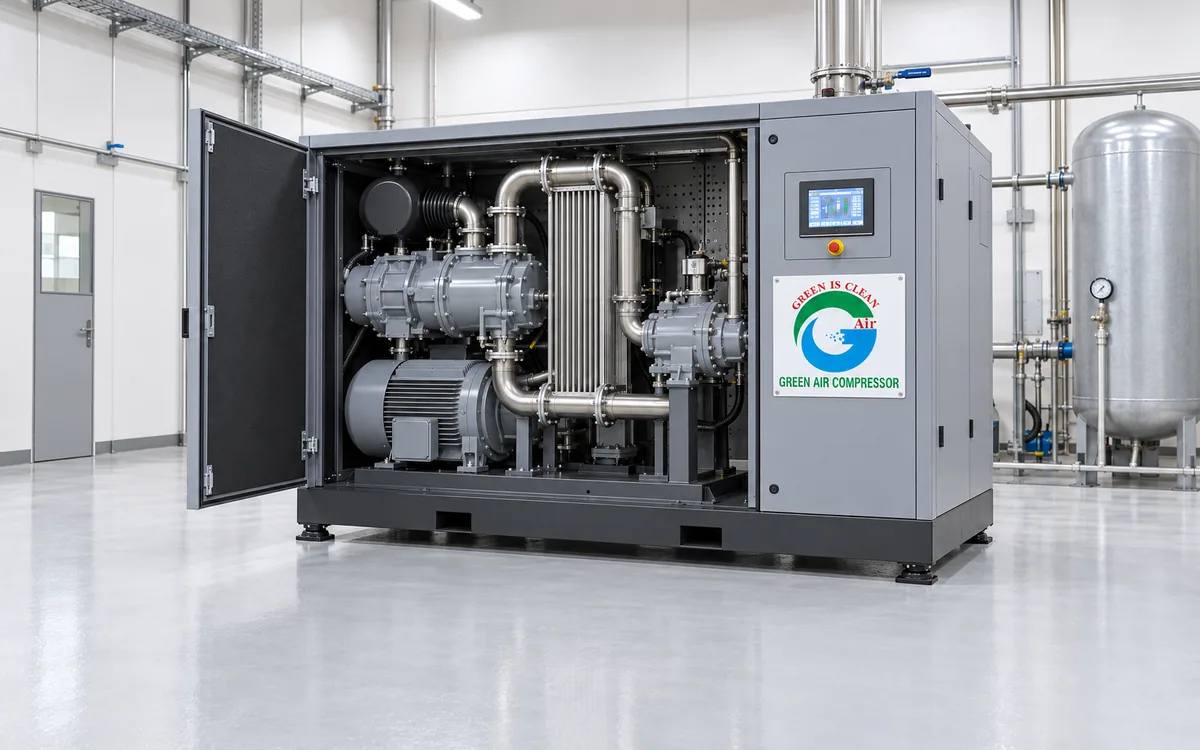
Overview
Oil-free means the compression chamber contains no lubricant at all, not that the oil is filtered out afterwards. For regulated industries that distinction is the whole point, because a filter can fail without warning and a machine with no oil in it cannot.
The range covers single-stage and two-stage machines from 22 to 355 kW, in fixed and variable speed, with full ISO 8573-1 Class 0 certification.
In this range
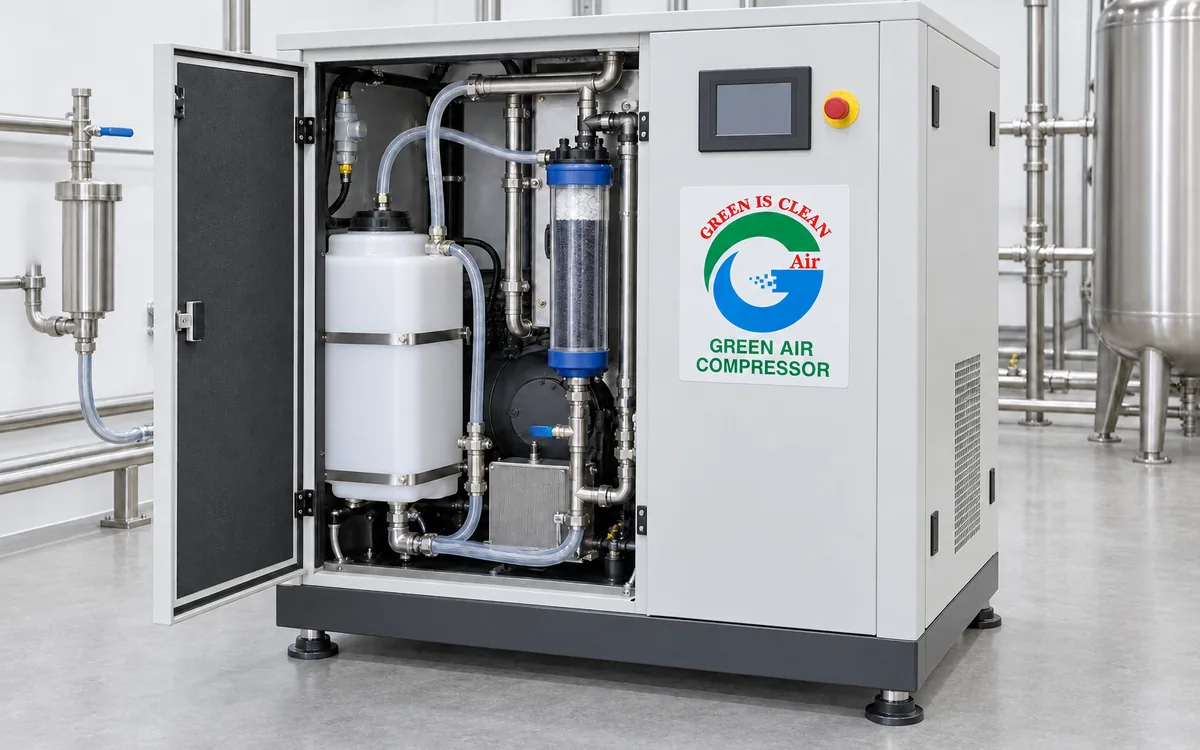
Water lubricated oil free compressors
Water seals and cools the rotors instead of oil. Class 0 air, 5.5 to 160 kW.
- Free air delivery
- 0.3 – 27.0 m³/min
- Working pressure
- 7 – 10 bar g
- Motor power
- 6 – 160 kW
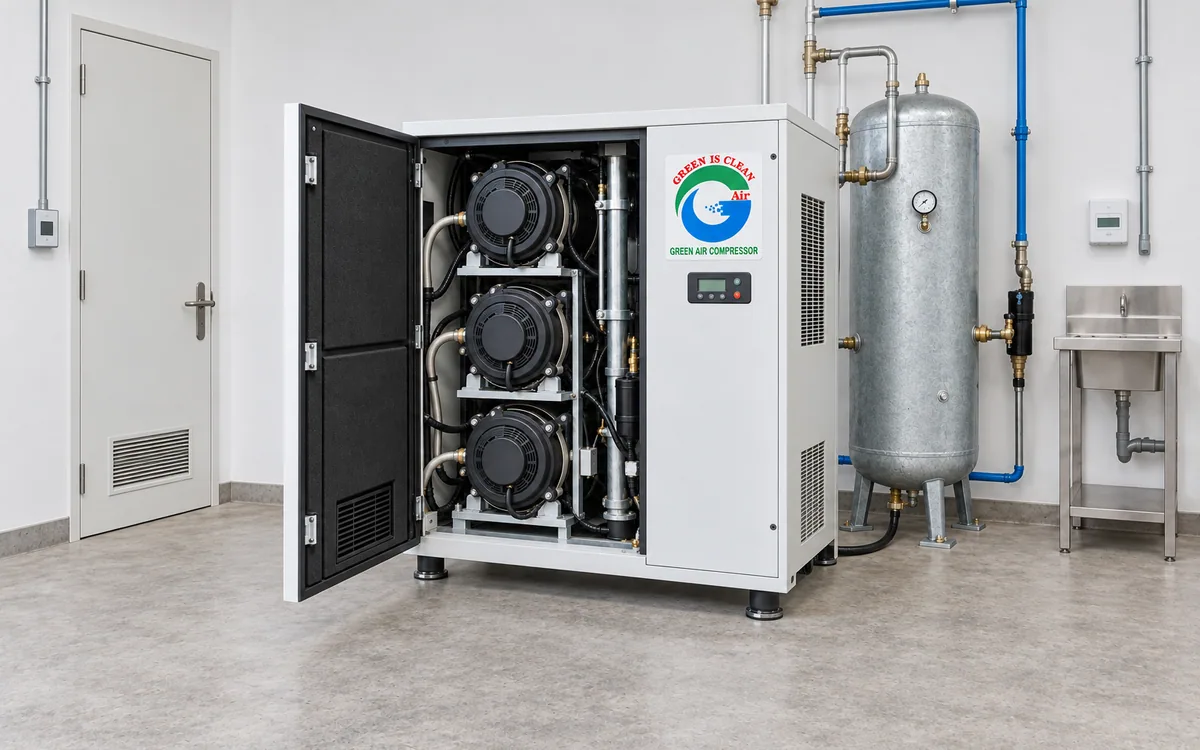
Oil free scroll compressors
Quiet, small, genuinely oil free. 7.5 to 37 kW at 8 bar g.
- Free air delivery
- 0.8 – 4.0 m³/min
- Working pressure
- 8 bar g
- Motor power
- 8 – 37 kW
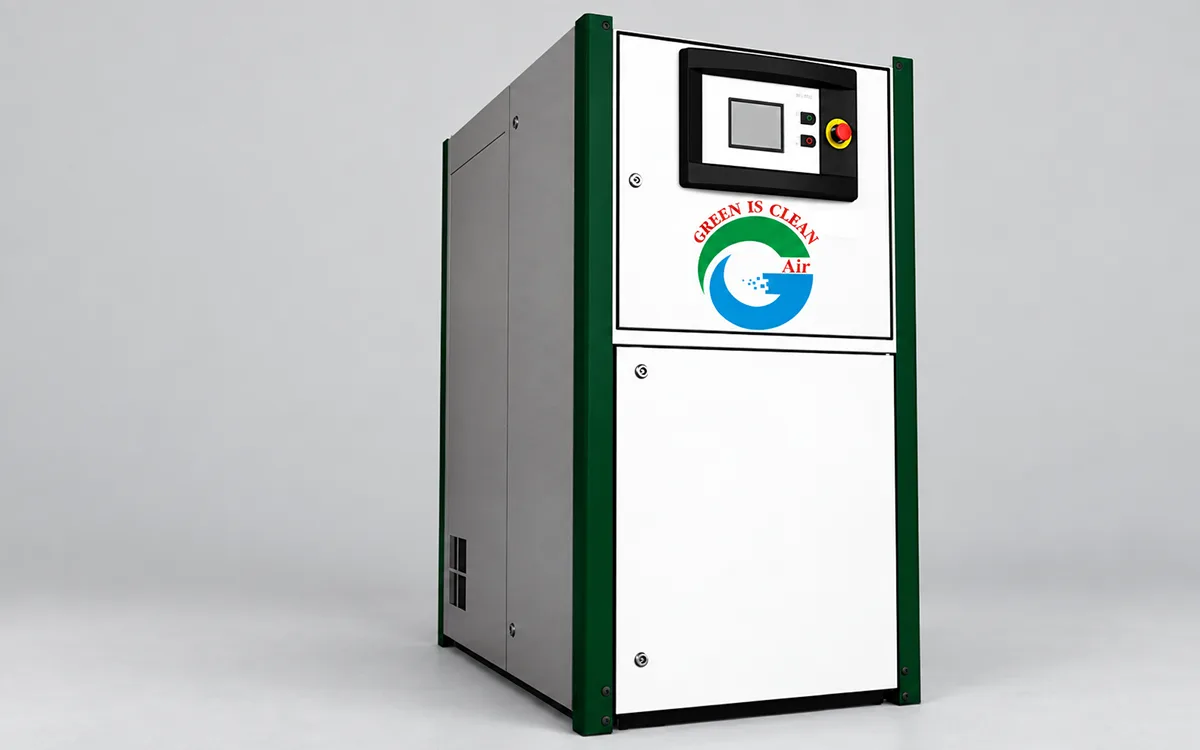
Oil-free rotary screw compressors
Class 0 air with no oil anywhere in the compression chamber.
- Free air delivery
- 0.3 – 6.9 m³/min
- Working pressure
- 5 – 10 bar g
- Motor power
- 15 – 37 kW
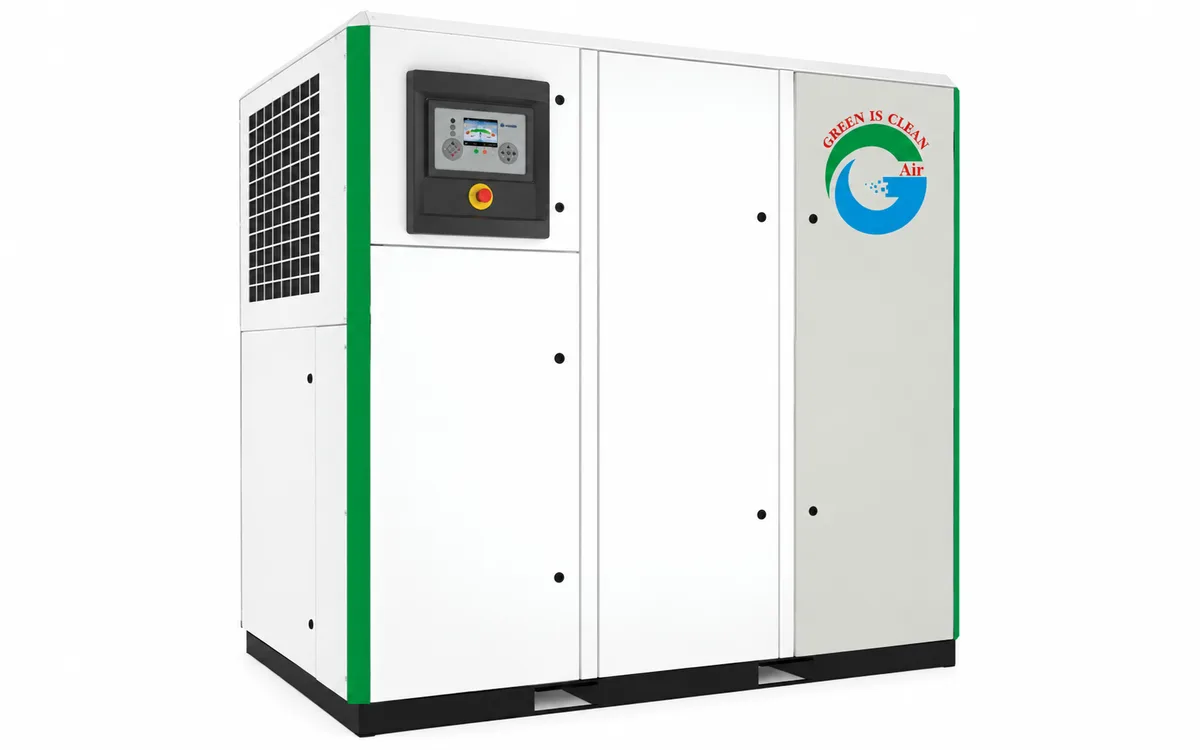
Two-stage oil-free compressors 37 – 75 kW
Two compression stages with intercooling for lower energy per m³.
- Free air delivery
- 5.1 – 12.7 m³/min
- Working pressure
- 7 – 10 bar g
- Motor power
- 37 – 75 kW
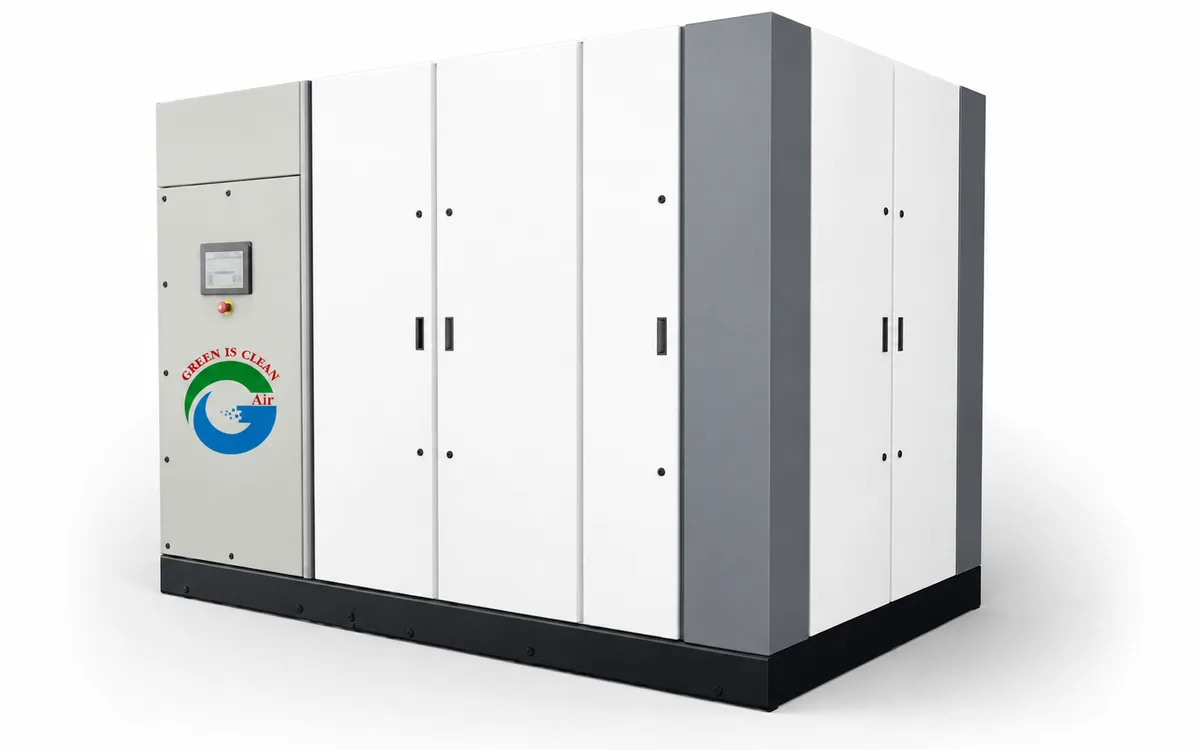
Two-stage oil-free compressors 200 – 355 kW
Large Class 0 machines for central, round-the-clock plant rooms.
- Free air delivery
- 11.6 – 53.3 m³/min
- Working pressure
- 7 – 10 bar g
- Motor power
- 200 – 355 kW
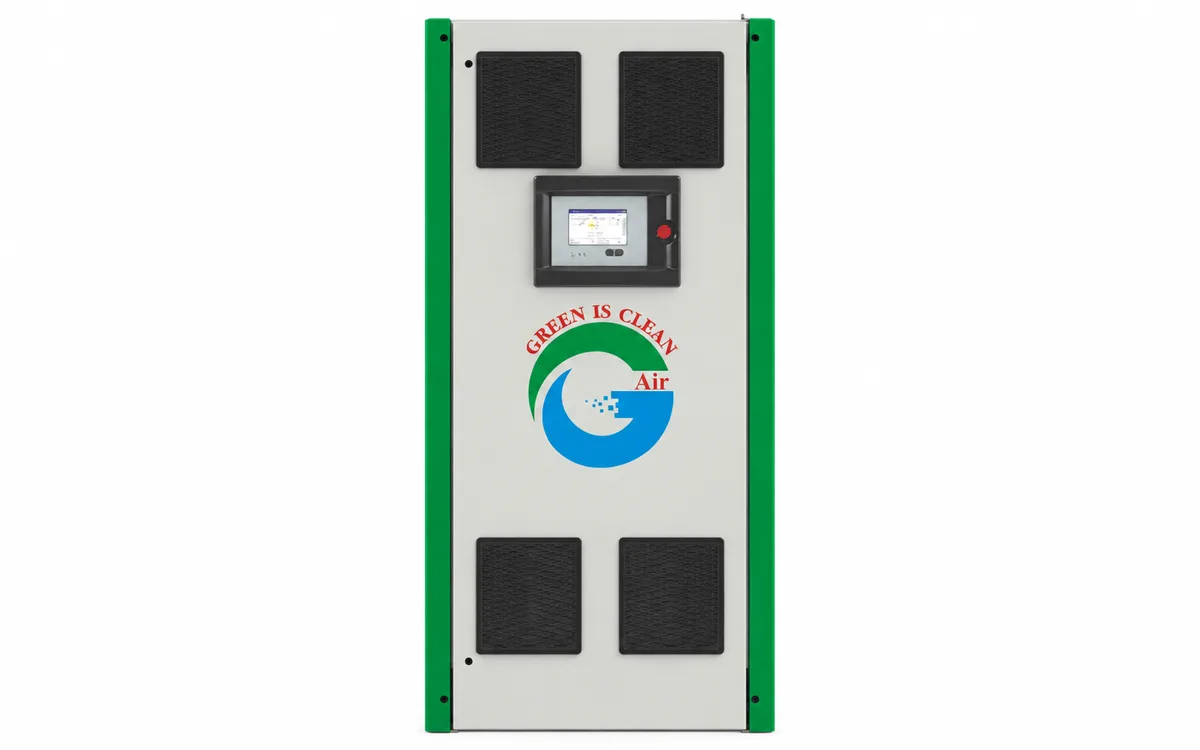
Two-stage variable speed oil-free compressors
Class 0 air that tracks demand instead of blowing it away.
- Free air delivery
- 4.4 – 22.2 m³/min
- Working pressure
- 4 – 10 bar g
- Motor power
- 55 – 132 kW
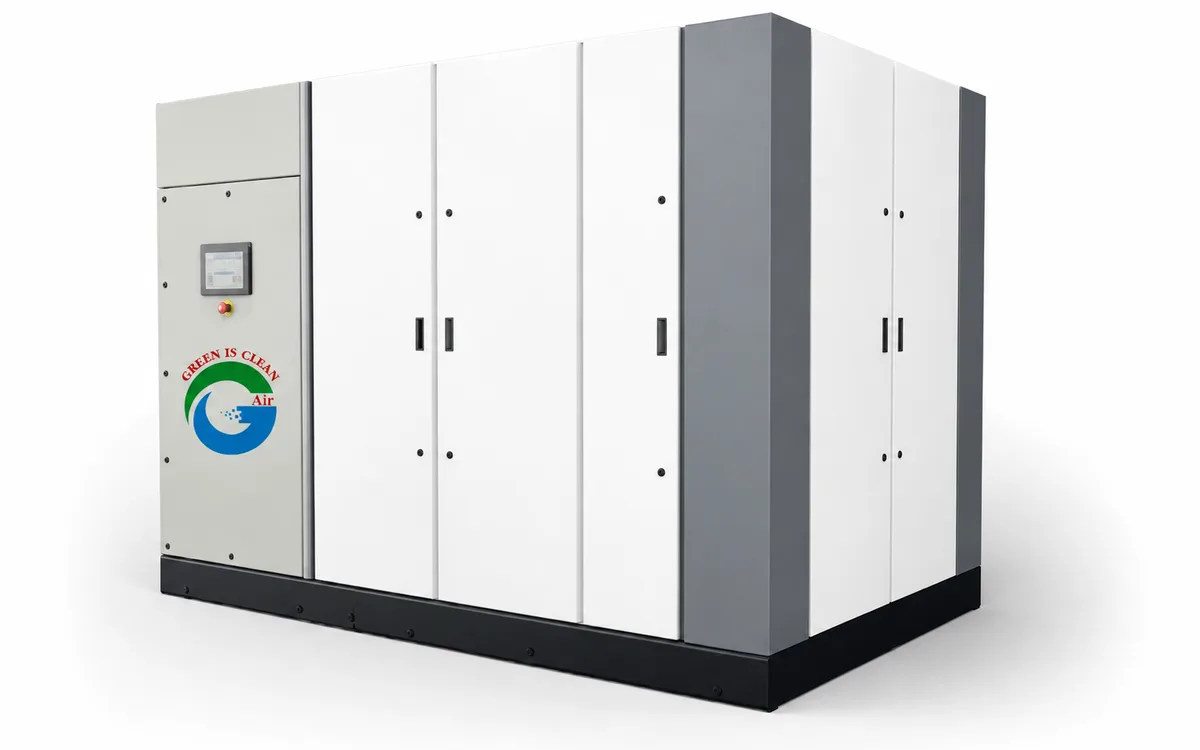
Heat recovery for oil-free compressors
Turn up to 94% of compressor input power into usable hot water.
Learn moreKey benefits
Certified, not claimed
Independently tested to ISO 8573-1 Class 0, certificate supplied per machine.
No oily condensate
Nothing to separate, nothing to dispose of, nothing to declare.
Lower filtration losses
Removes several stages of coalescing filters and the pressure drop they cause.
Two-stage efficiency
Two-stage models cut specific energy by 8 – 12% against single-stage.
What oil free actually means
There is no lubricant anywhere in the compression chamber. The rotors are timed by gears and never touch each other or any oil, which is a different thing from filtering oil out afterwards.
A filtered oil injected machine leaves one to three milligrams a cubic metre in the air and depends on elements that fail silently. An oil free machine has nothing to remove.
The certification that matters is ISO 8573-1 Class 0, independently tested, covering total oil including vapour.
- No lubricant in the compression chamber
- Rotors timed by gears, never touching
- Certified to ISO 8573-1 Class 0
- Total oil including vapour covered
- No coalescing filter pressure drop
- No oily condensate to treat
- Single stage and two stage builds
- Variable speed available
Is it worth it for you
Only if contamination would actually cost you something. In a fabrication shop it is irrelevant. In a dairy or a tablet press room one contaminated batch costs more than the price difference.
There are savings on the other side too. No coalescing filters means about four tenths of a bar of pressure drop you do not pay for, and no oily condensate to separate.
You still need a dryer. Oil free says nothing about water, and drying to the dew point the process needs is a separate decision.
- Worth it where contamination has a cost
- Not worth it in general workshop air
- Saves about 0.4 bar of filter pressure drop
- No oil water separator needed
- Drying is still a separate requirement
- Certificate supplied and reissued
- Compared honestly against oil injected
- Ten year cost shown for both
Datasheets in this range
Two pages each: what the machine is, what it is for, and the measured table. Built from this site, so a sheet can never say something the page does not.
Frequently asked questions
What does oil-free actually mean?
That there is no lubricant anywhere in the compression chamber. The rotors are timed by gears and never touch each other or any oil. It is not the same as an oil-injected machine with good filtration downstream.
What is ISO 8573-1 Class 0?
The strictest class in the standard: no measurable oil at all, including vapour and aerosol, not merely a low figure. Every machine we supply comes with its certificate.
Do I still need filters with an oil-free compressor?
Particulate filtration, yes: pipe scale and intake dust still exist. But you can drop the coalescing and carbon stages, which removes about 0.4 bar of permanent pressure drop and the energy that goes with it.
Do I still need a dryer?
Yes, oil-free says nothing about water. The machine still draws in humid ambient air, so you dry to whatever pressure dew point your process requires exactly as you would with any other compressor.
Why are oil-free machines so much more expensive?
Without oil to seal the gap between the rotors, they have to be manufactured to far tighter tolerances, coated, and timed by precision gears. That is a fundamentally more expensive machine to build, not a price premium for a badge.
Which industries genuinely need oil-free?
Food and beverage, pharmaceutical, electronics, hospitals and textile air-jet weaving. In a fabrication shop or a vehicle workshop it is money spent on a risk you do not have.
Is filtered oil-injected air as good as oil-free?
On paper it gets close. The difference is what happens when a filter element fails or is not changed on time, with an oil-free machine there is nothing to fail. That is a risk decision, not a technical one.
What maintenance does an oil-free machine need?
Intake filters, gearbox oil, coolers and the rotor coating inspection. There is no separator element and no oil in the air path, so consumable cost is lower, though the scheduled interventions are more specialised.
What about the condensate?
It is clean water. Nothing oily leaves the machine, so there is no oil-water separator to buy or maintain and nothing to declare to an environmental inspector.
Single-stage or two-stage?
Two-stage compresses in two smaller steps with cooling in between, which cuts specific energy by 8–12%. Above about 37 kW and continuous running, it pays for itself. Below that, single-stage is usually the sensible choice.
Related products
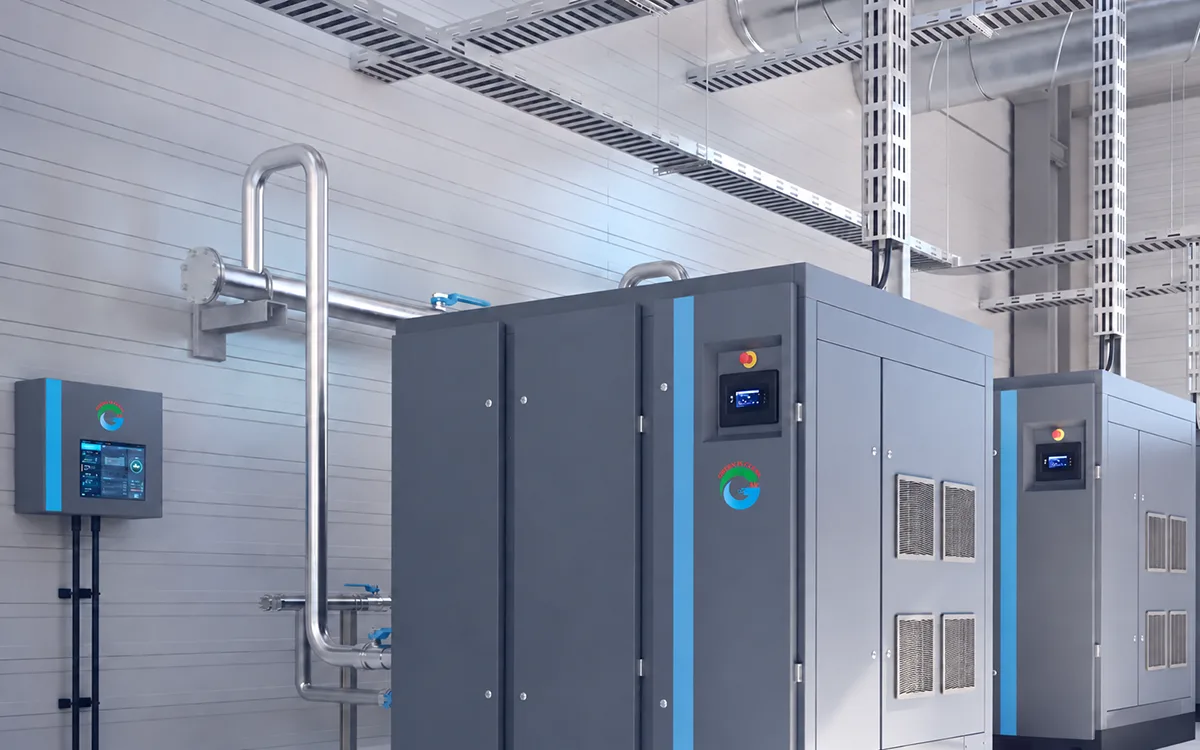
Rotary screw air compressors
The default choice for continuous industrial air, 2.2 to 250 kW.
- Free air delivery
- 0.2 – 109.0 m³/min
- Working pressure
- 2 – 35 bar g
- Motor power
- 2 – 355 kW
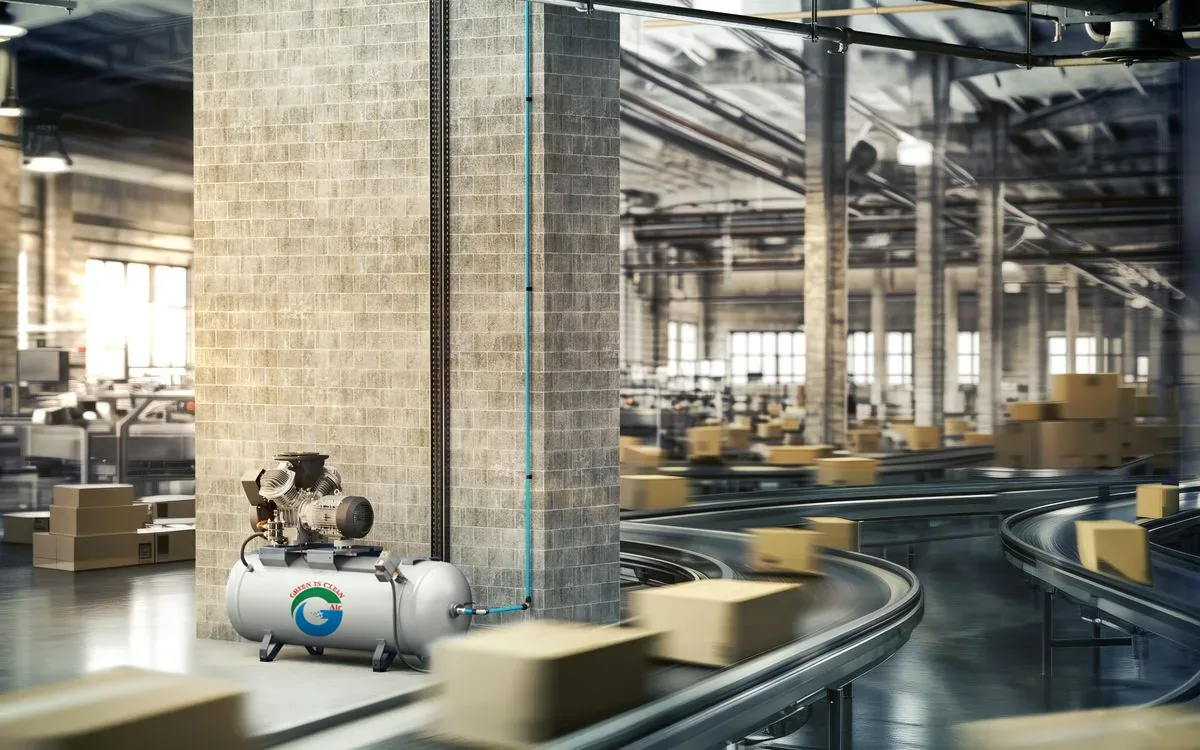
Piston air compressors
Reciprocating machines for intermittent and high-pressure duties.
- Free air delivery
- 0.1 – 25.0 m³/min (229 – 882 cfm)
- Working pressure
- 10 – 1,000 bar g
- Motor power
- 2 – 250 kW
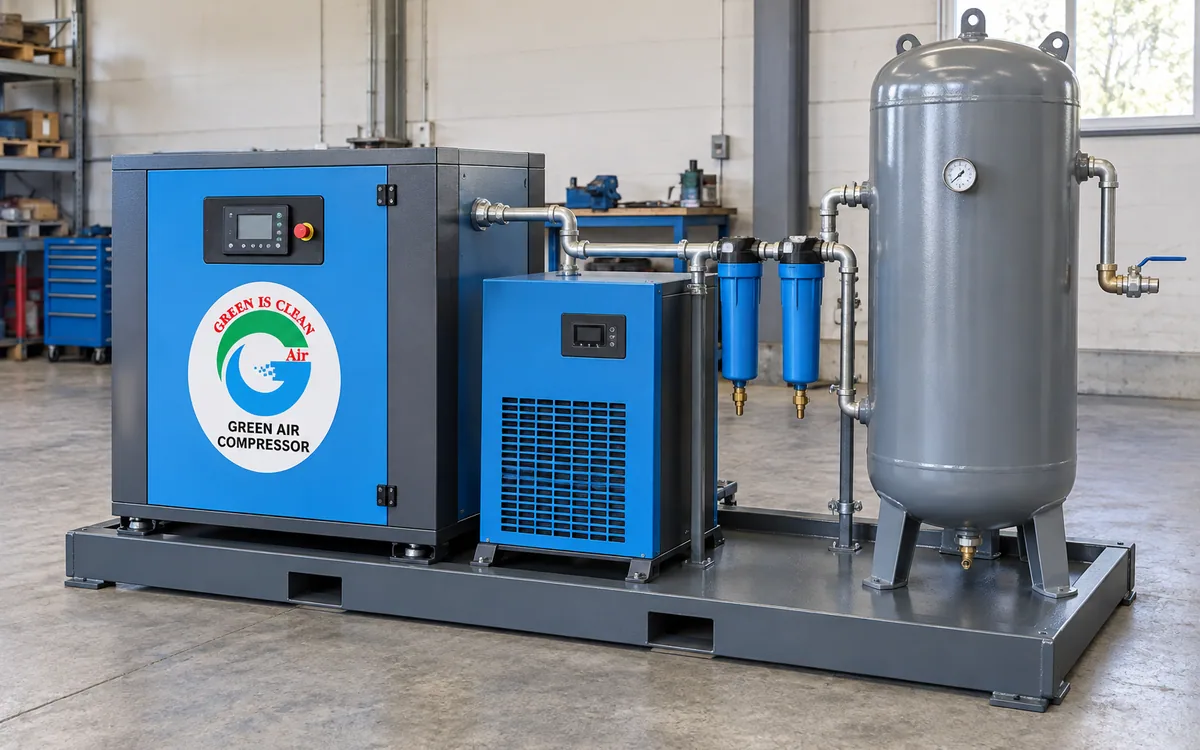
Packaged and integrated air stations
Compressor, dryer, filters and receiver supplied as one item.
- Free air delivery
- 0.3 – 25.0 m³/min (9 – 64 cfm)
- Working pressure
- 7 – 30 bar g
- Motor power
- 4 – 250 kW
Not sure which model you need?
Send us your air demand, working pressure and running hours. Our engineers will size the machine and send a written recommendation, no cost, no obligation.