
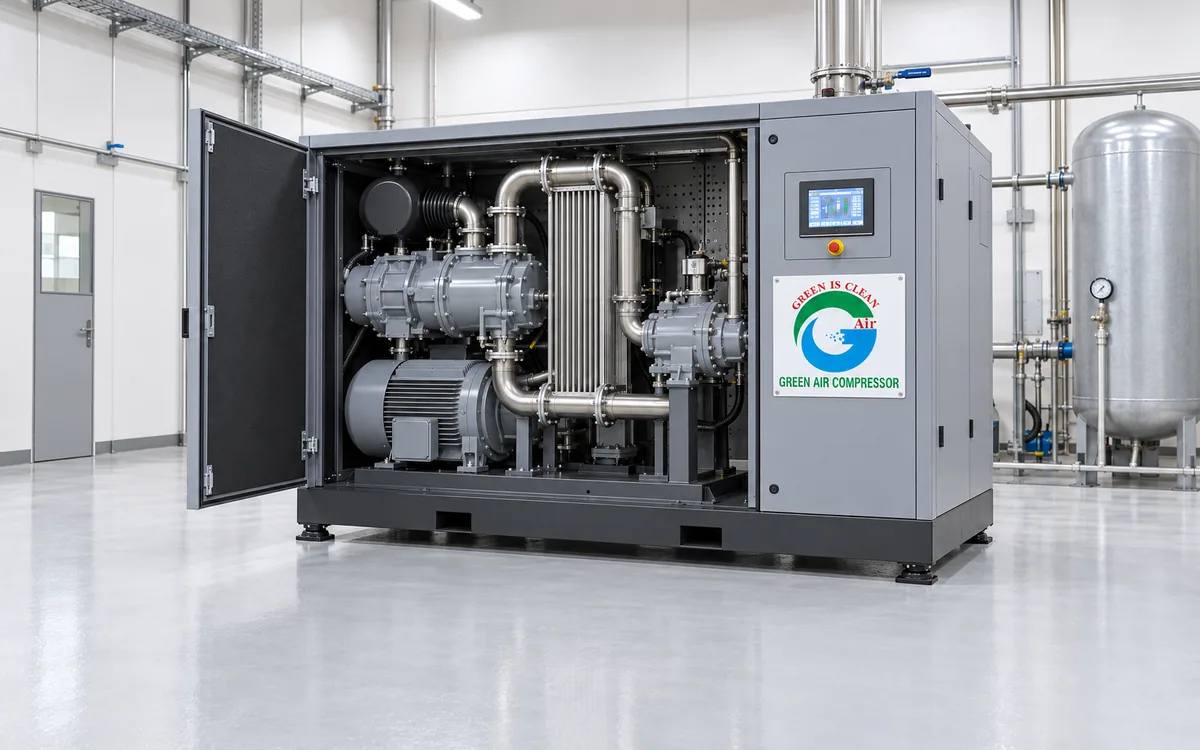
概述
Oil-free means the compression chamber contains no lubricant at all, not that the oil is filtered out afterwards. For regulated industries that distinction is the whole point, because a filter can fail without warning and a machine with no oil in it cannot.
The range covers single-stage and two-stage machines from 22 to 355 kW, in fixed and variable speed, with full ISO 8573-1 Class 0 certification.
本系列包含
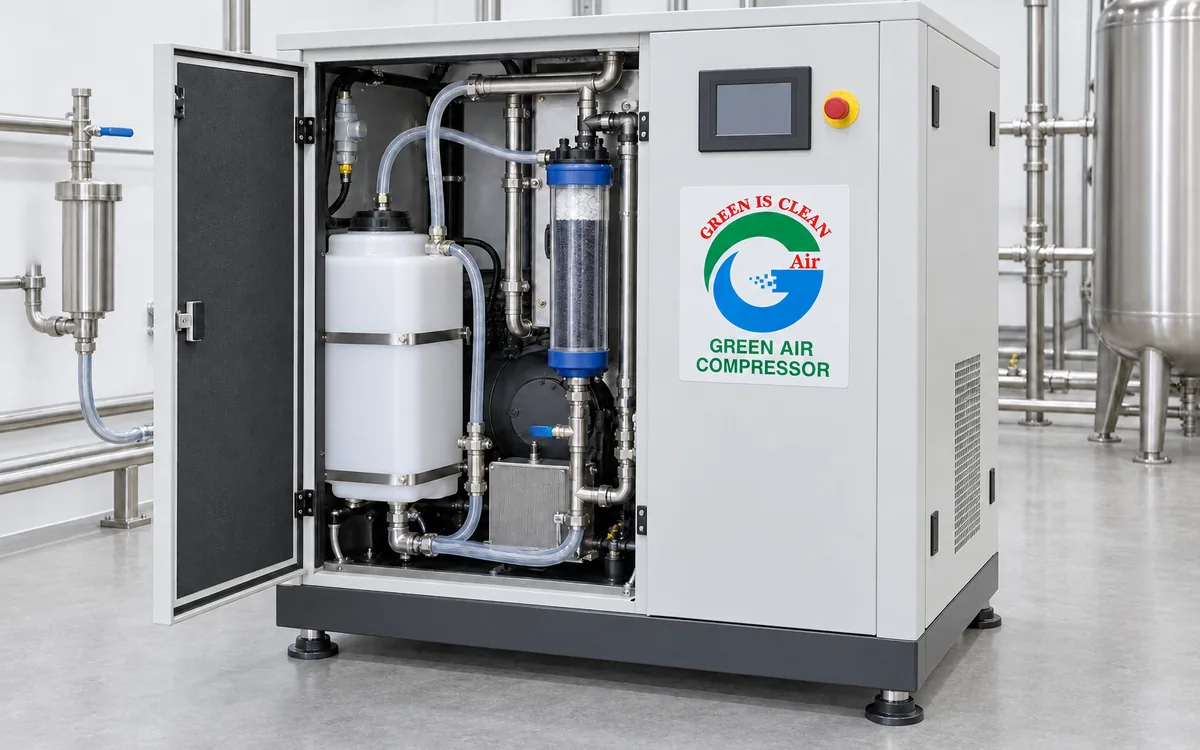
水润滑无油空压机
用水代替油来密封和冷却转子。Class 0 空气,5.5 至 160 kW。
- 容积流量(FAD)
- 0.3 – 27.0 m³/min
- 工作压力
- 7 – 10 bar g
- 电机功率
- 6 – 160 kW
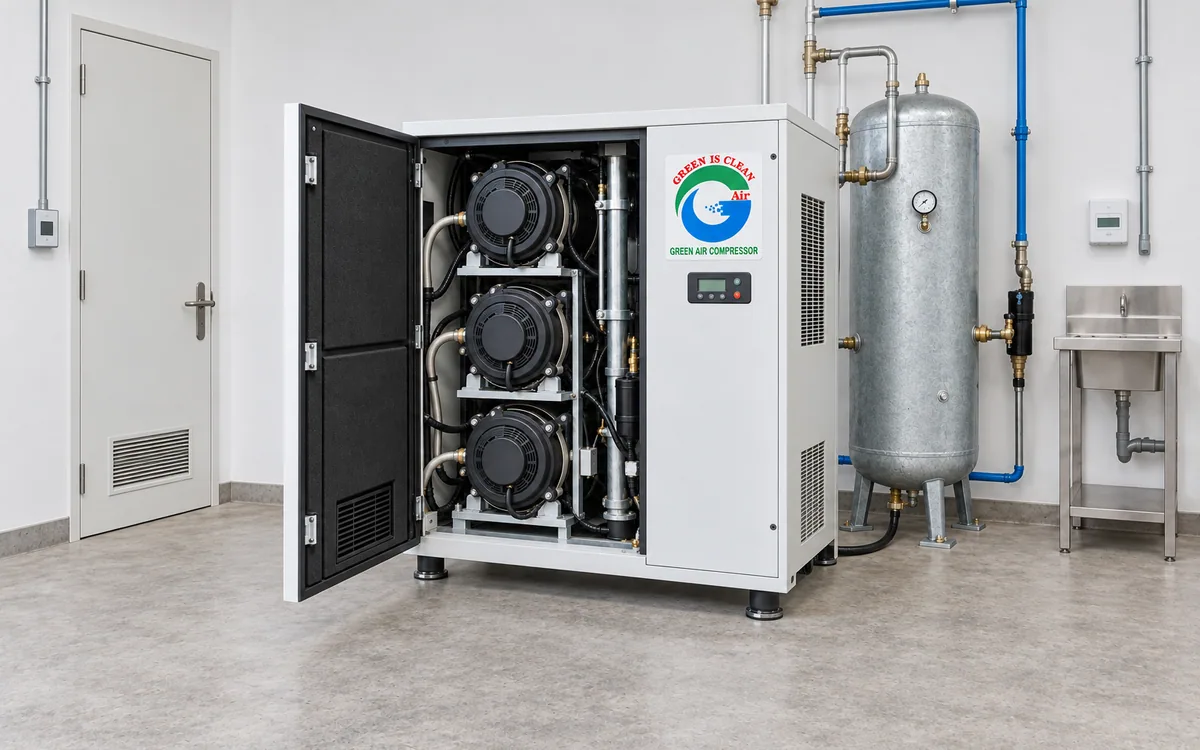
无油涡旋空压机
安静、小巧、真正无油。7.5 至 37 kW,8 bar g。
- 容积流量(FAD)
- 0.8 – 4.0 m³/min
- 工作压力
- 8 bar g
- 电机功率
- 8 – 37 kW
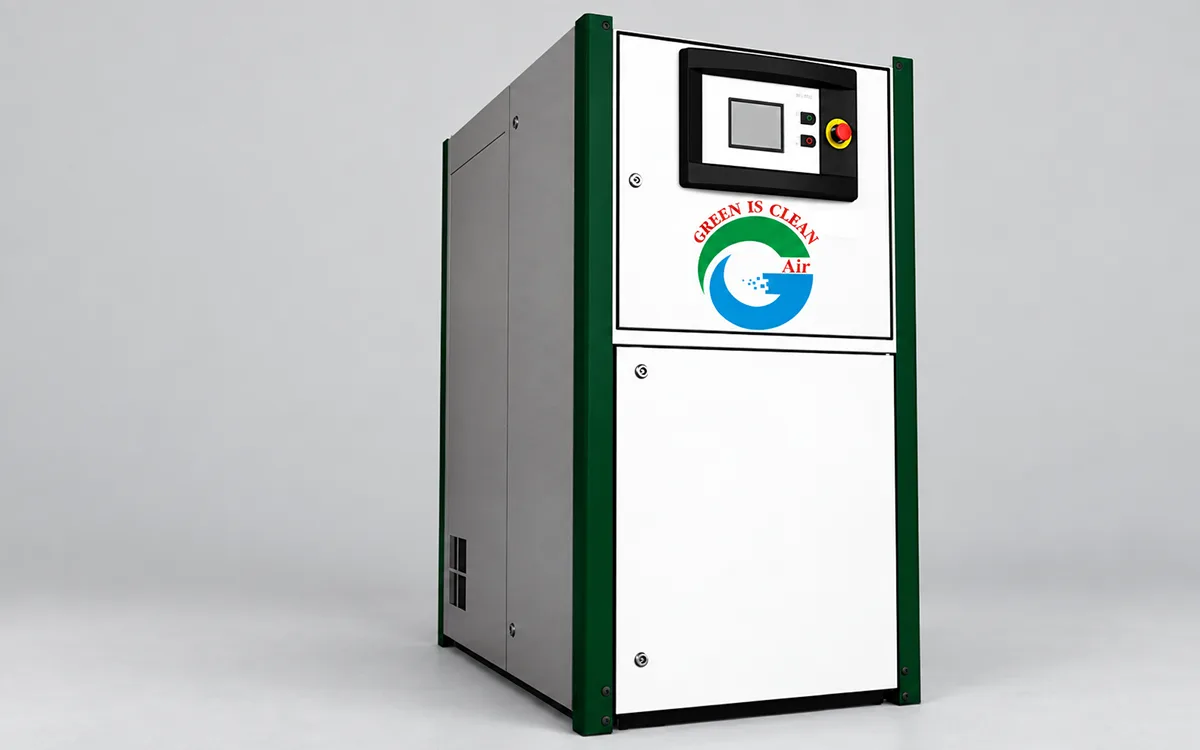
无油螺杆空压机
Class 0 空气,压缩腔内任何位置都没有油。
- 容积流量(FAD)
- 0.3 – 6.9 m³/min
- 工作压力
- 5 – 10 bar g
- 电机功率
- 15 – 37 kW
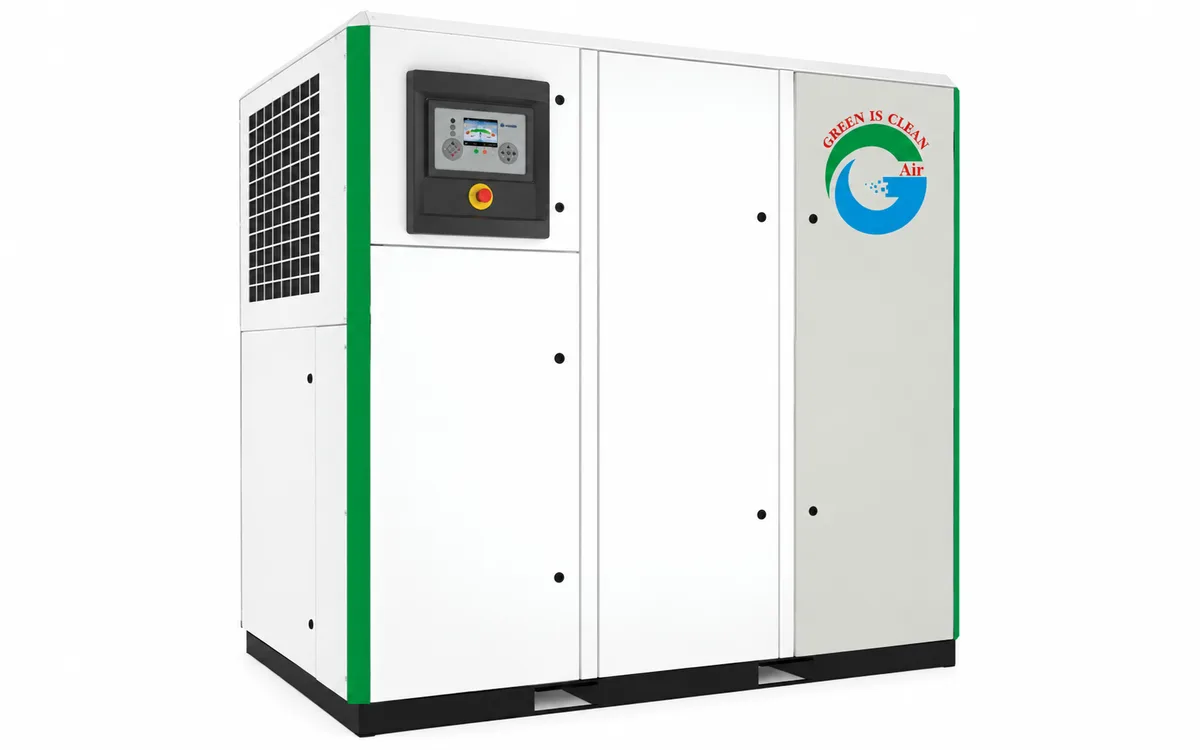
双级无油空压机 37 – 75 kW
两级压缩加中间冷却,每立方米耗电更低。
- 容积流量(FAD)
- 5.1 – 12.7 m³/min
- 工作压力
- 7 – 10 bar g
- 电机功率
- 37 – 75 kW
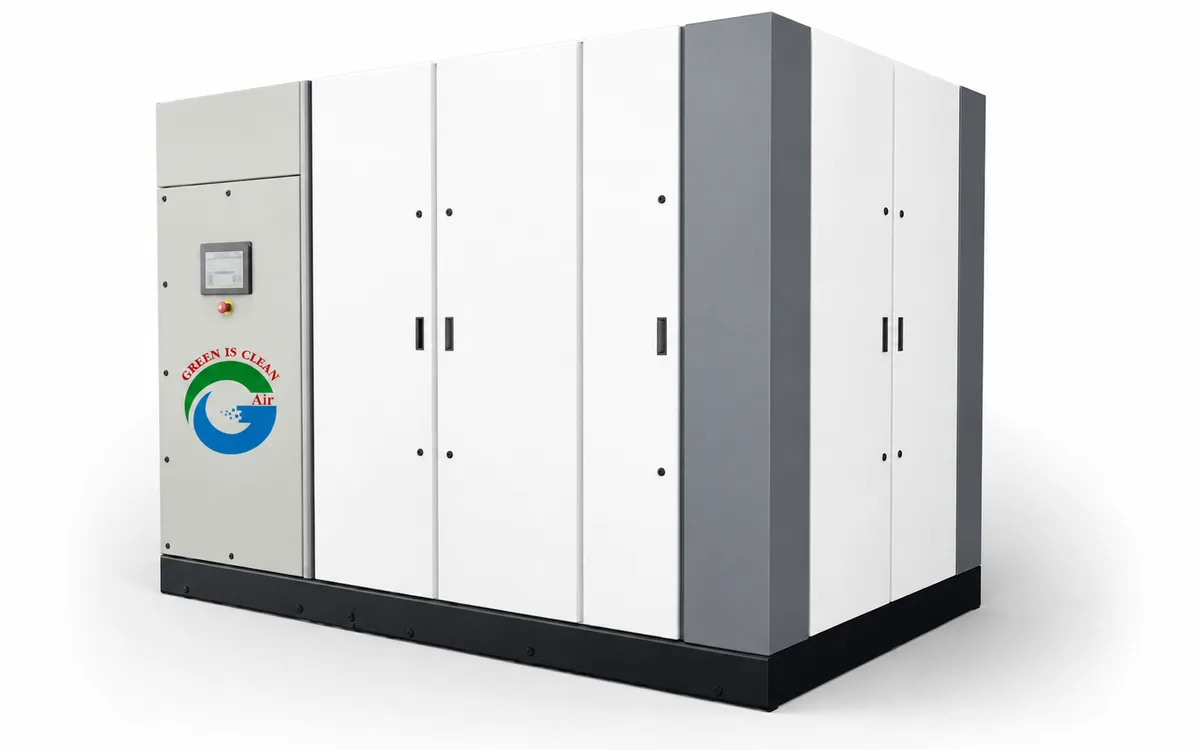
双级无油空压机 200 – 355 kW
面向集中式、全天候机房的大型 Class 0 机器。
- 容积流量(FAD)
- 11.6 – 53.3 m³/min
- 工作压力
- 7 – 10 bar g
- 电机功率
- 200 – 355 kW
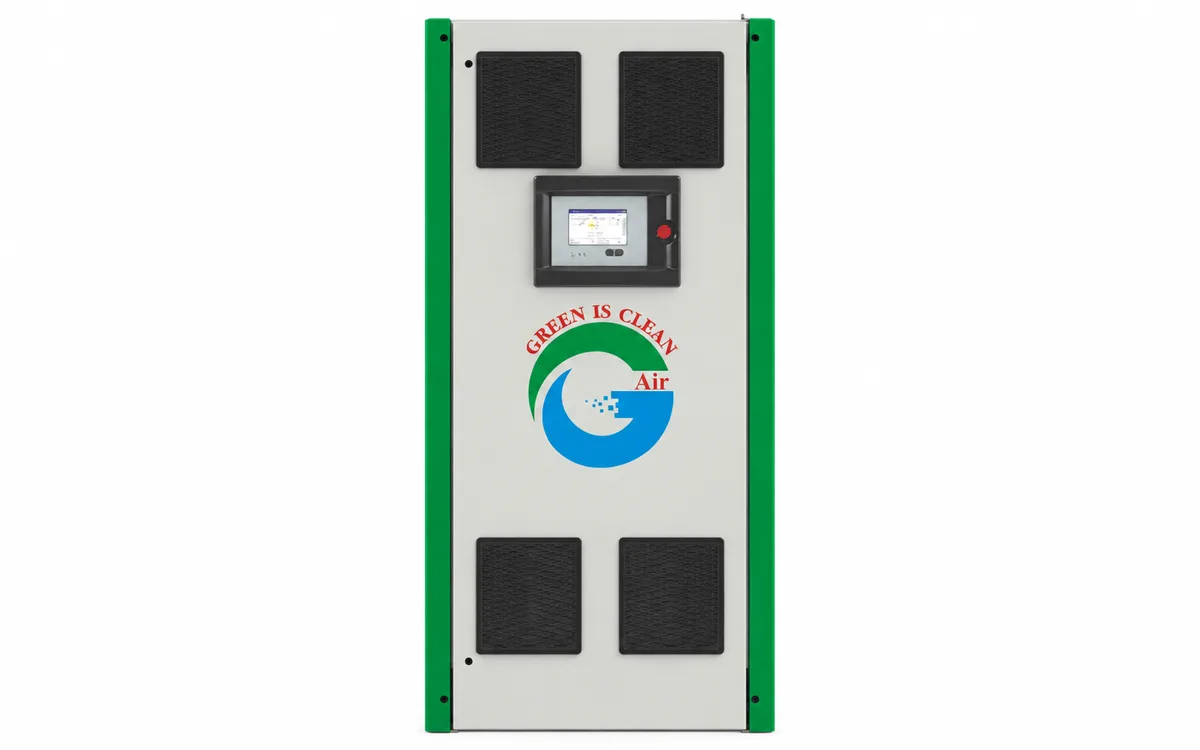
双级变频无油空压机
Class 0 空气跟着需求走,而不是白白放掉。
- 容积流量(FAD)
- 4.4 – 22.2 m³/min
- 工作压力
- 4 – 10 bar g
- 电机功率
- 55 – 132 kW
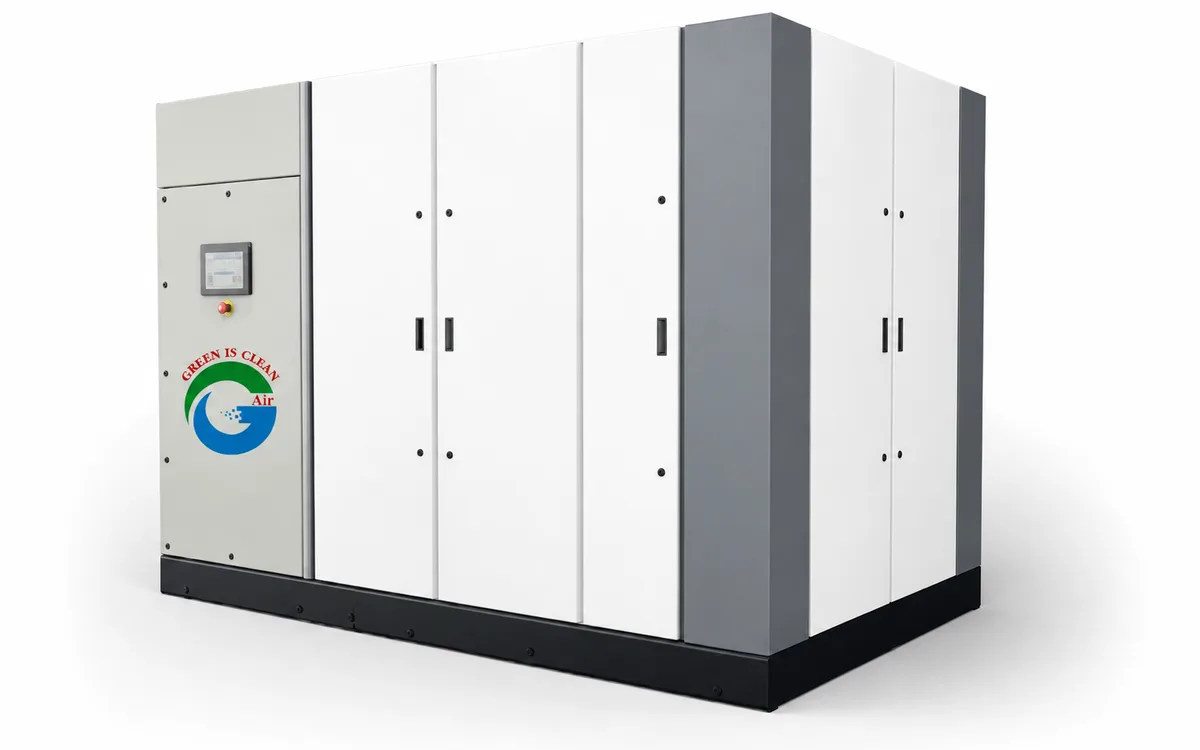
无油空压机热回收
把高达 94% 的输入功率变成可用的热水。
了解更多主要优势
Certified, not claimed
Independently tested to ISO 8573-1 Class 0, certificate supplied per machine.
No oily condensate
Nothing to separate, nothing to dispose of, nothing to declare.
Lower filtration losses
Removes several stages of coalescing filters and the pressure drop they cause.
Two-stage efficiency
Two-stage models cut specific energy by 8 – 12% against single-stage.
无油到底是什么意思
压缩腔内任何位置都没有润滑剂。转子由同步齿轮定时,彼此不接触,也不接触任何油——这和事后把油过滤掉完全是两回事。
一台带过滤的喷油机会在空气中留下每立方米一到三毫克的油,而且要依赖会无声失效的滤芯。无油机根本没有需要去除的东西。
真正要紧的认证是 ISO 8573-1 Class 0,由独立机构测试,涵盖包括油蒸气在内的总含油量。
- 压缩腔内没有润滑剂
- 转子由齿轮定时,从不接触
- 按 ISO 8573-1 Class 0 认证
- 涵盖包括油蒸气在内的总含油量
- 没有聚结过滤器的压降
- 没有含油冷凝水需要处理
- 单级与双级两种机型
- 可选变频
对您来说值不值
只有在污染确实会让您付出代价的时候才值。在钣金车间里它无关紧要;在乳品厂或压片车间里,一个被污染的批次就比差价贵。
另一头也有省下的钱。没有聚结过滤器意味着少了大约零点四 bar 的压降,也没有含油冷凝水需要分离。
您仍然需要干燥机。无油和水没有关系,干燥到工艺所需的露点是另一个单独的决定。
- 在污染有代价的地方值得
- 一般车间用气不值得
- 省下约 0.4 bar 的过滤压降
- 不需要油水分离器
- 干燥仍是一项单独的要求
- 提供证书,并在作业后重新出具
- 与喷油机如实比较
- 两者的十年成本都摆出来
本系列的数据表
每份两页:这台机器是什么、用在哪里,以及实测数据表。内容由本站生成,因此数据表不可能说出页面上没有的话。
常见问题
What does oil-free actually mean?
That there is no lubricant anywhere in the compression chamber. The rotors are timed by gears and never touch each other or any oil. It is not the same as an oil-injected machine with good filtration downstream.
What is ISO 8573-1 Class 0?
The strictest class in the standard: no measurable oil at all, including vapour and aerosol, not merely a low figure. Every machine we supply comes with its certificate.
Do I still need filters with an oil-free compressor?
Particulate filtration, yes: pipe scale and intake dust still exist. But you can drop the coalescing and carbon stages, which removes about 0.4 bar of permanent pressure drop and the energy that goes with it.
Do I still need a dryer?
Yes, oil-free says nothing about water. The machine still draws in humid ambient air, so you dry to whatever pressure dew point your process requires exactly as you would with any other compressor.
Why are oil-free machines so much more expensive?
Without oil to seal the gap between the rotors, they have to be manufactured to far tighter tolerances, coated, and timed by precision gears. That is a fundamentally more expensive machine to build, not a price premium for a badge.
Which industries genuinely need oil-free?
Food and beverage, pharmaceutical, electronics, hospitals and textile air-jet weaving. In a fabrication shop or a vehicle workshop it is money spent on a risk you do not have.
Is filtered oil-injected air as good as oil-free?
On paper it gets close. The difference is what happens when a filter element fails or is not changed on time, with an oil-free machine there is nothing to fail. That is a risk decision, not a technical one.
What maintenance does an oil-free machine need?
Intake filters, gearbox oil, coolers and the rotor coating inspection. There is no separator element and no oil in the air path, so consumable cost is lower, though the scheduled interventions are more specialised.
What about the condensate?
It is clean water. Nothing oily leaves the machine, so there is no oil-water separator to buy or maintain and nothing to declare to an environmental inspector.
Single-stage or two-stage?
Two-stage compresses in two smaller steps with cooling in between, which cuts specific energy by 8–12%. Above about 37 kW and continuous running, it pays for itself. Below that, single-stage is usually the sensible choice.
相关产品
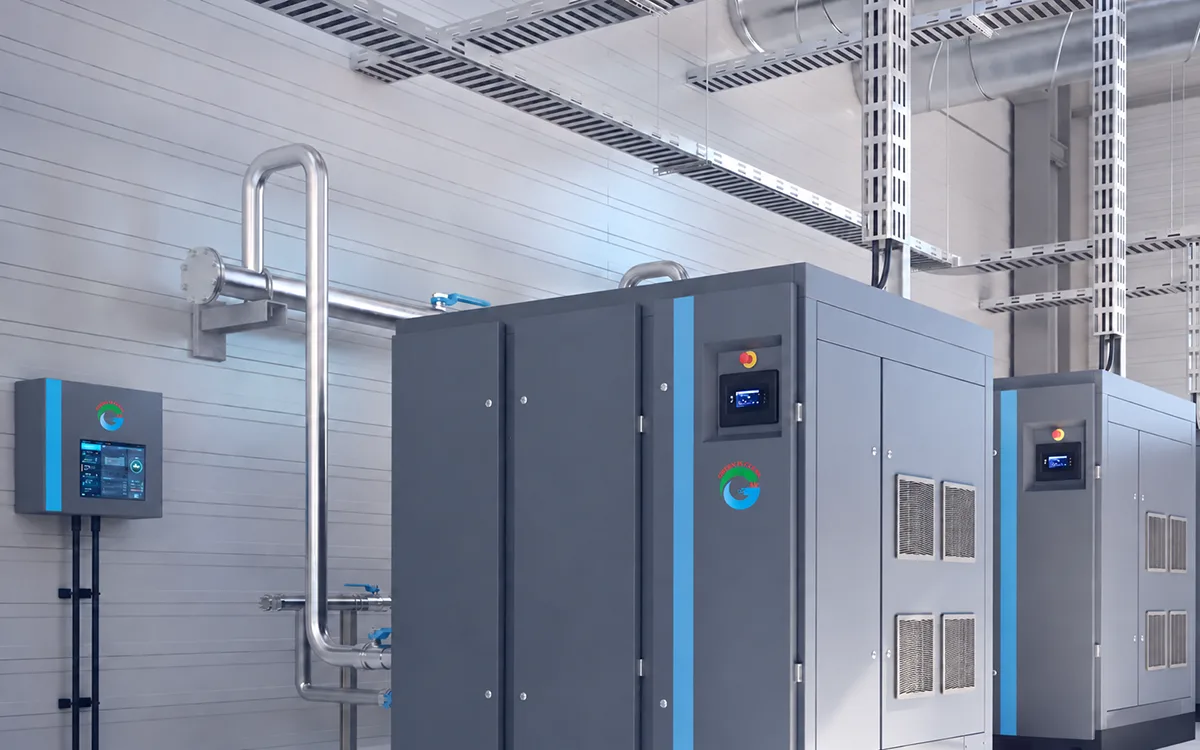
螺杆式空气压缩机
连续工业用气的首选,2.2 至 250 kW。
- 容积流量(FAD)
- 0.2 – 109.0 m³/min
- 工作压力
- 2 – 35 bar g
- 电机功率
- 2 – 355 kW
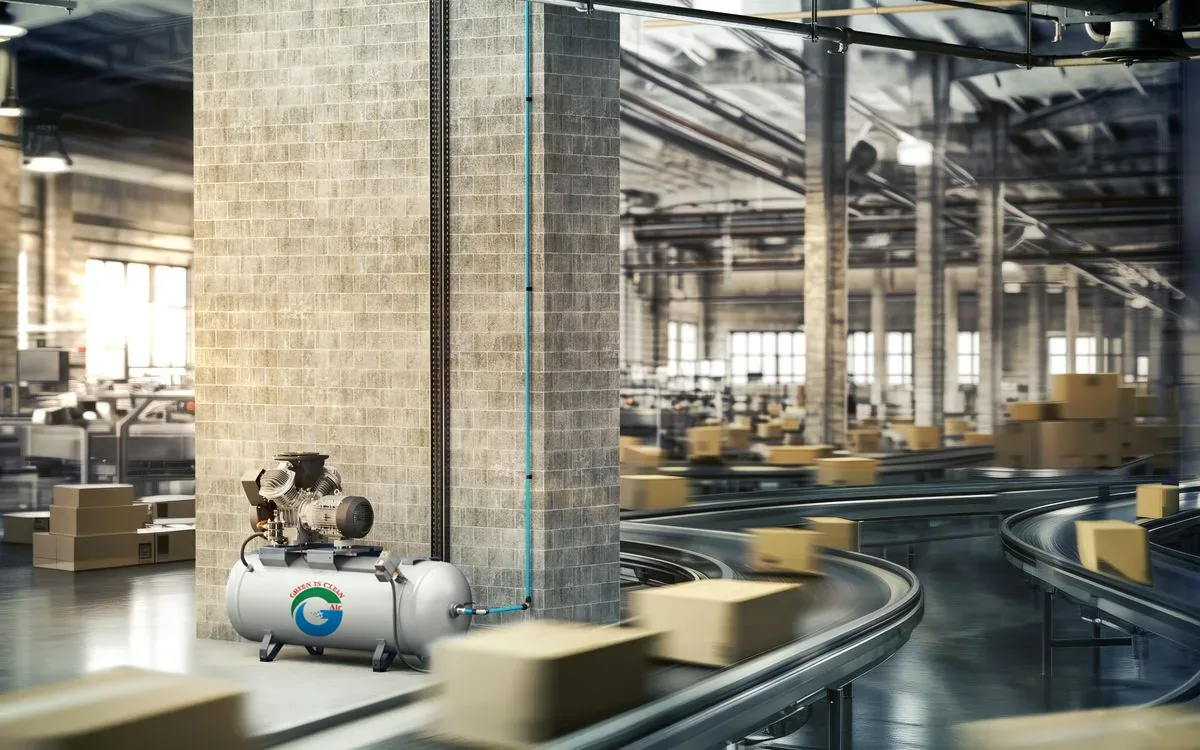
活塞式空气压缩机
适用于间歇工况与高压场合的往复式机器。
- 容积流量(FAD)
- 0.1 – 25.0 m³/min (229 – 882 cfm)
- 工作压力
- 10 – 1,000 bar g
- 电机功率
- 2 – 250 kW
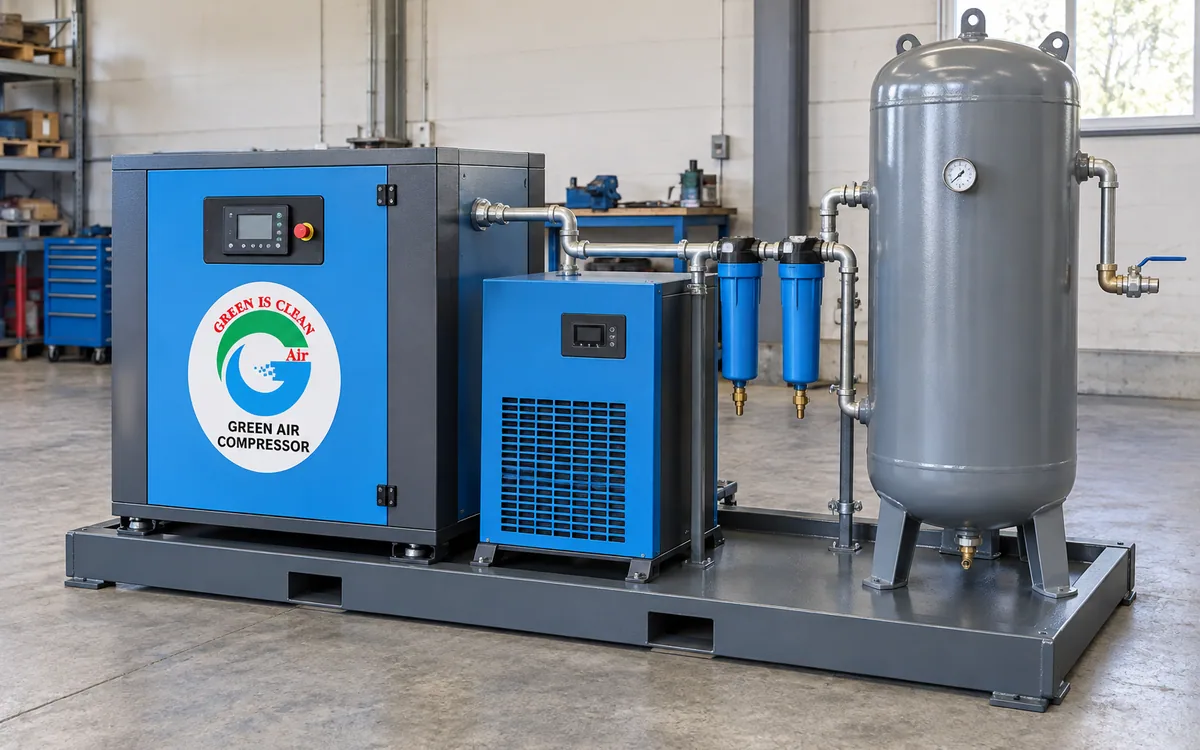
成套一体化空压站
压缩机、干燥机、过滤器与储气罐,作为一件设备交付。
- 容积流量(FAD)
- 0.3 – 25.0 m³/min (9 – 64 cfm)
- 工作压力
- 7 – 30 bar g
- 电机功率
- 4 – 250 kW
不确定该选哪个型号?
把您的用气量、工作压力和运行小时数发给我们。我们的工程师会完成选型并给出书面建议,不收费,也不构成任何义务。