
氨压缩机
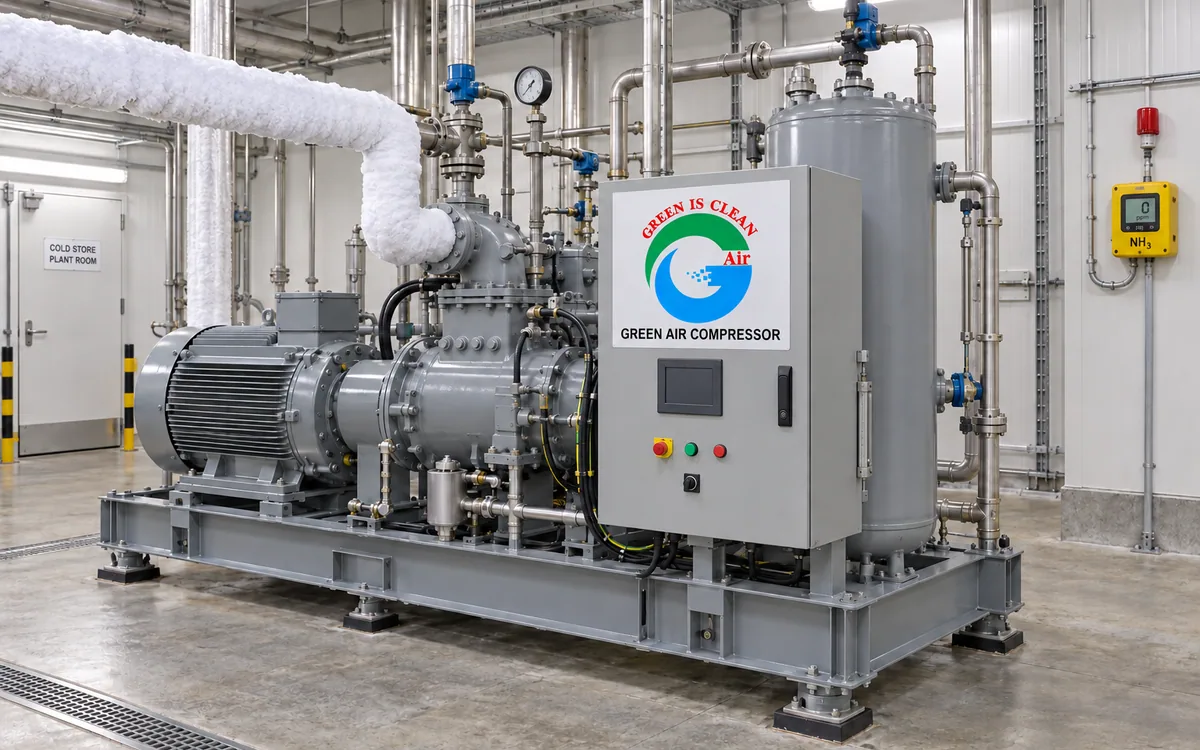
制冷与工艺工况,面对一种会侵蚀错用材料的气体。
技术参数
- 容积流量(FAD)
- 100 – 3,500 Nm³/h
- 工作压力
- 16 – 40 bar g
- 电机功率
- 6 – 75 kW
概述
Ammonia is an excellent refrigerant — high latent heat, cheap, and with no ozone or global warming penalty — which is why industrial cold stores and food plants keep using it. It is also toxic and it attacks copper and copper alloys, so the machine and everything around it is built in steel.
These are compressors for industrial refrigeration and for process ammonia duties, built with no copper in the gas path, with seals selected for ammonia, and with the safety instrumentation the gas requires.
主要优势
No copper in the gas path
Ammonia attacks copper and its alloys. Wetted parts are steel and the seals are chosen to suit.
Built for refrigeration duty
Economiser ports, oil management and capacity control arranged for a refrigeration circuit rather than for air.
Safety instrumentation included
Detection, isolation and the shutdown logic the gas demands, specified with the machine.
Screw and reciprocating
Screw for continuous plant duty, reciprocating where the load is small or highly variable.
Why plants keep choosing ammonia
Thermodynamically it is very hard to beat. An ammonia plant uses meaningfully less energy than the equivalent on a synthetic refrigerant, and the refrigerant itself costs almost nothing to replace.
It also has no phase out date. Synthetic refrigerants have been through several generations of regulation and each one has stranded somebody's plant. Ammonia has been used for over a century and no regulator is proposing to ban it.
The cost is that it is toxic and it must be engineered properly: machinery room ventilation, detection, and an emergency plan. That is a design cost rather than a running cost, and for a plant of any size it is repaid quickly.
- Lower energy than synthetic refrigerants
- No phase out risk
- Cheap to replace
- Steel gas path, no copper
- Machinery room ventilation and detection required
- Economised screw or reciprocating builds
What we need to quote
Gas compressors are not selected from a catalogue. The gas itself decides the materials, the seals and the safety case, and two plants asking for the same machine on paper often need different builds.
Four answers cover most of it: the gas and its composition, the suction pressure and temperature, the discharge pressure required, and the flow. With those we can size the machine and tell you whether it should be a screw, a reciprocating or a centrifugal.
Then the site questions. Area classification, whether the gas is wet or contains hydrogen sulphide, what the local authority requires, and whether the duty can stop. Those decide the seal arrangement and whether you need one machine or two.
- Gas composition and molecular weight
- Suction pressure and temperature
- Discharge pressure required
- Flow, normal and maximum
- Area classification
- Whether the duty can be interrupted
机型范围
- 25 bar g
- 100 Nm³/h
- 外形尺寸 长 x 宽 x 高
- 1000 × 580 × 870 mm
- 40 bar g
- 260 Nm³/h
- 外形尺寸 长 x 宽 x 高
- 1000 × 580 × 870 mm
- 30 bar g
- 300 Nm³/h
- 外形尺寸 长 x 宽 x 高
- 1000 × 580 × 870 mm
- 25 bar g
- 220 Nm³/h
- 外形尺寸 长 x 宽 x 高
- 1000 × 580 × 870 mm
- 30 bar g
- 420 Nm³/h
- 外形尺寸 长 x 宽 x 高
- 1000 × 580 × 870 mm
- 40 bar g
- 510 Nm³/h
- 外形尺寸 长 x 宽 x 高
- 1000 × 580 × 870 mm
- 30 bar g
- 540 Nm³/h
- 外形尺寸 长 x 宽 x 高
- 1000 × 580 × 870 mm
- 40 bar g
- 660 Nm³/h
- 外形尺寸 长 x 宽 x 高
- 1000 × 580 × 870 mm
- 25 bar g
- 330 Nm³/h
- 外形尺寸 长 x 宽 x 高
- 1000 × 580 × 870 mm
- 24 bar g
- 550 Nm³/h
- 外形尺寸 长 x 宽 x 高
- 1000 × 580 × 870 mm
- 30 bar g
- 630 Nm³/h
- 外形尺寸 长 x 宽 x 高
- 1000 × 580 × 870 mm
- 16 bar g
- 450 Nm³/h
- 外形尺寸 长 x 宽 x 高
- 1100 × 740 × 960 mm
- 24 bar g
- 750 Nm³/h
- 外形尺寸 长 x 宽 x 高
- 1000 × 580 × 870 mm
- 24 bar g
- 920 Nm³/h
- 外形尺寸 长 x 宽 x 高
- 1000 × 580 × 870 mm
- 16 bar g
- 600 Nm³/h
- 外形尺寸 长 x 宽 x 高
- 1100 × 740 × 960 mm
- 16 bar g
- 750 Nm³/h
- 外形尺寸 长 x 宽 x 高
- 1100 × 740 × 960 mm
- 24 bar g
- 1,380 Nm³/h
- 外形尺寸 长 x 宽 x 高
- 1000 × 580 × 870 mm
- 16 bar g
- 950 Nm³/h
- 外形尺寸 长 x 宽 x 高
- 1400 × 900 × 1180 mm
- 30 bar g
- 1,710 Nm³/h
- 外形尺寸 长 x 宽 x 高
- 1400 × 900 × 1180 mm
- 16 bar g
- 1,200 Nm³/h
- 外形尺寸 长 x 宽 x 高
- 1400 × 900 × 1180 mm
- 24 bar g
- 1,500 Nm³/h
- 外形尺寸 长 x 宽 x 高
- 1000 × 580 × 870 mm
- 16 bar g
- 1,500 Nm³/h
- 外形尺寸 长 x 宽 x 高
- 1400 × 900 × 1180 mm
- 24 bar g
- 1,880 Nm³/h
- 外形尺寸 长 x 宽 x 高
- 1000 × 580 × 870 mm
- 16 bar g
- 1,800 Nm³/h
- 外形尺寸 长 x 宽 x 高
- 1400 × 900 × 1180 mm
- 24 bar g
- 2,250 Nm³/h
- 外形尺寸 长 x 宽 x 高
- 1000 × 580 × 870 mm
- 24 bar g
- 3,000 Nm³/h
- 外形尺寸 长 x 宽 x 高
- 1600 × 900 × 1200 mm
- 24 bar g
- 3,500 Nm³/h
- 外形尺寸 长 x 宽 x 高
- 1600 × 900 × 1200 mm
容积流量按 ISO 1217 第四版附录 C 与 E 实测,进气 1 bar(a)、20°C、湿度 0%。噪声按 ISO 2151 在自由场条件下测量,公差 ± 3 dB(A)。每款机型均有水冷版本,可向我们索取其数据表。
常见问题
Is ammonia safe to use?
It is used safely at scale across the world, and the engineering that makes it safe — ventilation, detection, isolation — is well established. It is not a system to improvise.
Why not a synthetic refrigerant?
Higher energy cost, expensive refrigerant, and a regulatory history of phase outs. For an industrial plant of any size ammonia usually wins on both counts.
Can existing copper pipework be used?
No. Ammonia attacks copper and its alloys. The circuit has to be steel throughout, including anything reused from an earlier plant.
How much less energy does it use?
Typically ten to twenty per cent against a synthetic refrigerant plant of the same duty, and the refrigerant itself costs almost nothing to replace.
What does the machinery room need?
Ventilation, gas detection, emergency isolation and an emergency plan. It is a design cost rather than a running cost and it is not optional.
Screw or reciprocating?
Screw for continuous plant duty and economised operation; reciprocating where the load is small or highly variable. We size both and show the comparison.
What is an economiser port?
A second suction at an intermediate pressure. It increases capacity and efficiency on a refrigeration cycle and is one of the reasons screw machines dominate this duty.
How is the oil managed?
Separated, cooled and returned, with the level monitored. Oil carried into the evaporator is the commonest cause of lost capacity on an ammonia plant.
Can you service it locally?
Yes, and parts are held rather than shipped on demand. An ammonia plant that stops is a cold store warming up, so response time matters more than usual.
Does the plant need certification?
Yes, and the requirements differ across the countries we trade in. We state which apply and supply the documentation to match before the order.
相关产品
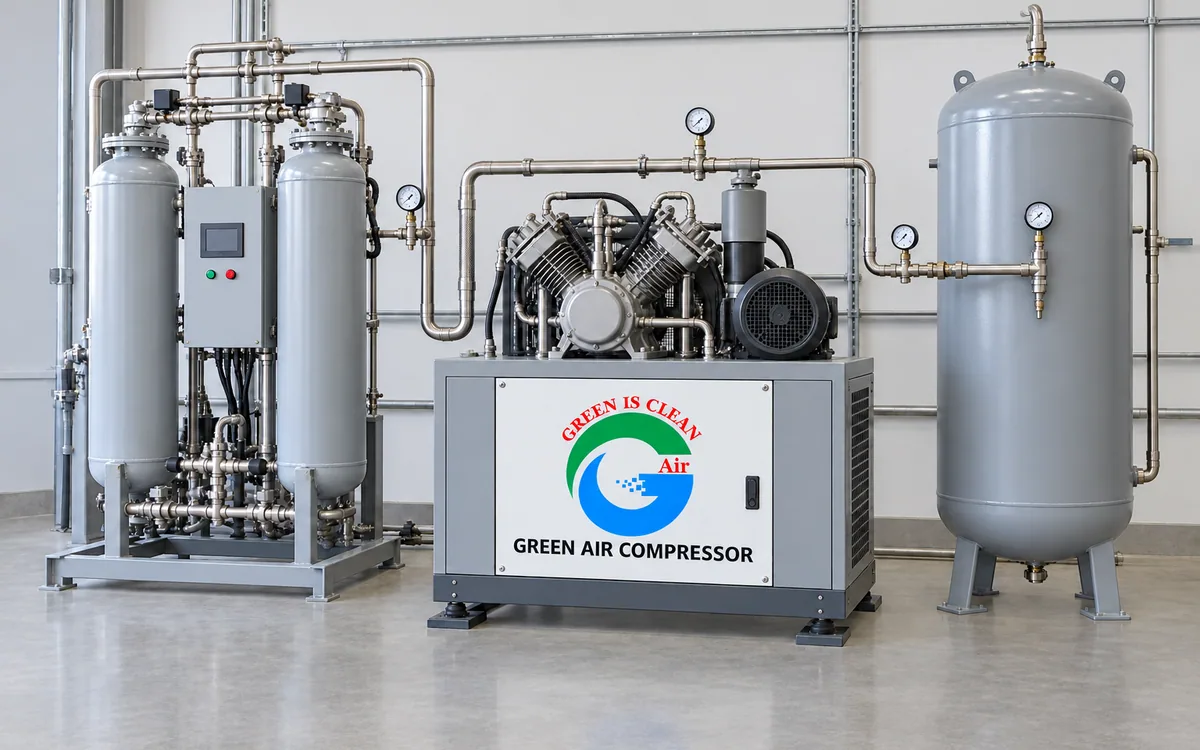
氮气压缩机
用于氮封、吹扫与工艺的氮气增压与循环。
- 容积流量(FAD)
- 90 – 3,000 Nm³/h
- 工作压力
- 3 – 160 bar g
- 电机功率
- 22 – 250 kW
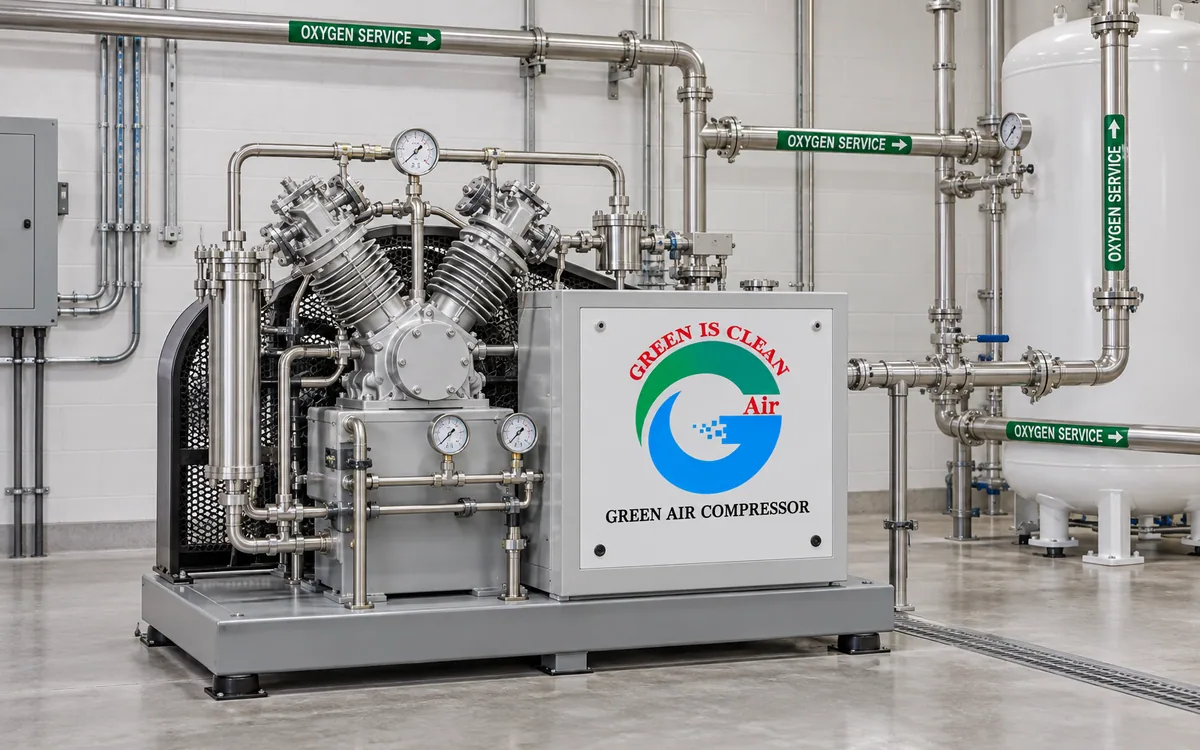
氧气压缩机
必须无油,按氧气使用标准制造并做洁净处理。
- 容积流量(FAD)
- 30 – 120 Nm³/h
- 工作压力
- 120 – 150 bar g
- 电机功率
- 11 – 30 kW
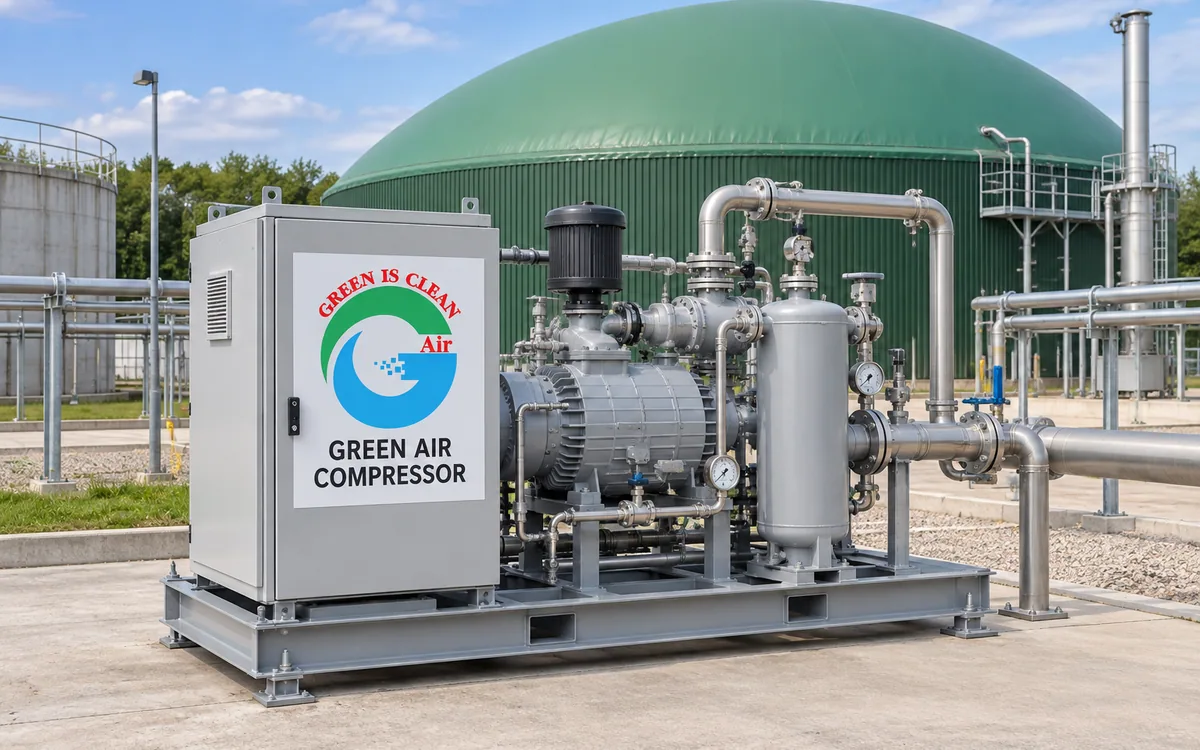
沼气压缩机
含水、有腐蚀性、成分多变的气体,处理它而不被它吃掉机器。
- 容积流量(FAD)
- 50 – 700 Nm³/h
- 工作压力
- 5 – 45 bar g
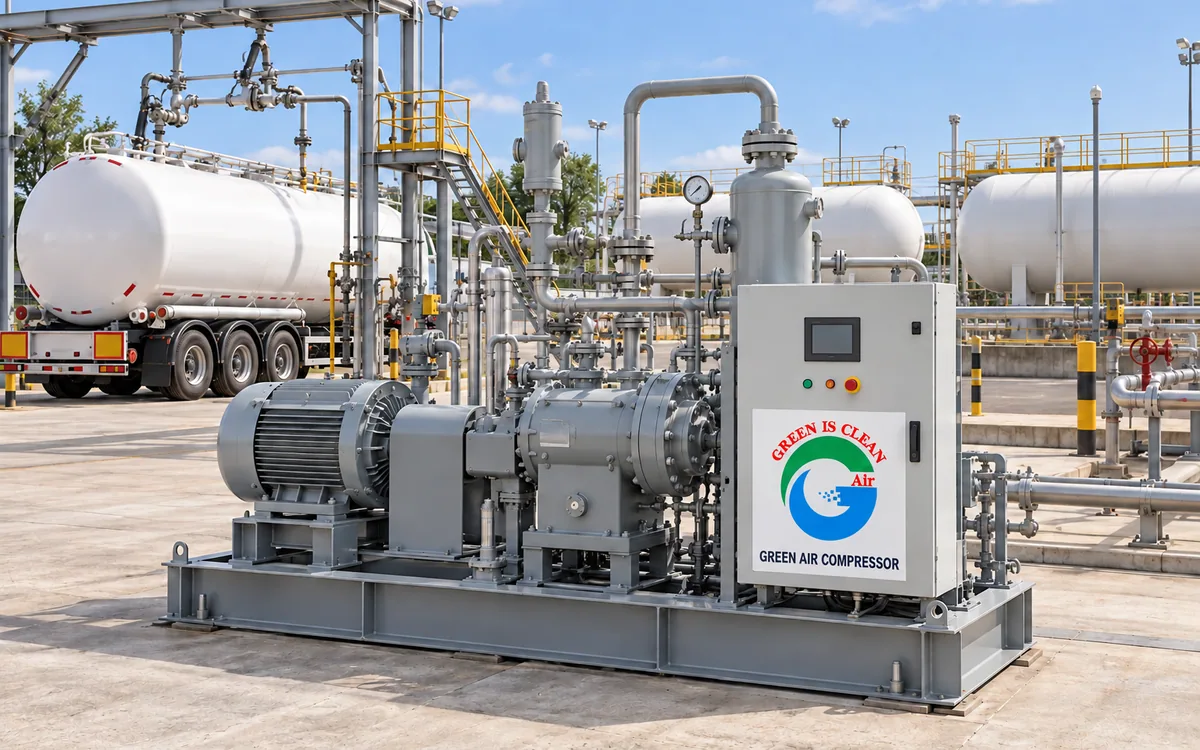
液化石油气与烃类气体压缩机
丙烷、丁烷与混合气的输送、回收与蒸气处理。
- 工作压力
- 16 bar g
- 电机功率
- 4 – 110 kW
不确定该选哪个型号?
把您的用气量、工作压力和运行小时数发给我们。我们的工程师会完成选型并给出书面建议,不收费,也不构成任何义务。