
吸附式干燥机
露点低至 −70 °C,用于关键工艺与室外管路。
技术参数
- 容积流量(FAD)
- 6.7 – 141.7 m³/min
- 重量
- 285 – 4,400 kg
概述
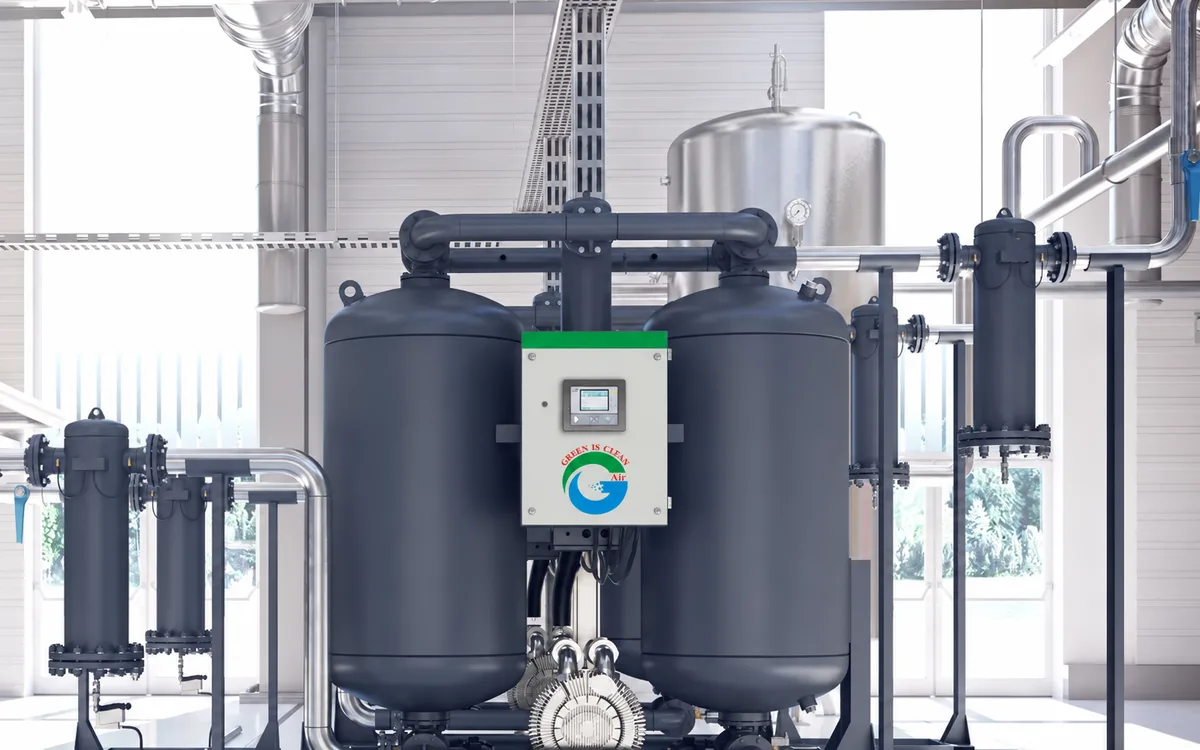
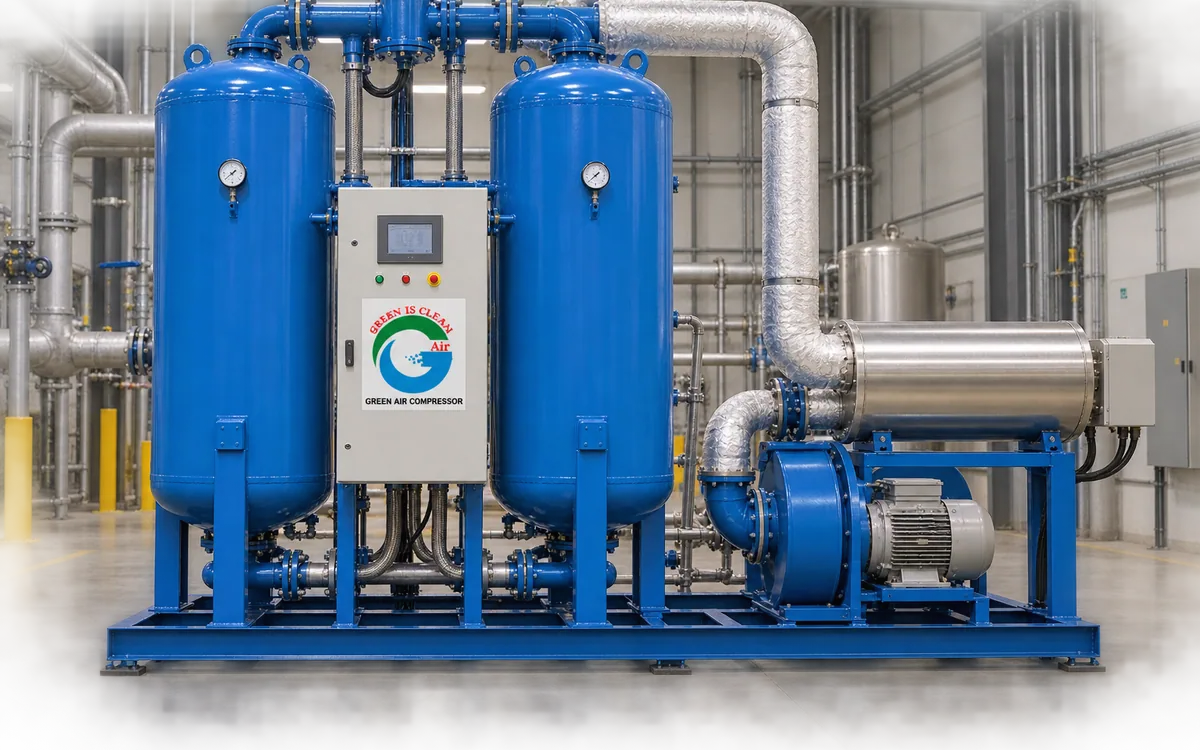
Desiccant dryers pass air over a bed of adsorbent material that pulls the water vapour out. Two towers alternate: one dries while the other regenerates. This gets you well below freezing: typically −40 °C, and −70 °C where the process demands it.
They cost more to run than refrigerant dryers, so the honest advice is to use them only where you need them. Outdoor pipework, cold stores, instrument air, pharmaceutical processes and anything blowing directly onto product are the usual cases.
主要优势
−40 °C or −70 °C dew point
Selectable to the standard your process or your customer's audit actually requires.
Heated regeneration option
Blower-purge and heated designs cut purge air loss from 15% down to 2 – 3%, which dominates the running cost.
Dew point control
Dew-point-dependent switching only regenerates when needed instead of on a fixed timer.
Long desiccant life
Correct pre-filtration and even flow distribution give three to five years of bed life rather than eighteen months.
机器是怎么造的
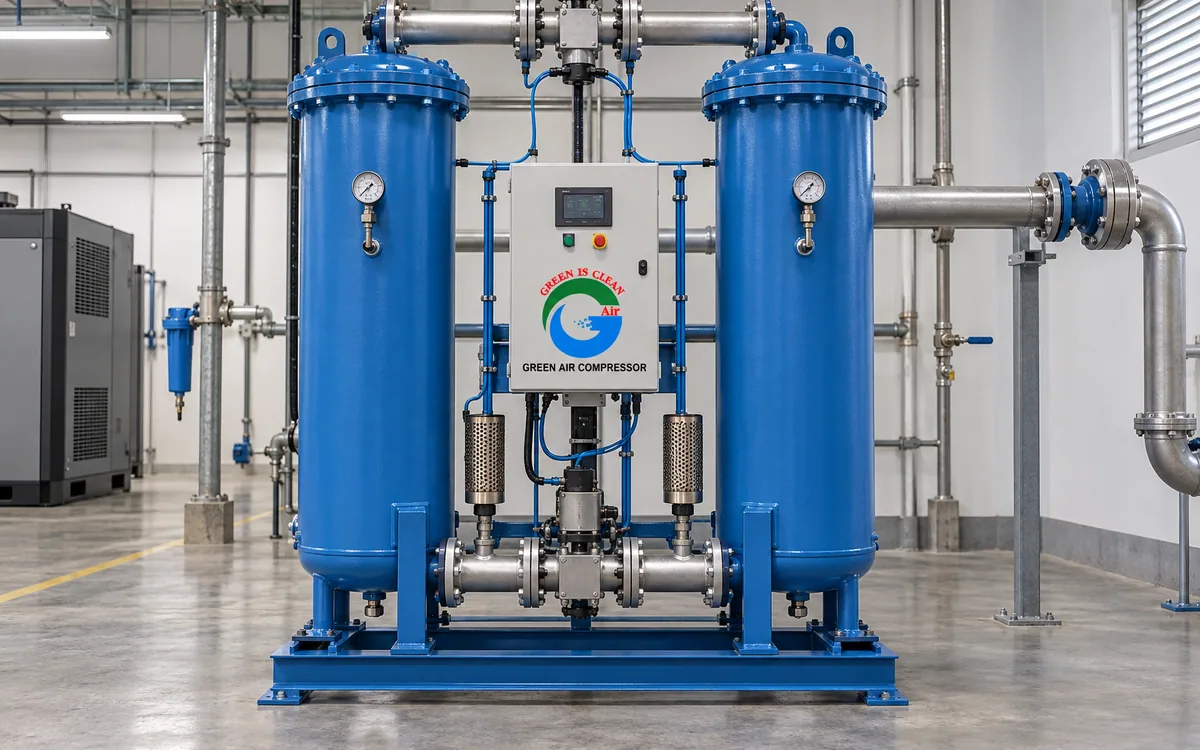
两塔干燥剂。一塔在干燥空气,另一塔在再生,按周期切换,供气从不中断。原理就是这一句,其余所有设计都是为了在不浪费空气的前提下做到这件事。
无热再生型用一部分已干燥的空气去再生离线的那一塔。微热型和鼓风再生型耗气少得多、耗电更多——这笔账值得在买之前算一算。
决定可靠性的是阀门和切换机构。它们一年动作数千次,所以这正是我们认真选型并认真备货的部件。
- 双塔设计,供气不间断
- 露点可达 −40 °C 与 −70 °C
- 无热再生、微热再生或鼓风再生
- 再生气耗按设计压到最低
- 可选露点联动切换
- 配套前置与后置过滤器
- 按高环境温度选型
- 无源报警触点
控制器做的事
露点联动切换是值得多花钱的那项功能。干燥机不再按固定定时切塔,而是在干燥剂真正到达极限时才切;在部分负荷的工厂里,这能省下大量再生气。
屏幕显示实际达到的露点、当前在用的塔,以及剩余时间或剩余露点余量。审核员要的是第一项,工厂工程师看的是后两项。
露点过高和阀门失效都会报警,两者都可以无源触点的形式接入工厂系统。
- 露点联动切换
- 屏幕显示实际达到的露点
- 当前在用塔与剩余时间
- 露点过高报警
- 阀门失效报警
- 再生气耗自动降至最低
- 用于工厂报警系统的无源触点
- 以小时计的保养倒计时
配件与保养套件
需要做的就三件事:阀门保养、消声器更换和干燥剂更换。前两项频繁且便宜,第三项不频繁,而持有成本正落在它身上。
干燥剂的寿命,取决于到达干燥机的是什么,远多于取决于干燥机本身。带油会很快毁掉一床干燥剂,这也是为什么前置过滤器属于规格的一部分,而不是一个配件。
我们在服务车上常备阀门套件和消声器。一台能通气却不能干燥的干燥机,通常问题在阀门,而且通常在同一次上门就能修好。
- 按周期更换的阀门保养套件
- 消声器按计划更换
- 每三到五年更换一次干燥剂
- 保护干燥剂床的前置滤芯
- 保养后验证露点
- 套件本地有库存
- 与压缩机在同一次上门中一并保养
- 服务方案下固定价格
机型范围
- Connection 1½ in
- 6.7 m³/min (400 m³/h)
- 重量
- 285 kg
- 外形尺寸 长 x 宽 x 高
- 2160 × 825 × 530 mm
- Connection 2 in
- 12.5 m³/min (750 m³/h)
- 重量
- 520 kg
- 外形尺寸 长 x 宽 x 高
- 2117 × 970 × 620 mm
- Connection 2 in
- 16.7 m³/min (1,000 m³/h)
- 重量
- 828 kg
- 外形尺寸 长 x 宽 x 高
- 2131 × 1440 × 1035 mm
- Connection 3 in
- 33.3 m³/min (2,000 m³/h)
- 重量
- 1,500 kg
- 外形尺寸 长 x 宽 x 高
- 2185 × 1928 × 1460 mm
- DN100 PN16
- 55.0 m³/min (3,300 m³/h)
- 重量
- 2,300 kg
- 外形尺寸 长 x 宽 x 高
- 2349 × 2132 × 1652 mm
- DN150 PN16
- 93.3 m³/min (5,600 m³/h)
- 重量
- 2,950 kg
- 外形尺寸 长 x 宽 x 高
- 2535 × 2438 × 1791 mm
- DN150 PN16
- 141.7 m³/min (8,500 m³/h)
- 重量
- 4,400 kg
- 外形尺寸 长 x 宽 x 高
- 2344 × 2677 × 1945 mm
容积流量按 ISO 1217 第四版附录 C 与 E 实测,进气 1 bar(a)、20°C、湿度 0%。噪声按 ISO 2151 在自由场条件下测量,公差 ± 3 dB(A)。每款机型均有水冷版本,可向我们索取其数据表。
常见问题
When do I actually need a desiccant dryer?
When pipework runs outdoors, through a cold store or in an unheated area, or when the process needs a dew point below zero, instrument air, pharmaceutical, powder handling.
How does it work?
Two towers of adsorbent alternate: one dries the air while the other regenerates. You get a continuous supply because they swap before the working bed is saturated.
What dew point can I get?
−40 °C as standard, −70 °C where the process or an audit demands it. Deeper drying costs more to run, so specify what you need rather than the deepest available.
What does purge air mean?
The compressed air used to regenerate the offline tower. A heatless dryer uses 15–20% of your output for this, which is the dominant running cost.
How do I reduce the purge loss?
Blower-purge and heated designs bring it down to 2–3% by using a fan and heater instead of your compressed air. Above about 700 m³/h the extra capital pays back quickly.
What is dew-point-dependent switching?
The dryer regenerates when the bed actually needs it rather than on a fixed timer. On a plant with variable demand it saves a substantial share of the purge.
How long does the desiccant last?
Three to five years with correct pre-filtration and even flow distribution. Oil carry-over from a worn separator kills a bed in about eighteen months.
Why is my desiccant dusting into the line?
Bed attrition from pressure surges or too-rapid switching. An after-filter catches it, but repeated dusting means the switching or the flow distribution needs looking at.
Can I have both types on one system?
Yes, and it is often the cheapest arrangement: a refrigerant dryer on the general ring main and a small desiccant dryer only on the line that needs a low dew point.
What maintenance does it need?
Valve service, filter changes, dew point measurement and a bed condition check. Valves are the wearing part on a twin-tower dryer, not the desiccant.
相关产品
不确定该选哪个型号?
把您的用气量、工作压力和运行小时数发给我们。我们的工程师会完成选型并给出书面建议,不收费,也不构成任何义务。