
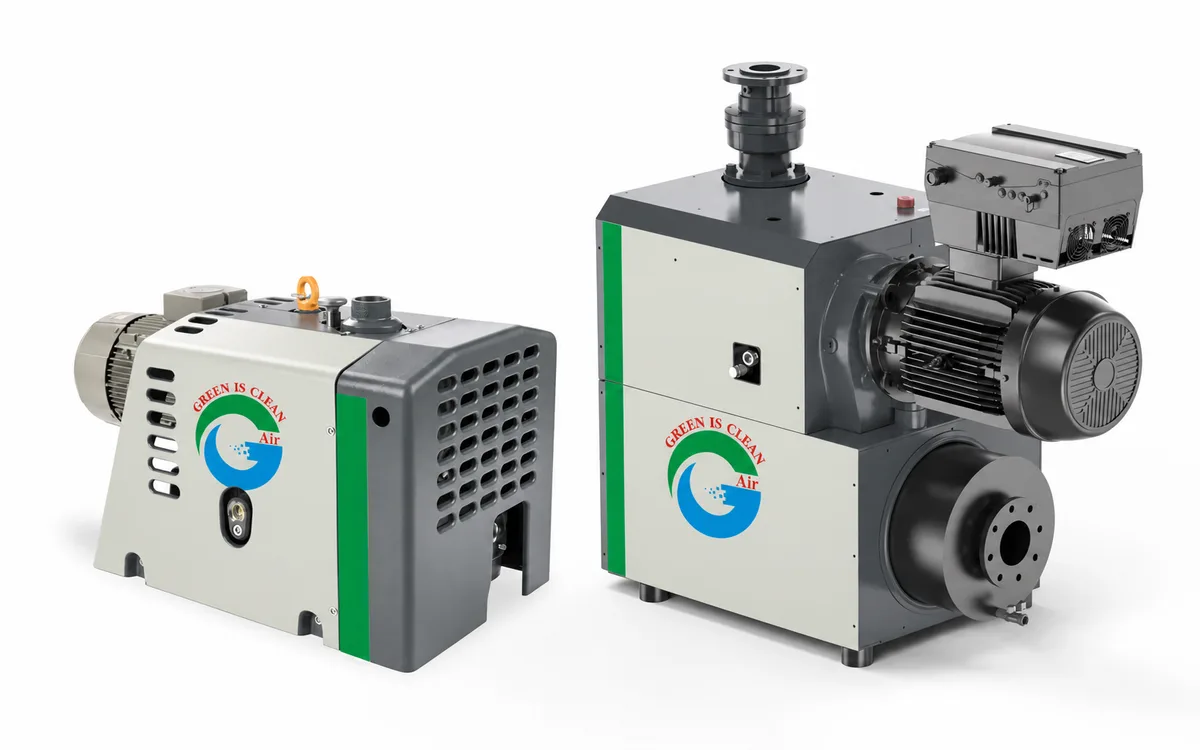
概述
Dry pumps have nothing in the pumping chamber, no oil, no water, no sealing fluid. That removes the contamination risk, removes the fluid disposal problem and usually removes most of the maintenance as well.
The trade-off is purchase price. Where the duty is clean and continuous, dry pumps almost always win on total cost over five years. Where duty is light and intermittent, they may not.
本系列包含
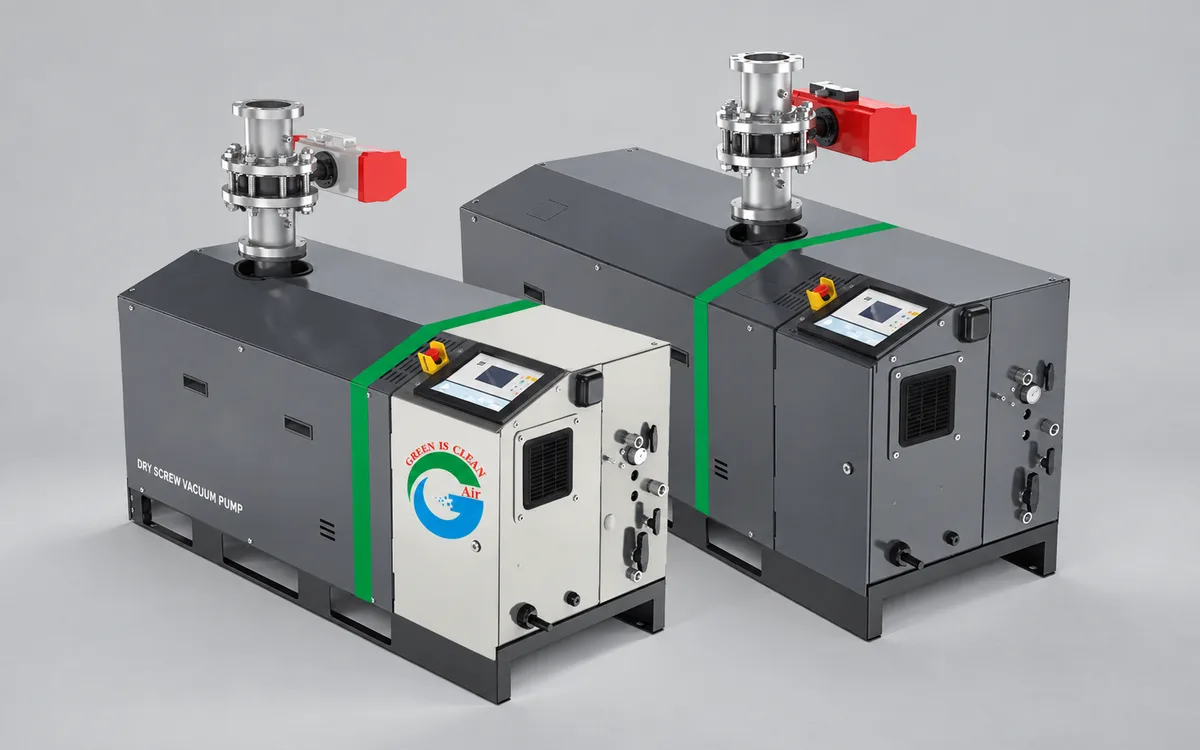
主要优势
No contamination path
Nothing in the chamber can reach your process or your product.
No fluid to manage
No oil changes, no sealing water, no effluent, no disposal cost.
Long intervals
Contact-free designs run for years between major service.
Lower total cost on continuous duty
Higher purchase price, materially lower cost over five years where the pump runs constantly.
它们是怎么造的、怎么控制的
在这几种设计里,泵腔内都没有任何接触。爪形、螺杆和涡旋都是靠加工精度,以及为它们定时的齿轮或平动轨迹来保持间隙的,所以没有摩擦接触会磨损,也没有油在带走热量。
最后这一点,正是温度成为干式泵上要紧读数的原因。没有油在做冷却,机壳和冷却风就承担了全部,而温度趋势上升,是任何异常最早也最诚实的警告。
在波动工况上,让这些泵变得经济的是变频。整天顶着阀门维持满真空,和在满负荷下运行花的钱一样多;让泵跟着工艺走,才是节省的主要来源。
- 泵腔内没有摩擦接触
- 间隙靠加工精度保持
- 齿轮或平动轨迹为转子定时
- 关键读数是温度,而不只是压力
- 变频跟随工艺需求
- 显示真空度、电机负载与运行小时
- 超温与失真空报警
- 用于工厂报警系统的无源触点
为什么选干式
泵腔内没有油,意味着没有油雾要过滤、没有换油周期要安排,也没有被污染的废油要处置。
它同时意味着泵里的任何东西都不会进入您的工艺;在食品、包装和电子行业里,这正是选这一类的全部理由。
代价是购机价格。在洁净连续的工况上,干式泵在五年总成本上几乎总是胜出;在轻载间歇的工况上,则未必。
- 泵腔内没有油
- 没有油雾、不用换油、也没有废油处置
- 泵里的任何东西都不会进入工艺
- 购机价格更高
- 洁净工况下五年总成本通常更低
- 有爪式、螺杆式、涡旋式与旋片式
- 风冷,不需要接水
- 可选变频
怎么选型式
洁净连续、看重可靠性、又不希望有东西磨损的场合用爪式。存在蒸汽和可凝物的场合用螺杆式。
实验室和分析作业看重安静、紧凑、彻底洁净,用涡旋式。轻载间歇、以低成本为主,用干式旋片。
决定选型的是极限压力和蒸汽负荷,而这两项我们都实测,不做假设。
- 洁净连续工况用爪式
- 有蒸汽和可凝物用螺杆式
- 实验室与分析作业用涡旋式
- 轻载间歇工况用干式旋片
- 由极限压力要求决定
- 蒸汽负荷靠实测,不靠假设
- 抽空速度要紧时加增压泵
- 与油封式如实比较
本系列的数据表
每份两页:这台机器是什么、用在哪里,以及实测数据表。内容由本站生成,因此数据表不可能说出页面上没有的话。
常见问题
What makes a pump 'dry'?
No liquid or oil in the pumping chamber. Everything that seals and compresses does so through tight clearances rather than a fluid film.
Which technologies are dry?
Claw, dry screw, scroll, dry rotary vane and roots boosters. Each covers a different vacuum range and a different kind of process.
Why choose dry over oil-sealed?
No oil contamination of the product, no oil mist in the exhaust, no waste oil to dispose of, and no oil changes to schedule.
Is dry always better?
No, oil-sealed pumps are cheaper to buy and better on some duties. Dry wins where contamination, oil waste or exhaust cleanliness matter.
What vacuum can dry pumps reach?
From about 150 mbar for a simple claw down to 0.01 mbar for a multi-stage screw. There is a dry option for most industrial ranges now.
Are they more efficient?
Often, because there is no oil to circulate and drag. The honest answer depends on your duty point, which we measure before claiming a figure.
What is the maintenance like?
Gearbox oil, bearings, seals and inlet filtration. Nothing in the pumping chamber wears, so the routine is short and predictable.
What do they not tolerate?
Debris and heavy liquid at the inlet. Tight clearances mean anything solid that gets in does damage immediately.
Are they more expensive?
To buy, yes. Over a full life, once oil, filters, disposal and downtime are counted, the gap usually closes and often reverses.
How do we choose?
Tell us the process, the gas, the vacuum level and the duty cycle. We will recommend a technology and explain why we ruled the others out.
相关产品
不确定该选哪个型号?
把您的用气量、工作压力和运行小时数发给我们。我们的工程师会完成选型并给出书面建议,不收费,也不构成任何义务。