
Dry vacuum pumps
Claw, screw, scroll, vane and booster pumps with no oil in the chamber.
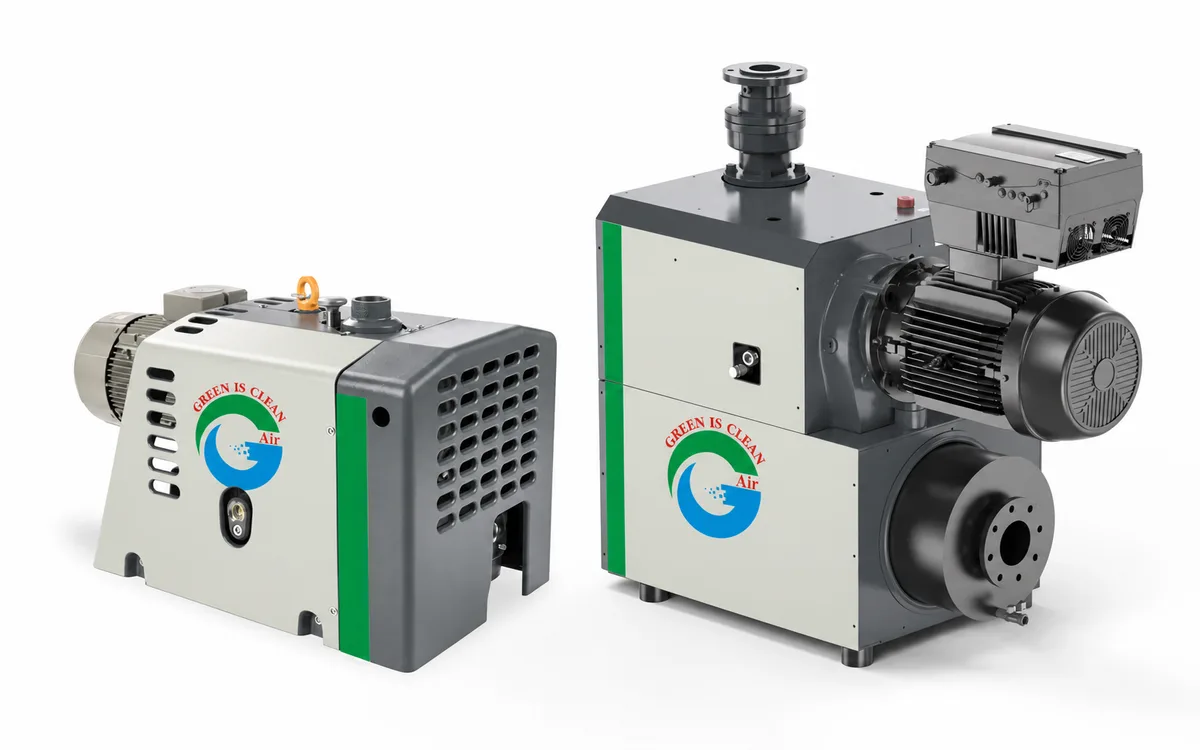
Overview
Dry pumps have nothing in the pumping chamber, no oil, no water, no sealing fluid. That removes the contamination risk, removes the fluid disposal problem and usually removes most of the maintenance as well.
The trade-off is purchase price. Where the duty is clean and continuous, dry pumps almost always win on total cost over five years. Where duty is light and intermittent, they may not.
In this range
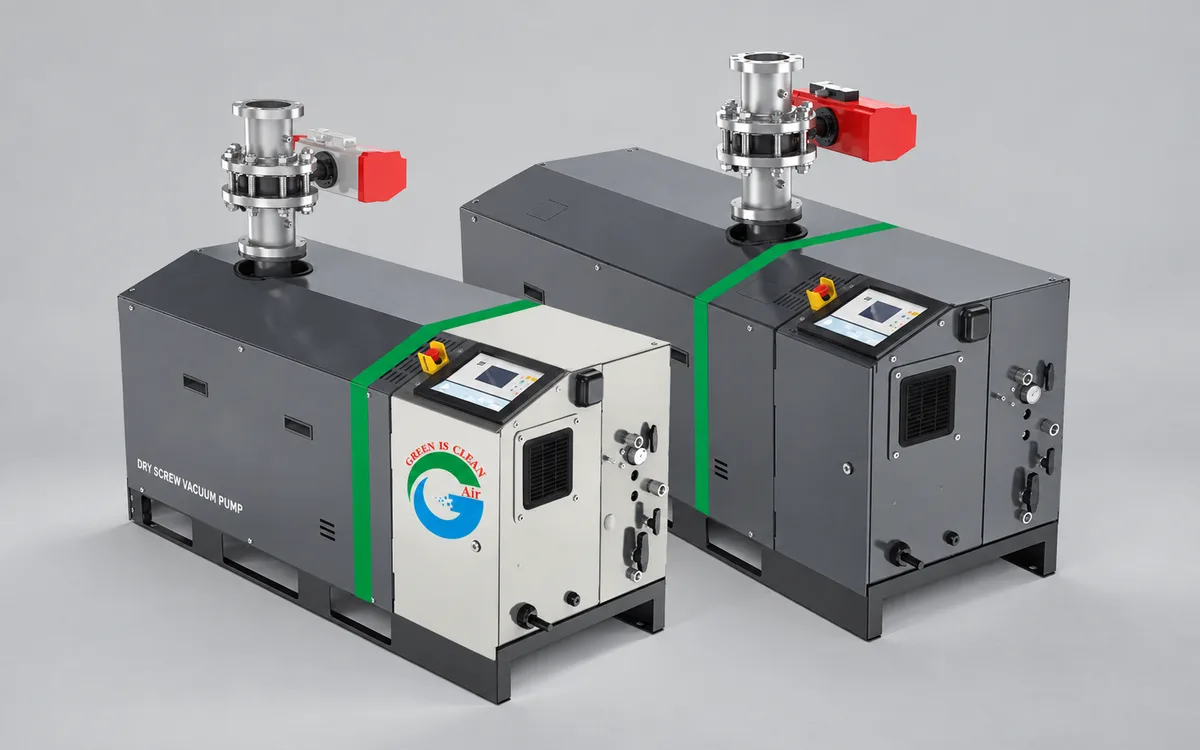
Key benefits
No contamination path
Nothing in the chamber can reach your process or your product.
No fluid to manage
No oil changes, no sealing water, no effluent, no disposal cost.
Long intervals
Contact-free designs run for years between major service.
Lower total cost on continuous duty
Higher purchase price, materially lower cost over five years where the pump runs constantly.
How they are built and controlled
Nothing touches inside the pumping chamber on any of these designs. Claws, screws and scrolls are all held apart by manufacturing accuracy and by the gears or the orbit that time them, so there is no rubbing contact to wear and no oil to carry heat away.
That last point is why temperature is the reading that matters on a dry pump. Without oil doing the cooling, the casing and the cooling air do all of it, and a rising temperature trend is the earliest honest warning of anything going wrong.
Variable speed is what makes these economical on a swinging duty. Holding full vacuum against a valve all day costs the same as running at full demand, and letting the pump follow the process instead is where most of the saving is.
- No rubbing contact in the pumping chamber
- Clearance held by manufacturing accuracy
- Gears or orbit keep the elements timed
- Temperature is the key reading, not pressure alone
- Variable speed follows the process demand
- Vacuum level, motor load and hours displayed
- Alarms on temperature and loss of vacuum
- Volt free contacts for plant alarms
Why dry
No oil in the pumping chamber means no oil mist to filter, no oil changes to schedule and no contaminated oil to dispose of.
It also means nothing from the pump can reach your process, which on food, packaging and electronics work is the whole reason to choose this type.
The trade is purchase price. Where the duty is clean and continuous, dry pumps almost always win on total cost over five years. Where duty is light and intermittent, they may not.
- No oil in the pumping chamber
- No oil mist, changes or disposal
- Nothing from the pump reaches the process
- Higher purchase price
- Usually cheaper over five years on clean duty
- Claw, screw, scroll and vane types
- Air cooled, no water needed
- Variable speed available
Choosing the type
Claw for clean continuous duty where reliability matters and nothing needs to wear. Screw where vapour and condensables are present.
Scroll for laboratory and analytical work where quiet, compact and completely clean is what matters. Dry vane for light intermittent duty at low cost.
Ultimate pressure and the vapour load are what decide it, and we measure rather than assume both.
- Claw for clean continuous duty
- Screw for vapour and condensables
- Scroll for laboratory and analytical work
- Dry vane for light intermittent duty
- Ultimate pressure requirement decides it
- Vapour load measured, not assumed
- Booster added where pump down speed matters
- Honest comparison against oil sealed
Datasheets in this range
Two pages each: what the machine is, what it is for, and the measured table. Built from this site, so a sheet can never say something the page does not.
Frequently asked questions
What makes a pump 'dry'?
No liquid or oil in the pumping chamber. Everything that seals and compresses does so through tight clearances rather than a fluid film.
Which technologies are dry?
Claw, dry screw, scroll, dry rotary vane and roots boosters. Each covers a different vacuum range and a different kind of process.
Why choose dry over oil-sealed?
No oil contamination of the product, no oil mist in the exhaust, no waste oil to dispose of, and no oil changes to schedule.
Is dry always better?
No, oil-sealed pumps are cheaper to buy and better on some duties. Dry wins where contamination, oil waste or exhaust cleanliness matter.
What vacuum can dry pumps reach?
From about 150 mbar for a simple claw down to 0.01 mbar for a multi-stage screw. There is a dry option for most industrial ranges now.
Are they more efficient?
Often, because there is no oil to circulate and drag. The honest answer depends on your duty point, which we measure before claiming a figure.
What is the maintenance like?
Gearbox oil, bearings, seals and inlet filtration. Nothing in the pumping chamber wears, so the routine is short and predictable.
What do they not tolerate?
Debris and heavy liquid at the inlet. Tight clearances mean anything solid that gets in does damage immediately.
Are they more expensive?
To buy, yes. Over a full life, once oil, filters, disposal and downtime are counted, the gap usually closes and often reverses.
How do we choose?
Tell us the process, the gas, the vacuum level and the duty cycle. We will recommend a technology and explain why we ruled the others out.
Related products
Not sure which model you need?
Send us your air demand, working pressure and running hours. Our engineers will size the machine and send a written recommendation, no cost, no obligation.