
Compressors and air treatment
Screw, oil-free, piston and process compressors, plus everything downstream.
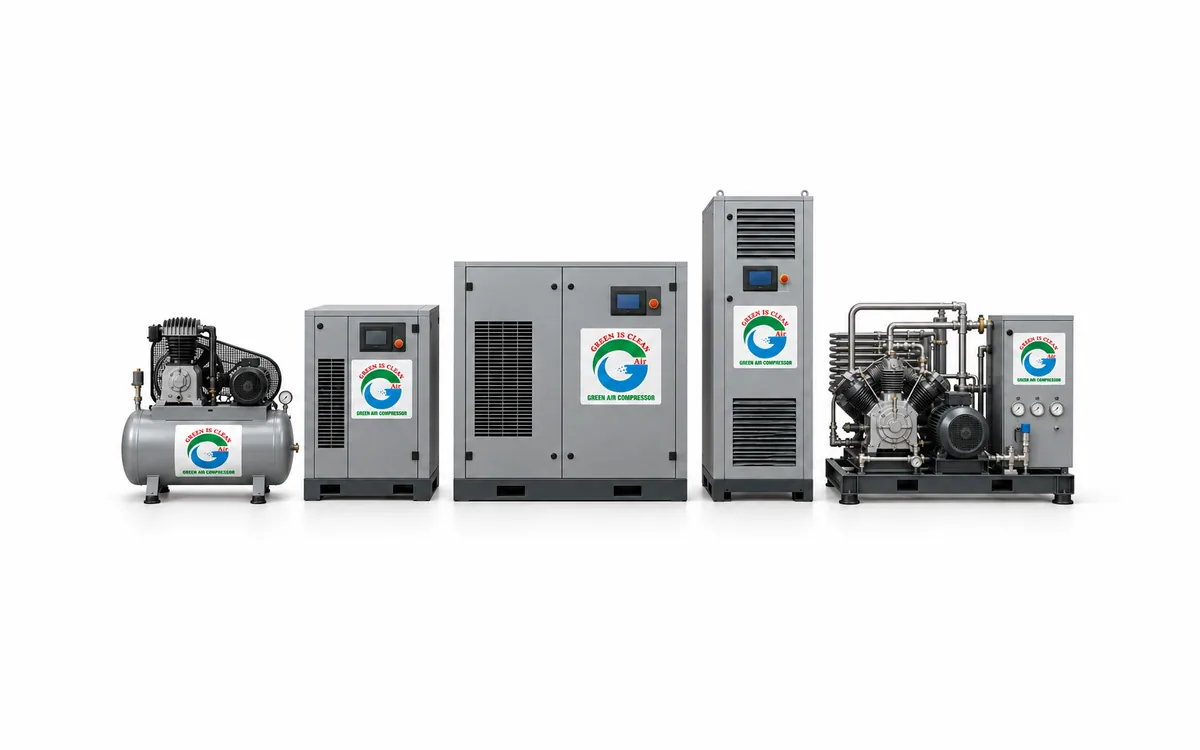
Overview
Compressed air is usually the most expensive utility in a factory and the least measured. Most plants know their diesel and electricity costs to the rupee or the dirham, but very few know what a cubic metre of their own air costs to make.
Green Air supplies the whole chain, compressor, dryer, filtration, condensate treatment and the control that ties them together, and we size it from measured demand, not from a total of nameplate ratings. That is normally where the savings are found.
In this range
- Air compressorsRotary screw, oil-free and piston compressors from 2.2 to 355 kW.
- Air receivers and tanksStorage, separation and the vessel that stops your compressor short cycling.
- Gas compressorsNitrogen, oxygen, biogas, LPG, natural gas, ammonia, argon and boil off gas.
- Oxygen and hydrogen generationMaking the gas on site instead of paying for cylinders and deliveries.
- Air blowersHigh-volume, low-pressure air for aeration and conveying.
- Air dryersRefrigerant, desiccant and membrane drying for every dew point.
- Compressed air filtersParticulate, coalescing and activated carbon filtration.
- Nitrogen generatorsMake your own nitrogen on site and stop paying for cylinders.
- Condensate managementZero-loss drains and oil-water separators for legal, clean disposal.
- Air, nitrogen and oxygen boostersRaise existing compressed gas to high pressure without contamination.
- Process air and gas equipmentCentrifugal machines, expanders, heat pumps and process gas compressors.
- Used and refurbished air compressorsWorkshop-rebuilt machines with a written warranty.
Key benefits
One supplier for the whole system
Compressor, dryer, filtration and condensate specified together, so nothing is left to be matched up on site.
Measured, not estimated
Specific energy to ISO 1217 at your working pressure, and a week of logging before we size anything you are unsure about.
Parts in your country
Consumables held in Pakistan, the UAE, Saudi Arabia, Oman and Türkiye rather than shipped when you order.
Serviced by the people who sold it
The engineer who commissions the machine is the one who comes back to it.
What is in this division
Everything that makes, treats or moves compressed air. Rotary screw and piston compressors, oil free machines, dryers, filters, boosters, blowers and nitrogen generation.
Most plants need three of those rather than one. A compressor without drying puts water into the ring main, and drying without filtration leaves the oil behind.
We supply them as a system because that is how they work. A machine chosen on its own datasheet and bolted to whatever was already there is how most compressed air problems begin.
- Rotary screw, piston and oil free compressors
- Refrigerant, desiccant and membrane dryers
- Filtration to every ISO 8573-1 class
- Boosters for high pressure duties
- Blowers for volume at low pressure
- Nitrogen generation from your own air
- Condensate treated to discharge rules
- Supplied and commissioned as one system
Where to start
With the duty. What the air drives, how many hours a day, and what it touches. Those three answers decide almost everything else.
If you do not know your demand, tell us the tools and the machines. Sizing from what the air actually drives is far more reliable than sizing from a guessed figure.
And ask any supplier for specific energy measured to ISO 1217 at your working pressure. Over ten years electricity is around three quarters of what a compressor costs you, so that one number decides more than the price does.
- Duty, hours and contact decide the specification
- Sized from the tools where demand is unknown
- Measurement offered before purchase
- Specific energy to ISO 1217 is the comparison
- Ten year cost shown before you commit
- Air quality matched to what the air touches
- Written sizing supplied with the quotation
- Honest advice where less is enough
Datasheets in this range
Two pages each: what the machine is, what it is for, and the measured table. Built from this site, so a sheet can never say something the page does not.
- PDFDirect driven screw compressors
- PDFVariable speed screw compressors
- PDFTwo stage screw compressors
- PDFPermanent magnet screw compressors
- PDFLow pressure screw compressors
- PDFMedium pressure screw compressors
- PDFHigh pressure screw compressors
- PDFSingle phase screw compressors
- PDF2.2 – 5.5 kW screw compressors
- PDF7.5 – 22 kW screw compressors
- PDF23 – 29 kW screw compressors
- PDF30 – 45 kW screw compressors
- PDF55 – 75 kW screw compressors
- PDF90 – 132 kW screw compressors
- PDF160 – 250 kW screw compressors
- PDFWater lubricated oil free compressors
- PDFOil free scroll compressors
- PDFOil-free rotary screw compressors
- PDFTwo-stage oil-free compressors 37 – 75 kW
- PDFTwo-stage oil-free compressors 200 – 355 kW
- PDFTwo-stage variable speed oil-free compressors
- PDFHeat recovery for oil-free compressors
- PDFHigh pressure piston compressors
- PDFBreathing air compressors
- PDFDiaphragm compressors
- PDFFour in one integrated compressors
- PDFLaser cutting air compressors
- PDFContainerised air compressors
- PDFSkid mounted air compressors
- PDFTruck mounted air compressors
- PDFAir receivers and storage tanks
- PDFNitrogen compressors
- PDFOxygen compressors
- PDFBiogas compressors
- PDFLPG and hydrocarbon gas compressors
- PDFNatural gas compressors
- PDFAmmonia compressors
- PDFArgon and special gas compressors
- PDFBoil off gas compressors
- PDFOxygen generation plants
- PDFHydrogen generation systems
- PDFMagnetic levitation blowers
- PDFAir suspension blowers
- PDFOil free screw blowers
- PDFSingle-stage centrifugal blowers
- PDFOil-free turbo blowers with variable speed
- PDFRefrigerant air dryers
- PDFDesiccant air dryers
- PDFMembrane air dryers
- PDFHeatless adsorption dryers
- PDFHeated and blower purge adsorption dryers
- PDFHigh temperature refrigerated dryers
- PDFCyclone water separators
- PDFPrecision compressed air filters
- PDFNitrogen generators
- PDFCondensate management
- PDFOil-free air and nitrogen boosters
- PDFOxygen boosters
- PDFReciprocating air and nitrogen boosters
- PDFCentrifugal compressors
- PDFProcess gas screw compressors
- PDFUsed and refurbished air compressors
Frequently asked questions
How much does compressed air actually cost to produce?
Over ten years, electricity is usually 75–80% of what a compressor costs you. The purchase price is often under 15%. As a rough figure, 1 m³/min of air at 7 bar needs about 6 kW running continuously. Multiply by your tariff and your running hours and the number is normally larger than people expect.
How do I know what size compressor I need?
Not by adding up the nameplate ratings of every machine, that always oversizes. We fit data loggers for a week and size from measured demand, including how often peak load actually happens. It is common for the answer to be a smaller machine than the customer expected.
Do I need an air dryer as well as a compressor?
In Pakistan, the Gulf and most of Türkiye, yes. Warm humid air condenses inside your pipework as it cools, and that water rusts pipes, wrecks pneumatic cylinders and ruins paint finishes. A dryer is part of the installation, not an accessory.
What pressure should I run my system at?
The lowest pressure that still runs your equipment. Every extra bar costs roughly 7% more energy, permanently. Many plants supply 8.5 bar when nothing on site needs more than 6.5 at the tool.
How long should a compressor last?
A rotary screw machine maintained properly runs 40,000–60,000 hours before a major overhaul, which is fifteen years at one shift. A piston machine used within its duty cycle lasts a decade. Used continuously it often fails inside two years.
What is the difference between oil-injected and oil-free?
An oil-injected machine sprays oil into the compression chamber to seal and cool it, then separates most of it out again: leaving 1–3 mg/m³ in the air. An oil-free machine has no lubricant in the air path at all. If oil contamination would cost you a batch, you need oil-free. Otherwise oil-injected is cheaper to buy and run.
How much space does a compressor room need?
Allow one metre of clear access on the service side and enough ventilation to remove the heat, roughly 4,000 m³/h of cooling air per 30 kW installed. Under-ventilated rooms are the single most common cause of high-temperature trips in summer.
Can I run a compressor on a generator?
Yes, but size the generator for the starting current, not the running load. A star-delta start needs roughly twice the running kVA. A variable speed machine starts softly and needs far less, which often makes it the cheaper option overall on generator supply.
What maintenance does a compressor need?
Air and oil filters plus an oil sample every 2,000 hours. Separator, oil change and cooler clean every 4,000. A full performance check and motor regrease every 8,000. We publish the full task list per interval so you can compare it against any other quotation.
Can you survey our existing system before we quote?
Yes, and we prefer to. A week of logging plus a leak survey usually finds 20–30% of generated air escaping and a system running a bar or two higher than anything needs. Fixing that is cheaper than buying a machine, and we will say so.
Related products
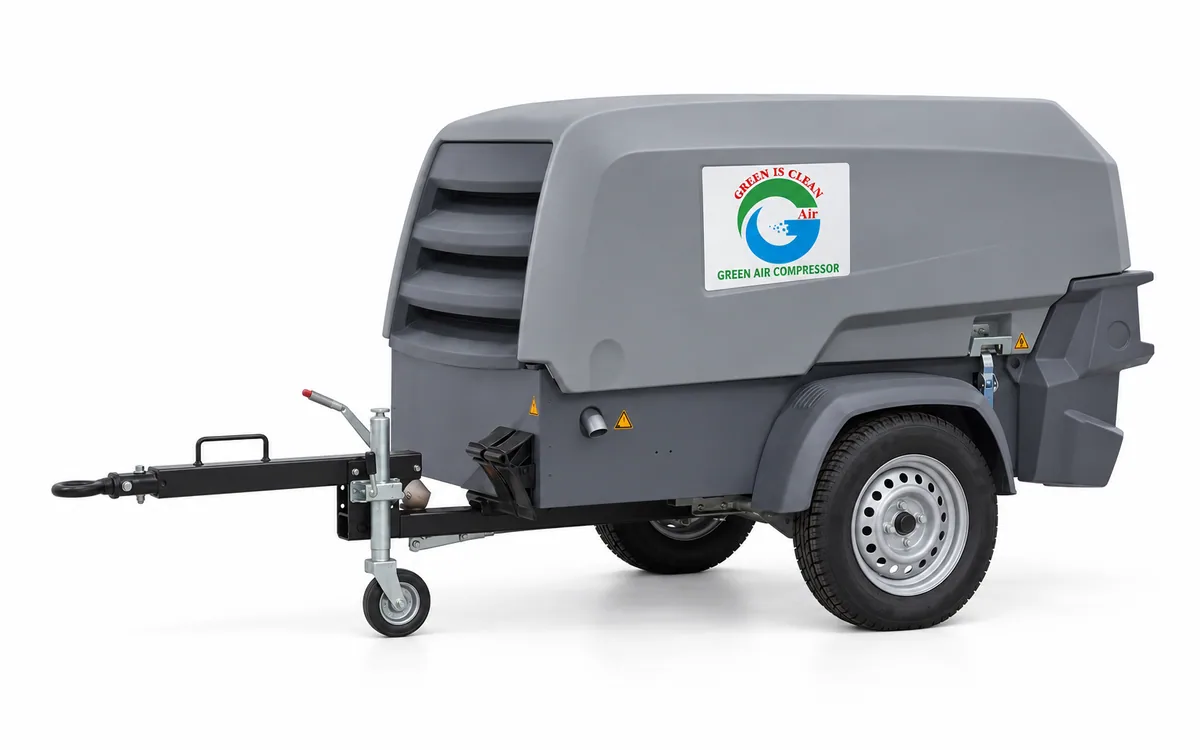
Construction equipment
Portable compressors, dewatering pumps and handheld breaking tools.
- Free air delivery
- 1.5 – 27.0 m³/min (106 – 954 cfm)
- Working pressure
- 5 – 40 bar g
- Motor power
- 30 – 224 kW
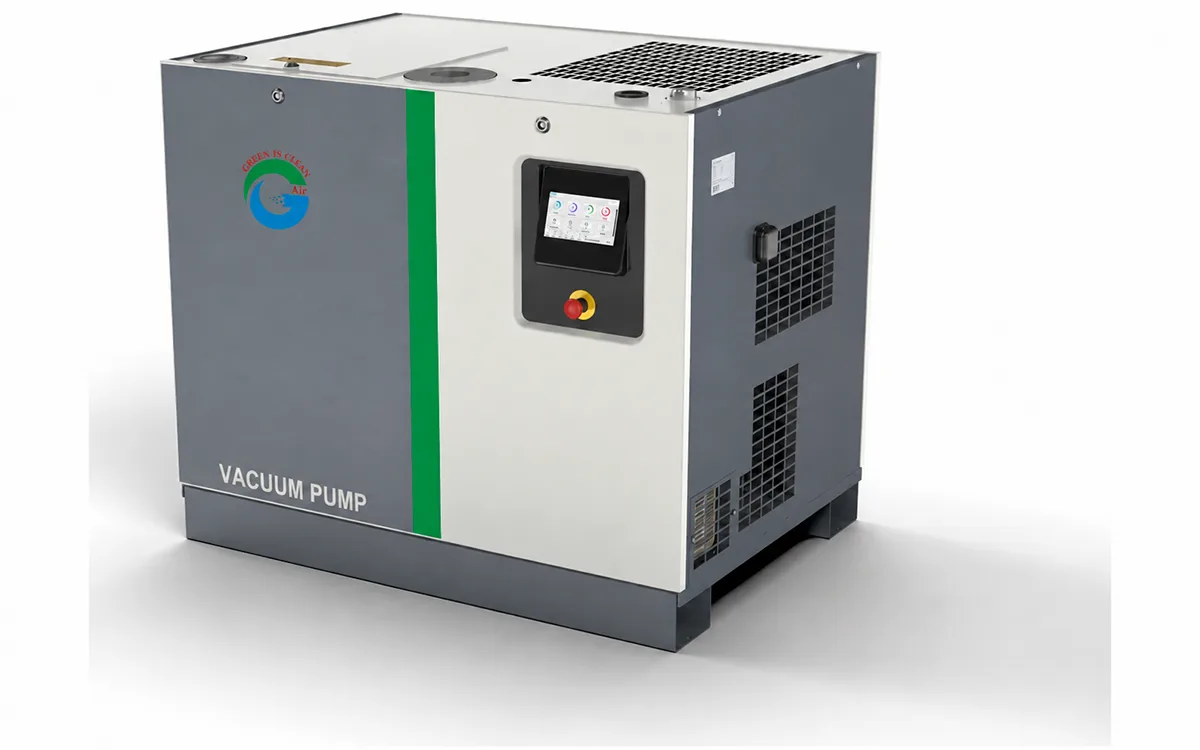
Vacuum solutions
Dry, oil-sealed and liquid ring vacuum pumps, plus full vacuum service.
- Working pressure
- 0 – 20 bar g
- Motor power
- 4 – 63 kW
- Weight
- 250 – 2,750 kg
Not sure which model you need?
Send us your air demand, working pressure and running hours. Our engineers will size the machine and send a written recommendation, no cost, no obligation.