
Dry rotary vane vacuum pumps
Simple, compact oil-free pumps for light and intermittent duty.
Technical data
- Working pressure
- 100 – 150 bar g
- Motor power
- 0 – 8 kW
- Weight
- 5 – 140 kg
- Noise level
- 62 – 78 dB(A)
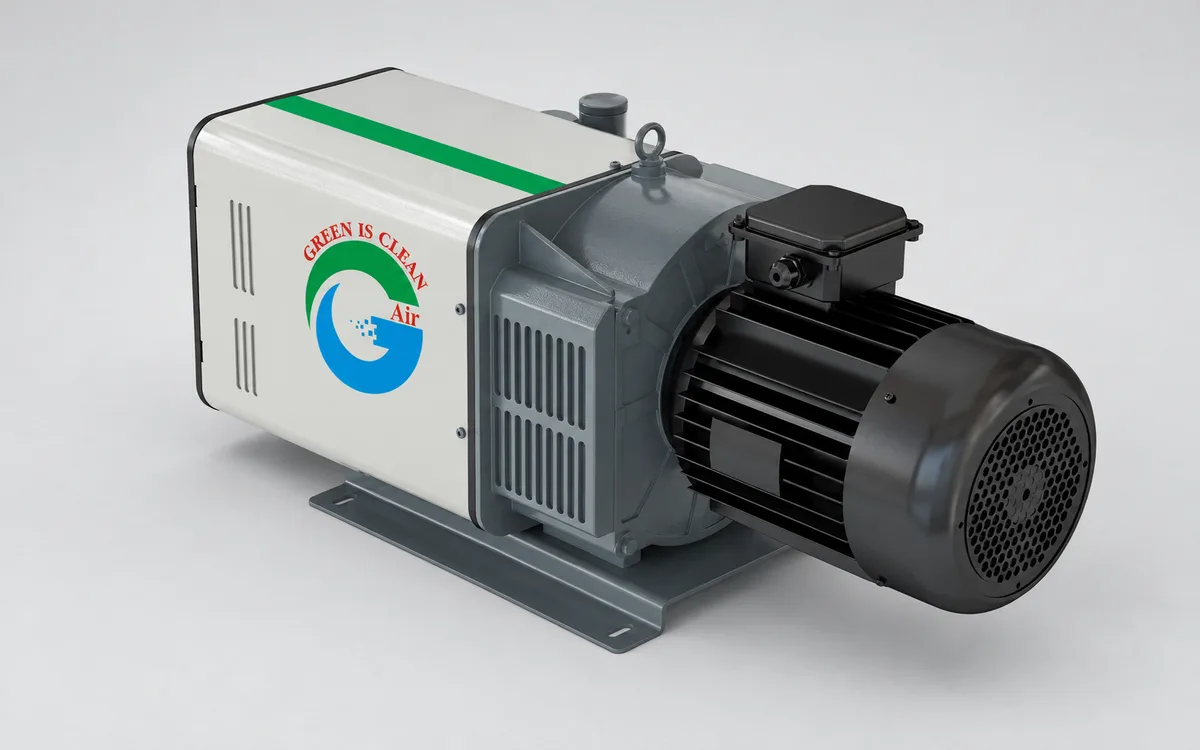
Overview
Carbon vanes slide in a rotor and seal against the housing without any lubricant. The vanes wear slowly and are replaced periodically. That is the entire maintenance schedule.
These pumps suit light-duty and intermittent applications where simplicity and low purchase price matter more than the last percentage of efficiency: printing feeders, small packaging machines, laboratory benches and clamping systems.
Key benefits
Genuinely simple
One moving assembly. Vane replacement is a twenty-minute job with basic tools.
Completely oil-free
No oil mist in the exhaust and nothing to dispose of.
Compact and light
Fits inside machine frames where a claw or screw pump will not.
Low purchase cost
The economical choice where duty is intermittent.
How it is built
Vanes slide in a rotor and sweep the gas around a housing, with no oil to seal them. The vanes are made of a self lubricating material and they are the wearing part by design.
That makes the pump simple, light and cheap to buy, and it puts the whole maintenance question on one item. Vane life is the specification to ask about.
There is no oil, so there is no oil mist filter, no oil change and nothing to dispose of. On light and intermittent duty that is a very practical machine.
- Self lubricating vanes, no oil required
- Vanes are the designed wearing part
- Light, compact and simple
- No oil mist filter and no disposal
- Air cooled
- Suits light and intermittent duty
- Low purchase cost
- Quiet running
Controls and monitoring
Vacuum level, hours and temperature. Hours matter more here than on most pumps because vane replacement is scheduled against them.
Temperature is the early warning of vane wear. A pump running hotter for the same duty is a pump asking for vanes.
Alarms on temperature and loss of vacuum, with volt free contacts where the plant system needs them.
- Vacuum level and running hours
- Hours tracked against vane life
- Temperature monitored and alarmed
- Service countdown in hours
- Volt free contacts for plant alarms
- Fault history kept on the pump
- Remote monitoring available
- Automatic restart after a power failure
Parts and service
Filters, seals and the scheduled wear items, quoted against the serial number and the process. Two identical pumps on different duties do not take the same interval.
A vacuum pump rarely fails without warning. Ultimate pressure drifting, a longer pump down time and a rising temperature all appear first, which is why those three are measured at every visit.
We test after service rather than simply finishing. The pump down curve and the ultimate pressure achieved go on the report, so you know what you have rather than what was intended.
- Filter and seal kits by interval
- Intervals set by the process, not the calendar
- Ultimate pressure tested after every service
- Pump down curve recorded
- Confirmed against your serial number
- Held in local stock
- Workshop overhaul where testing is needed
- Fixed price under a service plan
Model range
- 150 mbar
- 3.6 m³/h
- Noise level
- 63 dB(A)
- Weight
- 5.2 kg
- Dimensions L x W x H
- 239 x 144 x 142 mm
- 150 mbar
- 6.0 m³/h
- Noise level
- 72 dB(A)
- Weight
- 6.0 kg
- Dimensions L x W x H
- 272 x 147 x 143 mm
- 150 mbar
- 8.8 m³/h
- Noise level
- 66 dB(A)
- Weight
- 8.5 kg
- Dimensions L x W x H
- 245 x 164 x 125 mm
- 150 mbar
- 12 m³/h
- Noise level
- 62 dB(A)
- Weight
- 21 kg
- Dimensions L x W x H
- 413 x 239 x 224 mm
- see datasheet
- 18 m³/h
- 150 mbar
- 19 m³/h
- Noise level
- 63 dB(A)
- Weight
- 25 kg
- Dimensions L x W x H
- 440 x 239 x 224 mm
- see datasheet
- 33 m³/h
- Noise level
- 66 dB(A)
- Weight
- 33 kg
- Dimensions L x W x H
- 499 x 253 x 246 mm
- see datasheet
- 48 m³/h
- 120 mbar
- 48 m³/h
- Noise level
- 70 dB(A)
- Weight
- 38 kg
- Dimensions L x W x H
- 554 x 257 x 246 mm
- see datasheet
- 65 m³/h
- 100 mbar
- 65 m³/h
- Noise level
- 76 dB(A)
- Weight
- 82 kg
- Dimensions L x W x H
- 763 x 428 x 342 mm
- 100 mbar
- 77 m³/h
- Noise level
- 77 dB(A)
- Weight
- 90 kg
- Dimensions L x W x H
- 798 x 428 x 342 mm
- see datasheet
- 100 m³/h
- 100 mbar
- 97 m³/h
- Noise level
- 78 dB(A)
- Weight
- 140 kg
- Dimensions L x W x H
- 849 x 375 x 346 mm
FAD measured to ISO 1217 Edition 4, Annex C and E at 1 bar a intake, 20°C, 0% humidity. Noise measured to ISO 2151 in free field conditions, tolerance ± 3 dB(A). Water-cooled versions of every model are available. Ask us for their sheet.
Frequently asked questions
How does a dry vane pump work?
Carbon or composite vanes slide in a rotor and sweep the chamber. The vanes are self-lubricating, so the pump runs with no oil at all.
What vacuum can it reach?
Typically 100 to 200 mbar absolute. It is a workhorse for handling and holding duties rather than a deep vacuum machine.
Where is it commonly used?
Packaging, printing, pick-and-place handling, CNC hold-down and small laboratory work: continuous light-duty vacuum.
What wears out?
The vanes, and they are designed to. Vane replacement is routine, planned and inexpensive compared with the alternatives.
How often do vanes need changing?
It depends on duty, typically several thousand hours. Running at deeper vacuum than rated wears them faster than anything else.
Is any lubrication needed?
None. That is the point, no oil, no mist filter, no waste oil, no contamination of what you are handling.
What does it need protecting from?
Dust and liquid at the inlet. Debris destroys vanes quickly, and a good inlet filter is the cheapest life extension available.
Does it get hot?
Yes, running dry means the heat leaves in the exhaust and the casing. Adequate ventilation around the pump is a real requirement.
Is it quieter than a claw pump?
Generally yes at similar size, which is one reason it is popular for equipment mounted in a working area.
Is it right for a big central system?
Usually not: claw or screw technology scales better. This pump is at its best mounted on or near the machine it serves.
Related products
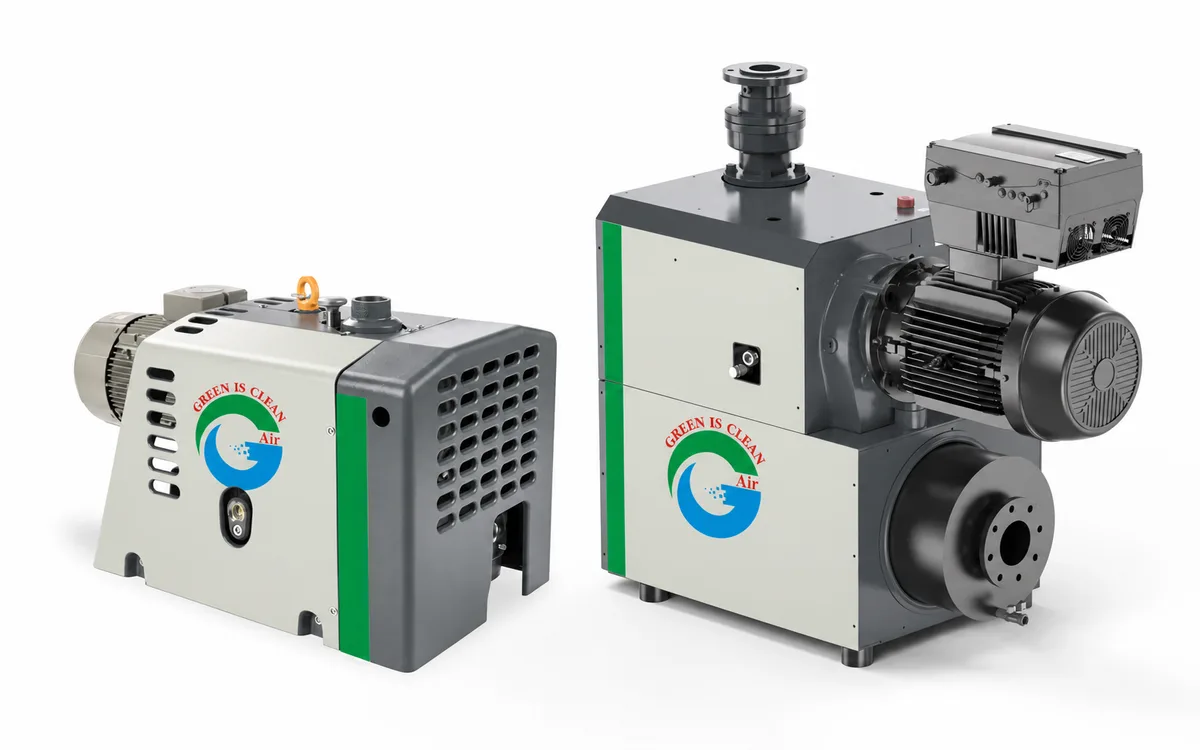
Dry claw vacuum pumps
Contact-free claw rotors for continuous, oil-free rough vacuum.
- Working pressure
- 20 – 450 bar g
- Motor power
- 1 – 25 kW
- Weight
- 7 – 950 kg
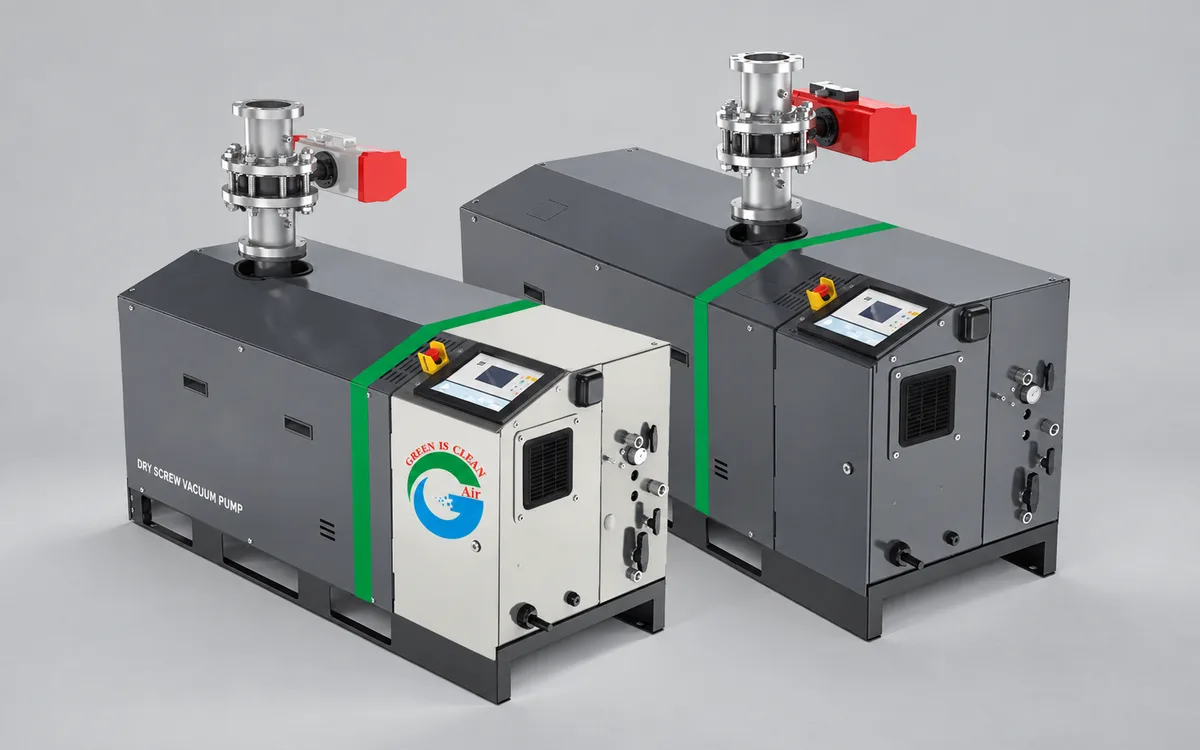
Dry screw vacuum pumps
Deep, dry vacuum that tolerates vapour and process carry-over.
- Working pressure
- 0 – 20 bar g
- Motor power
- 4 – 63 kW
- Weight
- 250 – 2,750 kg
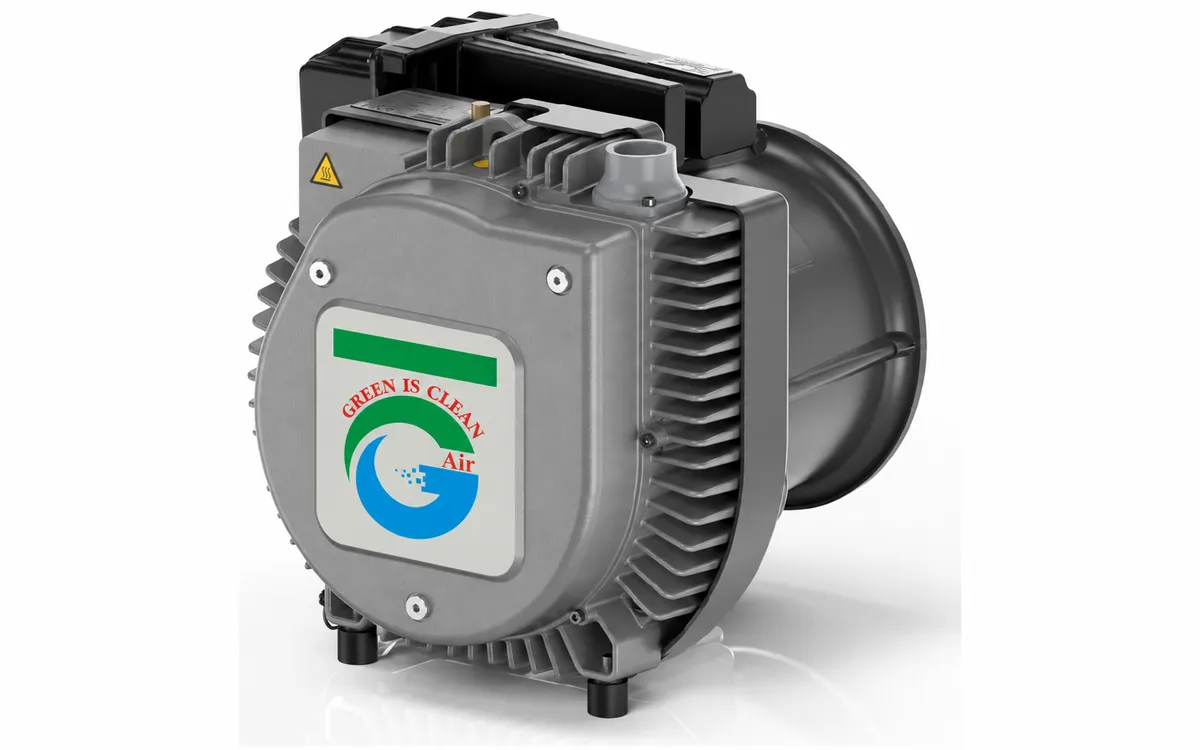
Dry scroll vacuum pumps
Quiet, clean pumps for laboratories and analytical instruments.
- Free air delivery
- 42 – 59 cfm
- Working pressure
- 2 bar g
- Motor power
- 2 – 2 kW
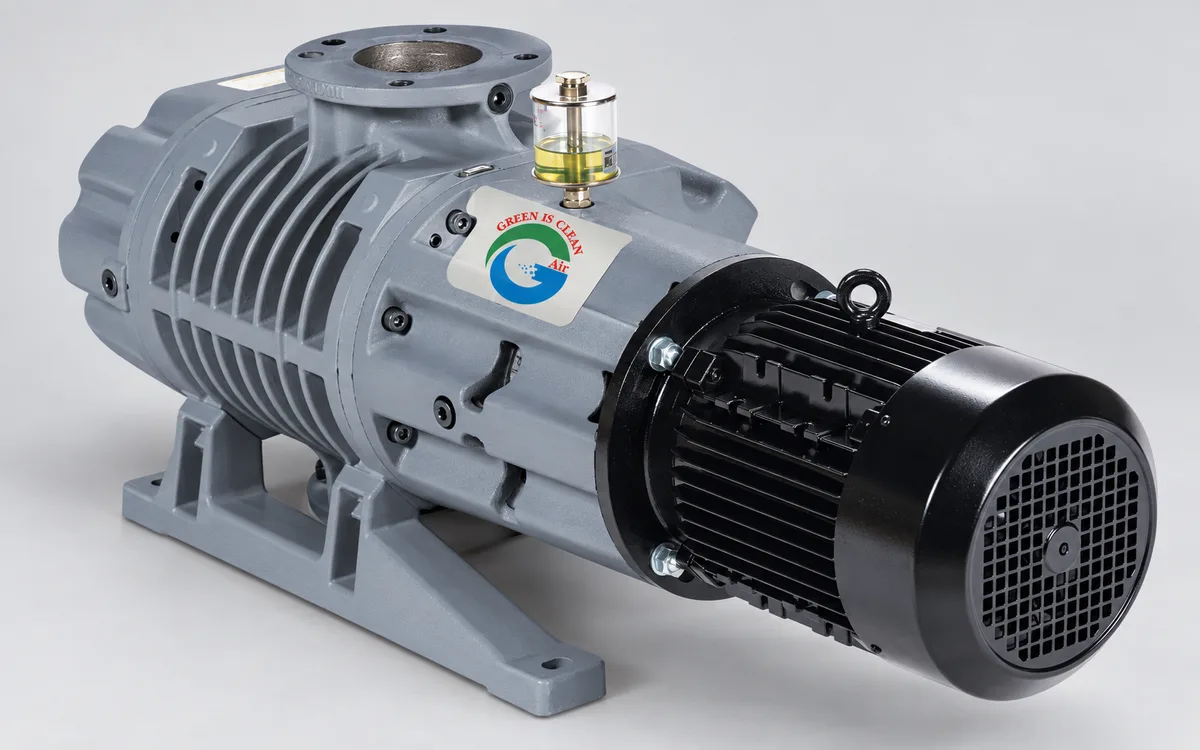
Mechanical booster pumps
Roots boosters that multiply the speed of a backing pump.
- Working pressure
- 20 – 85 bar g
- Motor power
- 2 – 19 kW
- Weight
- 146 – 825 kg
Not sure which model you need?
Send us your air demand, working pressure and running hours. Our engineers will size the machine and send a written recommendation, no cost, no obligation.