
Large portable diesel compressors
650 to 1600 cfm for drilling, blasting and pipeline work.
Technical data
- Free air delivery
- 11.0 – 27.0 m³/min (388 – 954 cfm)
- Working pressure
- 5 – 24 bar g
- Motor power
- 90 – 224 kW
- Weight
- 2,160 – 4,500 kg
- Noise level
- 99 – 102 dB(A)
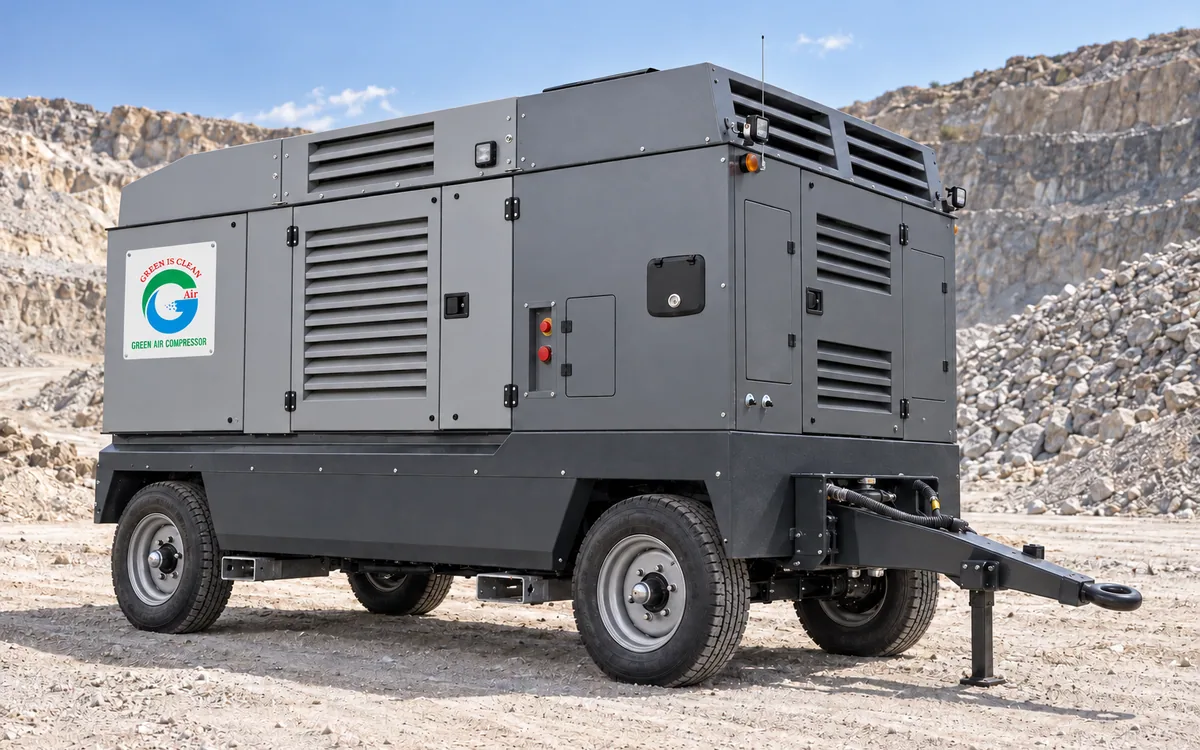
Overview
Large portable machines are specified around a single demanding job: a drill rig, a blasting crew running several pots, or a pipeline being dried and tested. The compressor is usually the critical path, so reliability is worth more than a small saving on purchase price.
These are twin-axle or skid-mounted units with two-stage compression where high pressure is required, and full instrumentation so a problem shows up on the panel rather than as a stoppage.
Key benefits
High pressure available
Up to 25 bar on two-stage models for deep drilling and pipeline testing.
Long service intervals
500-hour intervals with large-capacity filters and oil, so the machine stays on the job.
Skid or trailer
Skid-mounted for remote sites where towing is impractical, trailer-mounted where it is not.
Full instrumentation
Engine and airend parameters on one panel, with remote telemetry available.
How it is built
At the top of the portable range the machines are built for drilling and large scale blasting. High flow, high pressure, and a chassis rated for the weight that comes with both.
Two stage compression appears in this class because the pressures asked for are beyond what one stage does efficiently. Intercooling between stages is what keeps the fuel figure sensible.
Transport is a real part of the specification. Axle loads and permits need checking early, because on some routes the paperwork takes longer to arrange than the machine takes to build.
- High flow and high pressure for drilling
- Two stage compression with intercooling
- Heavy duty chassis and running gear
- Axle loads and permit data supplied
- Low loader or heavy road tow
- Fuel tank sized for extended shifts
- Cold start and high altitude options
- Service access without dismantling
On site controls and telemetry
Pressure, flow, engine load, fuel and faults, because on a drilling job the operator is managing the compressor as part of the process rather than just switching it on.
The telemetry gives the fleet owner hours, fuel, location and service countdown for every machine in one list, which on a spread out project is the only practical way to plan servicing.
Fuel against hours is the report that finds problems. On machines this size the numbers involved are large enough that a week of unexplained consumption is worth chasing.
- Pressure, flow, engine load and fuel
- Fleet telemetry with location and hours
- Fuel logged against running hours
- Service countdown per machine
- Geofence and movement alerts
- Faults reported before the call comes in
- Data exported for hire billing
- Remote support from our engineers
Parts and service kits
Kits by interval for both the engine and the airend, boxed so a site visit is one trip rather than two.
At this size a site spares holding usually makes sense. We agree the list at the start of the project based on lead times rather than on how often a part is used.
Servicing is done on site. Moving a machine this size for a service costs more than the service, in permits alone.
- Engine and airend kits by interval
- Site spares list agreed at project start
- Serviced on site, never moved for a service
- Intake filters for dusty and high altitude work
- Held in local stock
- Airend exchange available
- Fixed price under a service plan
- Project length service agreements
Model range
- 5 – 9 bar g
- 11.0 m³/min (388 cfm)
- Noise level
- 99 dB(A) LwA
- Weight
- 2,160 kg
- 5 – 12 bar g
- 11.5 m³/min (406 cfm)
- Noise level
- 100 dB(A) LwA
- Weight
- 2,160 kg
- 5 – 10 bar g
- 13.0 m³/min (459 cfm)
- Noise level
- 100 dB(A) LwA
- Weight
- 2,160 kg
- 5 – 9 bar g
- 13.0 m³/min (459 cfm)
- Noise level
- 100 dB(A) LwA
- Weight
- 2,160 kg
- 5 – 24 bar g
- 21.0 m³/min (742 cfm)
- Noise level
- 102 dB(A) LwA
- Weight
- 4,500 kg
- 5 – 14 bar g
- 27.0 m³/min (954 cfm)
- Noise level
- 102 dB(A) LwA
- Weight
- 4,500 kg
FAD measured to ISO 1217 Edition 4, Annex C and E at 1 bar a intake, 20°C, 0% humidity. Noise measured to ISO 2151 in free field conditions, tolerance ± 3 dB(A). Water-cooled versions of every model are available. Ask us for their sheet.
Frequently asked questions
What counts as a large portable?
Broadly above 12 m³/min, up to 35 m³/min and beyond, the class used for drilling rigs, pipeline work, large blasting and well services.
What are they typically used for?
Water well and blast hole drilling, pipeline drying and testing, large-scale blasting, and air lifting on dewatering projects.
What pressures are available?
From 7 bar up to 25 bar and higher for drilling duties. Pressure and flow trade off against each other on any given machine.
How are they transported?
By low-loader or on a heavy road-tow chassis. Check axle loads and permits early. On some routes that is the long-lead item, not the machine.
What fuel will it use?
Substantially more than a medium unit, plan bulk fuel and a refuelling routine. Fuel is the largest single running cost in this class by a distance.
What support is needed on site?
Daily checks, fuel, and a service plan. At this size an unplanned failure stops a whole crew, not just one tool.
Can it drive a drill rig directly?
Yes, and that is a common configuration. The rig manufacturer's air demand at working pressure is what governs the sizing.
How quickly can you get one to site?
Depends on availability and transport. We are honest about the lead time at enquiry rather than promising and then delaying.
Is hire common at this size?
Very. Most contractors hire this class for a defined project rather than carrying the capital and the idle time.
What service does it need?
Same 500 hour cycle, but far more consumables and a longer visit. We schedule it around your drilling programme rather than against it.
Related products
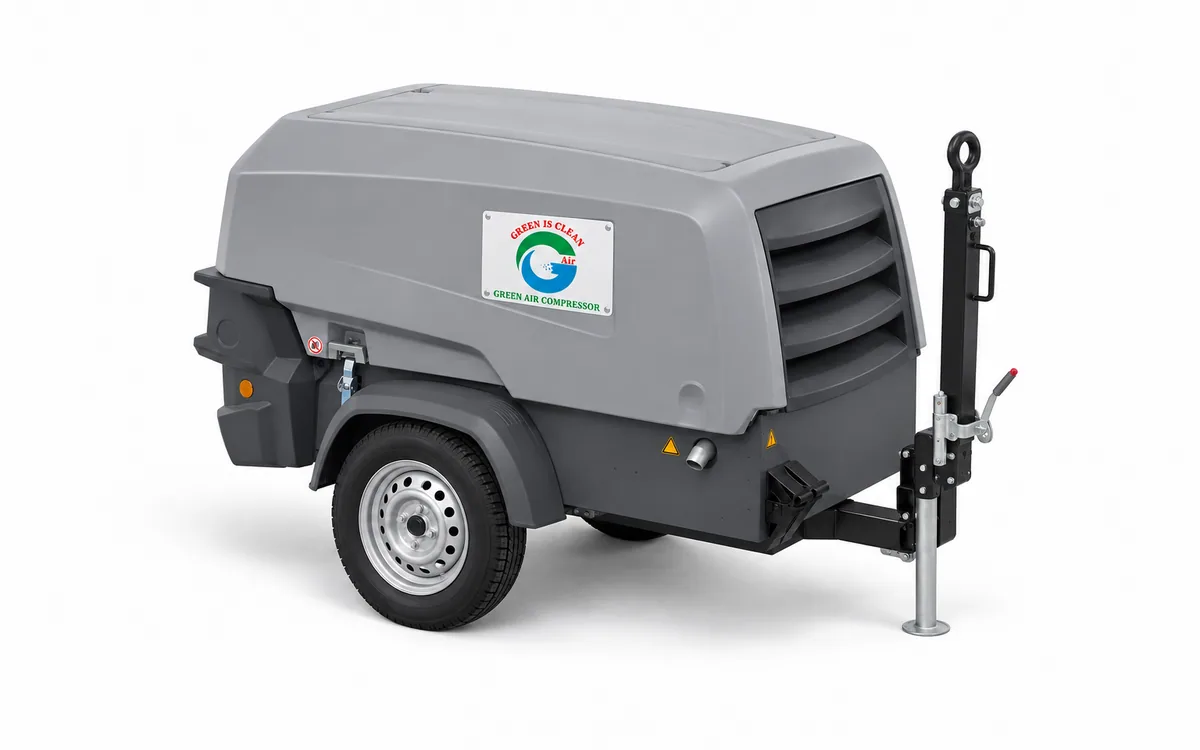
Diesel portable compressors
Towable diesel units for sites with no power supply.
- Free air delivery
- 3.0 – 10.5 m³/min (106 – 371 cfm)
- Working pressure
- 5 – 14 bar g
- Motor power
- 35 – 90 kW
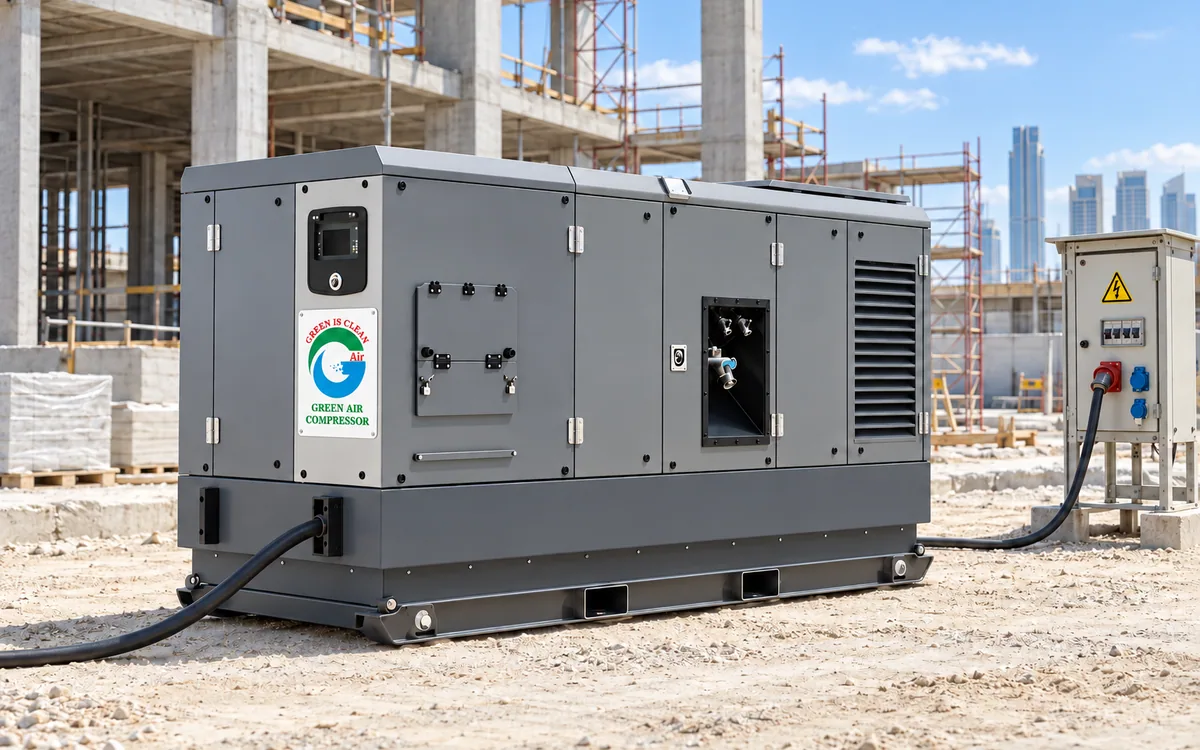
Electric portable compressors
Zero-emission site air where a power supply is available.
- Free air delivery
- 1.5 – 5.0 m³/min (124 – 177 cfm)
- Working pressure
- 5 – 12 bar g
- Motor power
- 30 kW
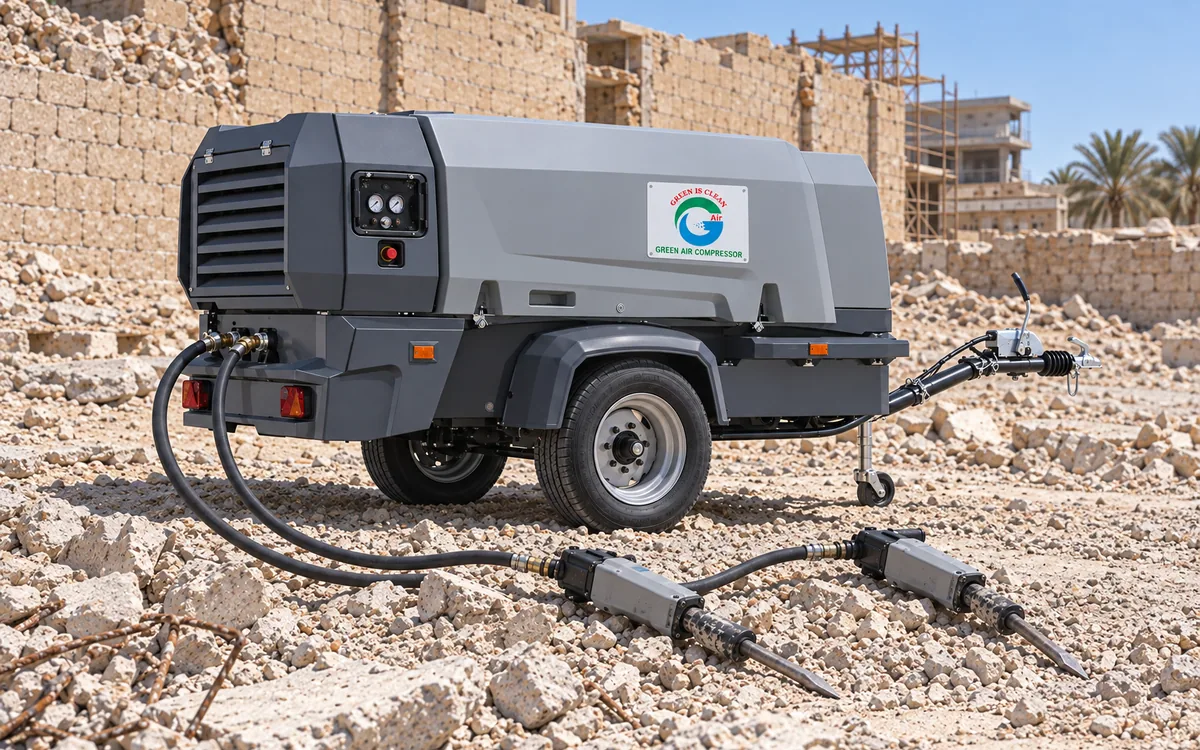
Medium portable diesel compressors
185 to 400 cfm, the general-purpose site range.
- Free air delivery
- 5.5 – 10.0 m³/min (194 – 353 cfm)
- Working pressure
- 5 – 14 bar g
- Motor power
- 55 – 90 kW
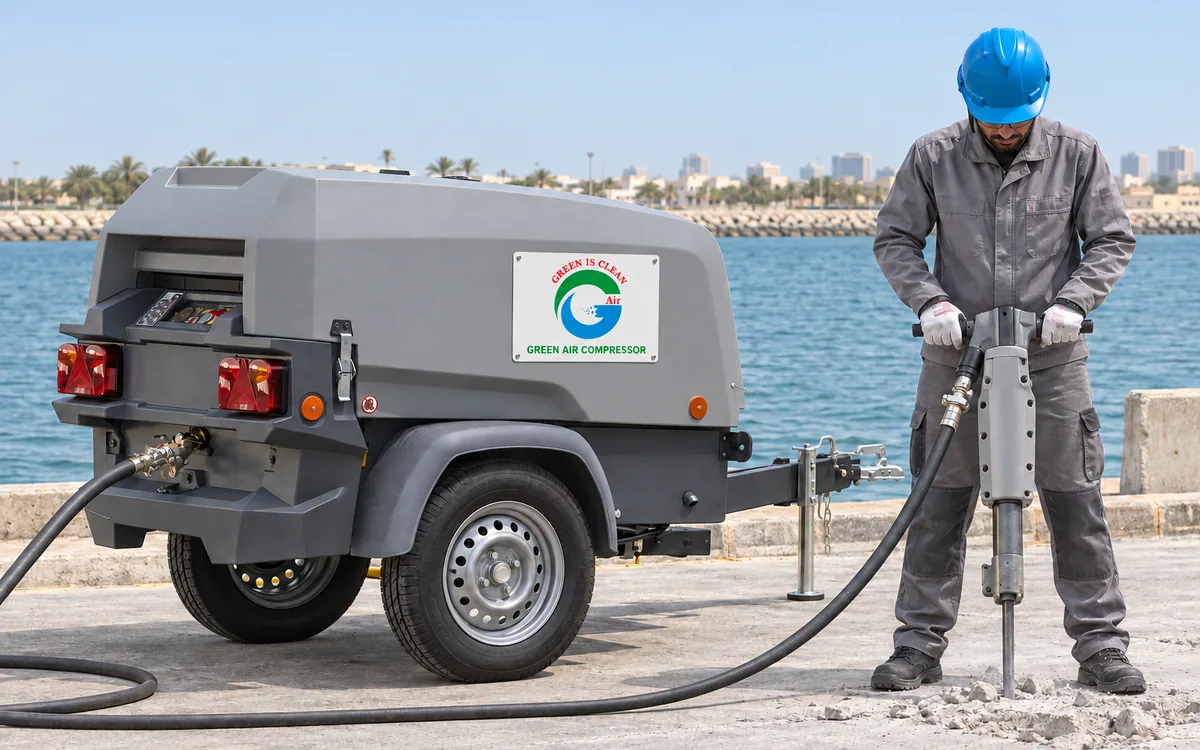
Ready-to-go compressor range
Standard specification machines held in stock for immediate delivery.
Learn moreNot sure which model you need?
Send us your air demand, working pressure and running hours. Our engineers will size the machine and send a written recommendation, no cost, no obligation.