
Diesel portable compressors
Towable diesel units for sites with no power supply.
Technical data
- Free air delivery
- 3.0 – 10.5 m³/min (106 – 371 cfm)
- Working pressure
- 5 – 14 bar g
- Motor power
- 35 – 90 kW
- Weight
- 750 – 2,160 kg
- Noise level
- 97 – 99 dB(A)
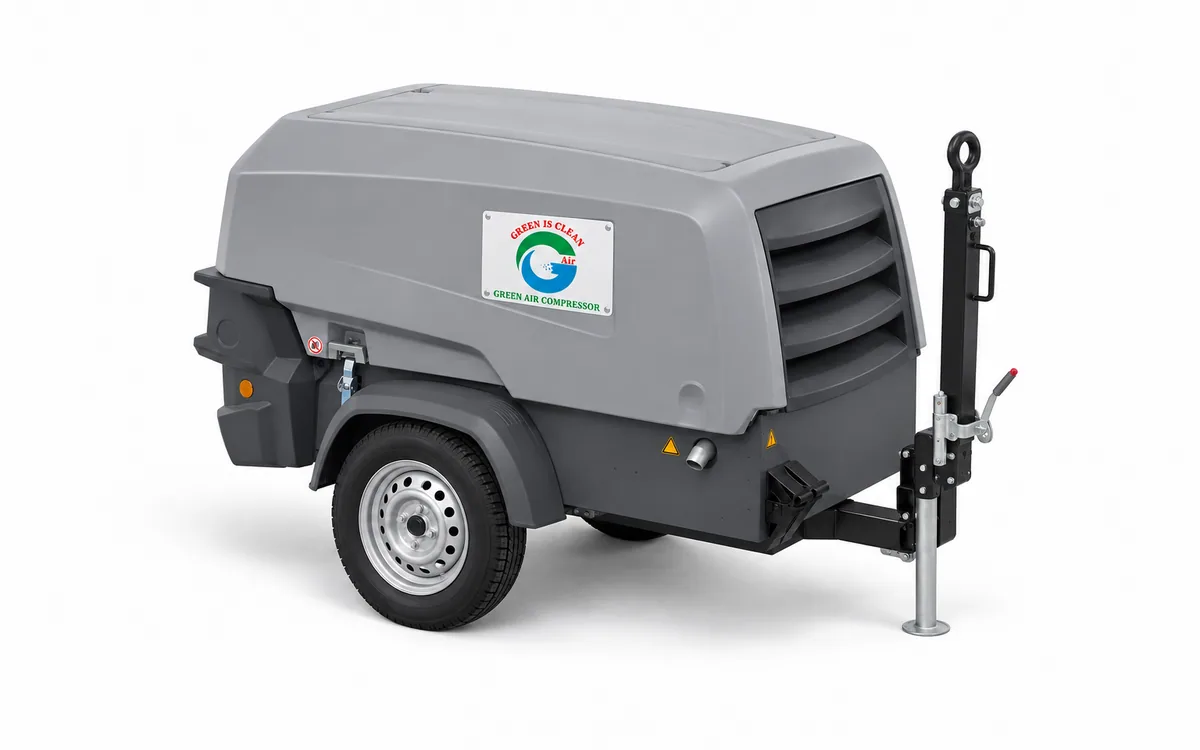
Overview
On most construction sites there is no three-phase supply where the work is happening, so the compressor brings its own engine. A towable diesel unit gets dropped where it is needed, runs a shift on one tank, and moves again the next morning.
What separates a good site compressor from a bad one is not peak output: it is whether it starts at 6 am in winter, survives dust, and can be serviced by whoever is on site rather than by a specialist.
Key benefits
Starts in the cold, runs in the heat
Cold start assistance to −10 °C and a cooling package rated for 50 °C site ambient.
Dust-tolerant intake
Two-stage cyclonic air filtration, because site air is not clean air.
One-shift fuel tank
Sized for a full working shift at full load so nobody has to hunt for a fuel bowser at lunchtime.
Service without a specialist
Filters, belts and drains reachable from ground level behind a single lockable panel.
How it is built
A screw airend, a diesel engine and a fuel tank on a chassis, built for a site rather than a plant room. The canopy takes knocks, the lifting eye takes a crane, and the whole thing tows behind a vehicle.
Cooling is sized for a machine standing in the sun with no ventilation help. That is the difference between a site compressor and an industrial one rebuilt for site use.
Service points are behind one door and reachable while the machine sits on its wheels. Nobody jacks up a compressor on a site to change a filter, so if it is awkward it does not get done.
- Screw airend with diesel drive
- Canopy and chassis built for site handling
- Lifting eye and towing eye as standard
- Cooling sized for standing in direct sun
- Service points behind one door
- Fuel tank sized for a full shift
- Cold start capability
- Road tow or skid mounted
On site controls and telemetry
The panel tells the operator what they need and nothing more. Pressure, engine hours, fuel level and any active fault.
The telemetry module is for whoever owns the fleet rather than whoever is using the machine. Running hours, fuel level, location, faults and service countdowns for every unit appear in one list.
Fuel logged against running hours is the report most of our rental customers say pays for the module, because consumption that does not match the hours is visible immediately.
- Pressure, hours, fuel and faults on the panel
- Fleet telemetry with location and hours
- Fuel level logged against running hours
- Service countdown per machine
- Geofence and movement alerts
- Faults reported before the call comes in
- One list for the whole fleet
- Data exported for hire billing
Parts and service kits
Kits are boxed for two hundred and fifty, five hundred and one thousand hour intervals, so the engineer takes one box to site and nothing is missed.
The air intake filter is the part that decides airend life on a site machine. Dust is the enemy here in a way it never is in a plant room, and the interval should follow the site rather than the calendar.
We keep kits in local stock in every country we trade in, because a site compressor waiting on a part is a site waiting on a part.
- Kits boxed by interval, nothing missed
- Engine and airend service in one visit
- Intake filters sized for dusty sites
- Interval adjusted for site conditions
- Held in local stock in every country
- Service on site, not in a workshop
- Fixed price under a service plan
- Hire fleet servicing available
Model range
- 5 – 14 bar g
- 3.0 m³/min (106 cfm)
- Noise level
- 97 dB(A) LwA
- Weight
- 750 kg
- 5 – 12 bar g
- 4.2 m³/min (148 cfm)
- Noise level
- 97 dB(A) LwA
- Weight
- 750 kg
- 5 – 10 bar g
- 5.0 m³/min (177 cfm)
- Noise level
- 97 dB(A) LwA
- Weight
- 750 kg
- 5 – 14 bar g
- 7.6 m³/min (268 cfm)
- Noise level
- 98 dB(A) LwA
- Weight
- 1,500 kg
- 5 – 14 bar g
- 10.5 m³/min (371 cfm)
- Noise level
- 99 dB(A) LwA
- Weight
- 2,160 kg
FAD measured to ISO 1217 Edition 4, Annex C and E at 1 bar a intake, 20°C, 0% humidity. Noise measured to ISO 2151 in free field conditions, tolerance ± 3 dB(A). Water-cooled versions of every model are available. Ask us for their sheet.
Frequently asked questions
Why diesel rather than electric?
Because most sites have no power when the work starts. A diesel unit runs from the day the ground is broken, wherever the job is.
What size do I need?
Add up the tools running at once and add 25%. Two breakers need about 7 m³/min. A rock drill on its own can need more than that.
How long does it run on a tank?
Typically 8 to 12 hours at full load. Larger tanks are available where refuelling is difficult or the machine works nights.
What kills them in this region?
Dust and heat, without question. Intake pre-cleaners and daily radiator cleaning extend life more than anything else you can do.
What is the service interval?
500 hours or six months, whichever comes first: engine and compressor together. The air filter often needs attention well before that.
Which emissions standard applies?
It depends on the country. We supply the engine tier your market requires and tell you plainly what that means for fuel and servicing.
Can it run tools and a generator?
Combination units exist that provide both air and power. On a remote site that is often the cheaper way to cover both needs.
What about cold or high altitude?
Both change output. Altitude derates the machine, and we allow for it in sizing rather than leaving you short on a mountain job.
How much noise do they make?
Modern canopies are far quieter than older machines. Where night work or an urban site is involved, ask us for the sound power figures before you order.
Hire or buy?
Hire for peaks and short projects, buy for baseload. Most contractors we work with end up doing both, and we will help with the arithmetic.
Related products
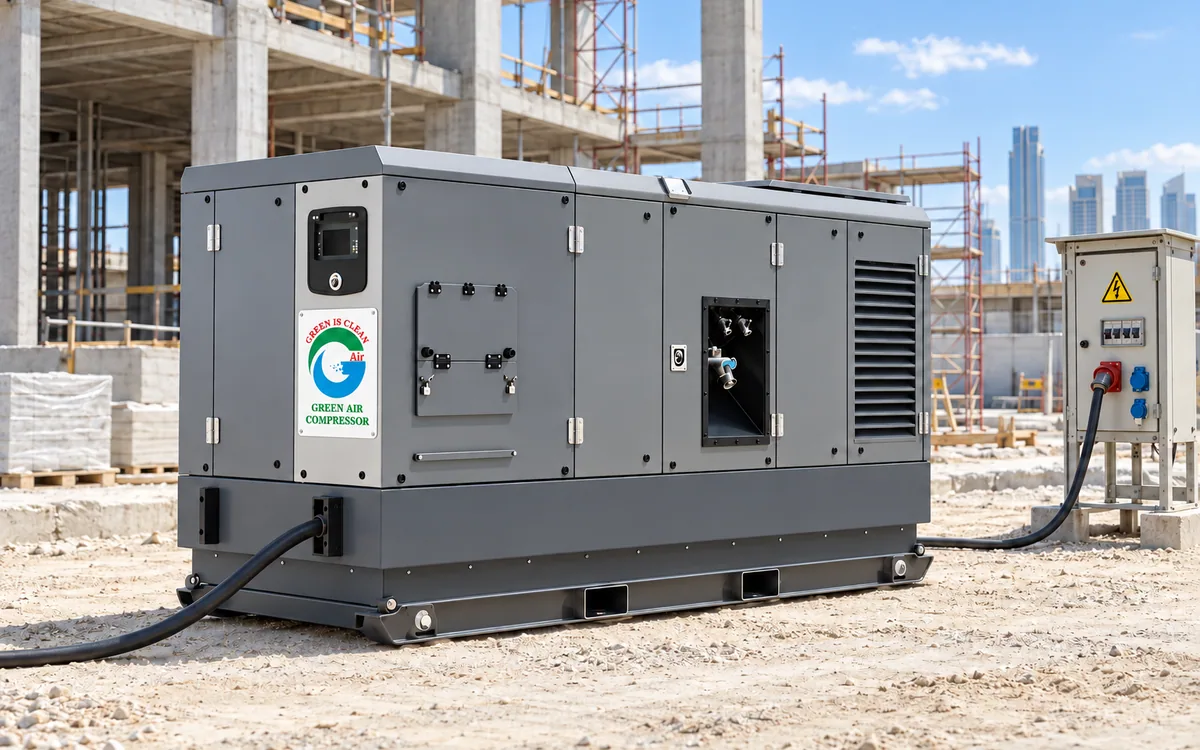
Electric portable compressors
Zero-emission site air where a power supply is available.
- Free air delivery
- 1.5 – 5.0 m³/min (124 – 177 cfm)
- Working pressure
- 5 – 12 bar g
- Motor power
- 30 kW
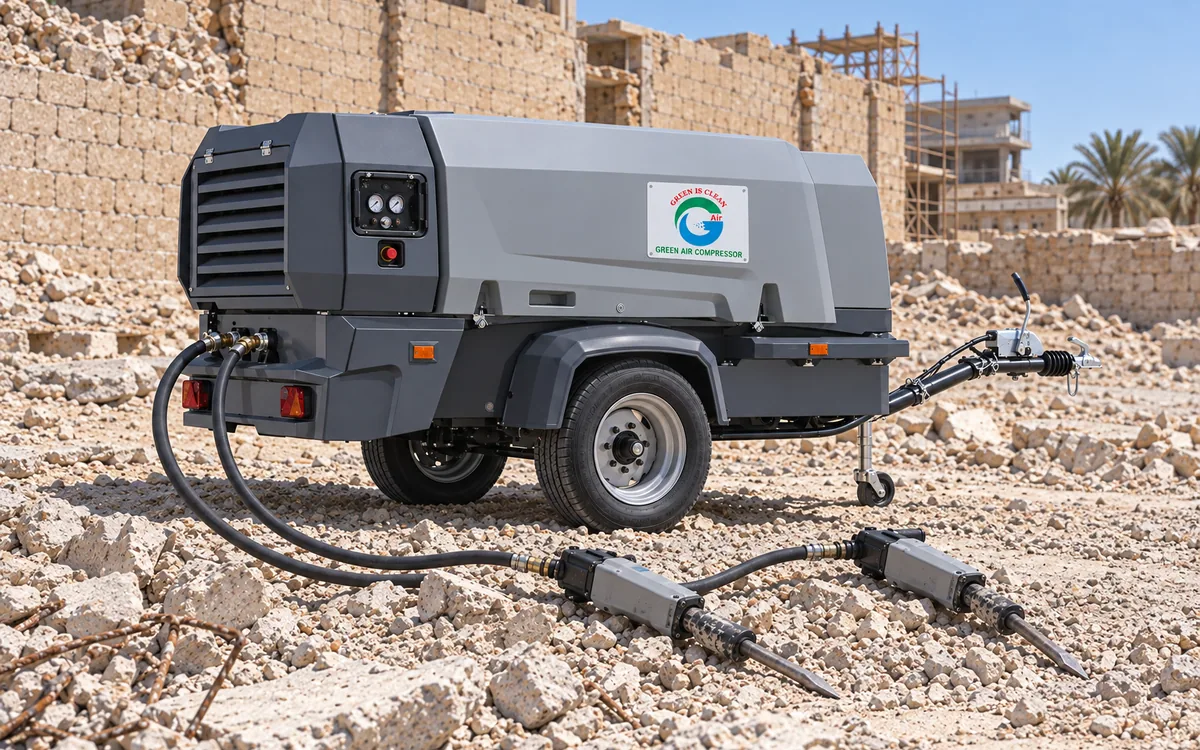
Medium portable diesel compressors
185 to 400 cfm, the general-purpose site range.
- Free air delivery
- 5.5 – 10.0 m³/min (194 – 353 cfm)
- Working pressure
- 5 – 14 bar g
- Motor power
- 55 – 90 kW
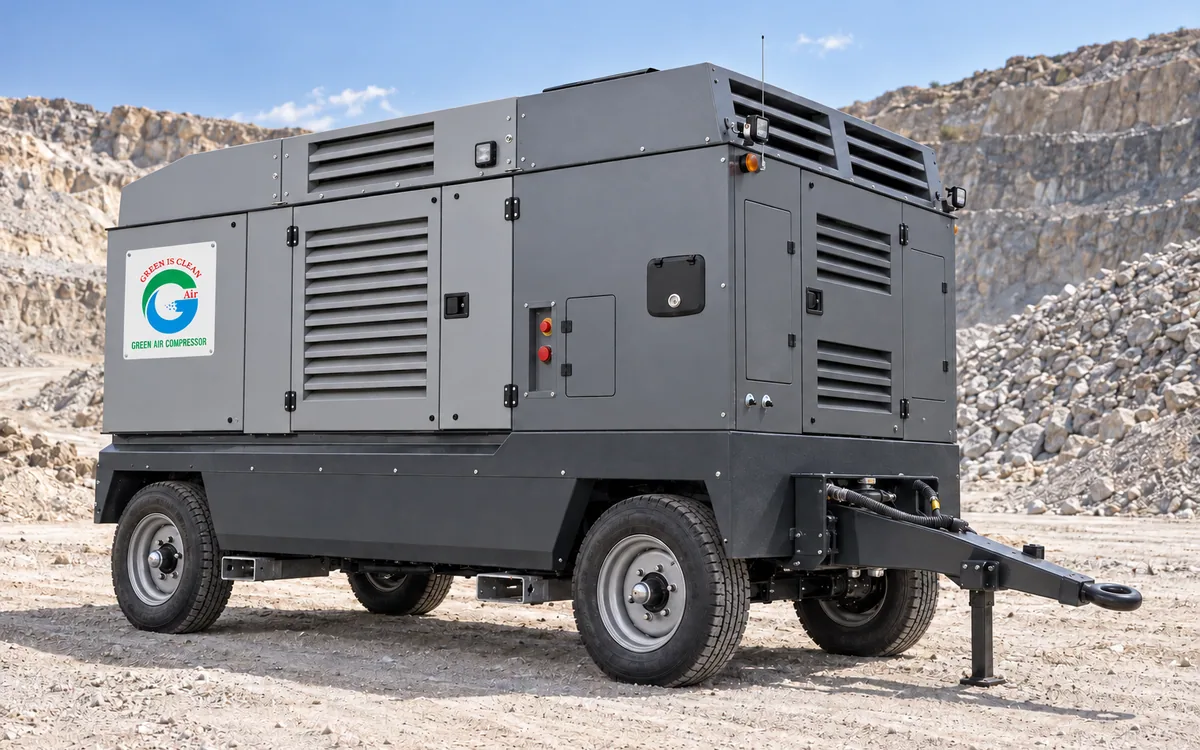
Large portable diesel compressors
650 to 1600 cfm for drilling, blasting and pipeline work.
- Free air delivery
- 11.0 – 27.0 m³/min (388 – 954 cfm)
- Working pressure
- 5 – 24 bar g
- Motor power
- 90 – 224 kW
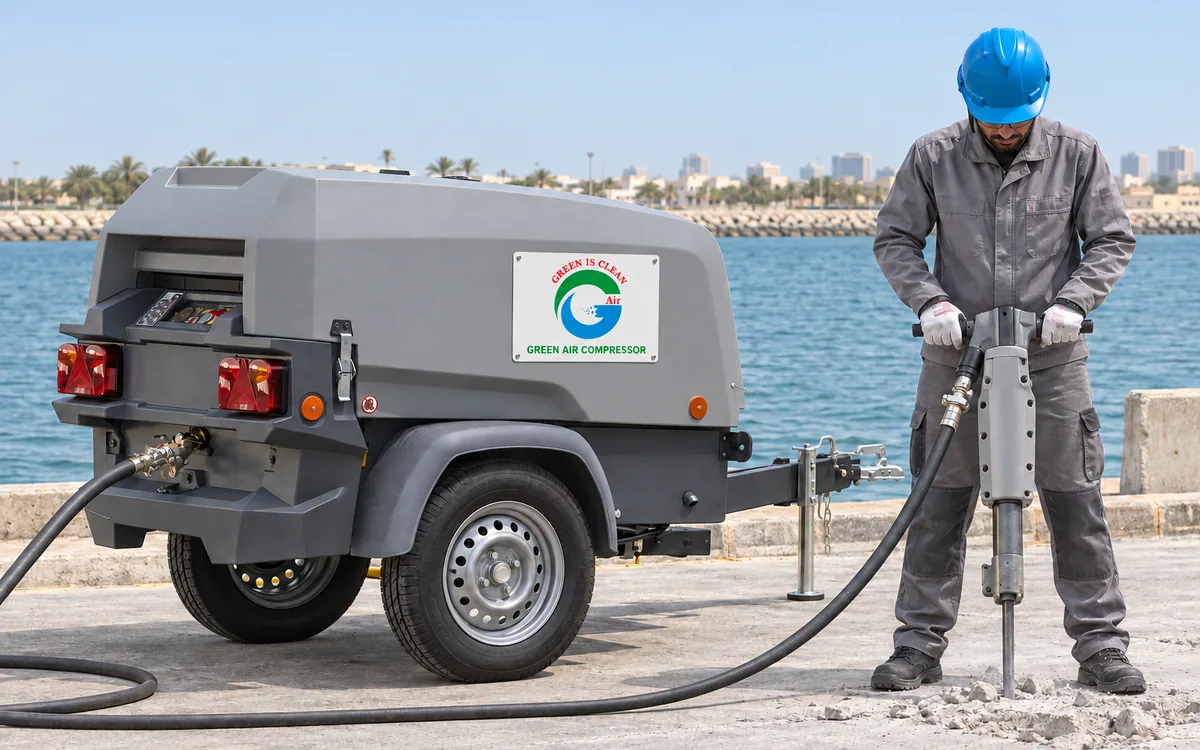
Ready-to-go compressor range
Standard specification machines held in stock for immediate delivery.
Learn moreNot sure which model you need?
Send us your air demand, working pressure and running hours. Our engineers will size the machine and send a written recommendation, no cost, no obligation.