
Portable compressor controllers
Panels and telemetry that make a fleet manageable.
Overview
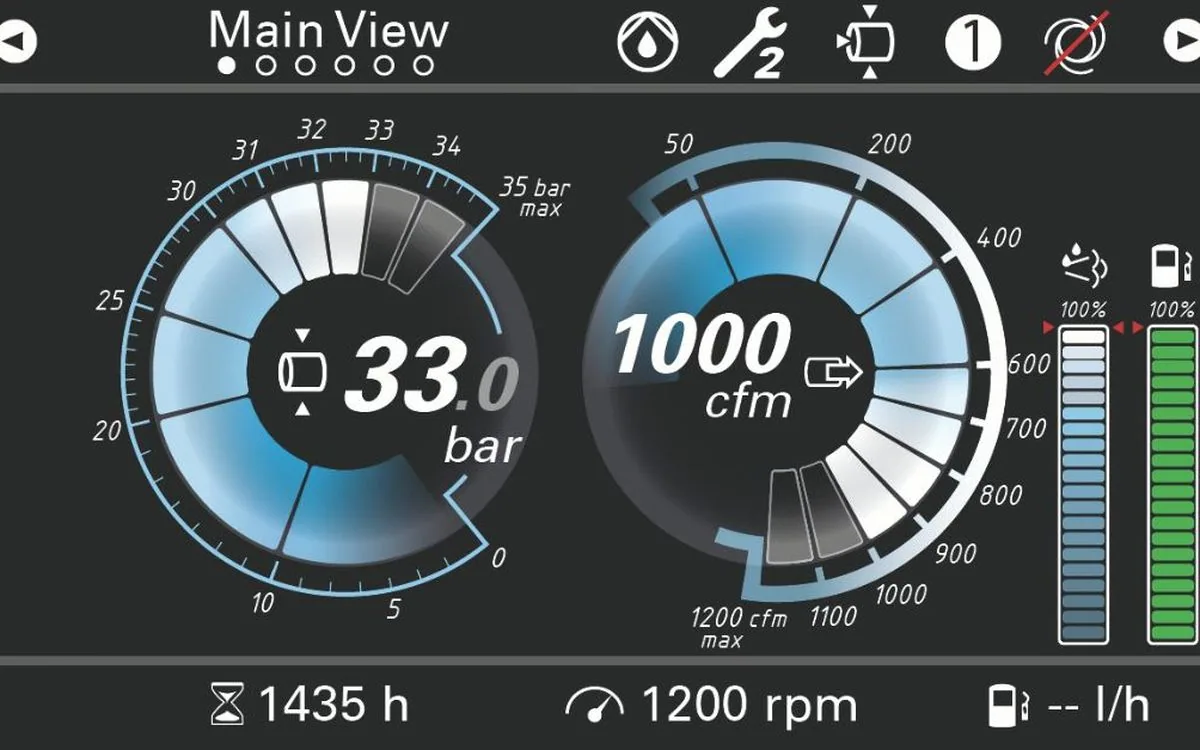
A single compressor can be managed by walking up to it. A fleet of twenty spread across four sites cannot, and that is where most hire and contracting businesses quietly lose money, on machines idling, machines missing services and machines that are not where the paperwork says they are.
The controller handles the machine. The telemetry module handles the fleet. Running hours, fuel level, location, faults and service countdowns all appear in one list.
Key benefits
Know where every machine is
GPS location and running hours per unit, updated automatically.
Services triggered by hours
Service due lists generated from actual running hours, not from a whiteboard.
Fuel theft becomes visible
Fuel level logging shows consumption that does not match running hours.
Faults before failures
Temperature and pressure alarms sent by message before the machine stops.
What it does
A central controller runs a plant room of compressors as one system instead of several machines each deciding for itself what to do.
Left alone, machines fight. One loads while another unloads, the pressure band widens to cover them all, and the plant ends up running at a higher pressure than it needs.
A controller holds a single narrow band across the whole room, decides which machine runs and swaps the lead unit so hours spread evenly rather than piling onto one.
- Runs several compressors as one system
- Single narrow pressure band across the plant
- Lead machine swapped so hours spread evenly
- Stops machines fighting each other
- Mixed makes and ages supported
- Variable speed used as the trim machine
- Full trending and reporting
- Remote access included
What it saves
Most of the saving comes from lowering the system pressure. Every bar you take out is about seven per cent of the energy, and a controller is usually what makes that possible safely.
The second saving is unloaded running. A machine idling makes no air and still draws power, and the controller is what stops that happening across the room.
We measure before and after rather than claiming a figure. If the saving is not there you will see that too.
- System pressure reduced safely
- About seven per cent of energy per bar removed
- Unloaded running cut across the plant
- Measured before and after, not claimed
- Report issued with the figures
- Works with machines you already own
- Payback usually under two years
- Installed and commissioned by our team
Parts and service
A controller needs its sensors checked and its settings reviewed, because a plant changes and a setting that was right two years ago may not be now.
We review the pressure band and the machine order at every service visit and report what we changed and why.
Software is kept up to date and the settings are backed up, so a failure is an afternoon rather than a re commissioning.
- Sensors checked and calibrated
- Pressure band reviewed at every visit
- Machine order reviewed as the plant changes
- Settings backed up
- Software kept up to date
- Changes reported with the reasons
- Remote support included
- Fixed price under a service plan
Frequently asked questions
What does a controller actually do?
It decides which machines run, when they load, and at what pressure, which is where most of the avoidable energy waste in a compressed air system lives.
Why do I need one with more than one compressor?
Because unsequenced machines fight each other. Two compressors on their own pressure switches will both part-load rather than one running fully loaded.
How much can it save?
Typically 5–15% on a multi-machine plant, more where the pressure band can also be narrowed. It is one of the cheapest savings available.
What is a pressure band?
The gap between load and unload pressure. A sequencer narrows it, and every 0.1 bar removed from the average is energy you stop paying for.
Can it work with mixed brands?
Yes. A good sequencer controls machines of different makes and ages, which matters because most plants have grown one compressor at a time.
Does it handle variable speed machines too?
It should. The correct strategy is one variable-speed machine trimming while fixed-speed machines carry base load: the controller is what enforces that.
Can I see the data?
Yes: running hours, load profile, pressure and energy, logged. That data is also what an audit or an efficiency claim needs.
Will it warn me about faults?
Yes, alarms and trends, and with remote monitoring we see them too. Most compressor failures announce themselves in the data first.
How long does installation take?
Usually a day, mostly wiring and commissioning. Machines rarely need to stop for more than a short changeover.
How quickly does it pay back?
Often under a year on a three-machine plant. We measure first and tell you the number for your site rather than quoting a brochure figure.
Related products
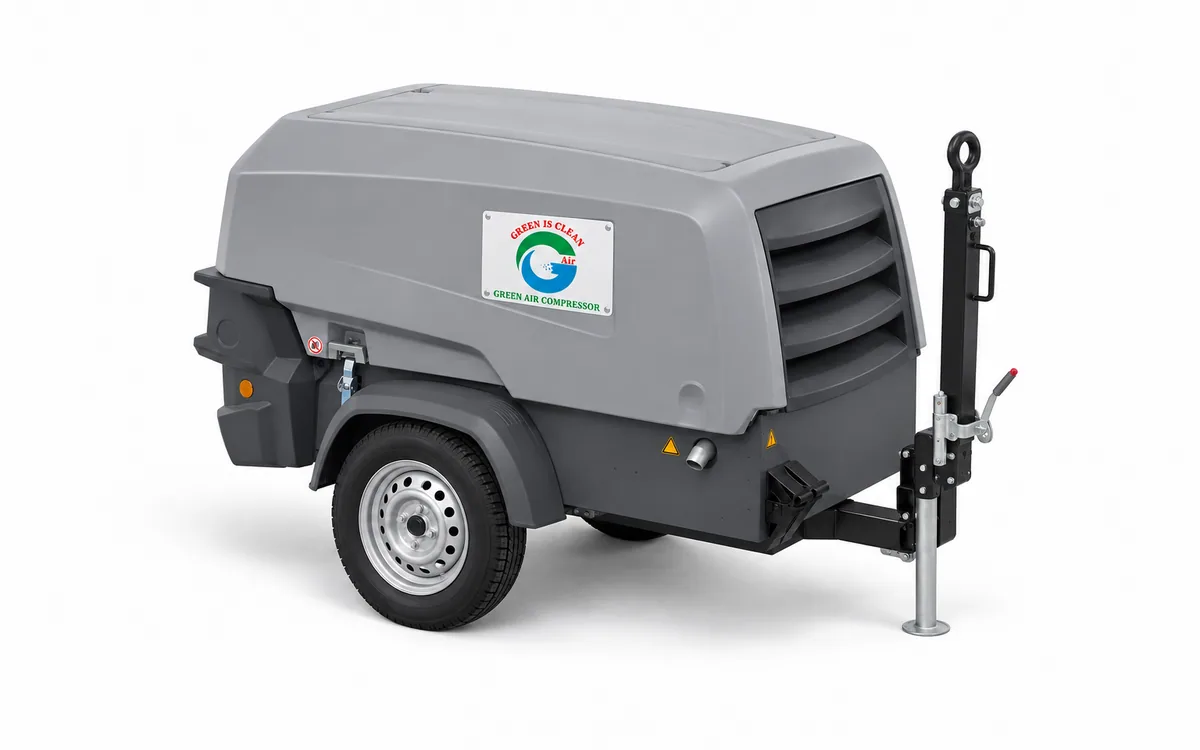
Diesel portable compressors
Towable diesel units for sites with no power supply.
- Free air delivery
- 3.0 – 10.5 m³/min (106 – 371 cfm)
- Working pressure
- 5 – 14 bar g
- Motor power
- 35 – 90 kW
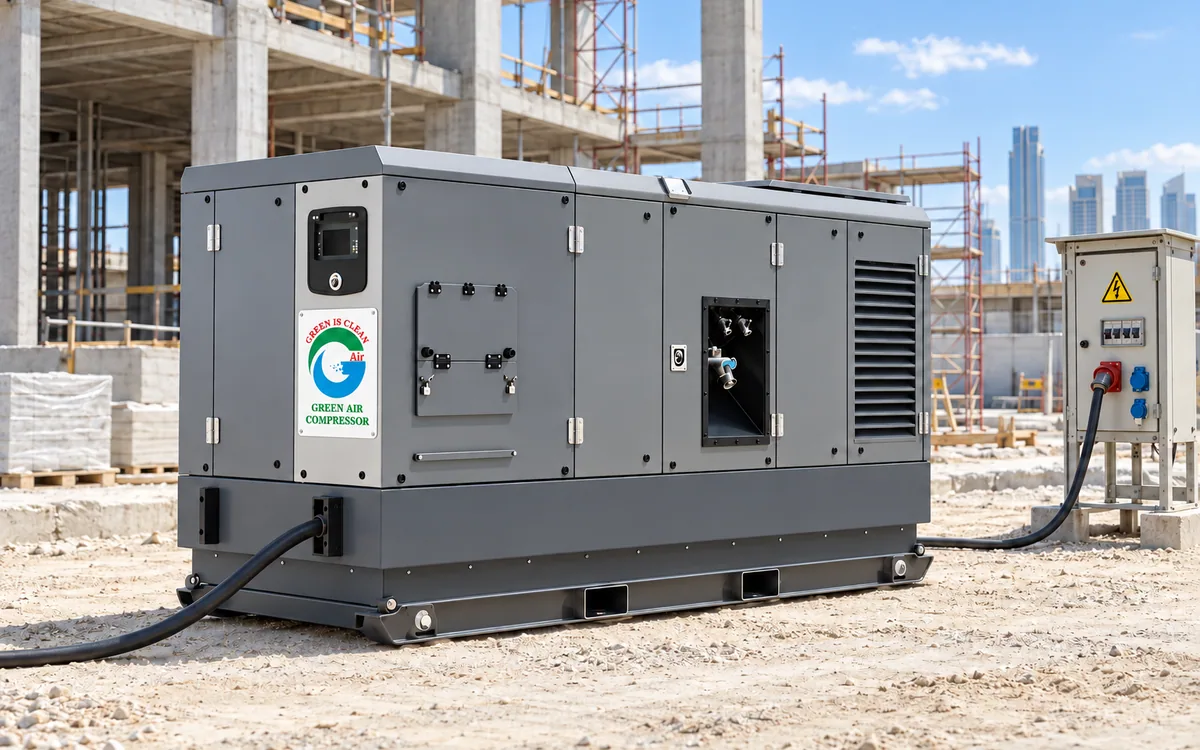
Electric portable compressors
Zero-emission site air where a power supply is available.
- Free air delivery
- 1.5 – 5.0 m³/min (124 – 177 cfm)
- Working pressure
- 5 – 12 bar g
- Motor power
- 30 kW
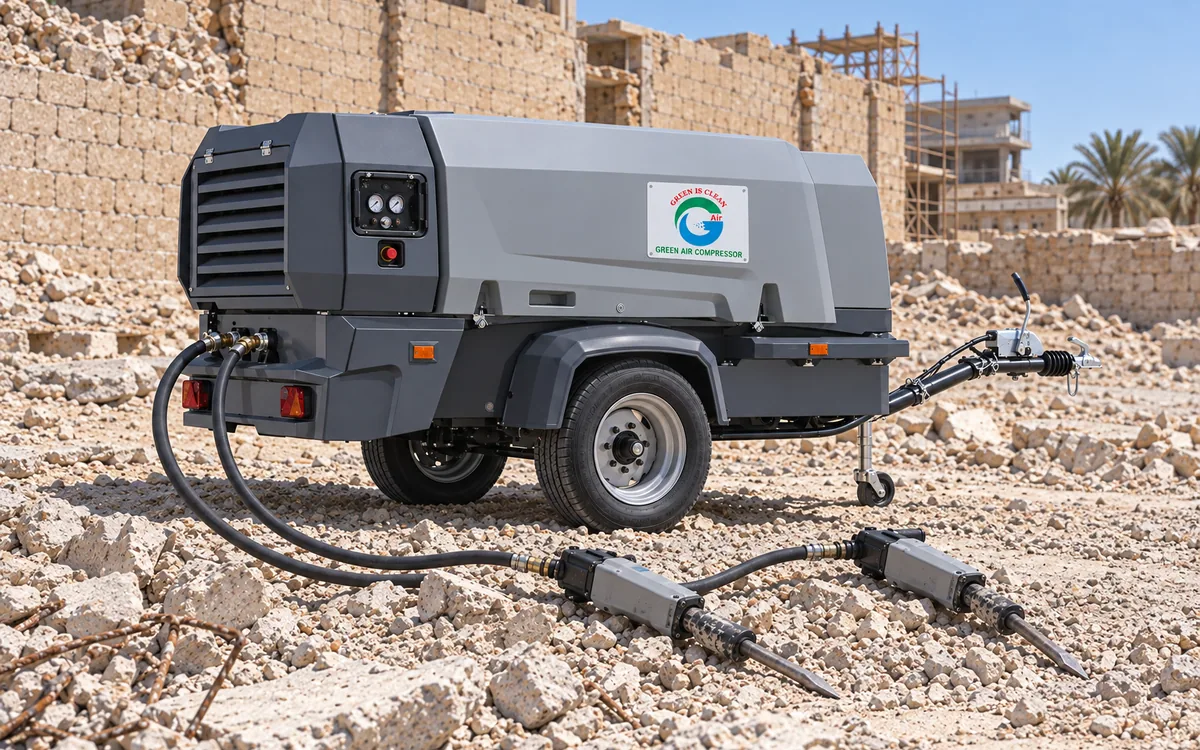
Medium portable diesel compressors
185 to 400 cfm, the general-purpose site range.
- Free air delivery
- 5.5 – 10.0 m³/min (194 – 353 cfm)
- Working pressure
- 5 – 14 bar g
- Motor power
- 55 – 90 kW
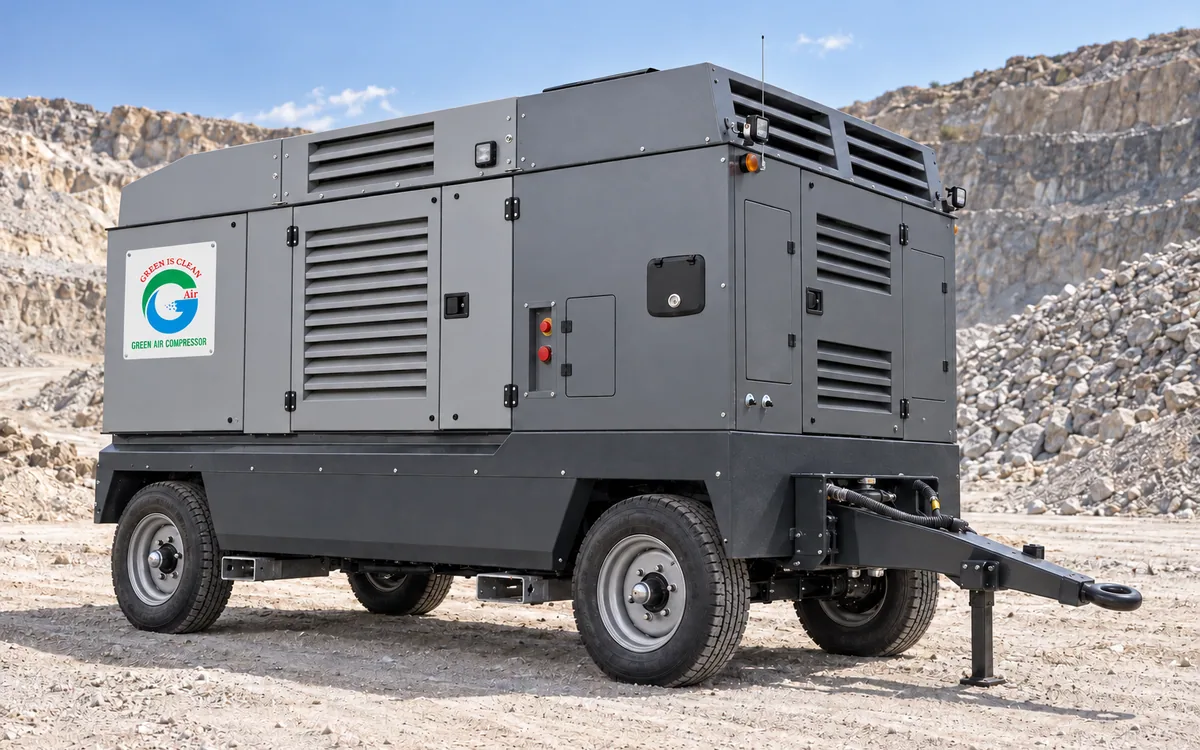
Large portable diesel compressors
650 to 1600 cfm for drilling, blasting and pipeline work.
- Free air delivery
- 11.0 – 27.0 m³/min (388 – 954 cfm)
- Working pressure
- 5 – 24 bar g
- Motor power
- 90 – 224 kW
Not sure which model you need?
Send us your air demand, working pressure and running hours. Our engineers will size the machine and send a written recommendation, no cost, no obligation.