
Oxygen compressors
Oil free by necessity, built and cleaned to oxygen service standards.
Technical data
- Free air delivery
- 30 – 120 Nm³/h
- Working pressure
- 120 – 150 bar g
- Motor power
- 11 – 30 kW
- Weight
- 750 – 1,350 kg
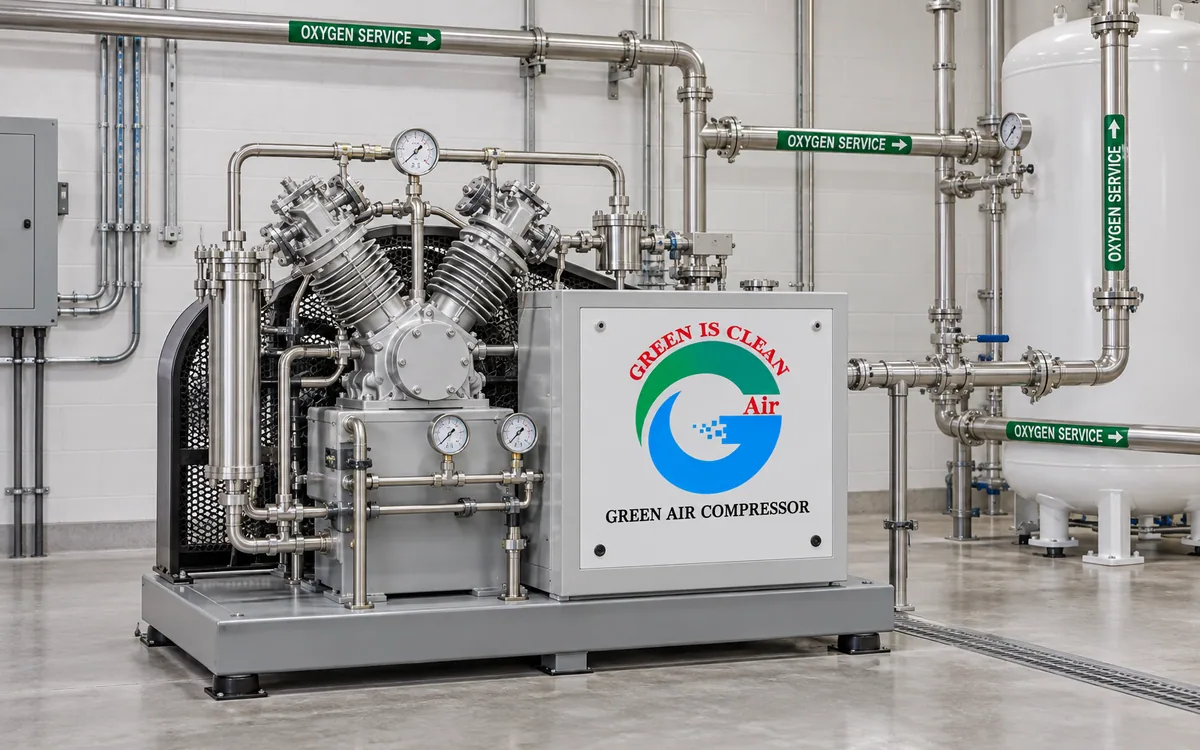
Overview
Oxygen compression is the one duty where a mistake in specification is not a commercial problem. Oil and oxygen under pressure will ignite, so every part of the gas path has to be oil free, cleaned to an oxygen standard and built from materials that will not burn.
That is not an option box on a normal machine. It is a different machine, cleaned in a different facility, with a different set of certificates, and any supplier who offers to convert an air compressor for oxygen service should be declined.
Key benefits
Cleaned for oxygen service
Degreased and certified to a recognised oxygen cleaning standard, with the paperwork to prove it.
Oil free by construction
No lubricant anywhere in the gas path. Not filtered out — never present.
Materials chosen for oxygen
Wetted parts selected for oxygen compatibility, including the seals and the valve components.
Documented for inspection
Material certificates, cleaning certificates and test records supplied as part of the machine.
Why this cannot be improvised
Oxygen raises the ignition temperature threshold of almost everything downwards. Materials that are inert in air become fuel, and a trace of hydrocarbon that would be invisible in an air machine becomes an ignition source.
The consequence is that the whole chain has to be controlled: the compressor, the pipework, the valves, the gaskets and the cleaning of all of them. A correctly built compressor bolted to pipework nobody cleaned is not a safe installation.
We supply the machine with its certification and we will tell you what the rest of the installation needs. Where a customer wants only the compressor, we say plainly what has been left out.
- Oil free gas path by construction
- Cleaned and certified for oxygen service
- Oxygen compatible seals and wetted parts
- Material and cleaning certificates supplied
- Pipework requirements stated with the quotation
- Never converted from an air machine
What we need to quote
Gas compressors are not selected from a catalogue. The gas itself decides the materials, the seals and the safety case, and two plants asking for the same machine on paper often need different builds.
Four answers cover most of it: the gas and its composition, the suction pressure and temperature, the discharge pressure required, and the flow. With those we can size the machine and tell you whether it should be a screw, a reciprocating or a centrifugal.
Then the site questions. Area classification, whether the gas is wet or contains hydrogen sulphide, what the local authority requires, and whether the duty can stop. Those decide the seal arrangement and whether you need one machine or two.
- Gas composition and molecular weight
- Suction pressure and temperature
- Discharge pressure required
- Flow, normal and maximum
- Area classification
- Whether the duty can be interrupted
Model range
- 150 bar g
- 30 Nm³/h
- Weight
- 750 kg
- Dimensions L x W x H
- 1550 × 910 × 1355 mm
- 150 bar g
- 40 Nm³/h
- Weight
- 780 kg
- Dimensions L x W x H
- 1550 × 910 × 1355 mm
- 150 bar g
- 50 Nm³/h
- Weight
- 800 kg
- Dimensions L x W x H
- 1550 × 910 × 1355 mm
- 150 bar g
- 60 Nm³/h
- Weight
- 800 kg
- Dimensions L x W x H
- 1550 × 910 × 1355 mm
- 150 bar g
- 70 Nm³/h
- Weight
- 980 kg
- Dimensions L x W x H
- 1850 × 1600 × 1600 mm
- 150 bar g
- 80 Nm³/h
- Weight
- 1,150 kg
- Dimensions L x W x H
- 1850 × 1600 × 1600 mm
- 150 bar g
- 90 Nm³/h
- Weight
- 1,150 kg
- Dimensions L x W x H
- 1850 × 1600 × 1600 mm
- 150 bar g
- 100 Nm³/h
- Weight
- 1,150 kg
- Dimensions L x W x H
- 1850 × 1600 × 1600 mm
- 120 bar g
- 120 Nm³/h
- Weight
- 1,350 kg
- Dimensions L x W x H
- 1850 × 1800 × 1600 mm
FAD measured to ISO 1217 Edition 4, Annex C and E at 1 bar a intake, 20°C, 0% humidity. Noise measured to ISO 2151 in free field conditions, tolerance ± 3 dB(A). Water-cooled versions of every model are available. Ask us for their sheet.
Frequently asked questions
Can an air compressor be converted for oxygen?
No, and anyone offering to do it should be declined. The cleaning, the materials and the construction are different from the start.
What certification comes with it?
Material certificates for the wetted parts, an oxygen cleaning certificate, and the test records. They are part of the supply, not an extra.
Does the pipework matter too?
As much as the machine. A correctly built compressor connected to uncleaned pipework is not a safe system, and we will say so before quoting.
Why is oil so dangerous with oxygen?
Because oxygen lowers the ignition threshold of almost everything. A trace of hydrocarbon that would be invisible in an air machine becomes an ignition source.
What materials are used?
Wetted parts selected for oxygen compatibility, including the seals and valve components. The selection is documented rather than assumed.
Can you clean an existing installation?
Pipework, valves and vessels can be cleaned to an oxygen standard by a qualified contractor. We state the requirement and can co-ordinate it, but we do not pretend it is optional.
Is it oil free or filtered?
Oil free by construction. There is no lubricant in the gas path at any point, which is a different claim from filtering oil out afterwards.
What flow and pressure are available?
The range is wide and the selection follows from your duty. Give us the suction condition, the discharge pressure and the flow, and we size it.
Is it suitable for medical oxygen?
The machine can be. A medical gas plant is a regulated system with its own approvals, alarms and records, and we supply it as a system rather than as a compressor.
How is it maintained?
On a documented schedule, with parts that are themselves cleaned for oxygen service. An ordinary spare fitted to an oxygen machine defeats the whole specification.
Related products
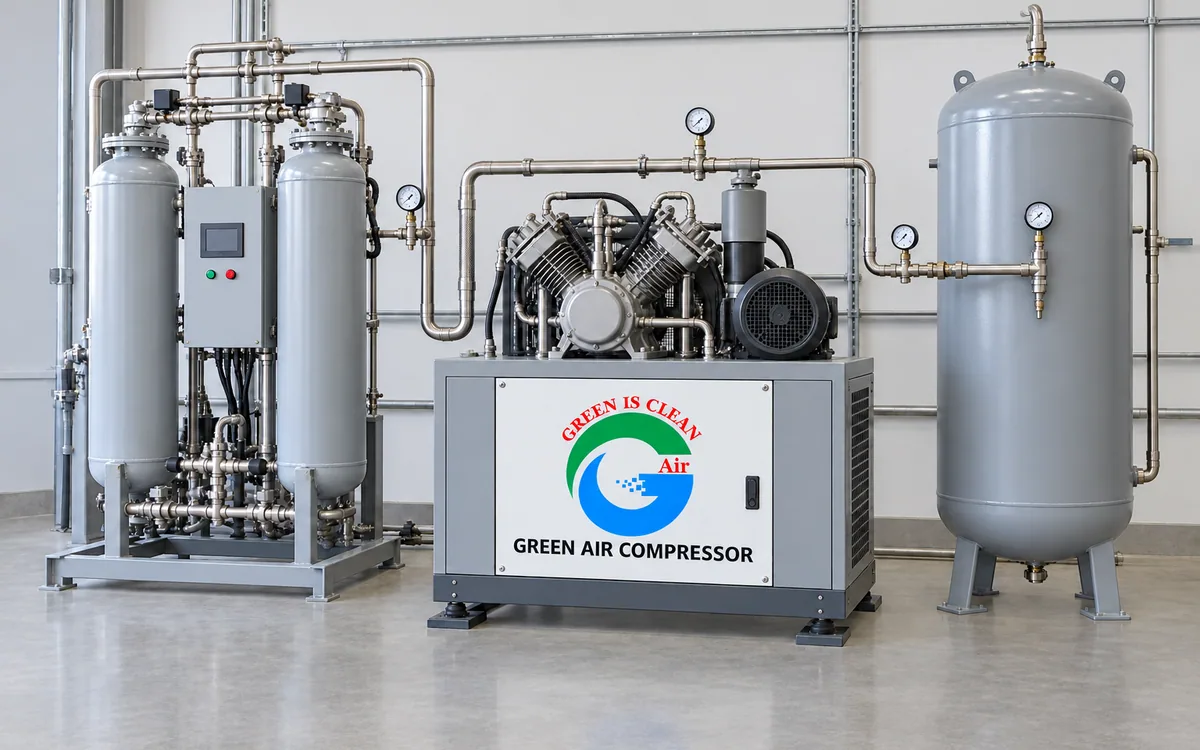
Nitrogen compressors
Boosting and circulating nitrogen for blanketing, purging and process.
- Free air delivery
- 90 – 3,000 Nm³/h
- Working pressure
- 3 – 160 bar g
- Motor power
- 22 – 250 kW
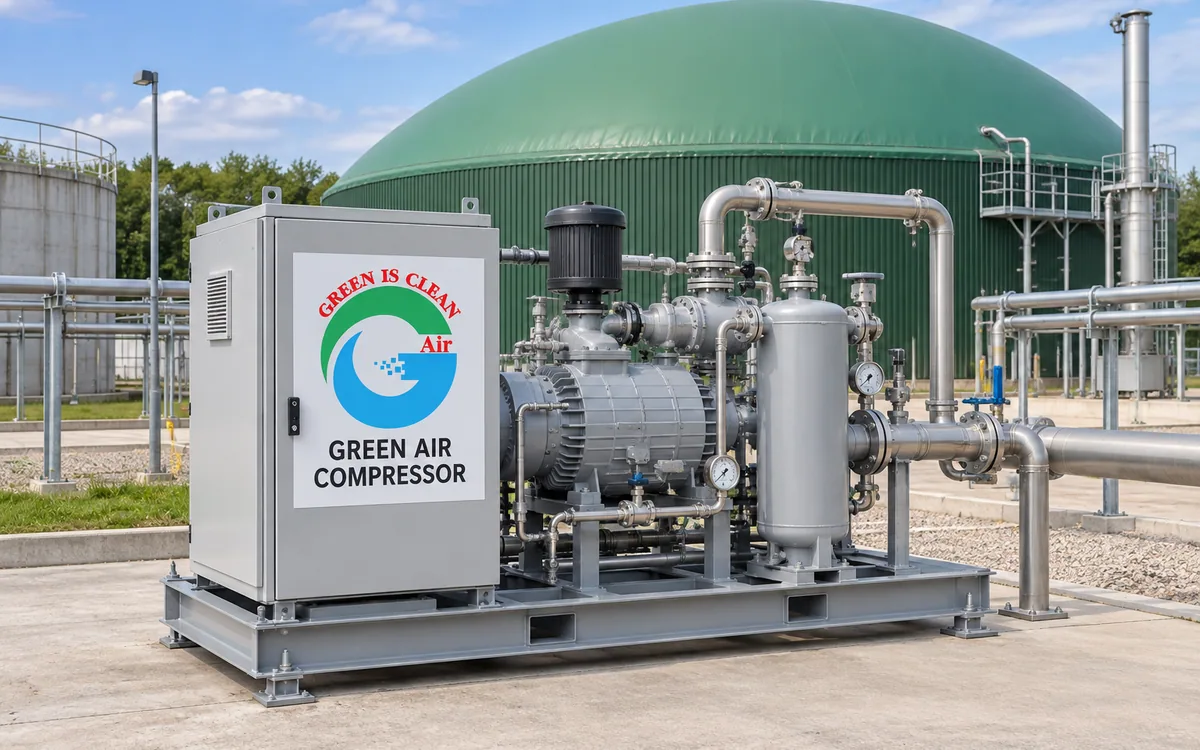
Biogas compressors
Wet, corrosive, variable gas handled without eating the machine.
- Free air delivery
- 50 – 700 Nm³/h
- Working pressure
- 5 – 45 bar g
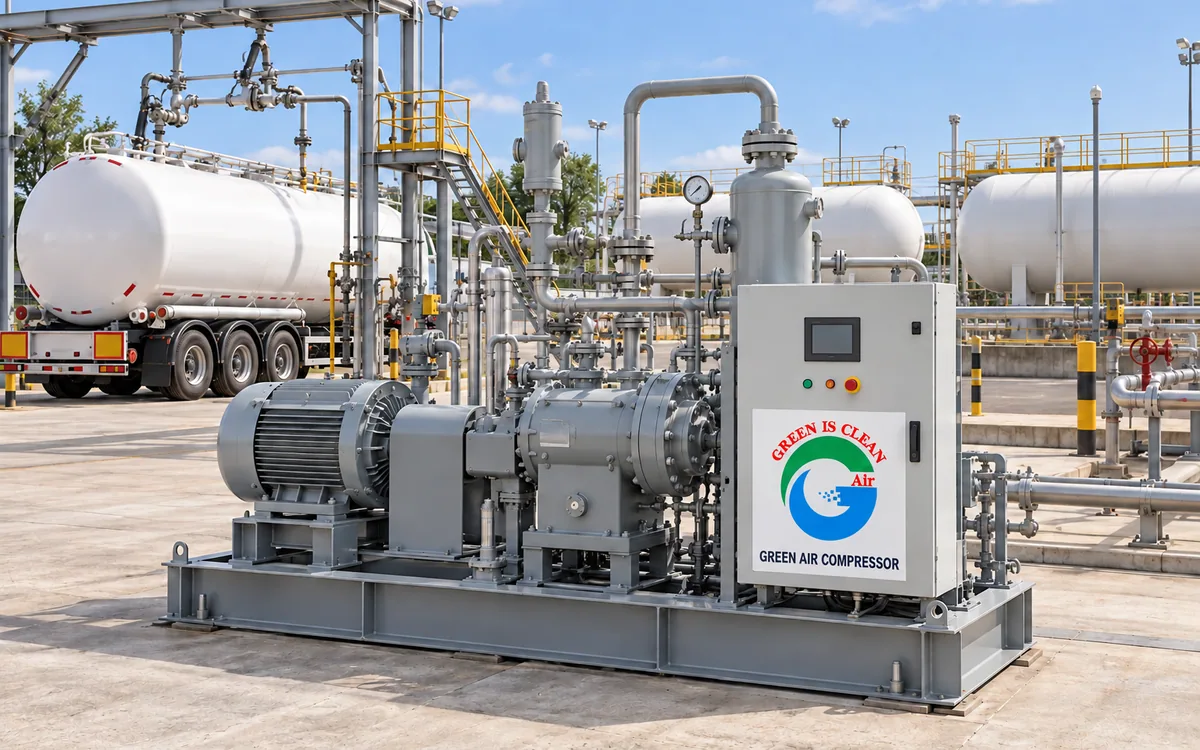
LPG and hydrocarbon gas compressors
Transfer, recovery and vapour handling for propane, butane and mixed gas.
- Working pressure
- 16 bar g
- Motor power
- 4 – 110 kW
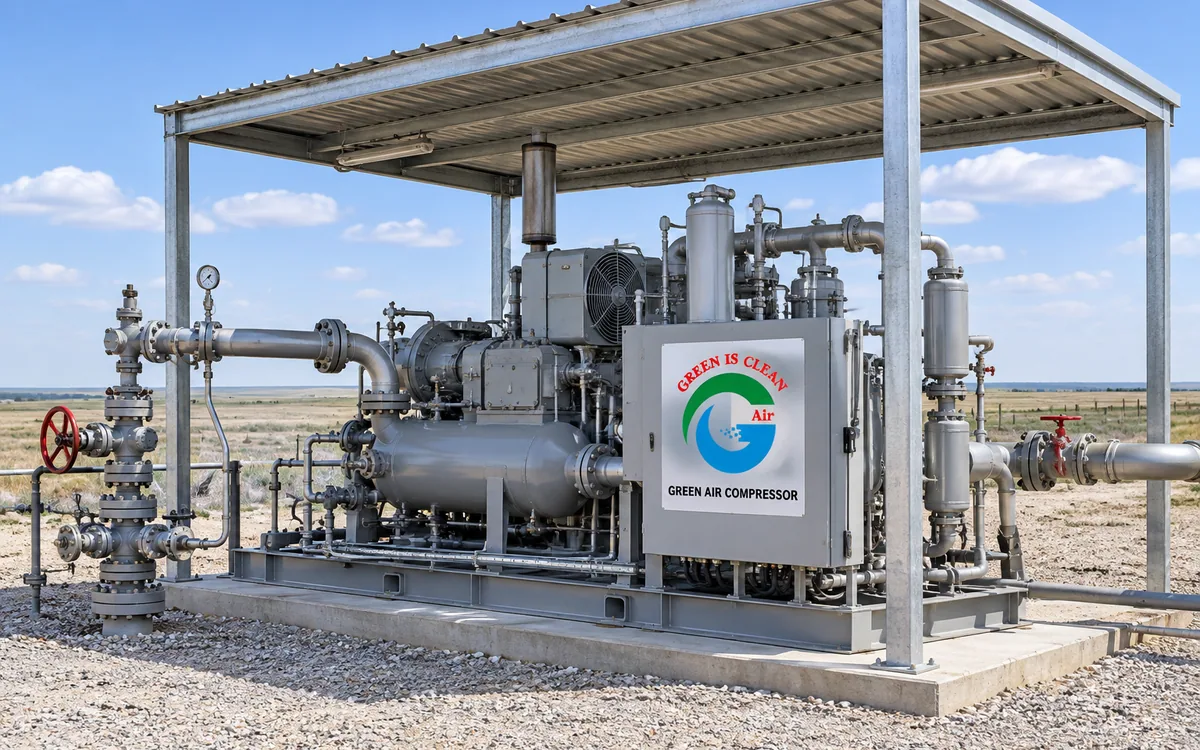
Natural gas compressors
Wellhead, gathering, boosting and fuel gas duties.
- Free air delivery
- 10 – 3,400 Nm³/h
- Working pressure
- 1 – 210 bar g
Not sure which model you need?
Send us your air demand, working pressure and running hours. Our engineers will size the machine and send a written recommendation, no cost, no obligation.