
Truck mounted compressors for bulk tankers
Oil-free screw compressors that discharge powder and granules from road tankers. 1.0 to 2.5 bar g, 7.1 to 13.6 m³/min.
Technical data
- Free air delivery
- 7.1 – 13.6 m³/min (251 – 480 cfm)
- Working pressure
- 1 – 2.5 bar g
- Motor power
- 23.1 – 42.3 kW
Overview
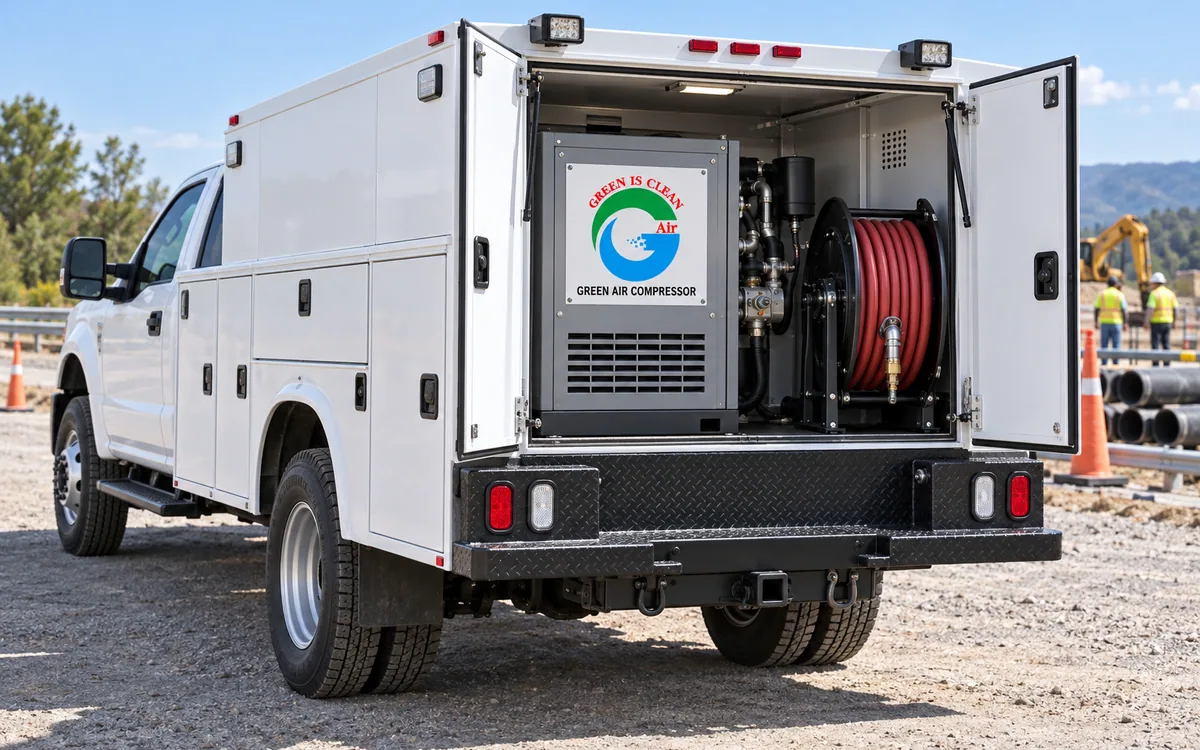
A road tanker carrying flour, cement or plastic pellets has to get its load out again, and it does that with air. A compressor on the chassis, driven by the vehicle's power take off, pressurises the tank and blows the product along a line into the customer's silo. The discharge is the job, and the compressor decides how long it takes.
These are oil-free screw compressors, and on this duty that is not a preference. The air is in direct contact with the load, so a lubricated machine would carry oil into food, feed or pharmaceutical material. Nothing in the compression chamber is lubricated, so there is nothing to carry over.
Key benefits
Nothing reaches the load
The air touches the product it is pushing. There is no lubricant in the compression chamber, so flour, sugar and feed arrive as they left.
Driven by the truck
A power take off drive between 700 and 1100 rpm. No second engine to fuel, to service, or to find room for on the chassis.
The discharge temperature is published
Every point in the table states it, from 109 °C at 1.0 bar to 190 °C at 2.5. On a heat-sensitive product that figure decides the duty, and it is not always given.
Built for the round trip
Dust, vibration, and a machine that stands overnight and has to work at the first delivery. The specification follows the route rather than the rating.
How a tanker discharges
The compressor pressurises the tank body and fluidises the load with air through the cone, so the powder behaves like a liquid. A valve opens and the mixture flows along the discharge line into the silo. More pressure moves it faster and further, which is why this range runs from 1.0 to 2.5 bar g rather than stopping at one figure.
The pressure you need comes from the line, not from the product alone: how long the run is, how high it lifts, and how dense the material is. A short drop into a low silo at a flour mill is a different duty from a long climb up the side of a cement plant, and the same tanker may do both in a week.
Capacity falls as pressure rises, as it does on any compressor. The 700 rpm machine gives 8.0 m³/min at 1.0 bar and 7.1 at 2.5. Input speed is the other half of the choice and it is set by the power take off, which is why the table is read across as well as down.
- Oil free in the compression chamber
- Power take off drive, 700 to 1100 rpm
- 1.0 to 2.5 bar g discharge pressure
- Discharge temperature stated at every point
- Motor drive for a fixed installation, where required
- Suitable for food, feed and pharmaceutical loads
Model range
- 1.0 bar g
- 8.0 m³/min
- 1.0 bar g
- 9.5 m³/min
- 1.0 bar g
- 11.0 m³/min
- 1.0 bar g
- 12.0 m³/min
- 1.0 bar g
- 13.6 m³/min
- 1.5 bar g
- 7.5 m³/min
- 1.5 bar g
- 9.0 m³/min
- 1.5 bar g
- 10.5 m³/min
- 1.5 bar g
- 11.7 m³/min
- 1.5 bar g
- 13.2 m³/min
- 2.0 bar g
- 7.3 m³/min
- 2.0 bar g
- 8.7 m³/min
- 2.0 bar g
- 10.1 m³/min
- 2.0 bar g
- 11.4 m³/min
- 2.0 bar g
- 12.8 m³/min
- 2.5 bar g
- 7.1 m³/min
- 2.5 bar g
- 8.5 m³/min
- 2.5 bar g
- 9.8 m³/min
- 2.5 bar g
- 11.1 m³/min
Performance to ISO 1217 Annex C at 20 °C inlet, 1 bar(a). Figures are typical and subject to confirmation. Ask us for the certified test report for your selected model.
Overall dimensions and net weight are supplied with the configured quotation and the arrangement drawing. Tell us the model and the duty and we will send both. Ask us
Frequently asked questions
Why does it have to be oil free?
Because the air is in contact with the load. On a lubricated machine some oil leaves with the air as a vapour, and on flour, sugar, feed or pharmaceutical material that is a contaminated delivery. These machines have no lubricant in the compression chamber at all.
What do the numbers in the model code mean?
The first is the input speed in rpm and the second is the discharge pressure in tenths of a bar. GA-TM-900-20 is 900 rpm at 2.0 bar g.
How do I know which pressure I need?
From the discharge line rather than the product: its length, how high it lifts and how dense the material is. Tell us the longest delivery you make and we will size for that one.
Why does capacity fall as pressure rises?
Because more of the shaft power goes into compressing and less into moving air. At 700 rpm you get 8.0 m³/min at 1.0 bar and 7.1 at 2.5, and the discharge simply takes longer.
Does the discharge temperature matter?
On some loads a great deal. Sugar, some plastics and certain pharmaceutical powders do not tolerate hot air, and this range runs from 109 °C at the lowest duty to 190 °C at the highest. It is published for every point so it can be checked before ordering.
Can it run from a motor instead of the truck?
Yes. The same compressor is supplied on a motor drive for a fixed installation, which is what a silo or a plant-side unloading point usually wants.
What speed will my power take off give?
That is the vehicle's answer rather than ours, and it sets which column of the table you are in. Tell us the chassis and the power take off ratio and we will work it out.
What maintenance does it need?
An air filter, the gear end oil at its interval, and the drive checked. There is no oil in the air path to change and no separator element, which is most of what a lubricated machine's service consists of.
Related products
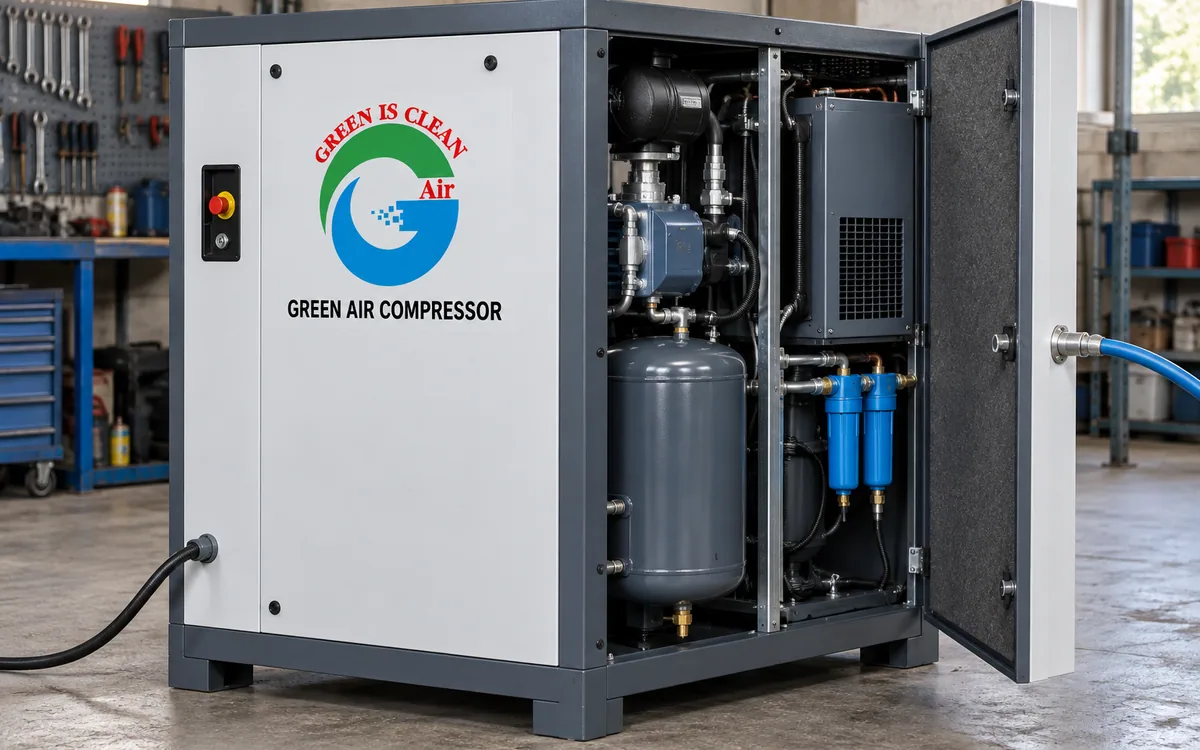
Four in one integrated compressors
Compressor, dryer, filters and receiver in one cabinet. 4 to 18 kW.
- Free air delivery
- 0.25 – 3 m³/min (9 – 106 cfm)
- Working pressure
- 7 – 13 bar g
- Motor power
- 4 – 18 kW
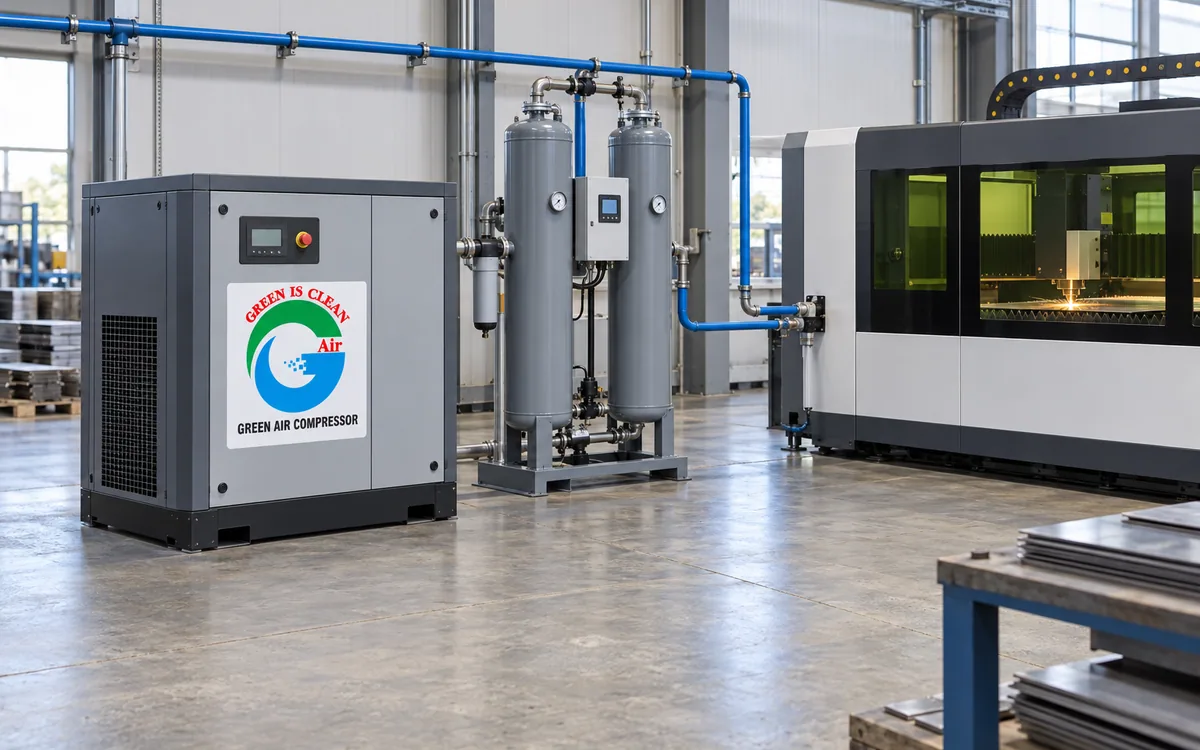
Laser cutting air compressors
The head wants 13 to 16 bar at the nozzle, so the machine is a 20 to 30 bar one. 90 to 250 kW.
- Free air delivery
- 8.5 – 25 m³/min (300 – 883 cfm)
- Working pressure
- 20 – 30 bar g
- Motor power
- 90 – 250 kW
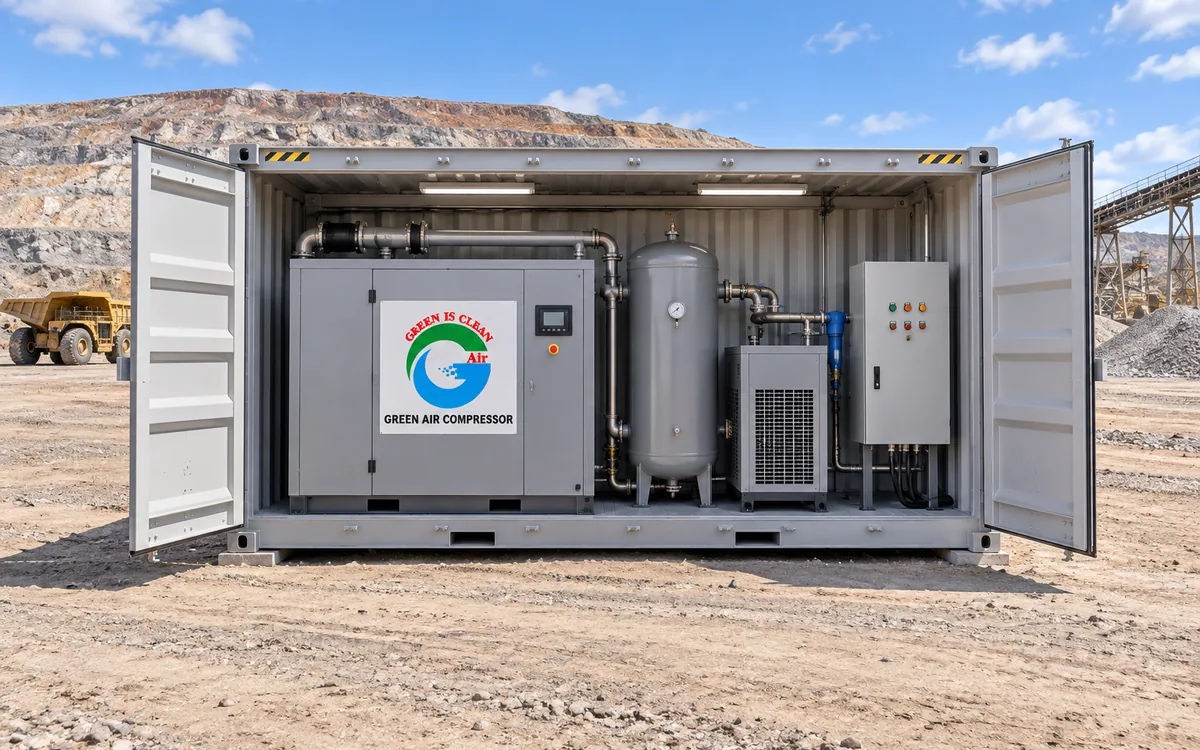
Containerised air compressors
A complete air station inside a shipping container. Ready to run on site.
Learn more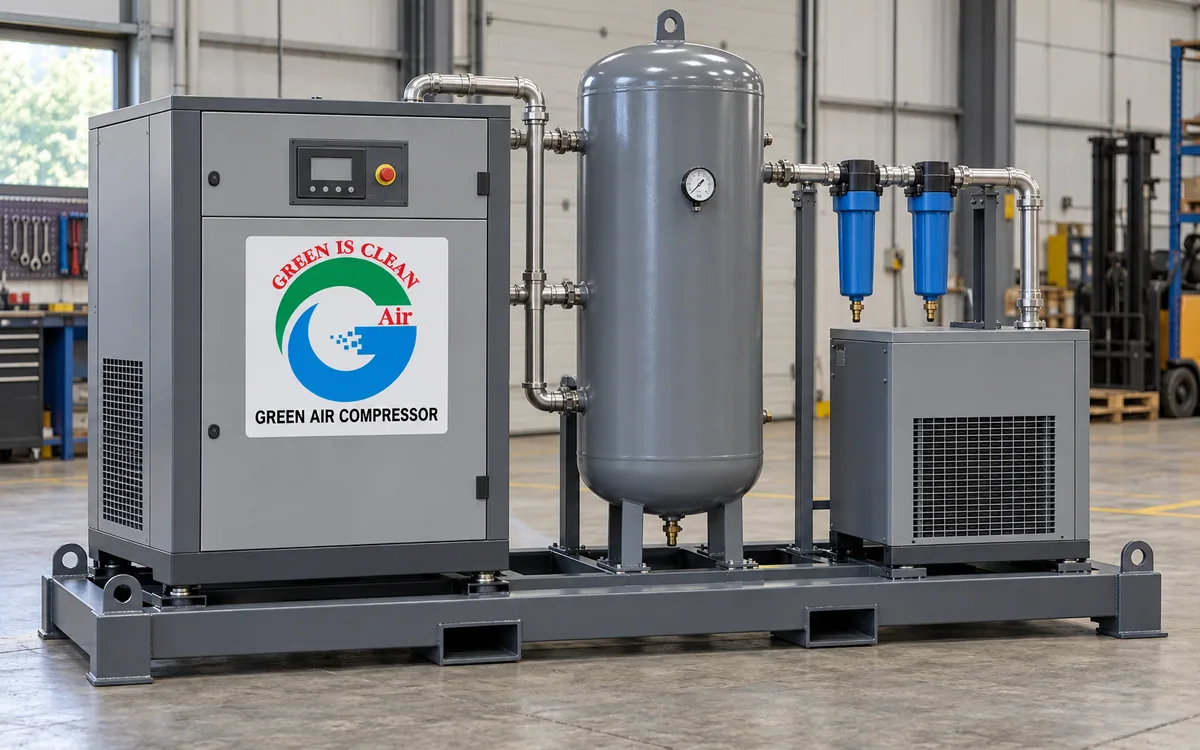
Skid mounted air compressors
The whole air system on one steel frame, piped and wired, ready to bolt down.
Learn moreNot sure which model you need?
Send us your air demand, working pressure and running hours. Our engineers will size the machine and send a written recommendation, no cost, no obligation.