
Mobile air compressors
Diesel and electric portable compressors from 185 to 1600 cfm.
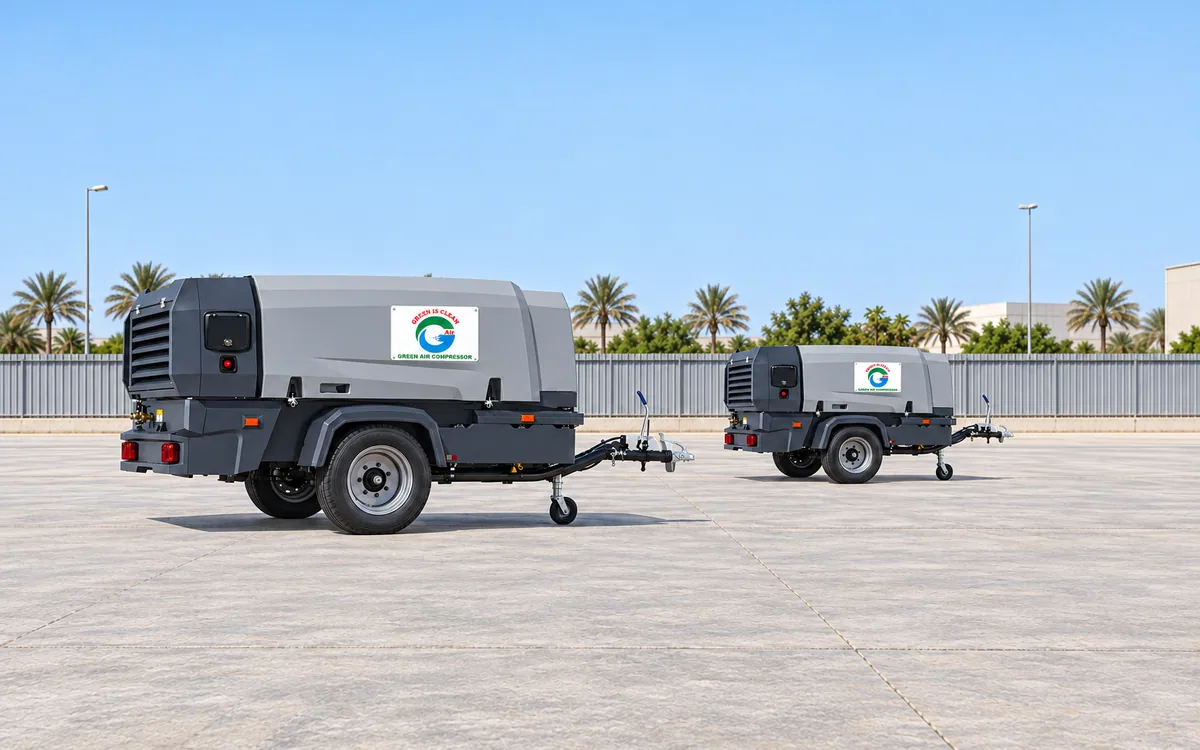
Overview
A portable compressor is sized by the tools it has to run, not by the size of the site. Get that calculation wrong and either you have bought too much machine or your breakers slow down every time two of them run together.
The range covers diesel and electric machines from 185 to 1600 cfm, at pressures from 7 to 25 bar, in trailer and skid-mounted forms.
In this range
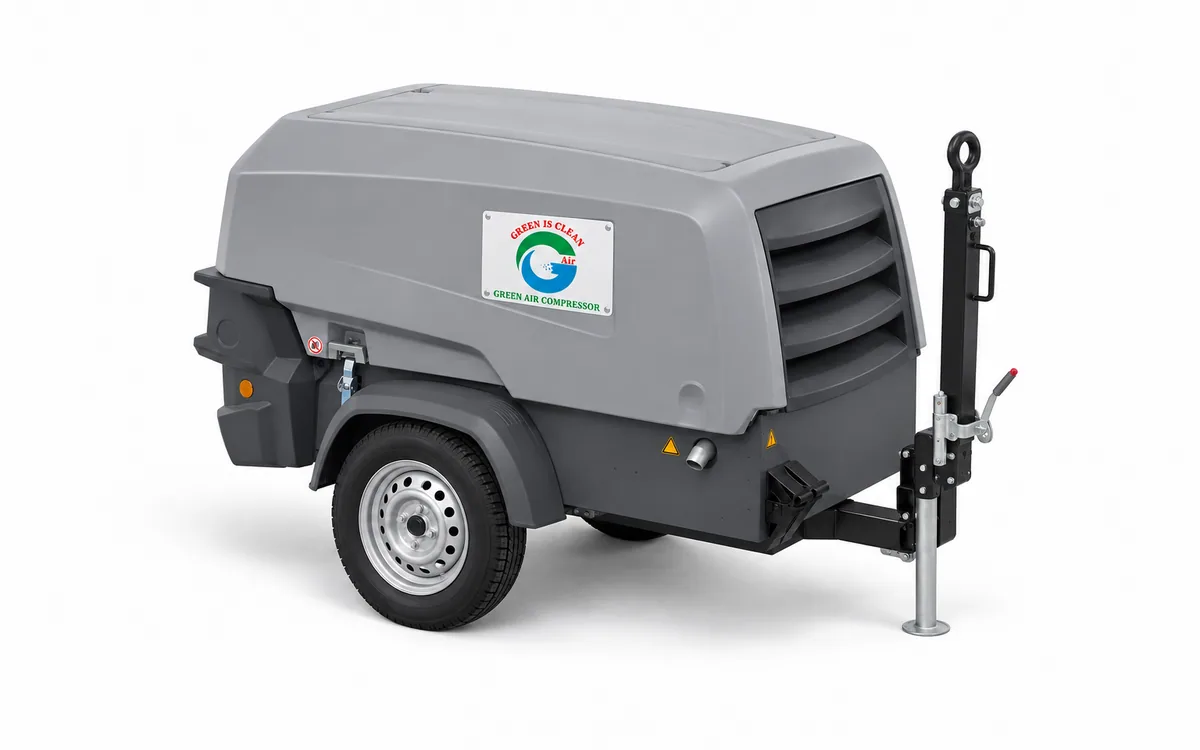
Diesel portable compressors
Towable diesel units for sites with no power supply.
- Free air delivery
- 3.0 – 10.5 m³/min (106 – 371 cfm)
- Working pressure
- 5 – 14 bar g
- Motor power
- 35 – 90 kW
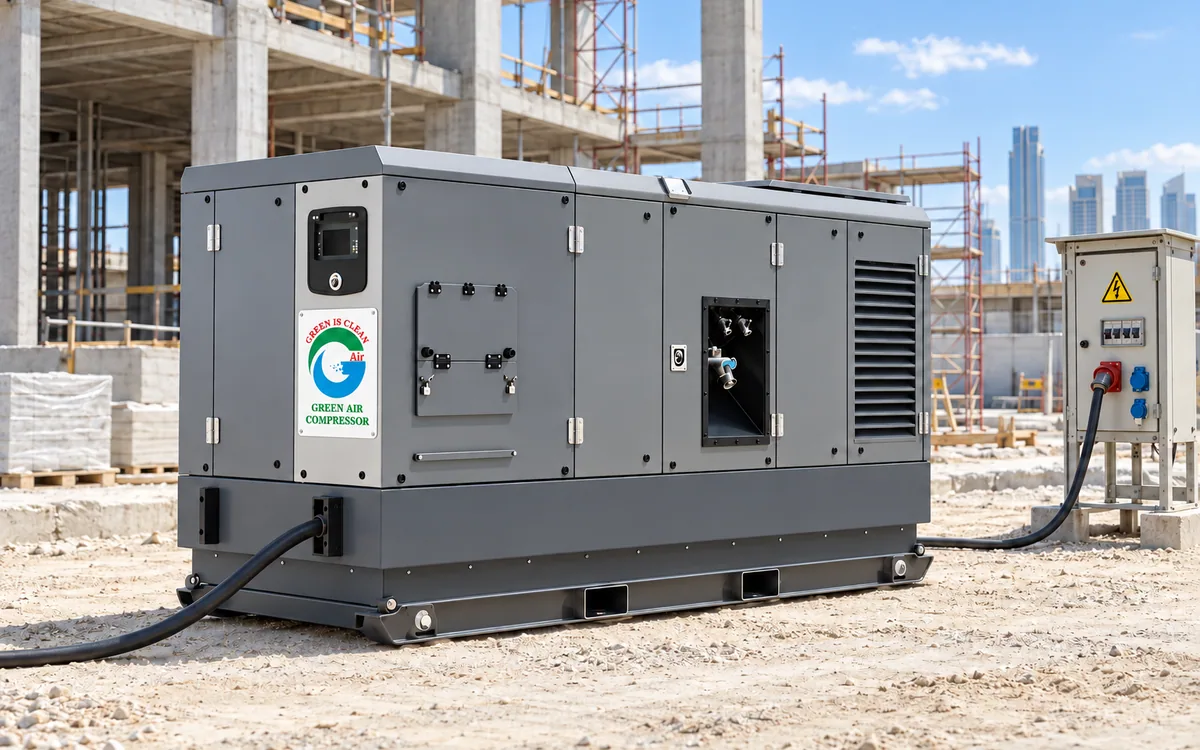
Electric portable compressors
Zero-emission site air where a power supply is available.
- Free air delivery
- 1.5 – 5.0 m³/min (124 – 177 cfm)
- Working pressure
- 5 – 12 bar g
- Motor power
- 30 kW
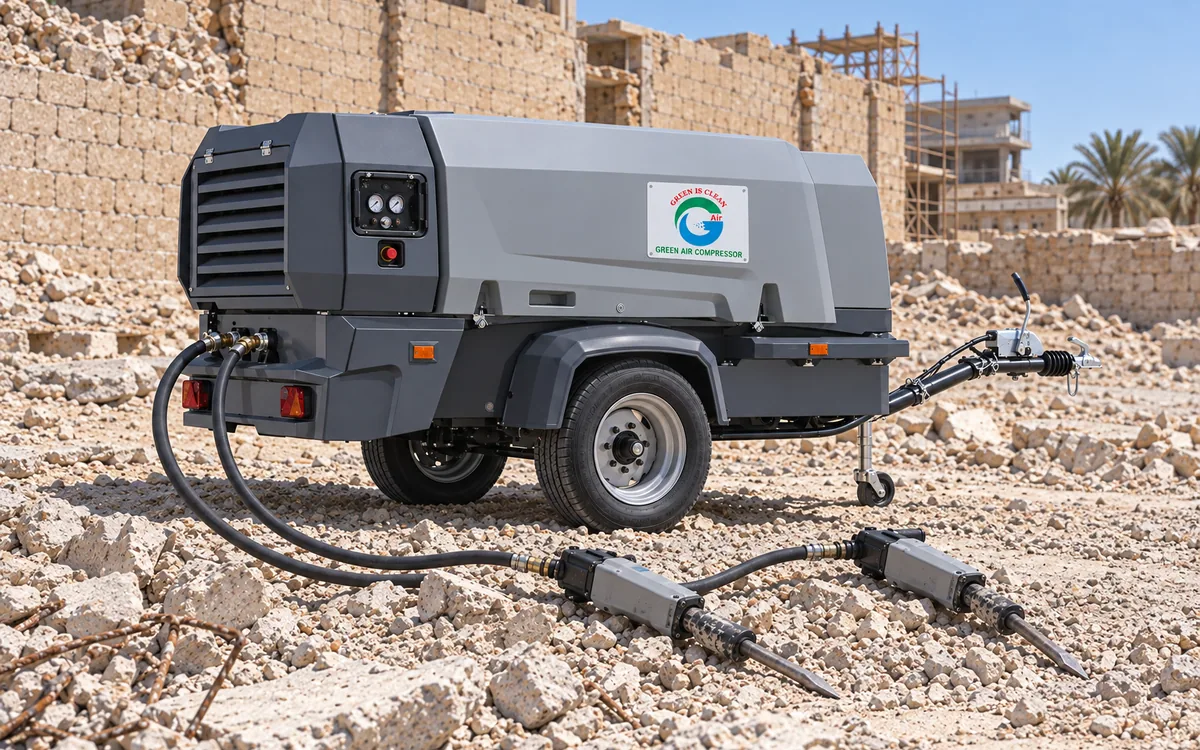
Medium portable diesel compressors
185 to 400 cfm, the general-purpose site range.
- Free air delivery
- 5.5 – 10.0 m³/min (194 – 353 cfm)
- Working pressure
- 5 – 14 bar g
- Motor power
- 55 – 90 kW
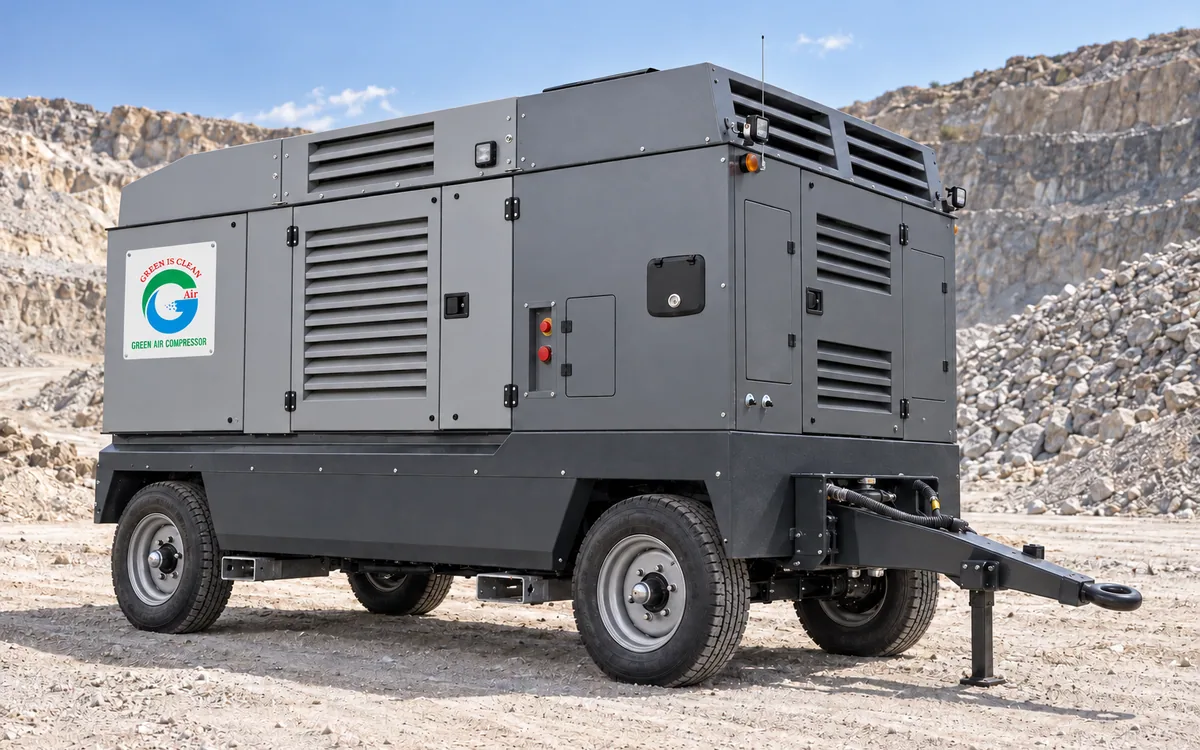
Large portable diesel compressors
650 to 1600 cfm for drilling, blasting and pipeline work.
- Free air delivery
- 11.0 – 27.0 m³/min (388 – 954 cfm)
- Working pressure
- 5 – 24 bar g
- Motor power
- 90 – 224 kW
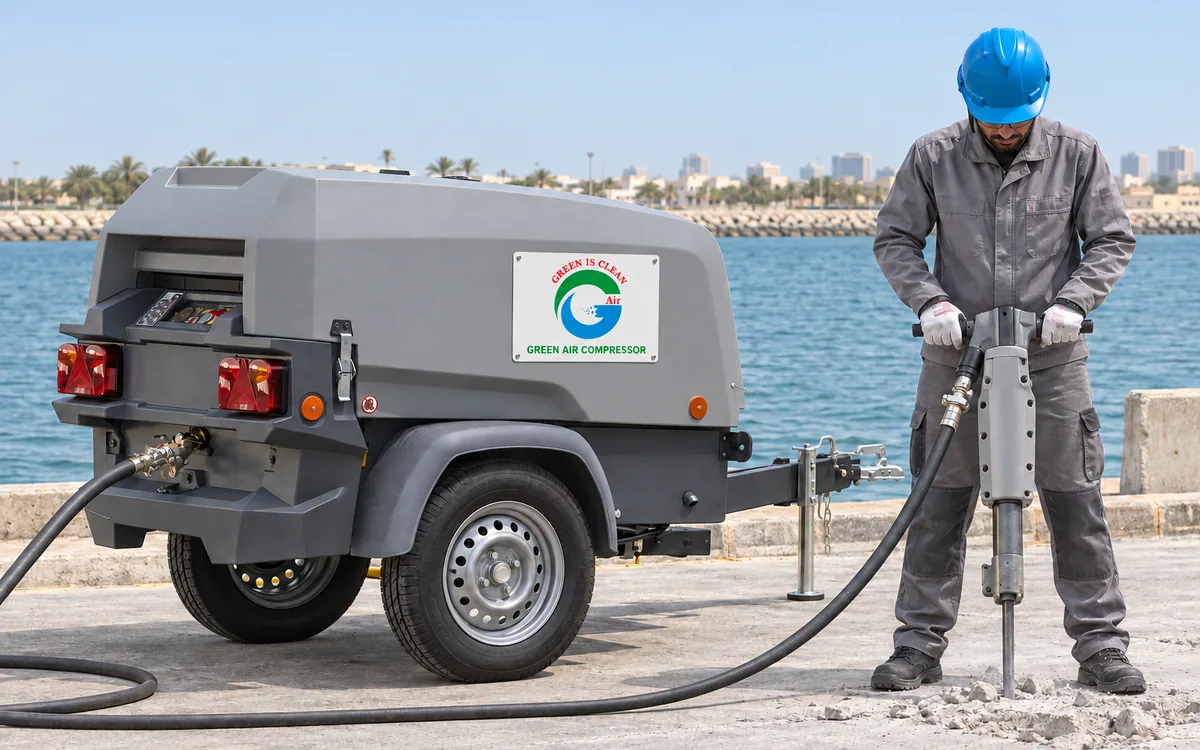
Ready-to-go compressor range
Standard specification machines held in stock for immediate delivery.
Learn more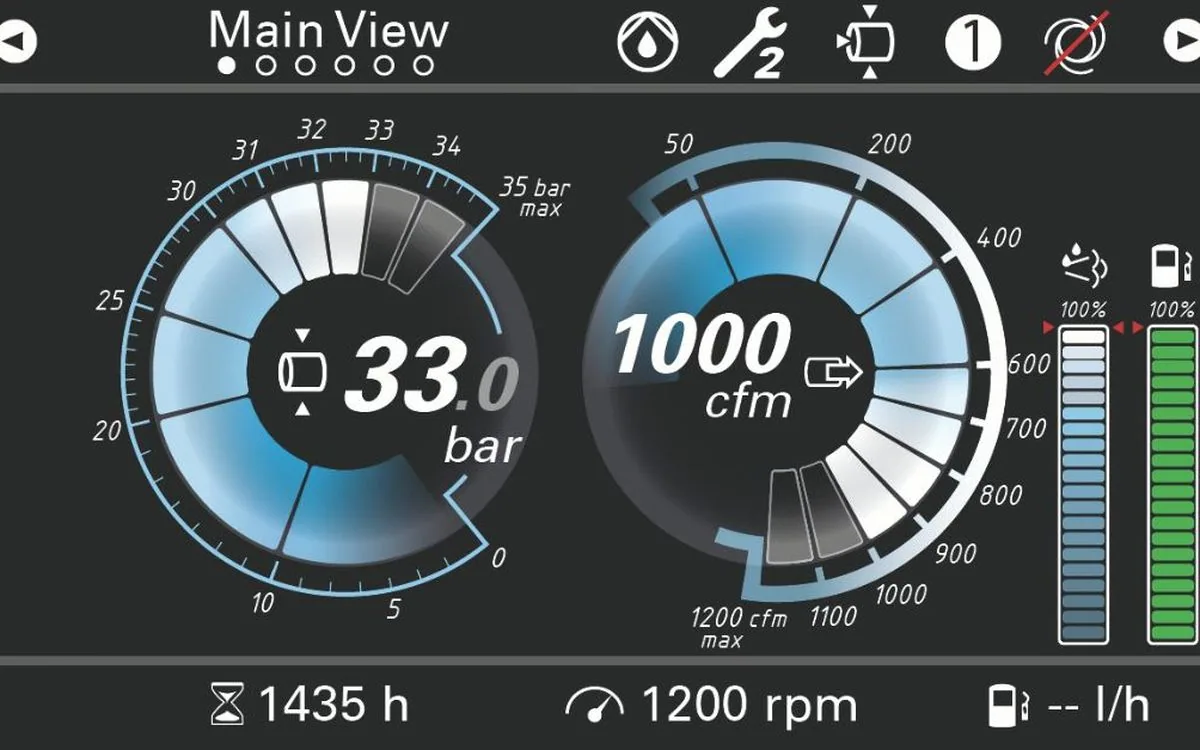
Portable compressor controllers
Panels and telemetry that make a fleet manageable.
Learn moreKey benefits
Sized from your tool list
Tell us what the machine has to run and we will size it, including hose losses and simultaneity.
Diesel or electric
Both available across most of the range, so site rules do not force a compromise.
Built for site conditions
50 °C ambient rating, cyclonic intake filtration and a bunded, galvanised chassis.
Serviced where it works
Mobile service vans in every country, so the machine does not come off site for a filter change.
Choosing a site compressor
Count the tools running at the same time and add twenty five per cent for hose and fitting losses. Two breakers need roughly seven cubic metres a minute.
Diesel where there is no supply, which is most sites. Electric indoors, in tunnels, on night work in residential areas, or anywhere a site rule bans engine exhaust.
Check the transport before the machine. On the larger sizes axle loads and permits can take longer to arrange than the compressor takes to deliver.
- Tools counted running together
- Twenty five per cent added for losses
- Diesel where there is no power supply
- Electric indoors and on night work
- Transport and permits checked early
- Fuel tank sized for a full shift
- Cold start and altitude options
- Hire or purchase compared honestly
Running it well
Hose size is the most common cause of disappointing performance. A nineteen millimetre hose at thirty metres drops meaningful pressure.
A lubricator at the tool is not optional on air breakers. Without it the piston and cylinder wear in weeks rather than years.
Fuel logged against running hours finds losses the same week rather than at the end of the hire, and it is the report contractors ask for most.
- 25 mm hose on long runs
- Lubricator fitted at the tool
- Fuel logged against running hours
- Telemetry with location and hours
- Intake filters changed on site conditions
- Serviced on site, never moved
- Kits boxed by interval
- Operator training on handover
Datasheets in this range
Two pages each: what the machine is, what it is for, and the measured table. Built from this site, so a sheet can never say something the page does not.
Frequently asked questions
What does cfm mean and how does it relate to m³/min?
Cubic feet per minute, the flow the machine delivers. One m³/min is about 35.3 cfm, so a 185 cfm machine is roughly 5.2 m³/min.
What pressure do site tools need?
Most need 6 bar at the tool, so the machine has to deliver about 7 bar to cover hose and coupling losses. Drilling and pipeline testing need much more, which is where the two-stage and booster machines come in.
Trailer or skid mounted?
Trailer where the machine moves between jobs and the site has road access. Skid where it is craned into position and stays: offshore, remote drilling, long shutdowns.
How often does it need servicing?
Kits are built for 250, 500 and 1,000 hour intervals. Because the kits are boxed by interval, nothing gets missed and the whole service is one part number.
Is a bunded frame necessary?
It is now a requirement on most managed projects, and it is standard on our machines. It contains fuel and oil spills so a leak does not become an environmental report.
Can it run a sandblasting pot?
Yes, but size it properly. Blasting is a continuous, high-consumption duty rather than an intermittent one. A single 6 mm nozzle at 7 bar wants around 4 m³/min on its own.
What is the difference between the medium and large ranges?
Medium covers 185–400 cfm, which handles breakers, small blasting and general site air. Large covers 650–1,600 cfm at up to 25 bar for drilling, big blasting crews and pipeline work.
Do you fit telemetry?
Yes. Running hours, fuel level, GPS position, faults and service countdowns come back automatically, which is what makes a fleet across four sites manageable.
How do I stop fuel going missing?
Fuel level logging against running hours makes it visible immediately. Consumption that does not match the hours is the giveaway. Most of our rental customers list this as the feature that paid for the telemetry.
Can I get one this week?
Usually yes. We hold the most commonly ordered configurations in stock in each country, and delivery with commissioning is typically within a week of order.
Related products
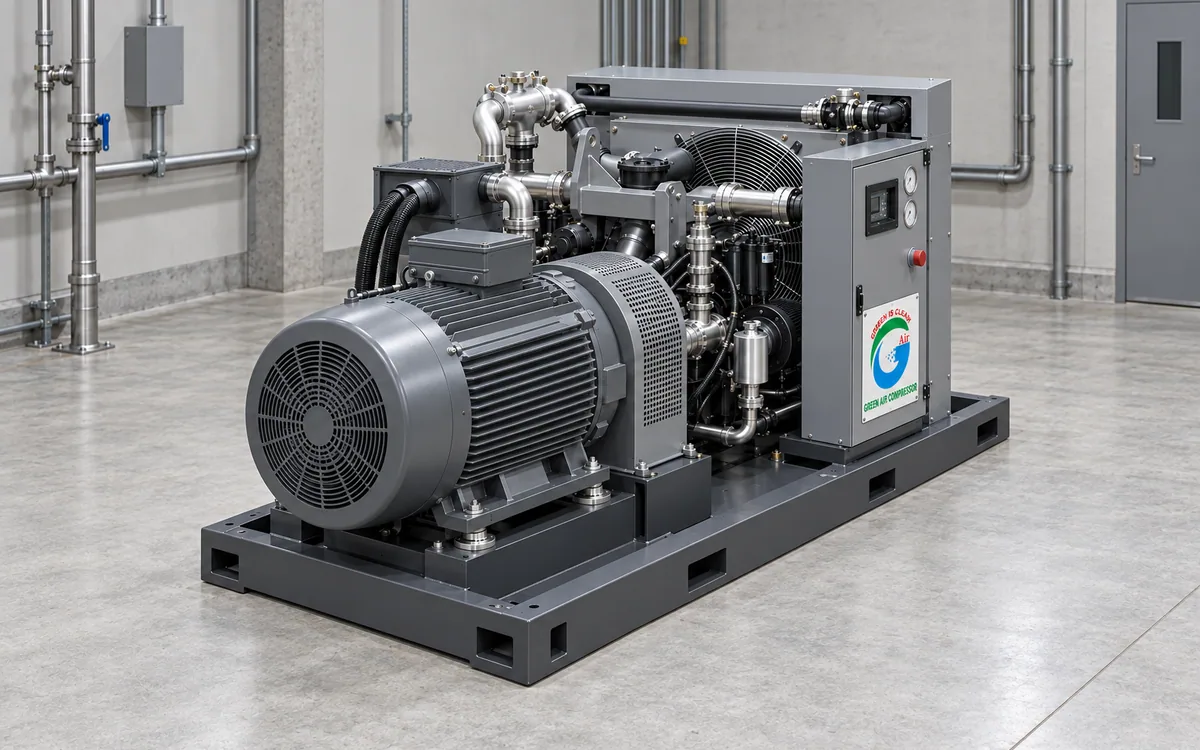
Not sure which model you need?
Send us your air demand, working pressure and running hours. Our engineers will size the machine and send a written recommendation, no cost, no obligation.