
Tips for increasing efficiency
Practical things that cut compressed air cost, most of them free.
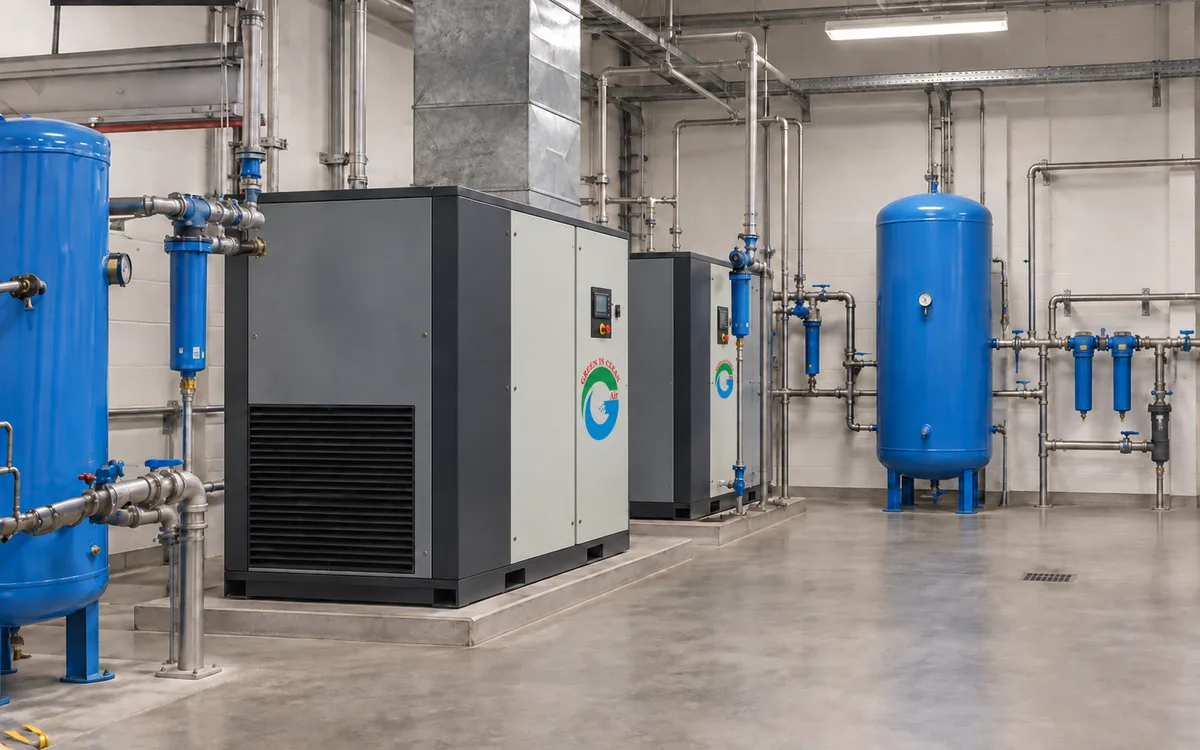
Overview
Before you replace a compressor to save energy, it is worth doing the things that cost nothing. In a typical plant that has not been audited, we find 20 to 30% of generated air is simply leaking away, and the system is running two bar higher than anything on site actually requires.
Both of those are fixable in a week without buying any equipment. Below is the order we work through them.
Key benefits
Fix the leaks first
A 3 mm hole at 7 bar wastes roughly 1.5 kW continuously. Twenty of them is a 30 kW compressor running for nothing.
Drop the pressure
Every 1 bar of reduction saves about 7% of energy. Most plants run 1 – 2 bar above what any machine needs.
Switch off at night
An unloaded compressor still draws 25 – 35% of full power. A timer costs almost nothing.
Cool the intake
Every 3 °C cooler at the intake gives about 1% more air for the same power. Ducting the intake from outside is often a one-day job.
Stop using air where you should not
Blowing off, drying and cooling with compressed air costs roughly eight times what a blower costs to do the same job.
The three that matter most
Lower the system pressure. Every bar you take out is about seven per cent of the energy, and most plants are running higher than they need because of one machine nobody has looked at.
Fix the leaks. A quarter of everything a typical plant makes is lost through leaks, and a leak runs twenty four hours a day whether the factory does or not.
Stop unloaded running. A machine idling makes no air and still draws power, and on a plant with several compressors that is usually where the waste is hiding.
- Reduce system pressure where the plant allows
- About seven per cent of energy per bar
- A quarter of output typically lost to leaks
- Leaks run when the factory does not
- Unloaded running found and removed
- Sequencing across the plant room
- Variable speed as the trim machine
- Measured before and after, not claimed
The ones people forget
Intake air. A compressor drawing hot air from its own exhaust works harder for the same output, and moving the intake is often the cheapest improvement in the plant.
Filter condition. A blocked element costs more in electricity in a year than the element did, and nothing on the machine tells you it is happening.
Drains. A timed drain wastes compressed air every time it opens, all day, every day, and a zero loss drain pays for itself quickly on a large machine.
- Cool intake air rather than recirculated
- Filters changed on differential pressure
- Timed drains replaced with zero loss
- Pipe sizing checked on long runs
- Heat recovery where there is a use for it
- Point of use pressure checked
- Storage sized to smooth the demand
- Night and weekend running reviewed
How we find them
An air audit measures rather than guesses. Flow, pressure and power logged over a week, and the leaks surveyed with ultrasound.
What comes out of it is a list with a number against each item, so you can decide what is worth doing rather than being handed a recommendation.
We show the measurement after the work as well. A saving that was not measured afterwards is a claim rather than a saving.
- Flow, pressure and power logged for a week
- Leaks surveyed with ultrasound
- Every finding costed individually
- You decide what is worth doing
- Measured again after the work
- Report written in plain language
- No obligation to buy anything
- Audit cost credited against the work
Frequently asked questions
What is the single biggest saving available?
Fixing leaks. Most plants lose 20–30% of their compressed air through leaks, and a survey usually pays for itself within weeks.
How much does one leak cost?
A 3 mm hole at 7 bar wastes roughly the output of a 4 kW compressor, running day and night, whether the plant is producing or not.
Why lower the pressure?
Every bar removed cuts energy by about 7%. Most systems run 1–2 bar higher than needed because someone raised it years ago to mask a leak or a restriction.
How do I find the right pressure?
Measure at the worst-served machine, not at the compressor. The gap between the two is pipework and filter loss, and that is what you should fix instead.
What about intake air temperature?
Every 4 °C cooler at the intake is about 1% less energy. Ducting the intake from outside the plant room is cheap and pays back quickly here.
Are pressure drops worth chasing?
Yes. A blocked filter can cost 0.5 bar, which is 3.5% of your compressed air bill for a part worth a fraction of that.
What does control do for efficiency?
A sequencer across multiple machines removes overlapping unloaded running. On a three-machine plant that is often 10% on its own.
Should I recover the heat?
Almost always. Over 90% of the electricity becomes heat, and if you need hot water or space heat, recovering it turns your largest waste stream into a credit.
How do I know any of this worked?
Meter it. Without a kWh meter and a flow meter you are guessing, and savings that are not measured tend to disappear over a year or two.
Where do I start?
With a week of logging. We fit the instruments free, then give you a ranked list of actions with the cost and the saving next to each one.
Related products
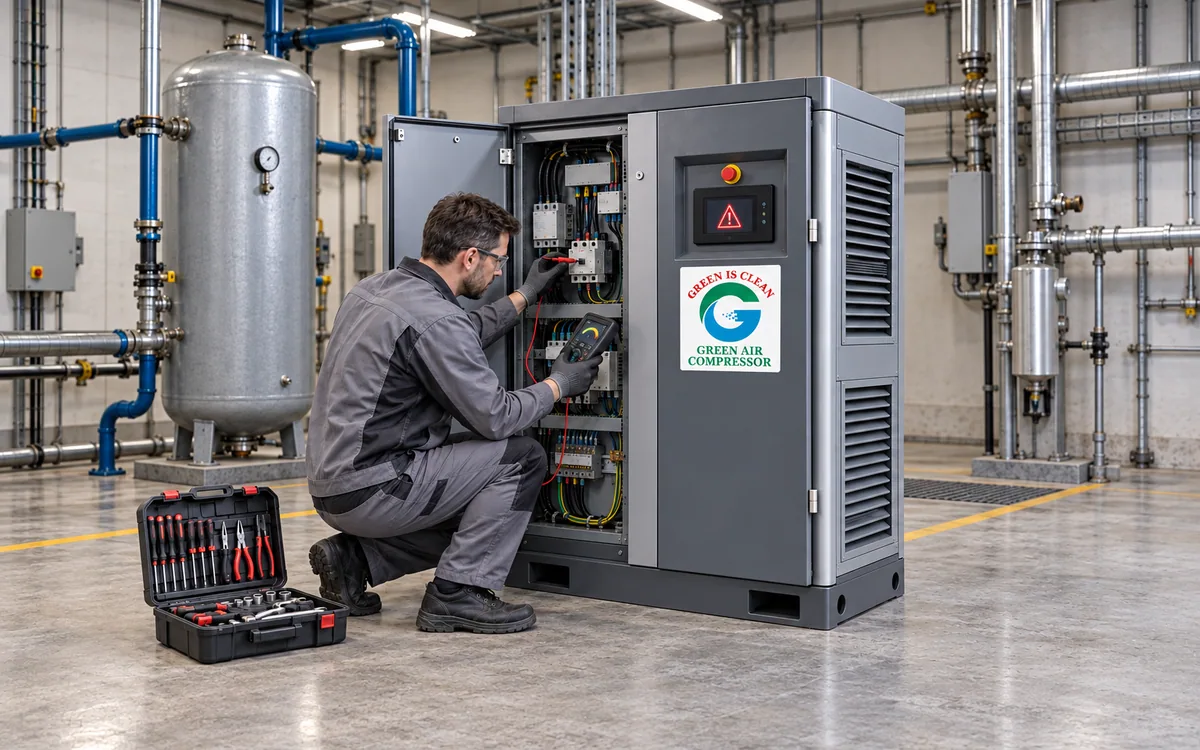
Air compressor repair
A machine that has stopped, and the fastest honest route to getting it running.
Learn more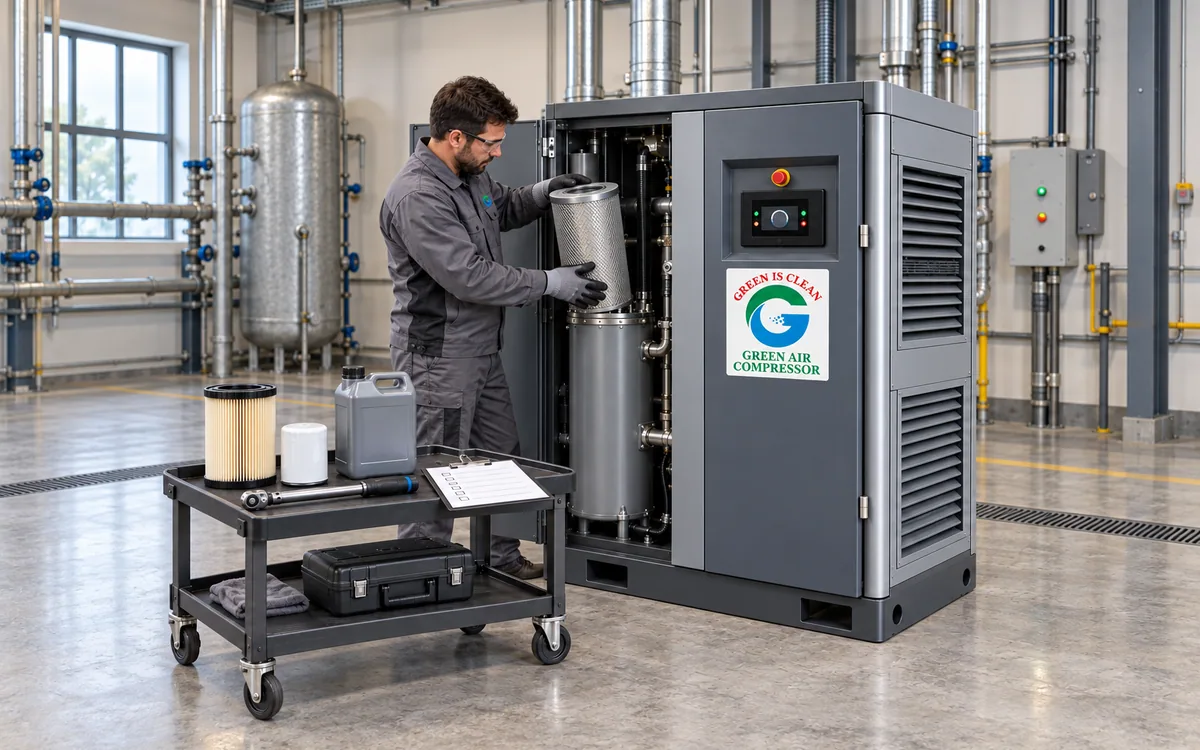
Air compressor maintenance
Planned work that keeps the machine off the breakdown list and the energy bill flat.
Learn more
Air compressor parts
Genuine filters, separators, oil, valves and kits from local stock.
Learn more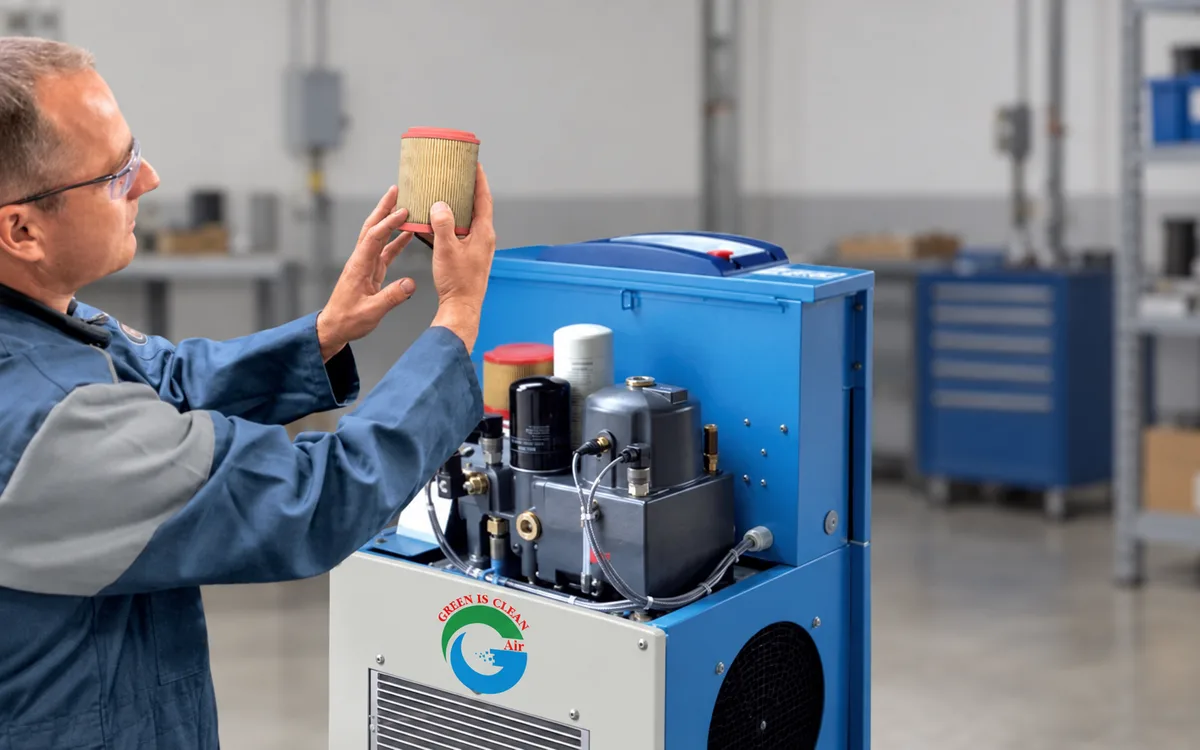
Air compressor filters
Intake, oil, separator and line filters correctly specified.
Learn moreNot sure which model you need?
Send us your air demand, working pressure and running hours. Our engineers will size the machine and send a written recommendation, no cost, no obligation.