
What an air compressor really costs
Why the purchase price is the small number, and what the other two are.
The three numbers that matter
Ask what a compressor costs and you will be told a purchase price. Over the life of the machine that figure is usually the smallest of the three numbers that matter, and it is the only one most quotations mention.
The three are the machine, the electricity it consumes, and the servicing it needs. On a compressor running two shifts, the electricity bill over ten years is routinely several times the purchase price. That is why two quotations for the same duty can differ by a modest amount on paper and by a very large amount over the life of the installation.
Where the money actually goes
Purchase is roughly a tenth of it
On a typical continuously running machine, the capital cost is a small share of the ten-year total. It is simply the part you pay first.
Electricity is the number to interrogate
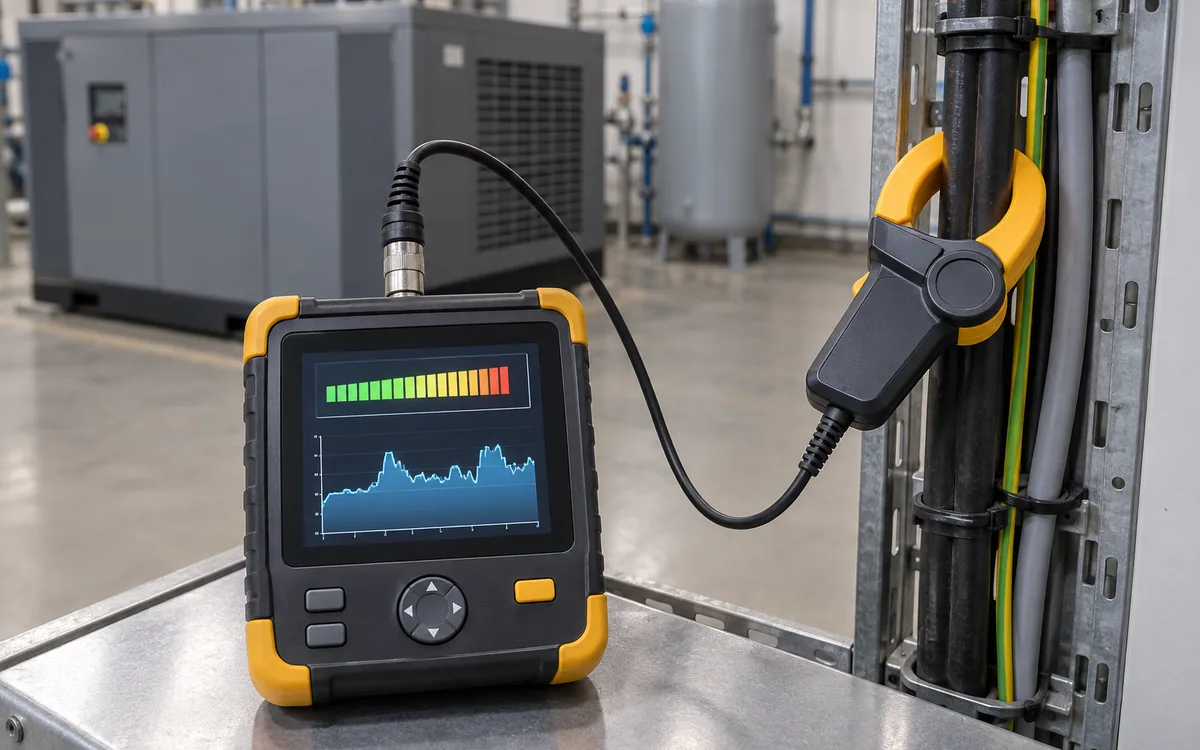
Specific energy consumption, measured to ISO 1217, tells you how much power the machine takes per unit of air. It is the figure worth comparing between quotations.
Service is predictable if you let it be
Filters, separators, oil and labour on a schedule. Predictable when planned, expensive when it is a breakdown.
Pressure is the free saving
Every bar you take off the setting takes roughly seven per cent off the energy. Most plants run one to two bar higher than anything on site requires.
Working out your own number
Take the motor power in kilowatts, multiply by the hours it runs a year, and multiply by your electricity rate. That is the running cost, and it is usually the number that matters.
A rough check: one cubic metre a minute at seven bar needs about six kilowatts running continuously. If your figures are far from that, something is worth investigating.
Then add the service plan and divide the purchase price over ten years. The three together are the real cost, and the purchase price is normally the smallest of them.
- Motor kW times annual hours times your rate
- About 6 kW per cubic metre a minute at 7 bar
- Service plan added as a known figure
- Purchase spread over ten years
- Electricity usually 75 to 80 per cent
- Purchase often under 15 per cent
- Heat recovery counted where it applies
- We will do the arithmetic with you
Where the money actually goes
Pressure set higher than anything needs, which is about seven per cent of the energy for every bar.
Leaks, at around a quarter of everything the plant makes, running through the night.
And unloaded running, where a machine draws power and makes no air. Those three together are usually larger than any difference between two machines on a quotation.
- Pressure higher than the plant needs
- Leaks running twenty four hours a day
- Unloaded running across several machines
- Filters left past their pressure drop
- Hot recirculated intake air
- Timed drains wasting compressed air
- All of it measurable in a week
- Each finding costed separately
Frequently asked questions
Why does this page not give a price?
Because a price without a duty is meaningless. The same kW rating can cost very different amounts depending on pressure, oil-free requirement, control and what treatment goes with it. Send us your air demand and running hours and you get a real figure.
What is the biggest cost over ten years?
On a machine that runs most of the day, the electricity. It routinely exceeds the purchase price several times over, which is why specific energy consumption is the number worth comparing between quotations.
How do I compare two quotations fairly?
Compare delivered air at your working pressure, and the power drawn to deliver it, both measured to ISO 1217. Two machines quoted at the same kW can differ meaningfully in the air they actually deliver.
Is a variable speed machine always cheaper to run?
No. It is cheaper where demand varies, which is most plants. On a machine that runs at full load continuously, a good fixed-speed compressor can be the better answer, and it costs less to buy.
How much does a compressor cost to service each year?
It depends on size and hours, but the useful point is that planned servicing is predictable and breakdown repair is not. That difference is usually larger than the difference between service quotations.
What is the cheapest way to cut compressed air cost?
Fix the leaks and drop the pressure. Neither costs anything to buy, and in an unaudited plant they typically account for more waste than any equipment change would recover.
Does an oil-free machine cost more to own?
It costs more to buy and its specific energy consumption is usually higher. Where the process requires Class 0 air it is not a choice, and where it does not, the extra rarely pays back.
How long does a compressor last?
A well-maintained screw compressor commonly runs for fifteen years or more. The airend is normally overhauled once or twice in that time rather than the whole machine being replaced.
Should I repair an old machine or replace it?
Compare the repair against the ten-year energy cost of both options, not against the purchase price alone. An old inefficient machine can be more expensive to keep than to replace, even when the repair is cheap.
Can you tell me what my current system costs to run?
Yes, that is what an efficiency assessment does: measure what is actually being consumed and what is being wasted, and put a figure against each. The report is yours whether or not you buy anything.
Related products
Air compressor troubleshooting
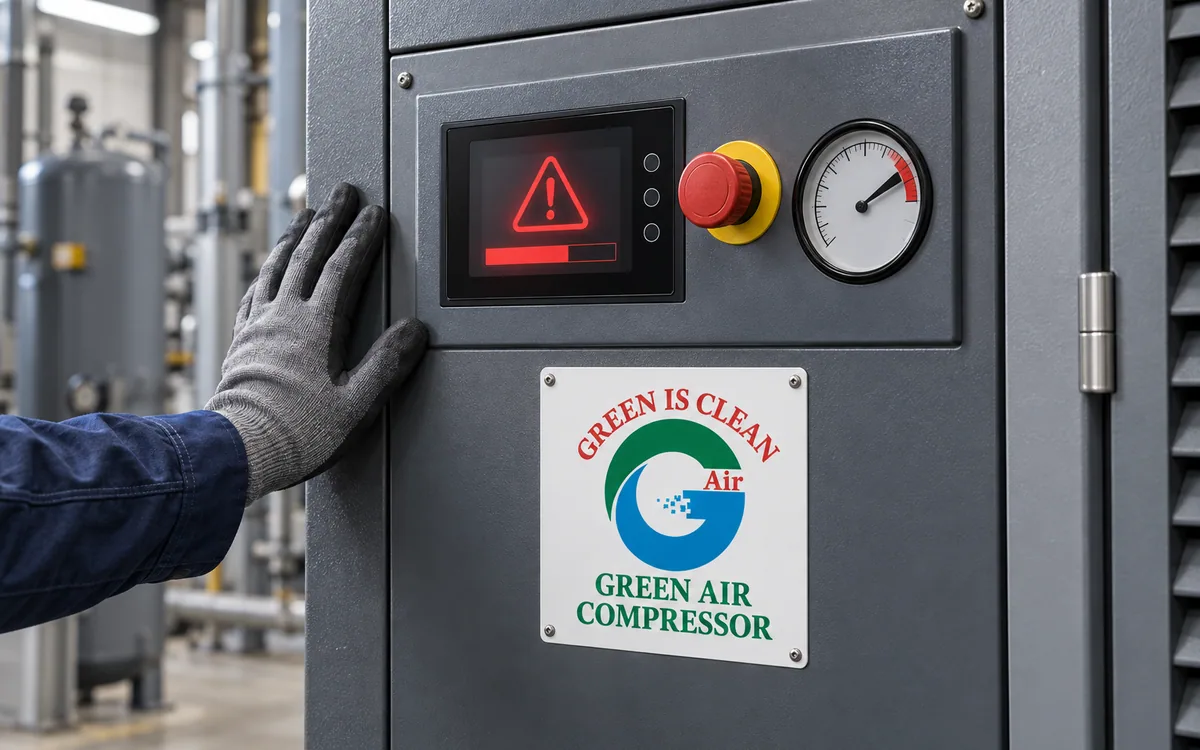
The fault you can see, what usually causes it, and what to check before calling anyone.
Learn more
What is compressed air?
Why it is called the fourth utility, and why it costs more than you think.
Learn more
How a rotary screw compressor works
Two rotors, one continuous flow, and why it replaced the piston machine.
Learn more
Variable speed compressors explained
What VSD actually saves, and when it saves nothing at all.
Learn moreNot sure which model you need?
Send us your air demand, working pressure and running hours. Our engineers will size the machine and send a written recommendation, no cost, no obligation.