
What size air receiver do I need?
The rule, the reason behind it, and when to put the tank somewhere else.
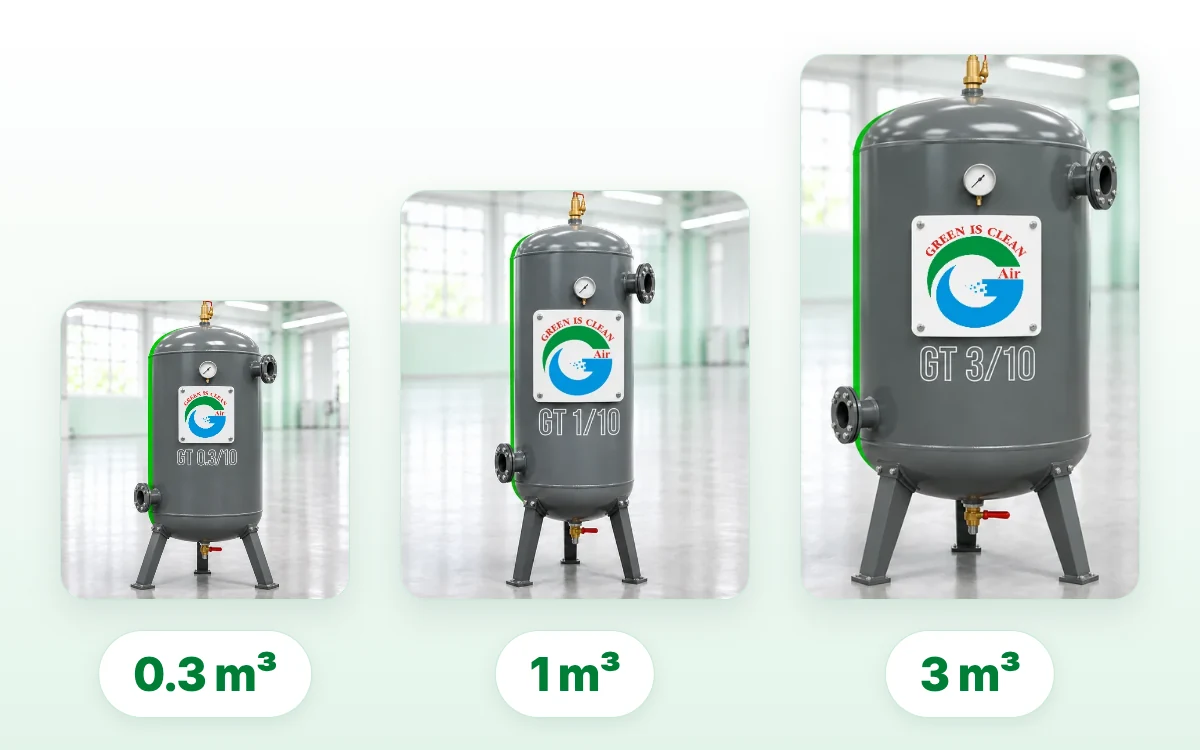
The rule and the reason
A receiver does three jobs. It stores air, so that the compressor does not chase every short peak. It lets water and oil fall out before they reach the pipework. And it slows the cycling of a fixed speed machine, which is what wears out motors and contactors.
The rule most engineers start from is 6 to 10 litres of receiver for every litre per second the compressor delivers. A machine delivering 5 m³/min gives 83 l/s, so it wants 500 to 830 litres and a 1 m³ vessel is a comfortable answer.
A variable speed machine does not start and stop, so it needs about a third of that, for peaks and for separation. And the rule is only a beginning. A process that takes a great deal of air for a few seconds is sized on that process, not on the compressor.
What a receiver does for you
It stores
Between the moment demand rises and the moment the compressor answers, the receiver carries the plant.
It separates
Air slows right down inside it and water drops out. Every litre that falls in the receiver is a litre the dryer does not have to handle.
It limits starts
Above about ten starts an hour a motor suffers. A vessel of twice the size halves the starts.
It steadies the pressure
A steady line lets you lower the setting, and every bar off the setting is about 7% of the electricity.
It can stand anywhere
A second vessel beside a machine that takes air in bursts does more good than the same volume in the compressor room.
It is a pressure vessel
The safety valve, the gauge, the drain and the inspection are not extras. The authority and the interval depend on the country, and we tell you which applies before it ships.
A worked example for a short peak
A filter cleaning cycle takes 3 m³/min for 20 seconds, every ten minutes. The compressor has only 1 m³/min to spare. For those 20 seconds the system is 2 m³/min short, which is 0.67 m³ of free air.
If the pressure may fall by 1 bar while it happens, a vessel gives back its own volume of free air for each bar it drops. So 0.67 m³ of vessel covers it, and 1 m³ beside the filter covers it with room to spare.
The alternative is a compressor 2 m³/min bigger, about 12 kW more, to be busy for 20 seconds in every ten minutes.
- Extra flow during the peak
- Length of the peak in seconds
- Pressure drop you can accept
- Free air needed, divided by that drop
- Vessel placed beside the user
- Check valve if the peak must not disturb others
- Time to refill before the next peak
- Pipe to the vessel not too small
Before the dryer or after it
A receiver before the dryer cools the air, drops water and evens out the flow the dryer sees. A receiver after the dryer stores dry air that can be taken quickly without overloading the dryer.
With one vessel, before the dryer is the usual place. With two, a common split is one third before and two thirds after.
Either way the drain matters more than the volume. A vessel with a blocked drain fills with water, and 1 m³ that is half full of water is 0.5 m³.
- One vessel: usually before the dryer
- Two vessels: about a third before, two thirds after
- Automatic drain that somebody checks
- Inlet low and outlet high on a wet vessel
- Bypass with valves, for inspection
- Level floor and room to reach the drain
- Gauge where it can be read
- Connection size that does not throttle it
Safety comes with the vessel
A receiver is the one part of the system that can hurt somebody by itself. It needs a safety valve that nothing can isolate, a gauge, a drain at the lowest point and a nameplate that can be read.
Its design pressure must be at or above the most the compressor can make, not the pressure you happen to run at. Ours are built for 8, 10 and 13 bar.
An old vessel without papers should not be used again, however sound it looks. Corrosion works from the inside.
- Design pressure above the compressor's maximum
- Safety valve sized for the full flow
- Nothing between the vessel and its safety valve
- Papers kept for the life of the vessel
- Inspection interval known before it ships
- No welding or drilling on site
- Drained every day
- Out of use until a fault is cleared
Frequently asked questions
What size air receiver do I need?
Start at 6 to 10 litres for every litre per second the compressor delivers, then look at the starts. Over about ten starts an hour it needs more.
What size for a 37 kW compressor?
A 37 kW screw delivers about 6.7 m³/min at 8 bar, which is 112 l/s. The rule gives 670 to 1,120 litres, so 1 m³ is the usual choice.
Does a variable speed compressor need a receiver?
Yes, a smaller one. It has removed the starting and stopping, not the peaks and not the water, so about a third of the fixed speed figure is usual.
Does a bigger receiver save energy?
Indirectly. It lets the compressor run in longer blocks and steadies the pressure, which usually allows a lower setting. Every bar off is about 7%.
Can a receiver be too big?
It takes longer to fill at start-up and asks for more floor and more inspection. Once it is full it does not waste energy.
One big receiver or two small ones?
Two, if one process takes air in bursts: put the second one beside it. Otherwise one is simpler to drain and to inspect.
Should it go before or after the dryer?
One vessel usually goes before the dryer, where it cools the air and drops water. Where a process takes sudden gulps of dry air, add one after it.
How often should it be drained?
Every day by hand, or all the time by an automatic drain that somebody checks each week.
Does a receiver need inspecting?
Yes, it is a pressure vessel. The authority and the interval differ from country to country, and we tell you which applies before it ships.
Can I use an air receiver for vacuum?
No. A vacuum vessel is built for pressure from the outside and is a different design. Never use one in place of the other.
More guides
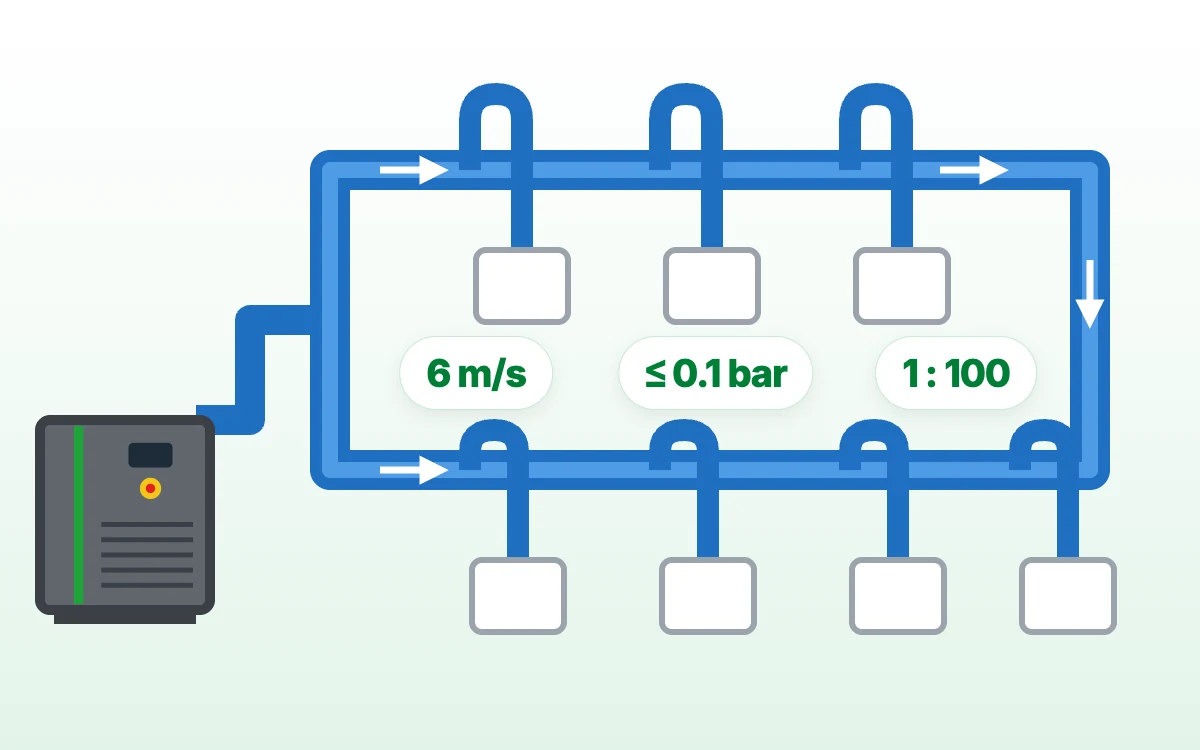
Compressed air pipework: size, ring and slope
The sums that decide the pipe, and the details that keep water out of the machines.
Learn more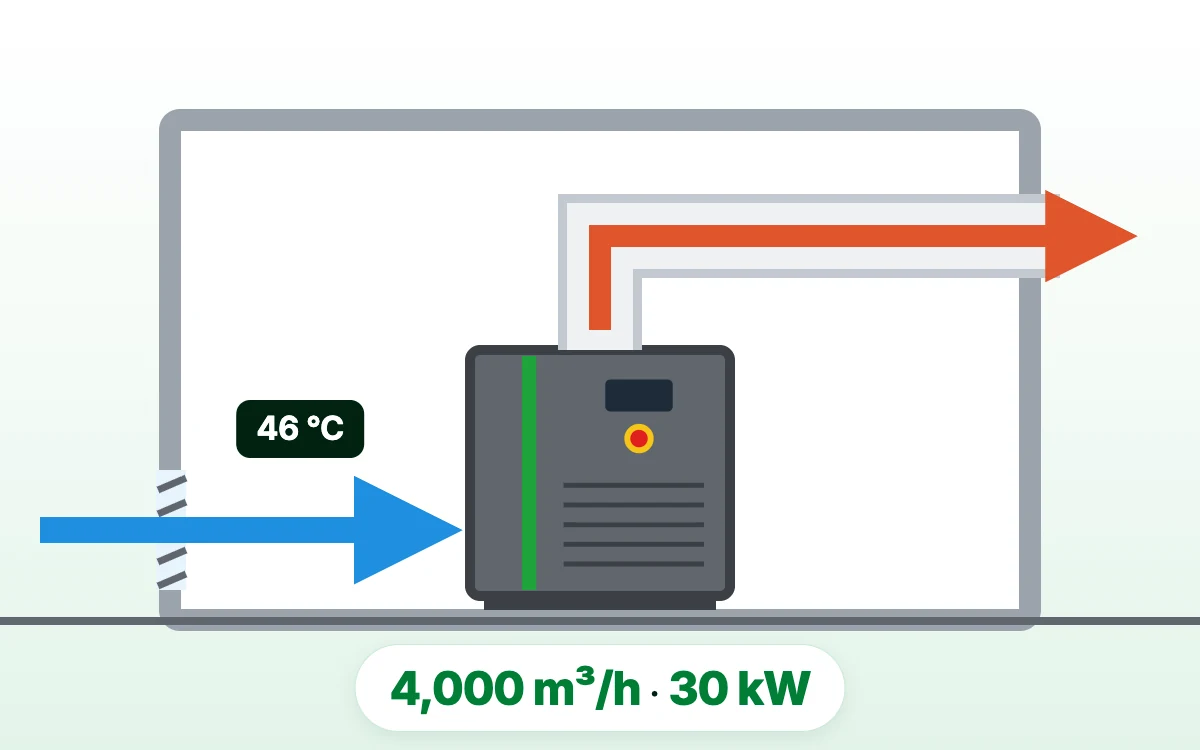
Compressor rooms in hot climates
Where the heat goes, how much air the room needs, and why machines trip in August.
Learn more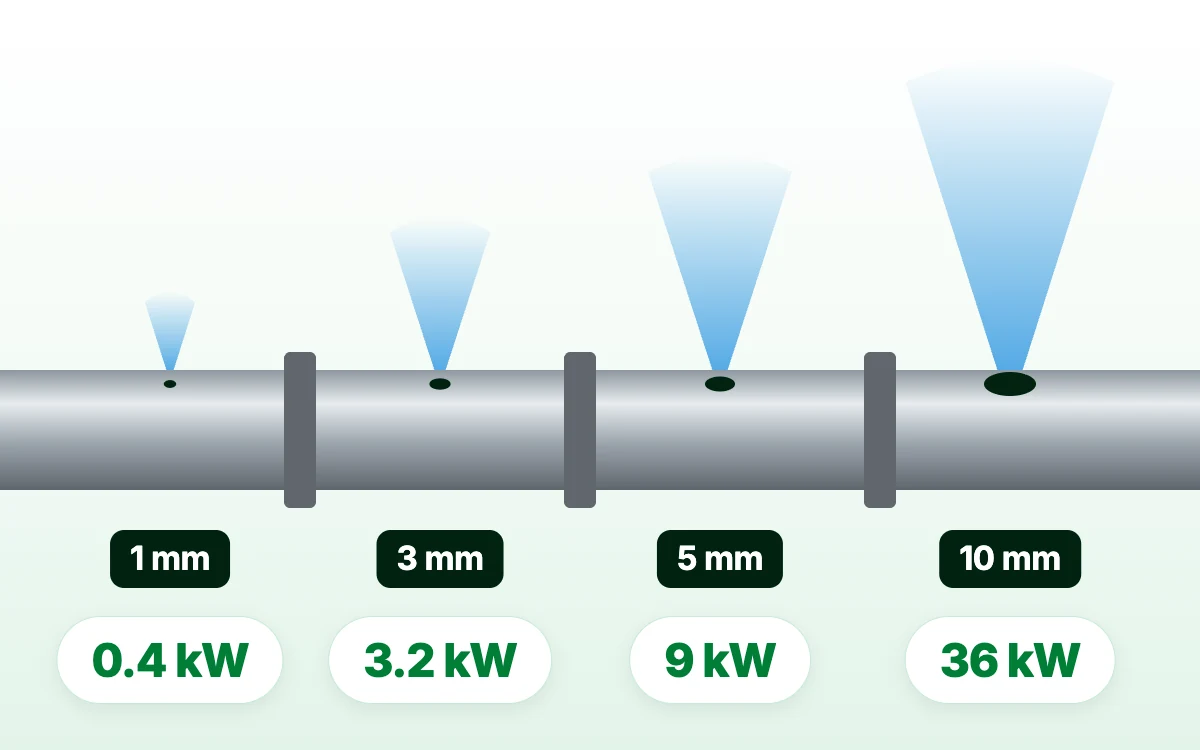
Compressed air leaks: find them and count the cost
What a hole costs, how to measure your own leaks in an evening, and what to repair first.
Learn more
Air compressor troubleshooting
The fault you can see, what usually causes it, and what to check before calling anyone.
Learn moreNot sure which model you need?
Send us your air demand, working pressure and running hours. Our engineers will size the machine and send a written recommendation, no cost, no obligation.