
Hydrogen generation systems
Electrolysers, compression, storage and dispensing as one system.
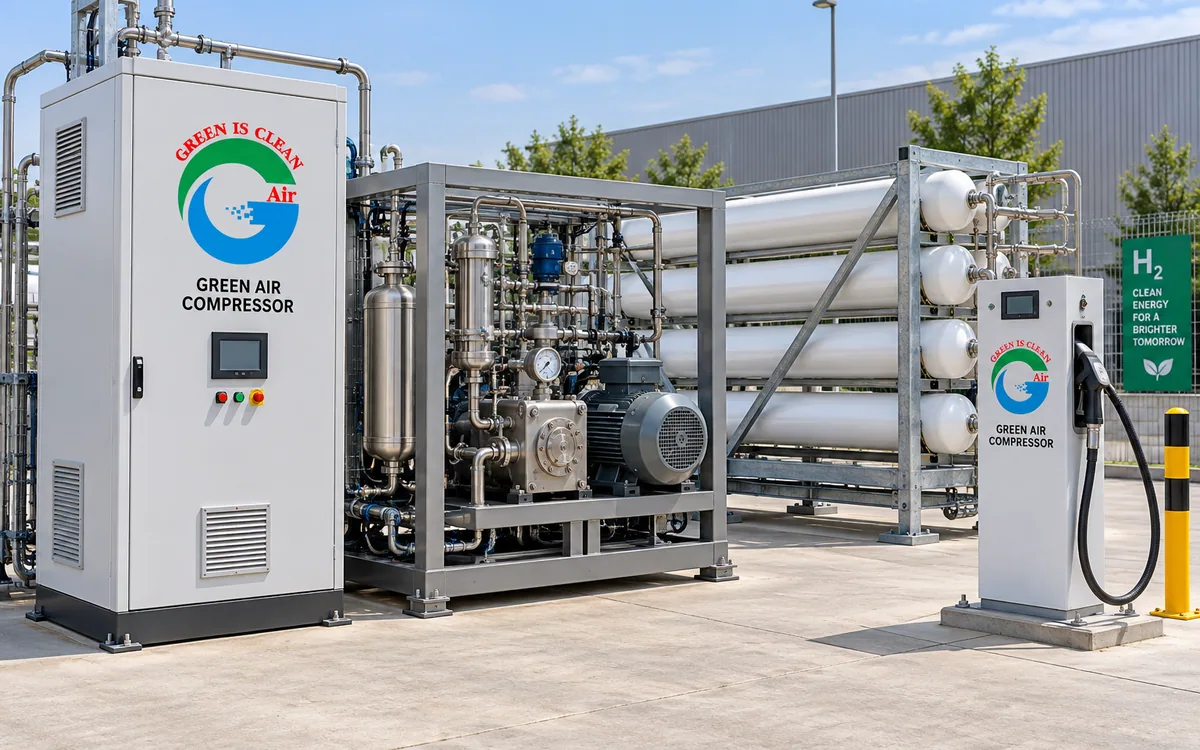
Overview
An electrolyser splits water into hydrogen and oxygen using electricity. If that electricity is renewable the hydrogen is too, which is why these systems are being installed now in places that had no interest in them five years ago.
The electrolyser is the visible part and rarely the difficult part. Hydrogen comes out at low pressure and has to be compressed, dried, stored and dispensed, and the compression is where most of the engineering and most of the risk sits.
Key benefits
Supplied as a system
Electrolyser, compression, drying, storage and dispensing specified together rather than bought separately and joined up.
Diaphragm compression
Hermetically sealed, so the hydrogen neither leaks nor picks up contamination on its way to storage.
Purity maintained to the point of use
Fuel cell hydrogen has a purity specification, and it is the whole chain that has to meet it, not the electrolyser alone.
Sized on the demand profile
A refuelling duty and a process feed duty need very different storage, and that decides much of the plant.
Why the compression decides the design
Hydrogen is the smallest molecule there is. It finds leak paths that no other gas would, it embrittles some steels, and its low molecular weight means a compressor achieves far less pressure ratio per stage than it would on air.
That is why diaphragm compression dominates this application. A sealed chamber with no dynamic gas seal answers the leakage problem directly, and the high ratio per stage keeps the number of stages manageable.
Storage pressure then follows from the use. Process feed may need a few tens of bar; vehicle refuelling needs 350 or 700, and at those pressures the storage, the dispensing and the safety case are a substantial part of the project rather than an accessory to the electrolyser.
- Diaphragm compression as standard
- Materials selected against embrittlement
- Storage pressure set by the end use
- 350 and 700 bar dispensing available
- Drying to the fuel cell purity specification
- Safety case developed with the design
Technical data
- Hydrogen output
- 1,000 Nm³/h
- Oxygen output
- 500 Nm³/h
- Turndown
- 30 – 100 % of rated load
- Hydrogen purity
- ≥ 99.8 %, or ≥ 99.999 % after purification
- Oxygen purity
- ≥ 98.5 %
- Delivery pressure
- 15 – 16 bar g
- Electrolyte
- 30 % KOH
- DC consumption
- ≤ 4.5 kWh per Nm³ of hydrogen
- Water consumption
- 1 kg per Nm³ of hydrogen, conductivity ≤ 1 mS/m
- Rectifier
- 24 pulse, 15,400 A DC at 365 V, efficiency ≥ 93 %
- Transformer
- 6,300 kVA, 10 – 35 kV three phase, ONAN cooled, 20 t
- Container
- 12,192 × 2,438 × 2,896 mm, about 60 t
- Utilities
- Chilled water ≥ 200 m³/h, instrument air ≥ 8 bar g at ≥ 20 Nm³/h
- Control
- PLC with HMI
Frequently asked questions
How much electricity does it use?
Around 50 to 55 kWh per kilogram of hydrogen, depending on the electrolyser. That figure, times your power price, is most of the running cost.
What pressure do I need to store at?
It follows from the use. Process feed is often a few tens of bar; vehicle refuelling is 350 or 700, and that changes the whole plant.
Can the oxygen be used too?
Yes, and on a site that also needs oxygen it improves the economics considerably. It is worth raising early because it affects the plant layout.
Why is diaphragm compression used?
Because hydrogen leaks through anything with a dynamic seal. A hermetically sealed chamber answers that directly, and the high ratio per stage keeps the staging manageable.
What is embrittlement?
Hydrogen entering the metal structure and making it brittle. Material selection guards against it, which is why an ordinary steel cannot simply be used.
How pure does the hydrogen have to be?
For fuel cells, very. The specification applies at the point of use, so the whole chain has to meet it, not the electrolyser alone.
How much space does a plant need?
More than the electrolyser suggests. Compression, drying, storage and the safety distances are what set the footprint, and we lay it out before pricing.
Is it safe?
It is engineered to be, with detection, ventilation, separation distances and a safety case developed alongside the design rather than after it.
What is the delivery programme?
Long, because it is a system rather than a machine. A realistic programme is given with the quotation rather than an optimistic one.
Can you maintain it?
Yes, and the compression side is where most of the maintenance sits. Our engineers are trained on it and the wear parts are held rather than ordered.
Related products
Not sure which model you need?
Send us your air demand, working pressure and running hours. Our engineers will size the machine and send a written recommendation, no cost, no obligation.