
Air suspension blowers
Air bearings instead of magnetic ones. 22 to 450 kW, oil free and quiet.
Technical data
- Free air delivery
- 17.0 – 418.0 m³/min
- Motor power
- 22 – 450 kW
- Weight
- 525 – 2,550 kg
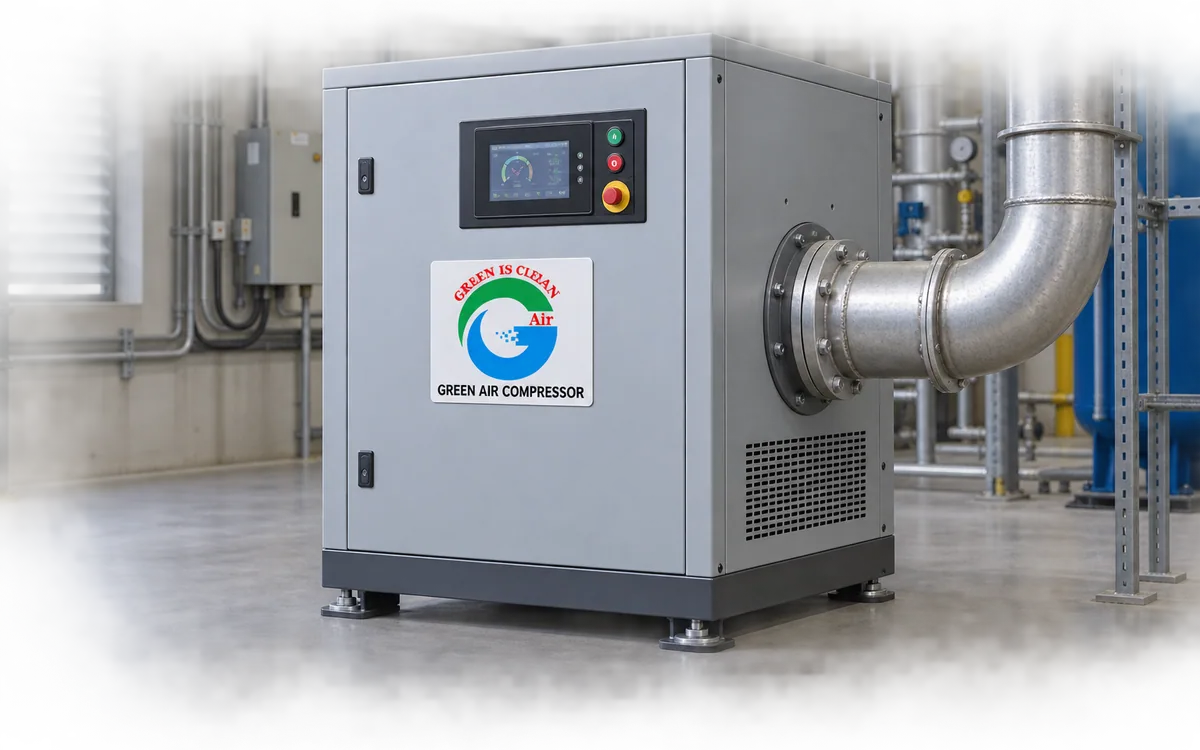
Overview
An air bearing works on the same principle as a magnetic one — keep the shaft off the housing — but uses a film of air rather than a magnetic field. As the shaft comes up to speed the film forms and lifts it, and from then on nothing touches.
It is a simpler machine than a magnetic levitation blower: no position sensors, no bearing control electronics, no backup power requirement for the bearing system. It is also cheaper, and for most aeration and conveying duties it does the same job.
Key benefits
No oil, no gearbox
Direct drive on air bearings. Nothing to lubricate and nothing to change.
Simpler than magnetic levitation
No bearing control electronics and no backup supply for them, which is one less system to maintain.
Quiet and smooth
No pulsation, no gear noise, and low enough vibration to sit on a plain floor.
22 to 450 kW
Covers most aeration and conveying duties without moving up to a magnetic machine.
Air bearings against magnetic bearings
Both remove the gearbox and the oil, and both are a large improvement on a roots blower. The difference is in the detail and in the price.
Magnetic bearings work from standstill, hold position actively, and can be monitored — the control system knows exactly where the shaft is at all times, which is useful diagnostic information. They cost more and they need their control electronics to be healthy.
Air bearings are passive. The film forms as speed rises and there is nothing to control, which makes the machine simpler and cheaper. The trade is that there is a brief period on every start and stop where the shaft is running on the coating rather than on air, so start frequency is worth discussing.
- Passive film, no bearing control system
- Lower purchase price than magnetic levitation
- No oil and no gearbox
- Start frequency worth checking at selection
- Speed controlled across the operating range
- 22 to 450 kW
Model range
- 60 kPa
- 20 m³/min
- Connection
- DN150
- Weight
- 525 kg
- Dimensions L x W x H
- 1580 × 700 × 1300 mm
- 80 kPa
- 17 m³/min
- Connection
- DN150
- Weight
- 525 kg
- Dimensions L x W x H
- 1580 × 700 × 1300 mm
- 60 kPa
- 35 m³/min
- Connection
- DN150
- Weight
- 535 kg
- Dimensions L x W x H
- 1580 × 700 × 1300 mm
- 80 kPa
- 28 m³/min
- Connection
- DN150
- Weight
- 535 kg
- Dimensions L x W x H
- 1580 × 700 × 1300 mm
- 40 kPa
- 74 m³/min
- Connection
- DN200
- Weight
- 750 kg
- Dimensions L x W x H
- 1760 × 855 × 1550 mm
- 60 kPa
- 50 m³/min
- Connection
- DN200
- Weight
- 750 kg
- Dimensions L x W x H
- 1760 × 855 × 1550 mm
- 80 kPa
- 41 m³/min
- Connection
- DN200
- Weight
- 750 kg
- Dimensions L x W x H
- 1760 × 855 × 1550 mm
- 100 kPa
- 33 m³/min
- Connection
- DN200
- Weight
- 750 kg
- Dimensions L x W x H
- 1760 × 855 × 1550 mm
- 40 kPa
- 93 m³/min
- Connection
- DN300
- Weight
- 800 kg
- Dimensions L x W x H
- 1760 × 855 × 1550 mm
- 60 kPa
- 65 m³/min
- Connection
- DN200
- Weight
- 800 kg
- Dimensions L x W x H
- 1760 × 855 × 1550 mm
- 80 kPa
- 53 m³/min
- Connection
- DN300
- Weight
- 800 kg
- Dimensions L x W x H
- 1760 × 855 × 1550 mm
- 90 kPa
- 45 m³/min
- Connection
- DN300
- Weight
- 800 kg
- Dimensions L x W x H
- 1760 × 855 × 1550 mm
- 60 kPa
- 81 m³/min
- Connection
- DN250
- Weight
- 1020 kg
- Dimensions L x W x H
- 1960 × 1020 × 1700 mm
- 80 kPa
- 67 m³/min
- Connection
- DN250
- Weight
- 1020 kg
- Dimensions L x W x H
- 1960 × 1020 × 1700 mm
- 60 kPa
- 105 m³/min
- Connection
- DN300
- Weight
- 1050 kg
- Dimensions L x W x H
- 2000 × 1020 × 1710 mm
- 80 kPa
- 85 m³/min
- Connection
- DN250
- Weight
- 1050 kg
- Dimensions L x W x H
- 2000 × 1020 × 1710 mm
- 100 kPa
- 65 m³/min
- Connection
- DN300
- Weight
- 1050 kg
- Dimensions L x W x H
- 2000 × 1020 × 1710 mm
- 60 kPa
- 136 m³/min
- Connection
- DN250
- Weight
- 1090 kg
- Dimensions L x W x H
- 2000 × 1020 × 1710 mm
- 80 kPa
- 108 m³/min
- Connection
- DN250
- Weight
- 1090 kg
- Dimensions L x W x H
- 2000 × 1020 × 1710 mm
- 100 kPa
- 86 m³/min
- Connection
- DN250
- Weight
- 1090 kg
- Dimensions L x W x H
- 2000 × 1020 × 1710 mm
- 60 kPa
- 158 m³/min
- Connection
- DN300
- Weight
- 1130 kg
- Dimensions L x W x H
- 2000 × 1020 × 1710 mm
- 80 kPa
- 132 m³/min
- Connection
- DN300
- Weight
- 1130 kg
- Dimensions L x W x H
- 2000 × 1020 × 1710 mm
- 100 kPa
- 103 m³/min
- Connection
- DN300
- Weight
- 1130 kg
- Dimensions L x W x H
- 2000 × 1020 × 1710 mm
- 60 kPa
- 208 m³/min
- Connection
- DN400
- Weight
- 1590 kg
- Dimensions L x W x H
- 2360 × 1300 × 2050 mm
- 80 kPa
- 163 m³/min
- Connection
- DN400
- Weight
- 1590 kg
- Dimensions L x W x H
- 2360 × 1300 × 2050 mm
- 100 kPa
- 132 m³/min
- Connection
- DN400
- Weight
- 1590 kg
- Dimensions L x W x H
- 2360 × 1300 × 2050 mm
- 60 kPa
- 268 m³/min
- Connection
- DN500
- Weight
- 2020 kg
- Dimensions L x W x H
- 3020 × 1620 × 2050 mm
- 80 kPa
- 213 m³/min
- Connection
- DN400
- Weight
- 2020 kg
- Dimensions L x W x H
- 3020 × 1620 × 2050 mm
- 100 kPa
- 170 m³/min
- Connection
- DN500
- Weight
- 2020 kg
- Dimensions L x W x H
- 3020 × 1620 × 2050 mm
- 60 kPa
- 318 m³/min
- Connection
- DN500
- Weight
- 2050 kg
- Dimensions L x W x H
- 3220 × 1760 × 2090 mm
- 80 kPa
- 258 m³/min
- Connection
- DN500
- Weight
- 2050 kg
- Dimensions L x W x H
- 3220 × 1760 × 2090 mm
- 100 kPa
- 208 m³/min
- Connection
- DN400
- Weight
- 2050 kg
- Dimensions L x W x H
- 3220 × 1760 × 2090 mm
- 60 kPa
- 418 m³/min
- Connection
- DN600
- Weight
- 2550 kg
- Dimensions L x W x H
- 3520 × 1960 × 2000 mm
- 80 kPa
- 320 m³/min
- Connection
- DN600
- Weight
- 2550 kg
- Dimensions L x W x H
- 3520 × 1960 × 2000 mm
- 100 kPa
- 258 m³/min
- Connection
- DN500
- Weight
- 2550 kg
- Dimensions L x W x H
- 3520 × 1960 × 2000 mm
FAD measured to ISO 1217 Edition 4, Annex C and E at 1 bar a intake, 20°C, 0% humidity. Noise measured to ISO 2151 in free field conditions, tolerance ± 3 dB(A). Water-cooled versions of every model are available. Ask us for their sheet.
Frequently asked questions
How many starts a day can it take?
More than most duties need, but it is a real number rather than an unlimited one. Tell us the expected start pattern and we will confirm it against the selection.
Is it as efficient as a magnetic levitation machine?
Close, and both are far ahead of a roots blower. Magnetic has a small edge at part load; air suspension has a clear edge on price.
What is the routine maintenance?
An air filter and an inspection. There is no oil, no gearbox and no bearing replacement interval.
How does an air bearing work?
As the shaft comes up to speed a film of air forms and lifts it. From then on nothing touches, which is why there is no wear and no lubricant.
Why are starts a consideration at all?
Because the film has to form. On every start and stop there is a brief period where the shaft runs on the bearing coating rather than on air.
Does it need backup power?
No, and that is one of its advantages over a magnetic machine. The bearing is passive, so there is no control system to keep alive during a coast down.
What range does it cover?
22 to 450 kW, which covers most aeration and conveying duties without moving up to a magnetic levitation machine.
Is it quiet?
Yes, and without the pulsation of a roots blower. Exact figures depend on the build and are given with the quotation rather than as a range.
Can it replace an existing roots blower directly?
Usually, but check the duty point rather than the nameplate. Roots blowers are often installed oversized, and the replacement can be smaller.
How long before anything needs replacing?
The air filter on its interval and the bearing coating over many years. There is no scheduled overhaul in the way a geared machine has one.
Related products
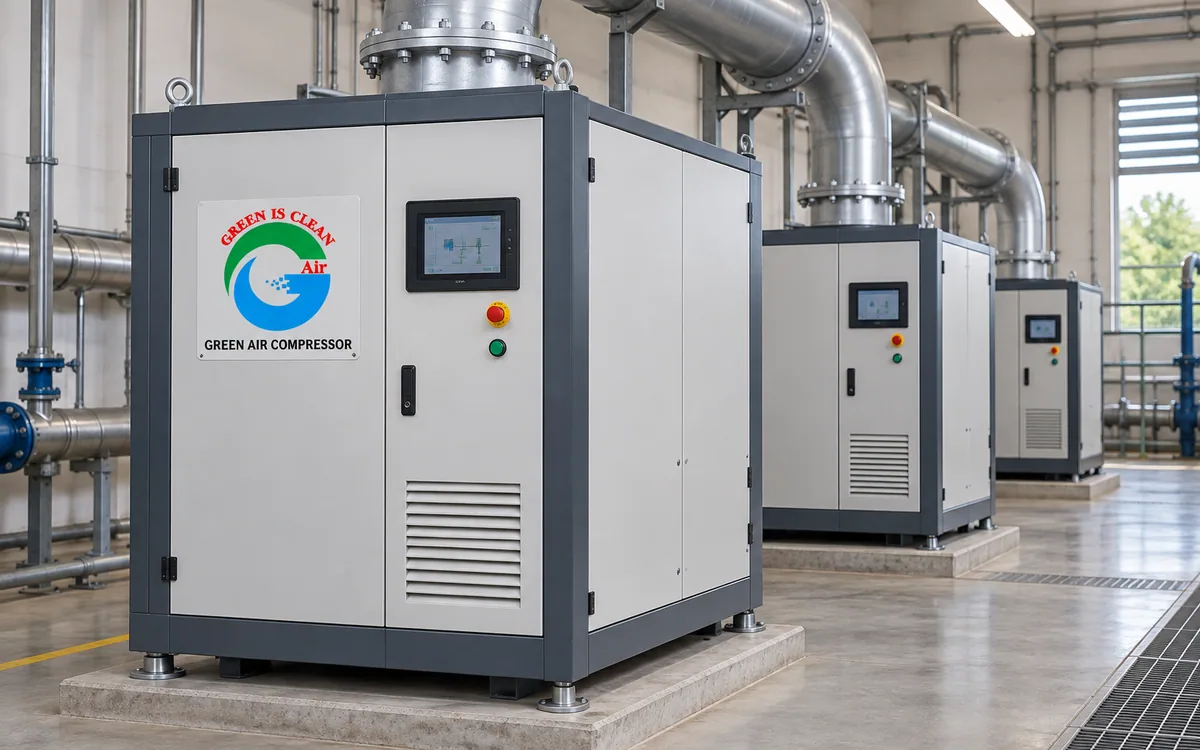
Magnetic levitation blowers
The impeller floats on a magnetic field. 37 to 350 kW, no bearings to wear.
- Free air delivery
- 25.0 – 388.0 m³/min
- Motor power
- 37 – 350 kW
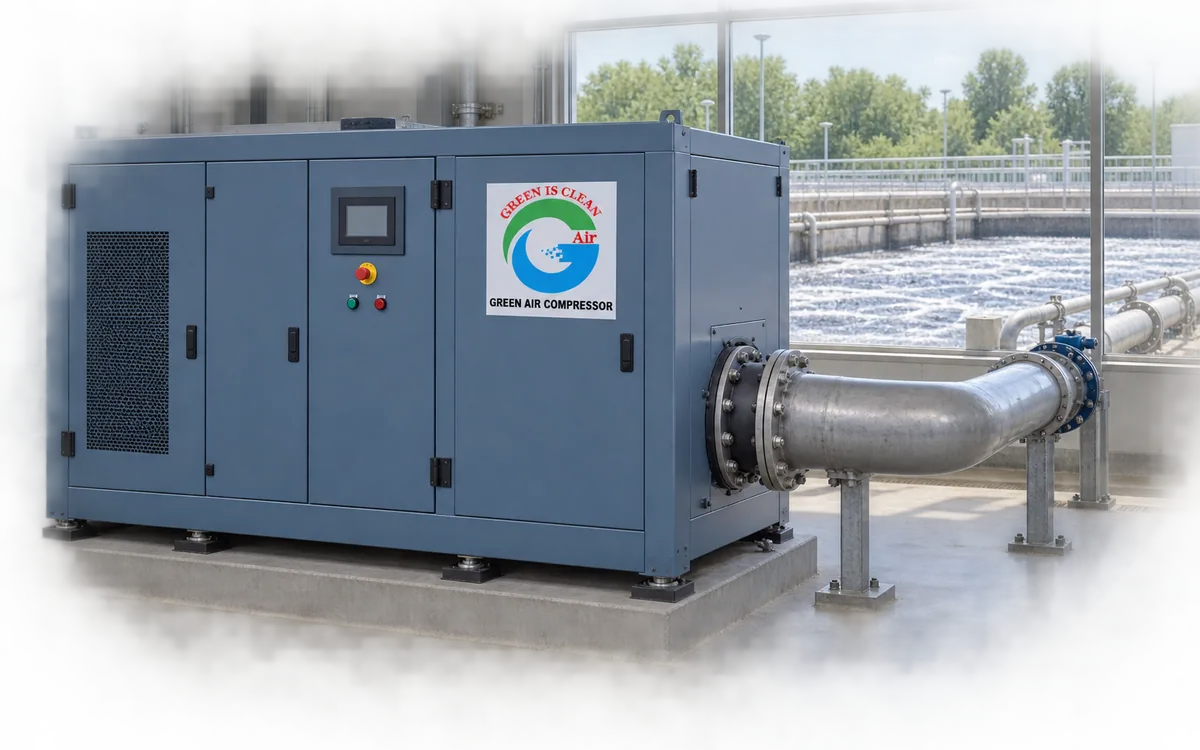
Oil free screw blowers
Screw compression at blower pressures. Up to 1.5 bar g, 22 to 180 kW.
- Free air delivery
- 15.0 – 98.0 m³/min
- Motor power
- 22 – 180 kW
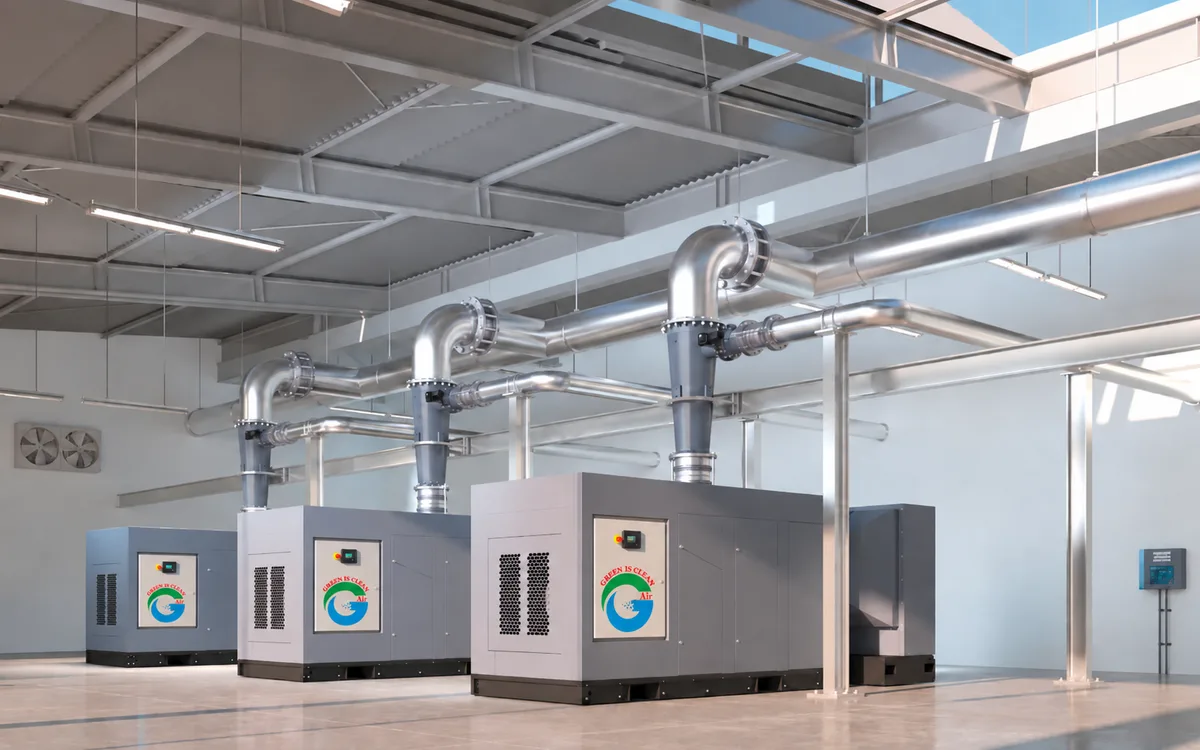
Single-stage centrifugal blowers
High-volume, low-pressure air for aeration and drying.
- Free air delivery
- 12.6 – 160.0 m³/min
- Working pressure
- 1,100 bar g
- Motor power
- 22 – 250 kW
Oil-free turbo blowers with variable speed
High-efficiency turbo blowers for continuous aeration duty.
- Free air delivery
- 32.0 – 135.0 m³/min
- Working pressure
- 1 – 1 bar g
- Motor power
- 50 – 200 kW
Not sure which model you need?
Send us your air demand, working pressure and running hours. Our engineers will size the machine and send a written recommendation, no cost, no obligation.