
Medium portable diesel compressors
185 to 400 cfm, the general-purpose site range.
Technical data
- Free air delivery
- 5.5 – 10.0 m³/min (194 – 353 cfm)
- Working pressure
- 5 – 14 bar g
- Motor power
- 55 – 90 kW
- Weight
- 1,500 – 2,160 kg
- Noise level
- 98 – 99 dB(A)
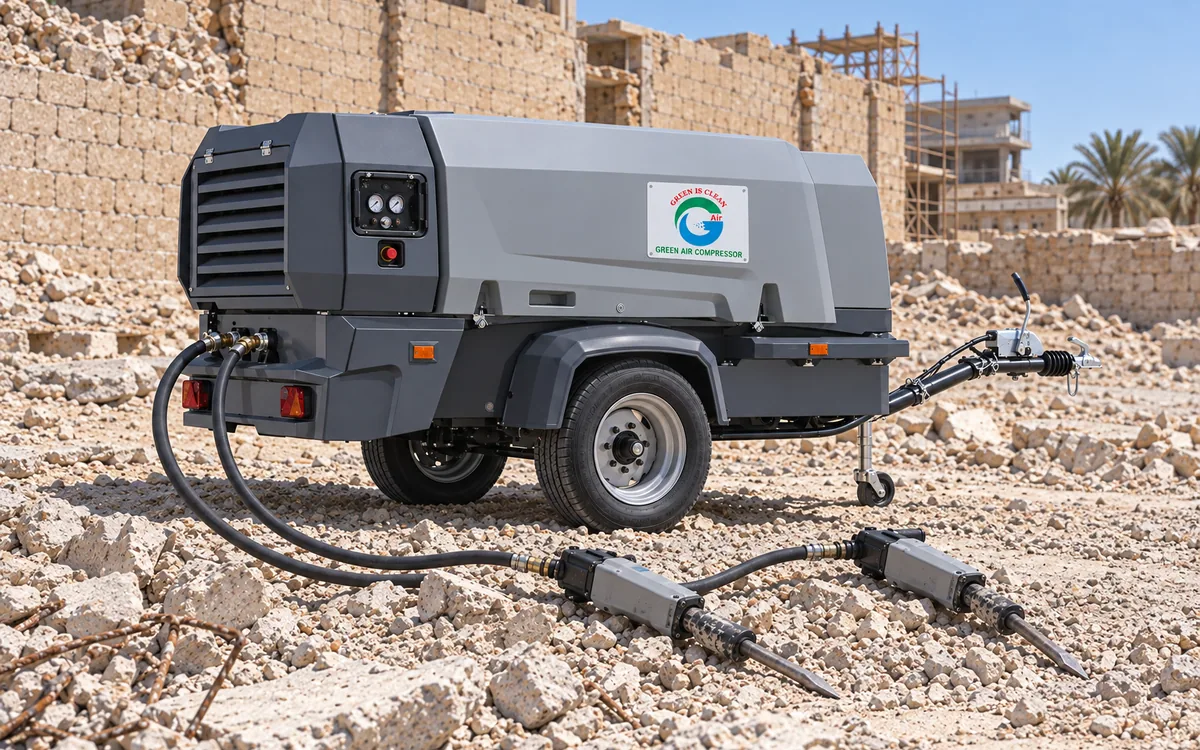
Overview
This band covers most general construction work: two to four breakers, a small blasting pot, tie rod work or general site air. It is also the size that gets hired out most often, so durability and simple servicing matter more than anything else.
Machines here are single-axle towable, road legal, and built with a galvanised chassis because they spend their lives outdoors.
Key benefits
Galvanised chassis
Not painted steel. These machines live outside and rust is what kills the resale value.
Road legal towing
Overrun brakes, lighting and jockey wheel to local road regulations.
Spillage-free frame
Bunded base contains fuel and oil, which is now a site requirement on most managed projects.
Hire-fleet proven
Built to the specification our rental customers ask for, which is the toughest specification there is.
How it is built
This is the workhorse size on most sites. Enough air for several breakers, a small drill rig or a sandblasting pot, on a chassis that still tows behind an ordinary vehicle.
Airend, engine and cooling are matched so the machine can run at full output all day in high ambient rather than derating by the afternoon. That is the specification that separates machines in this class.
Everything that gets serviced is behind one door, and the machine can be lifted, towed or skidded without dismantling anything.
- Five to twelve cubic metres a minute class
- Runs several breakers or a small drill rig
- Full output at high ambient, no afternoon derate
- Tows behind an ordinary vehicle
- Lifting and towing points as standard
- Service behind one door
- Diesel or electric drive
- Fuel tank sized for a full shift
On site controls and telemetry
Pressure, hours, fuel and faults on the panel for the operator, and the full fleet picture for whoever owns the machines.
Sizing complaints on site are usually hose, not compressor. The panel shows delivered pressure so the argument can be settled on the spot rather than by sending another machine.
Fuel logged against hours is the single most requested report from our rental customers, because it makes losses visible the same week rather than at the end of the hire.
- Delivered pressure shown on the panel
- Hours, fuel and faults for the operator
- Fleet telemetry with location
- Fuel logged against running hours
- Service countdown per machine
- Geofence and movement alerts
- Data exported for hire billing
- Faults reported before the call comes in
Parts and service kits
Kits at two hundred and fifty, five hundred and one thousand hours, boxed so one box covers the visit.
On a machine this size the intake filter and the oil are what decide airend life, and on a dusty site the interval belongs to the site rather than to the manual.
We service these on site. A machine that has to go to a workshop is a machine off hire, and that costs more than the service does.
- Kits boxed at 250, 500 and 1,000 hours
- Engine and airend service in one visit
- Intake filter interval set by site conditions
- Serviced on site, not in a workshop
- Held in local stock in every country
- Hire fleet servicing available
- Confirmed against your serial number
- Fixed price under a service plan
Model range
- 5 – 14 bar g
- 5.5 m³/min (194 cfm)
- Noise level
- 98 dB(A) LwA
- Weight
- 1,500 kg
- 5 – 14 bar g
- 7.6 m³/min (268 cfm)
- Noise level
- 98 dB(A) LwA
- Weight
- 1,500 kg
- 5 – 14 bar g
- 8.6 m³/min (304 cfm)
- Noise level
- 99 dB(A) LwA
- Weight
- 2,160 kg
- 5 – 10 bar g
- 10.0 m³/min (353 cfm)
- Noise level
- 99 dB(A) LwA
- Weight
- 2,160 kg
FAD measured to ISO 1217 Edition 4, Annex C and E at 1 bar a intake, 20°C, 0% humidity. Noise measured to ISO 2151 in free field conditions, tolerance ± 3 dB(A). Water-cooled versions of every model are available. Ask us for their sheet.
Frequently asked questions
What is a medium portable compressor?
Broadly the 5 to 12 m³/min class. The workhorse size that runs several breakers, a small drill rig or a sandblasting pot.
How many tools will it run?
Around three to five breakers, or one medium rock drill. Always size on simultaneous use, not on the number of tools in the store.
What pressure do they deliver?
Usually 7 to 12 bar. Higher-pressure versions exist for drilling, and the flow rating falls as the pressure rating rises.
Is it road towable?
Most of this class is, with braked axles. Check the plated weight against your towing vehicle before assuming it.
What fuel consumption should I expect?
It varies with load, but plan for a full working day per tank at typical duty. We give the actual figures per model rather than a rule of thumb.
Can I add an aftercooler or filtration?
Yes, for blasting, painting and tank work where water in the air ruins the job. It is a common and worthwhile option in this class.
How does it handle summer heat here?
Correctly specified units are rated for high ambient. The failure mode is always a dirty cooler, so cleaning schedule matters more than the rating.
What is the resale value like?
Good, if the service record is complete. This size sells quickly across Pakistan and the Gulf second-hand.
Should I hire or buy at this size?
This is the class most contractors own, because it is used on nearly every job. Larger sizes are more often hired for specific tasks.
Which options are worth having?
Cold-start aids where relevant, spark arrestor, a decent tool box and lifting eyes. Small options that save real time on site.
Related products
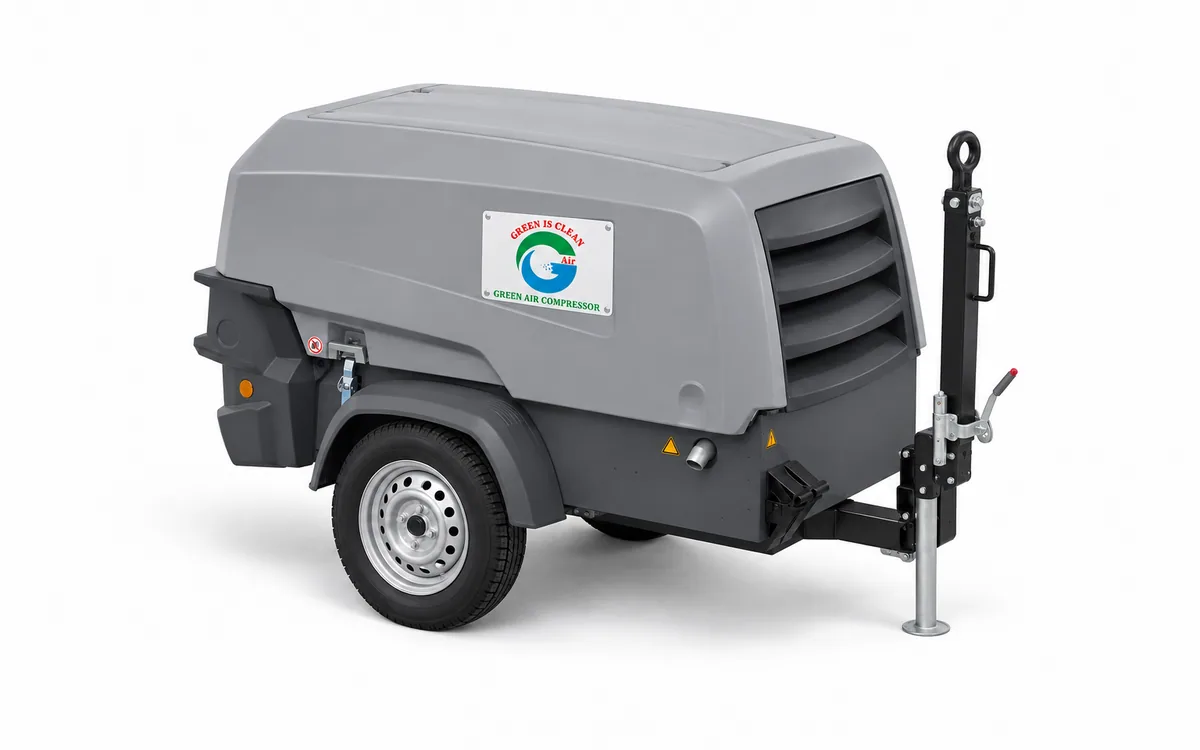
Diesel portable compressors
Towable diesel units for sites with no power supply.
- Free air delivery
- 3.0 – 10.5 m³/min (106 – 371 cfm)
- Working pressure
- 5 – 14 bar g
- Motor power
- 35 – 90 kW
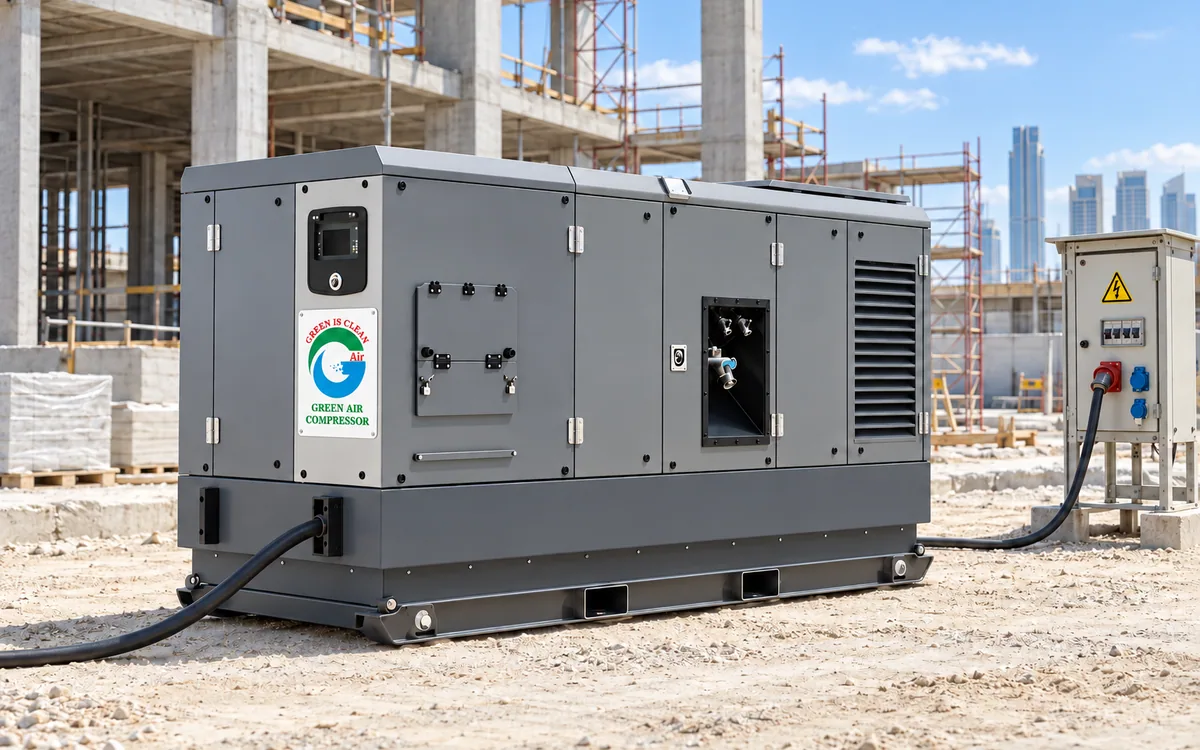
Electric portable compressors
Zero-emission site air where a power supply is available.
- Free air delivery
- 1.5 – 5.0 m³/min (124 – 177 cfm)
- Working pressure
- 5 – 12 bar g
- Motor power
- 30 kW
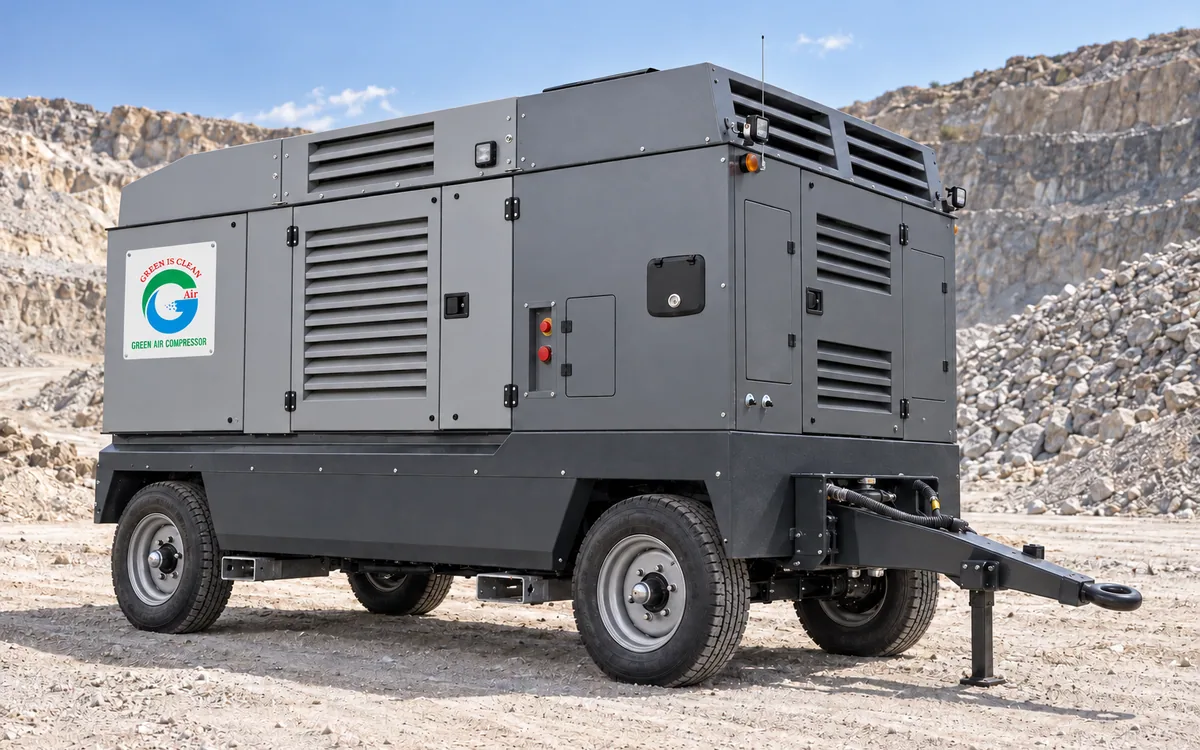
Large portable diesel compressors
650 to 1600 cfm for drilling, blasting and pipeline work.
- Free air delivery
- 11.0 – 27.0 m³/min (388 – 954 cfm)
- Working pressure
- 5 – 24 bar g
- Motor power
- 90 – 224 kW
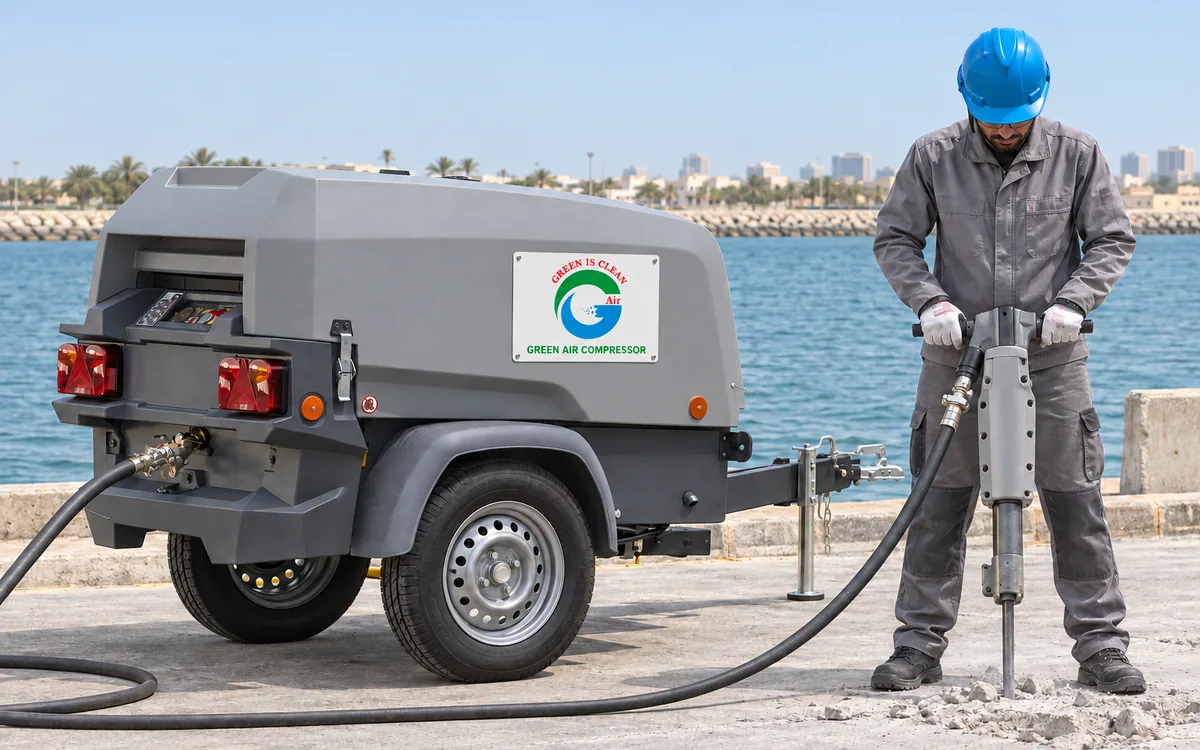
Ready-to-go compressor range
Standard specification machines held in stock for immediate delivery.
Learn moreNot sure which model you need?
Send us your air demand, working pressure and running hours. Our engineers will size the machine and send a written recommendation, no cost, no obligation.