
Membrane air dryers
Silent, power-free drying for small flows and point-of-use.
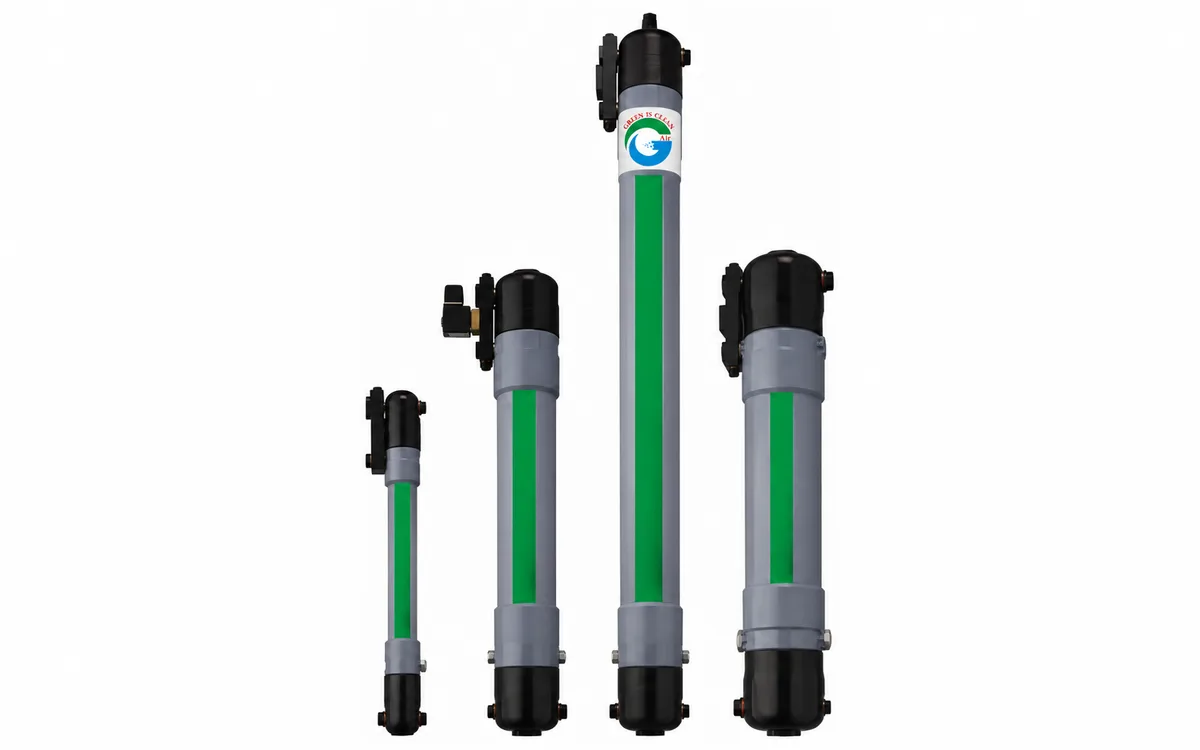
Overview
A membrane dryer is a bundle of hollow fibres that let water vapour pass through the wall while the dry air continues down the pipe. There are no moving parts, no electricity and no noise.
That makes it the right answer for a laboratory bench, an analyser cabinet, a control panel or a remote instrument, anywhere a small, steady flow of dry air is needed and there is no easy power supply.
Key benefits
No electricity
Works from the compressed air itself. Ideal for hazardous areas and remote panels.
Completely silent
No compressor, no valves switching every few minutes. Suitable for laboratories and control rooms.
Nothing to maintain
No moving parts. Change the pre-filter and leave it alone.
Adjustable dew point
Dew point suppression from 20 °C to 40 °C by setting the purge flow.
How it is built
A bundle of hollow fibres, each one with a wall that lets water vapour through far more readily than air. Dry air goes out of one end and the moisture is swept away with a small purge flow.
There is nothing moving and nothing electrical. That is the whole appeal, and it is why these are chosen for remote installations, for hazardous areas and for points of use a long way from a plant room.
Prefiltration is not optional. Oil reaching the membrane blocks it permanently, so a coalescing and carbon stage ahead of the dryer is part of the dryer rather than an accessory.
- Hollow fibre membrane bundle
- No moving parts and no electricity
- Dew points to minus forty
- Silent running
- Suits hazardous and remote locations
- Prefiltration included in the design
- Compact enough for point of use
- Very long service life when protected
Where it suits and where it does not
A membrane dryer is the right answer for small flows, for point of use drying and anywhere a power supply or a moving part would be a problem.
It is the wrong answer for a large plant. The purge air it uses is a fixed share of the flow, and on a big system that share becomes an expensive way to dry air.
We size it on the flow you actually have rather than the connection size. Oversizing a membrane dryer wastes purge air all day and undersizing simply fails to reach the dew point.
- Best for small flows and point of use
- Not economic on large plant
- Purge air is a fixed share of the flow
- Sized on actual flow, not pipe size
- Ideal where no power is available
- Ideal in hazardous areas
- Dew point chosen to the process need
- Alternative options compared honestly
Parts and service
The prefilters are the service item. The membrane itself is not serviced, it is protected, and how well it is protected decides whether it lasts three years or ten.
A membrane that has seen oil does not recover. That is the single most important thing to know about this design and the reason we specify the filtration with it.
We check the dew point being achieved at every visit, because a membrane declines gradually rather than failing, and only a measurement shows it.
- Coalescing and carbon prefilters by interval
- Membrane protected rather than serviced
- Dew point measured at every visit
- Oil contamination is permanent damage
- Filter changes scheduled, not reactive
- Parts held in local stock
- Serviced with the compressor
- Fixed price under a service plan
Frequently asked questions
How does a membrane dryer work?
Compressed air passes through a bundle of hollow fibres whose walls let water vapour escape while the dry air continues down the pipe. There are no moving parts at all.
Does it need electricity?
No, it works from the compressed air itself, which is why it suits hazardous areas, remote instrument cabinets and anywhere there is no convenient supply.
How quiet is it?
Completely silent: no compressor, no valves switching every few minutes. That is what makes it the standard choice for laboratories and control rooms.
What dew point does it achieve?
Dew point suppression of 20 °C to 40 °C, set by how much purge flow you allow. It is adjustable rather than fixed.
What flow rates does it suit?
Small ones, analyser cabinets, laboratory benches, dental and medical equipment, single instruments. For a factory ring main it is the wrong technology.
What maintenance does it need?
Change the pre-filter and leave it alone. There is nothing else to service, which is the main reason people fit them in awkward locations.
Does it lose air?
Yes, a small purge flow is inherent to how it works. On the flows involved that loss is trivial, but it is why the technology does not scale up.
How long does the membrane last?
Years, provided the air reaching it is properly filtered. Oil is what destroys a membrane, so the pre-filter is not optional.
Can it be mounted in any orientation?
Yes, which matters inside a packed control panel. It is compact enough to fit where a refrigerant dryer never would.
Is it more expensive to run than a refrigerant dryer?
Per unit of air, yes, because of the purge. At these small flows the difference is negligible against the cost of running power to a remote cabinet.
Related products
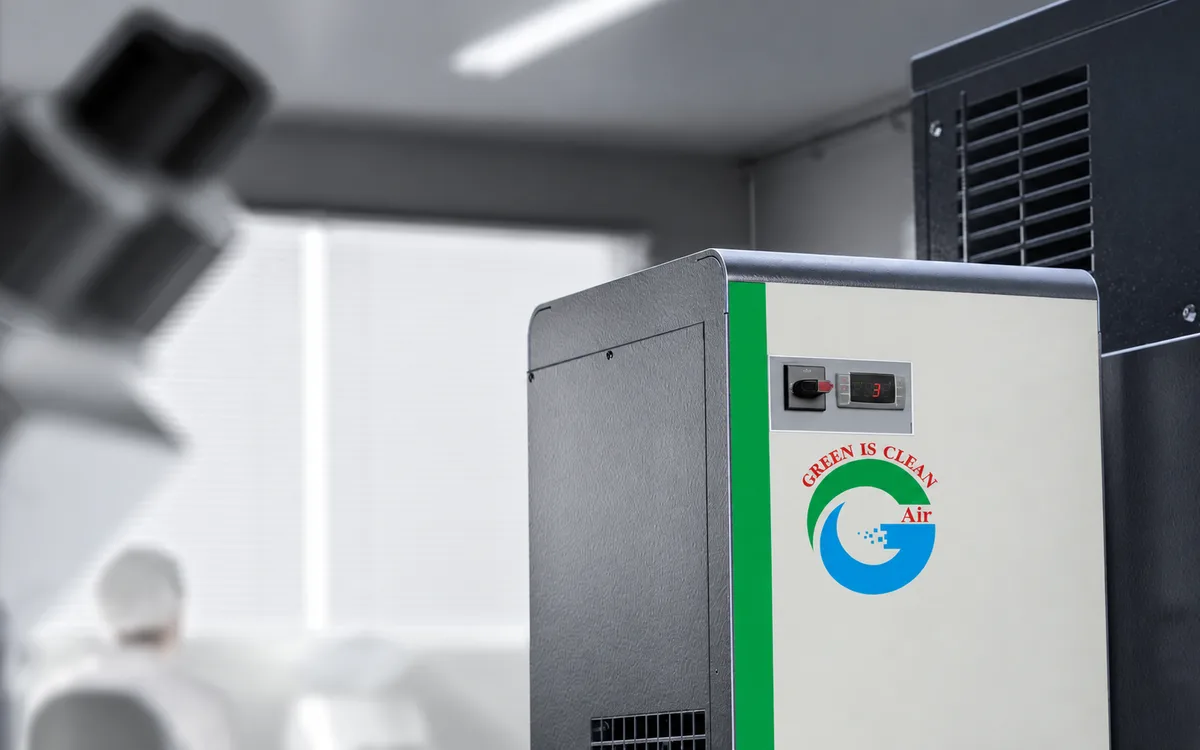
Refrigerant air dryers
The standard, low-cost way to reach a +3 °C pressure dew point.
- Free air delivery
- 10.0 – 383.3 m³/min
- Working pressure
- 13 – 16 bar g
- Motor power
- 1 – 32 kW
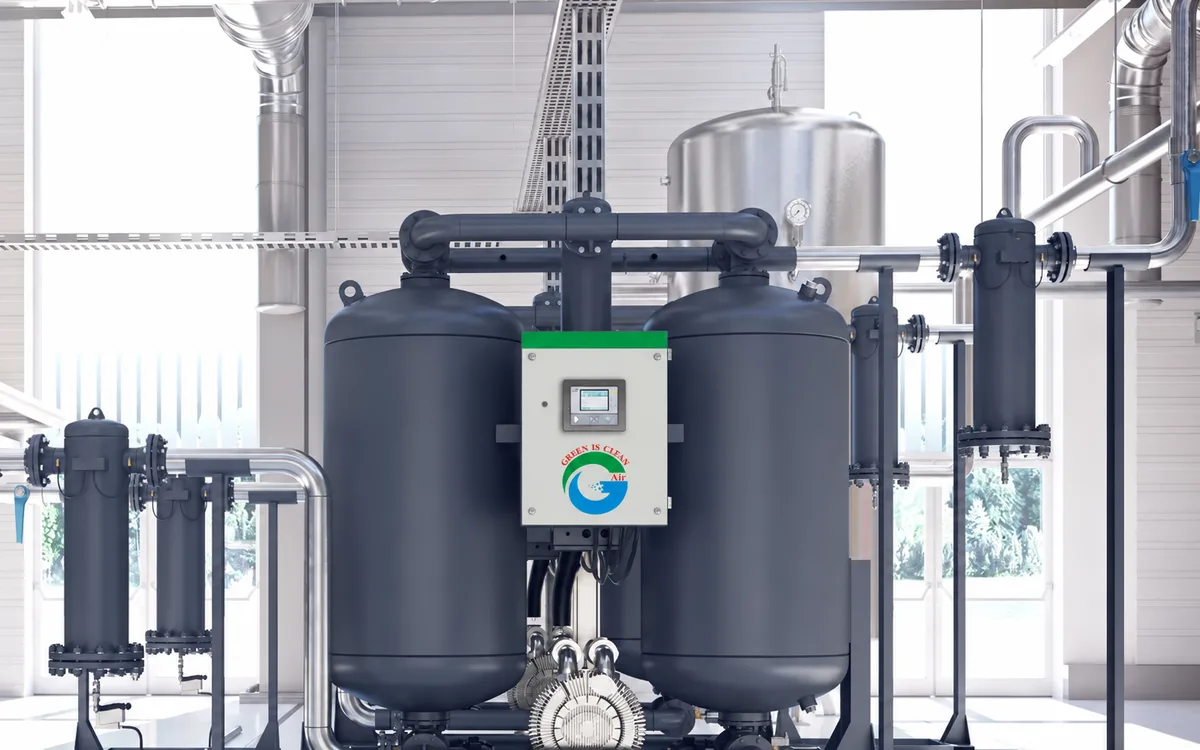
Desiccant air dryers
Dew points down to −70 °C for critical and outdoor pipework.
- Free air delivery
- 6.7 – 141.7 m³/min
- Weight
- 285 – 4,400 kg
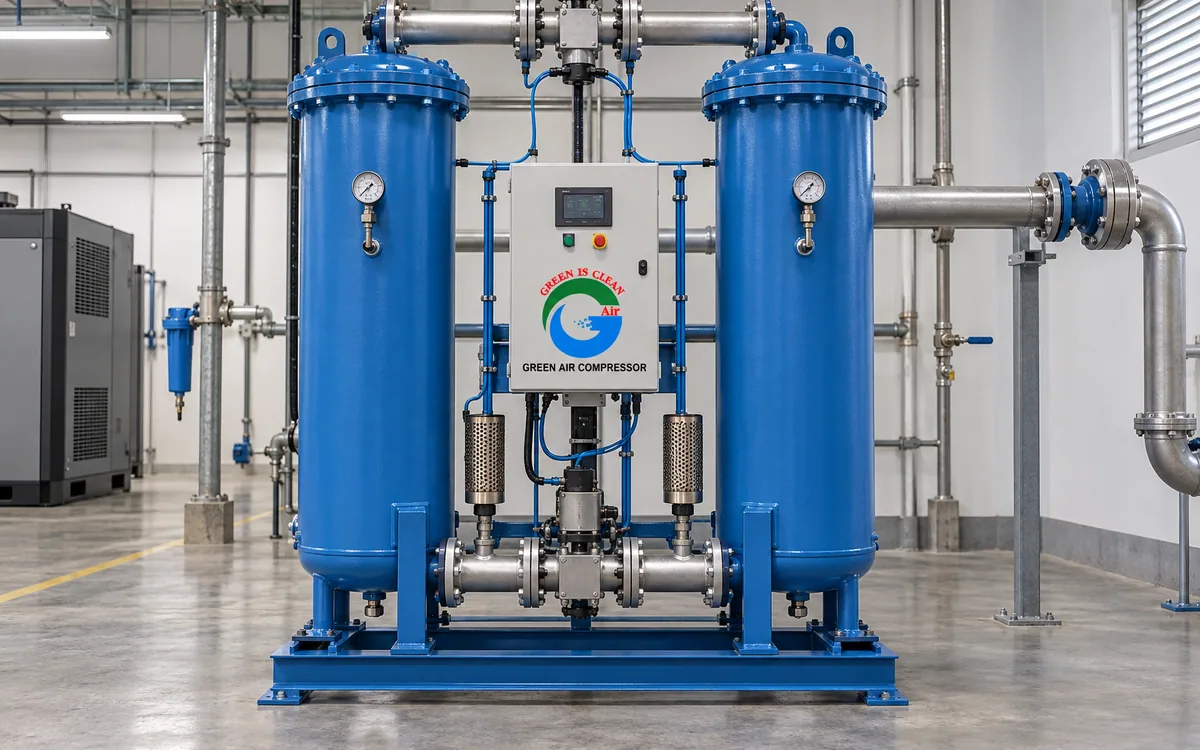
Heatless adsorption dryers
Minus 40 °C dew point with no heater. Simple, reliable, uses purge air.
- Free air delivery
- 1.4 – 80.0 m³/min
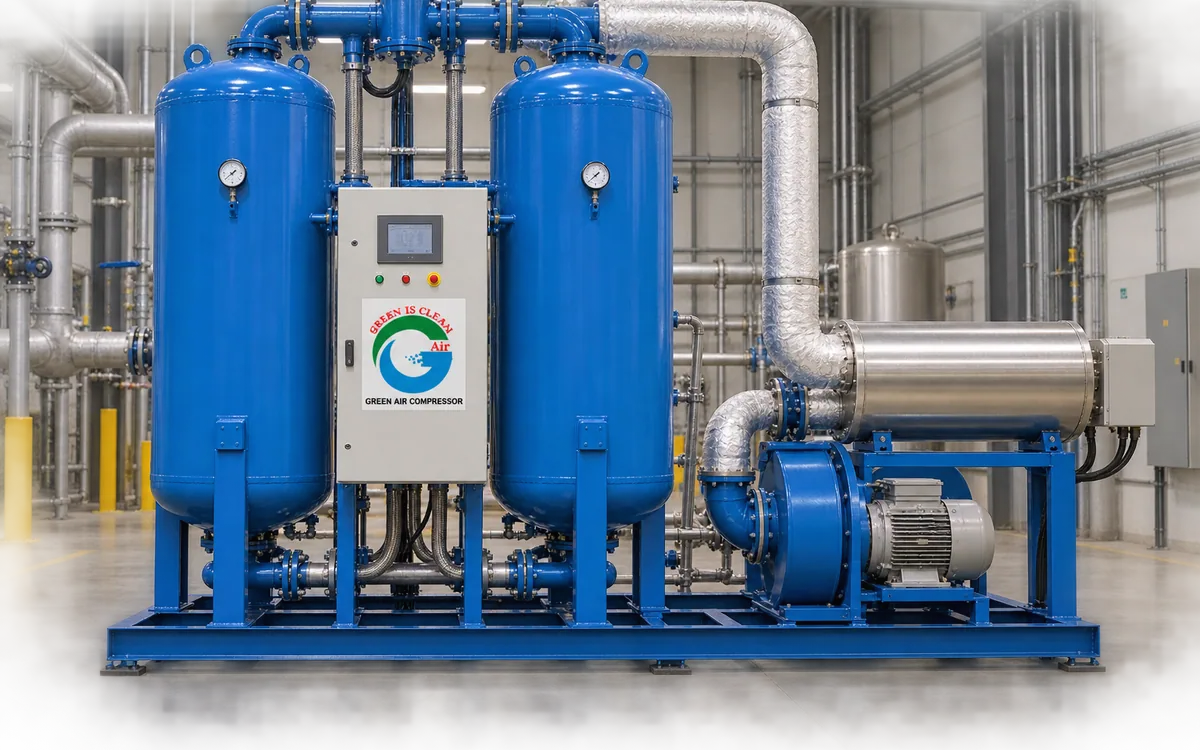
Heated and blower purge adsorption dryers
Minus 40 °C with two per cent purge or none at all. For large flows.
Learn moreNot sure which model you need?
Send us your air demand, working pressure and running hours. Our engineers will size the machine and send a written recommendation, no cost, no obligation.