
High temperature refrigerated dryers
Takes air straight off the compressor at up to 80 °C, with no pre-cooler.
Technical data
- Free air delivery
- 1.2 – 65.0 m³/min
- Motor power
- 8 – 355 kW
- Weight
- 40 – 410 kg
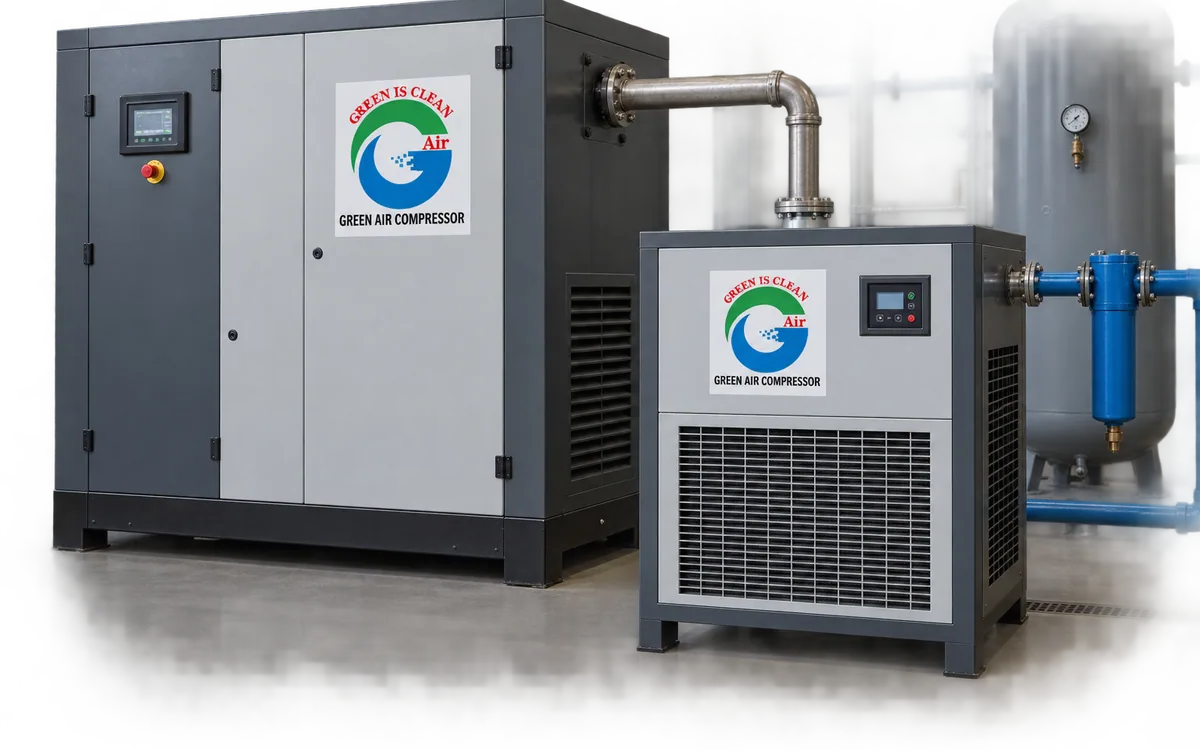
Overview
A standard refrigerant dryer expects air at around 35 to 45 °C. Air coming straight off a compressor without an aftercooler can be 70 or 80 °C, and feeding that to a standard dryer either trips it or ruins it.
The usual fix is an aftercooler, and where there is room for one that is the right answer. Where there is not — a retrofit, a tight skid, a machine whose aftercooler has been outgrown — a high temperature dryer handles the inlet directly.
Key benefits
Up to 80 °C inlet
Takes the air as the compressor delivers it, with no separate aftercooler in the line.
Saves a component and its space
One item instead of two, which on a retrofit into an existing plant room is often the deciding factor.
Built for the heat
Oversized condenser and a heat exchanger designed for the duty rather than a standard one pushed past its rating.
Standard 3 °C dew point
Same outlet performance as an ordinary refrigerant dryer. The difference is what it will accept at the inlet.
When to use one
On a retrofit where there is no room for an aftercooler, or where the existing aftercooler has been outgrown because the compressor was replaced with a larger one and the cooler was not.
On a skid or a container where every component has to justify its footprint. One high temperature dryer occupies less than an aftercooler plus a standard dryer.
Where ambient conditions make an air cooled aftercooler ineffective. In a plant room that is already at 45 °C, an air cooled aftercooler has very little temperature difference to work with and the dryer downstream sees hot air regardless.
- Retrofits with no space for an aftercooler
- Skids and containerised stations
- Hot plant rooms where aftercooling is ineffective
- Compressor upgraded, aftercooler not
- 3 °C pressure dew point at outlet
- Cyclone separator still required upstream
Model range
- Free air delivery
- 1.2 m³/min
- Weight
- 40 kg
- Dimensions L x W x H
- G¾'' mm
- Free air delivery
- 1.6 m³/min
- Weight
- 134 kg
- Dimensions L x W x H
- G¾'' mm
- Free air delivery
- 2.6 m³/min
- Weight
- 410 kg
- Dimensions L x W x H
- G1" mm
- Free air delivery
- 3.8 m³/min
- Weight
- 410 kg
- Dimensions L x W x H
- G 1½'' mm
- Free air delivery
- 6.5 m³/min
- Weight
- 410 kg
- Dimensions L x W x H
- G 1½'' mm
- Free air delivery
- 8.5 m³/min
- Weight
- 410 kg
- Dimensions L x W x H
- G2" mm
- Free air delivery
- 11.5 m³/min
- Weight
- 160 kg
- Dimensions L x W x H
- G2" mm
- Free air delivery
- 13.5 m³/min
- Weight
- 410 kg
- Dimensions L x W x H
- G2" mm
- Free air delivery
- 18.5 m³/min
- Weight
- 410 kg
- Dimensions L x W x H
- G2½'' mm
- Free air delivery
- 20.5 m³/min
- Weight
- 410 kg
- Dimensions L x W x H
- G3" mm
- Free air delivery
- 25 m³/min
- Weight
- 410 kg
- Dimensions L x W x H
- G3" mm
- Free air delivery
- 35 m³/min
- Weight
- 410 kg
- Dimensions L x W x H
- G4" mm
- Free air delivery
- 45 m³/min
- Weight
- 410 kg
- Dimensions L x W x H
- DN100 mm
- Free air delivery
- 55 m³/min
- Weight
- 410 kg
- Dimensions L x W x H
- DN125 mm
- Free air delivery
- 65 m³/min
- Weight
- 410 kg
- Dimensions L x W x H
- DN125 mm
FAD measured to ISO 1217 Edition 4, Annex C and E at 1 bar a intake, 20°C, 0% humidity. Noise measured to ISO 2151 in free field conditions, tolerance ± 3 dB(A). Water-cooled versions of every model are available. Ask us for their sheet.
Frequently asked questions
Is it less efficient than a standard dryer plus aftercooler?
Slightly, on energy. It wins on space, on capital cost and on having one fewer item to install and maintain.
Do I still need a water separator?
Yes. A great deal of water drops out as that air cools, and it has to go somewhere other than into the dryer's heat exchanger.
What dew point does it give?
Around 3 °C, the same as a standard refrigerant dryer. Where you need lower than that you need a desiccant dryer regardless of the inlet temperature.
What inlet temperature can it take?
Up to 80 °C, which covers air taken straight off a compressor with no aftercooler in the line.
When is it the right choice?
Retrofits with no room for an aftercooler, skids and containers where space is scarce, and hot plant rooms where air cooling an aftercooler achieves little.
Why is the condenser oversized?
Because it is rejecting the heat that an aftercooler would otherwise have removed. A standard dryer pushed to this duty would trip on high pressure.
Can it handle a hot plant room too?
Ambient rating is separate from inlet rating and both are stated. In a plant room already at 45 °C we check the two together rather than assuming.
Does it need more maintenance?
The condenser needs keeping clean, and in a dusty plant room that is the item most often neglected. Otherwise the schedule is the same as any refrigerant dryer.
Will it cope if the compressor is upgraded?
Only within its rated flow. A dryer sized for the old machine is the commonest cause of wet air after a compressor is replaced.
Is the drain included?
Yes, and there is a lot of condensate at this inlet temperature. An automatic drain is specified with it rather than left to site.
Related products
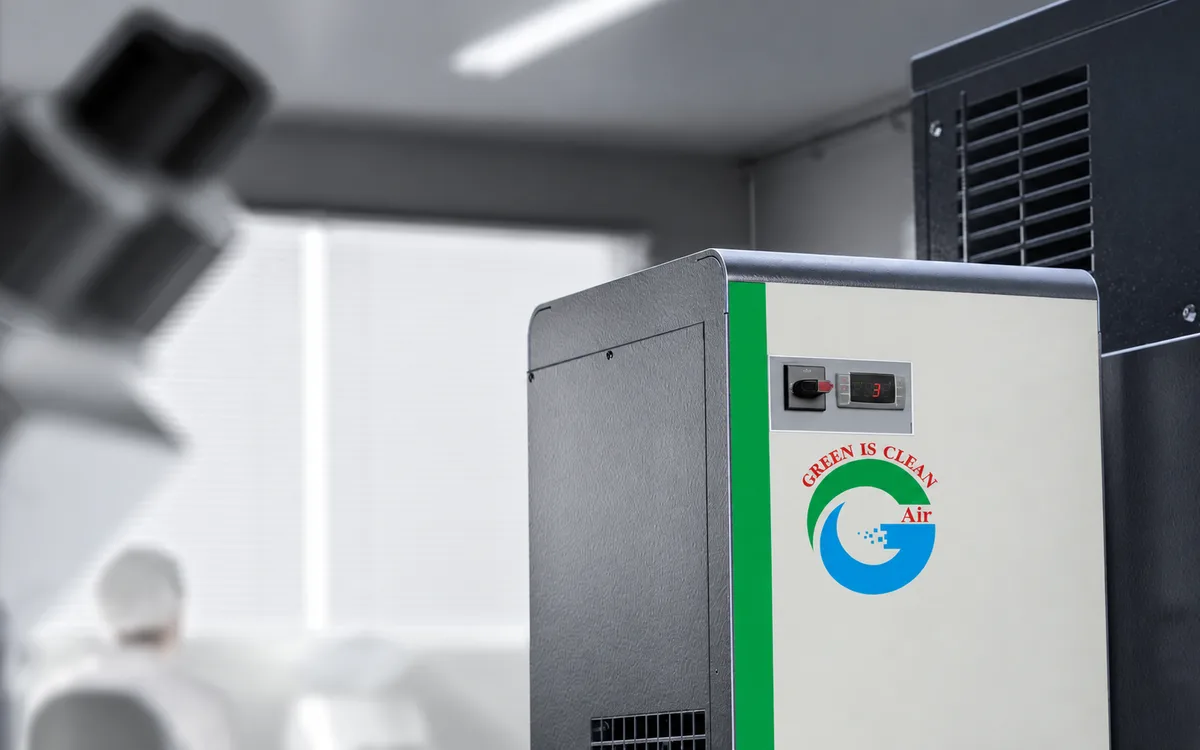
Refrigerant air dryers
The standard, low-cost way to reach a +3 °C pressure dew point.
- Free air delivery
- 10.0 – 383.3 m³/min
- Working pressure
- 13 – 16 bar g
- Motor power
- 1 – 32 kW
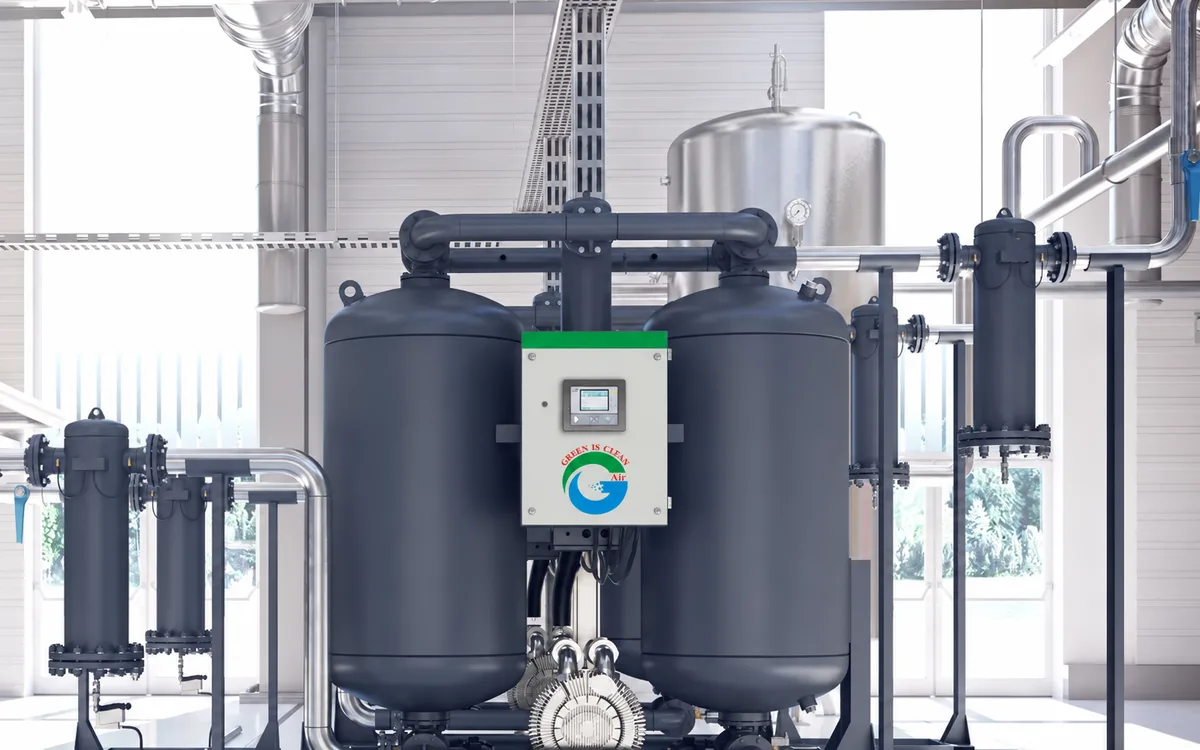
Desiccant air dryers
Dew points down to −70 °C for critical and outdoor pipework.
- Free air delivery
- 6.7 – 141.7 m³/min
- Weight
- 285 – 4,400 kg
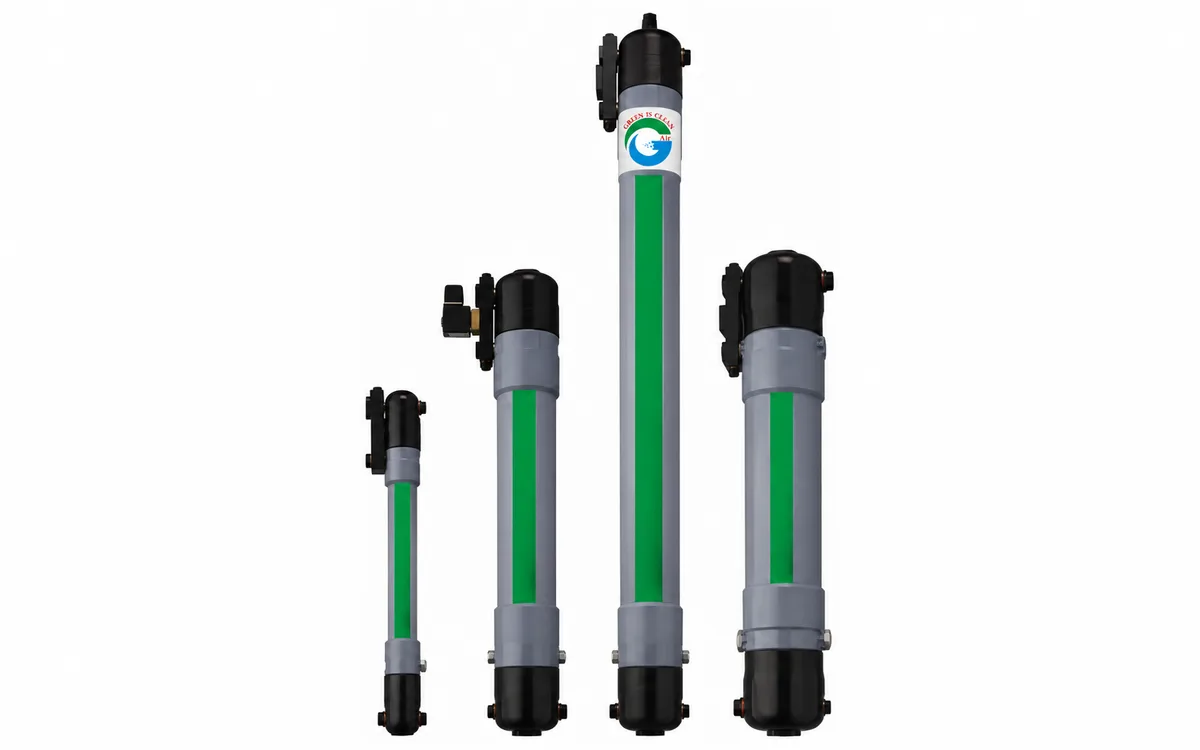
Membrane air dryers
Silent, power-free drying for small flows and point-of-use.
Learn more
Heatless adsorption dryers
Minus 40 °C dew point with no heater. Simple, reliable, uses purge air.
- Free air delivery
- 1.4 – 80.0 m³/min
Not sure which model you need?
Send us your air demand, working pressure and running hours. Our engineers will size the machine and send a written recommendation, no cost, no obligation.