
Industries and applications
How we specify air for the sectors we work in most.
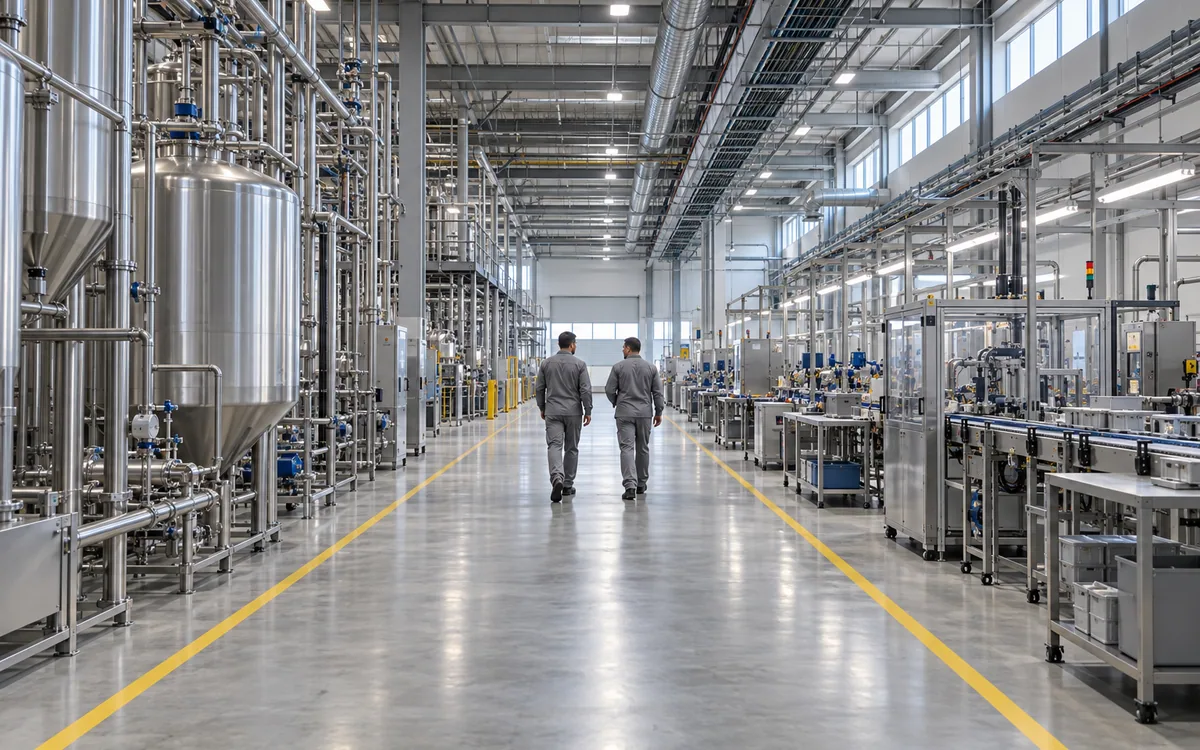
Overview
The same 55 kW compressor can be exactly right in one plant and completely wrong in the one next door. What changes is the air quality required, how the demand varies through the day, and what it costs when the air stops.
These pages set out how we approach each sector, what we ask about, what usually turns out to matter, and where the money is normally found.
In this range
- TextilesAir-jet weaving, spinning and dyeing, where air is the largest utility.
- Food and beverageClass 0 air, documented, for anything that touches product.
- PharmaceuticalValidated, qualified air systems with full documentation.
- Mining and quarryingAir and dewatering that survive dust, distance and heat.
- ConstructionPortable air, pumps and tools that arrive when you need them.
- Industrial manufacturingGeneral factory air, specified from measurement rather than habit.
- ElectronicsUltra-clean, dry, stable air for assembly and test.
- Electric vehicle manufacturingDocumented tightening and clean, dry air for battery assembly.
- DefenceRuggedised, documented and supportable equipment.
- General industryWorkshops, facilities and everything that does not fit a category.
Key benefits
Specified from the process
What the air touches and what a stoppage costs decide the machine, not a catalogue page.
Documentation an auditor accepts
Certificates kept current and reissued after any work that affects them.
Planned around your production
Servicing in your windows, with rental cover when a machine has to come out.
Present in five countries
Engineers and parts where our customers are.
Why the industry matters
Compressed air is the same physics everywhere and a completely different specification in each trade. What decides it is what the air touches and what the plant can tolerate when it stops.
A weaving shed needs clean air more than dry air. A dairy needs certified oil free. A mine needs a machine that survives dust and a parts holding on site rather than in a city.
So we specify from the process rather than from a catalogue, and the pages here set out what each trade actually needs before anybody talks about a model.
- Air quality set by what the air touches
- Reliability set by what a stoppage costs
- Conditions set the derating and the intervals
- Documentation set by the regulator
- Specified from the process, not the catalogue
- Local support in every market we serve
- Honest advice where less is enough
- Written sizing with every quotation
What we bring to a plant
Engineers and parts in Pakistan, the United Arab Emirates, Saudi Arabia, Oman and Türkiye, which is where our customers are rather than where a head office is.
Servicing planned around your production rather than around our calendar, with rental cover where a machine has to come out.
And measurement. An audit that logs flow, pressure and power for a week tells you more than any opinion, and every finding comes with a number against it.
- Engineers and parts in five countries
- Servicing planned around your production
- Rental cover during removals
- Audits that measure rather than guess
- Every finding costed individually
- Documentation kept for audits
- Fixed price service plans
- Support for machines of any make
Frequently asked questions
Why does my industry change the compressor specification?
Because air quality, pressure stability and the cost of stopping are different in every sector. A pharma cleanroom and a quarry can use the same kW and need completely different machines.
Which industries genuinely need oil-free air?
Food and beverage, pharmaceutical, electronics, hospitals and air-jet weaving. In general engineering, oil-injected with proper filtration is the sensible answer.
How do I work out the cost of an air failure?
Take the value of an hour of lost production and multiply by a realistic repair time. Once that number is on paper, standby capacity or an N+1 arrangement usually justifies itself immediately.
Do you supply standby capacity?
Yes, either as a second machine with automatic changeover, or as a rental unit on call. Which is right depends on how expensive an hour of downtime is.
What air quality class does my process need?
It is set by what the air touches. General factory air is typically ISO 8573-1 3.4.3. Food contact and pharmaceutical air is 1.2.1 or better. We specify to your process, not to the highest class available.
Can you help with an audit for a customer certification?
Yes, we supply air quality test results and certification documentation for BRC, FSSC, HACCP and pharmaceutical qualification files.
Do different industries need different service intervals?
Yes, a dusty cement plant needs intake filtration attention far more often than an electronics assembly hall. We set intervals from the site conditions, not from a generic table.
Is heat recovery worth it in my sector?
It is unusually good where the plant already buys hot water, textile dye houses, dairies, food processing. In a machine shop with no hot water demand, there is nothing to recover into.
Which industries have the biggest savings available?
General manufacturing, almost always, because nobody has ever looked. A week of logging typically finds 20–30% leakage and a system running one to two bar higher than anything needs.
Do you have references in my sector?
Ask us for the country and the sector and we will put you in touch with a customer running a comparable installation.
Related products
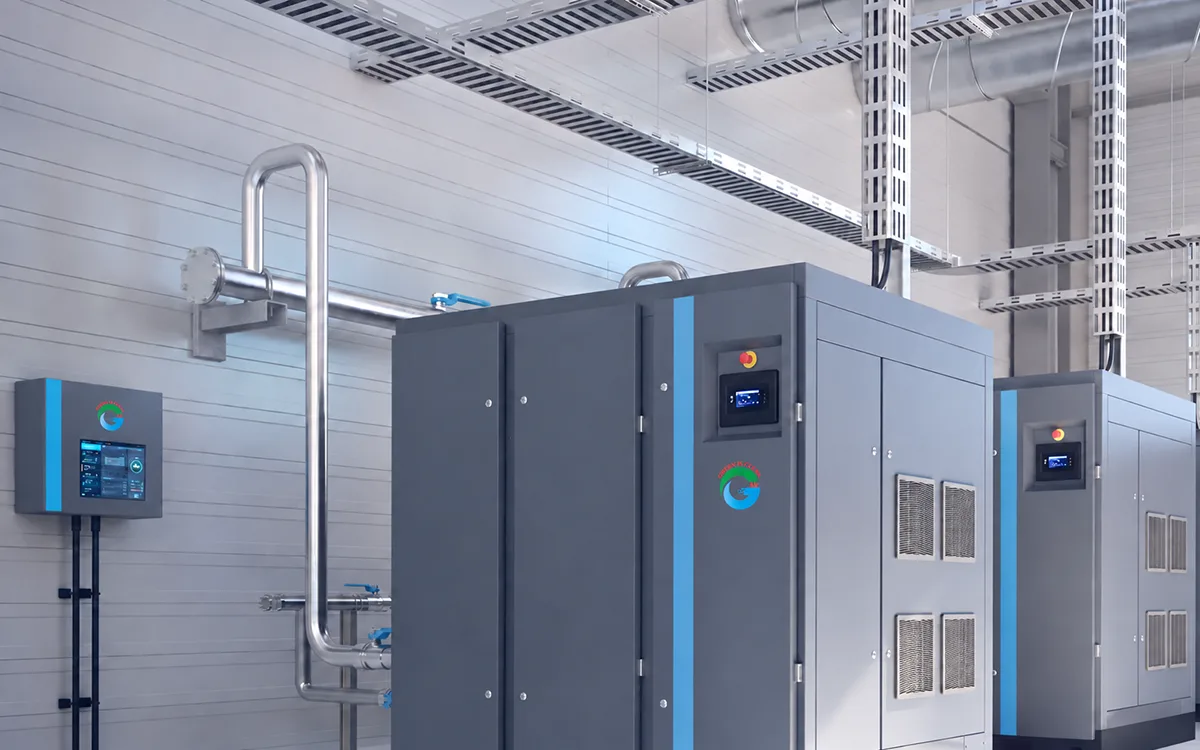
Products
Screw, oil-free, piston and gas compressors, dryers, filters, blowers, receivers and gas generation.
- Free air delivery
- 0.1 – 418.0 m³/min (9 – 954 cfm)
- Working pressure
- 0 – 1,100 bar g
- Motor power
- 1 – 450 kW
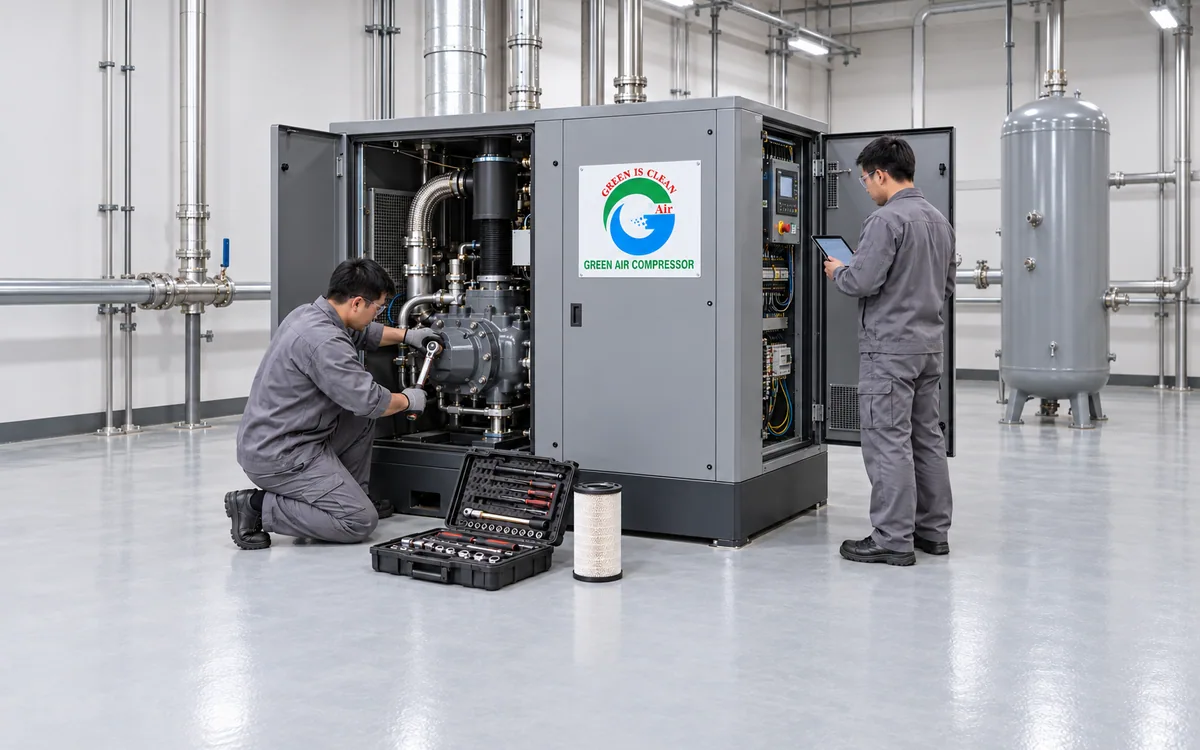
Service and parts
Parts, planned maintenance, airend exchange, rental and 24/7 breakdown cover.
Learn more
Knowledge hub
Plain-English guides to compressed air, written for people who buy it.
Learn moreNot sure which model you need?
Send us your air demand, working pressure and running hours. Our engineers will size the machine and send a written recommendation, no cost, no obligation.