
Air dryers
Refrigerant, desiccant and membrane drying for every dew point.
Overview
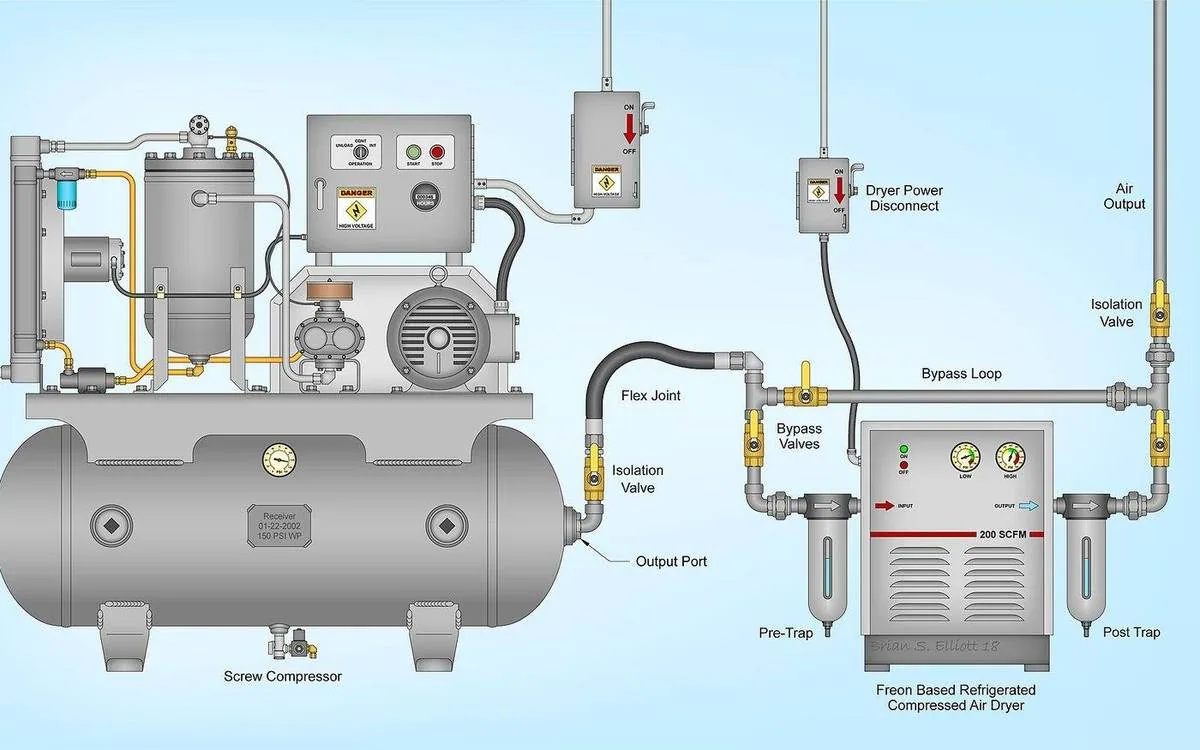
Every compressor makes water. Air drawn in at 35 °C and 70% humidity carries a surprising amount of moisture, and compressing it forces most of that water out as liquid inside your pipework.
That water rusts pipes, wrecks pneumatic cylinders, ruins paint finishes and contaminates product. A dryer is not an accessory, in Karachi, Dubai or Muscat it is part of the compressor installation.
In this range
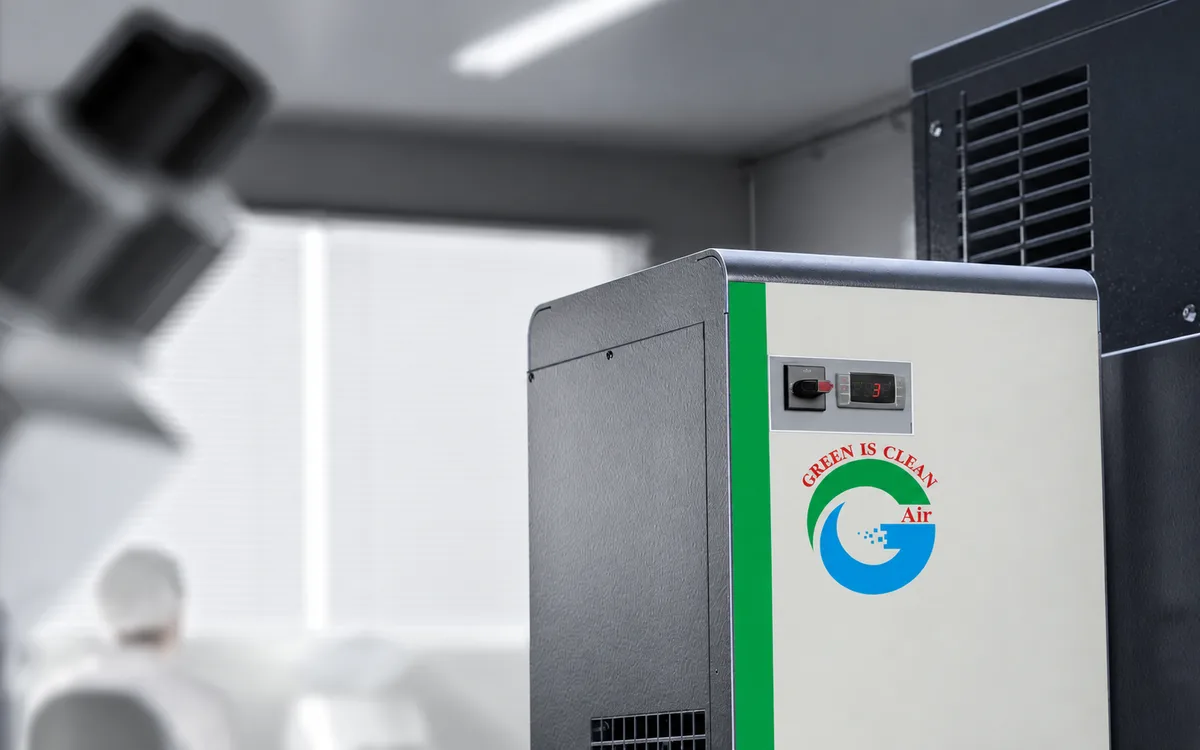
Refrigerant air dryers
The standard, low-cost way to reach a +3 °C pressure dew point.
- Free air delivery
- 10.0 – 383.3 m³/min
- Working pressure
- 13 – 16 bar g
- Motor power
- 1 – 32 kW
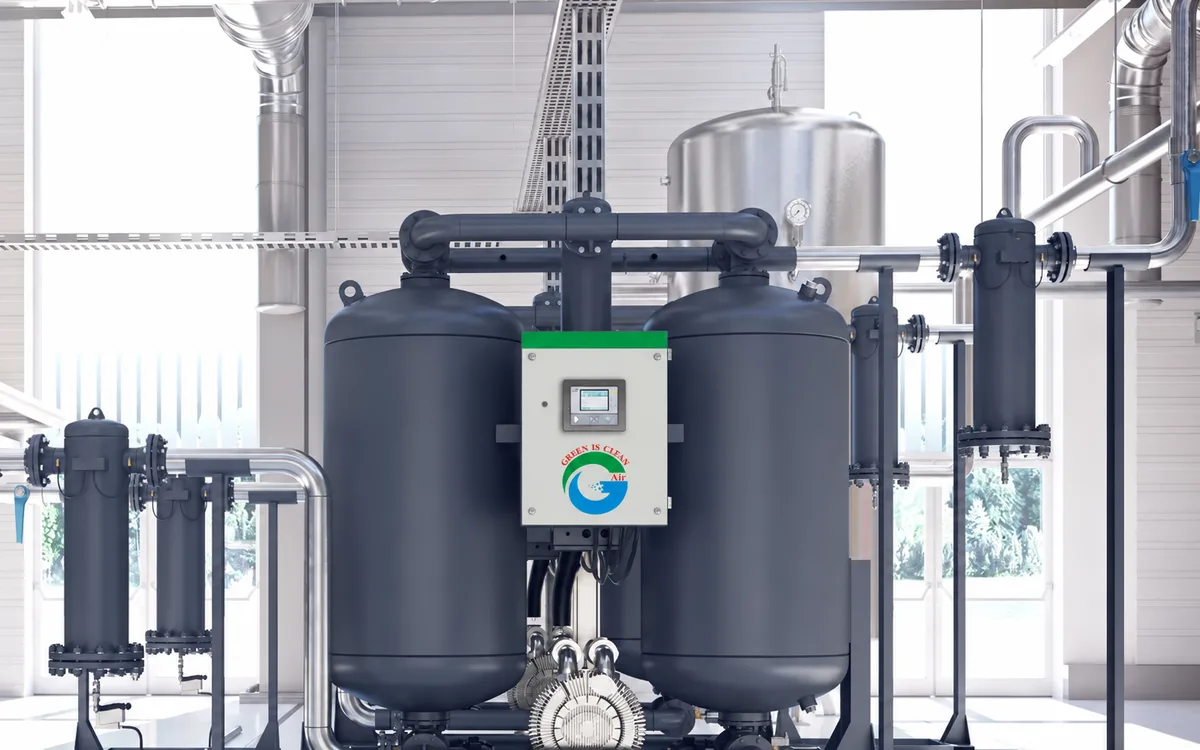
Desiccant air dryers
Dew points down to −70 °C for critical and outdoor pipework.
- Free air delivery
- 6.7 – 141.7 m³/min
- Weight
- 285 – 4,400 kg
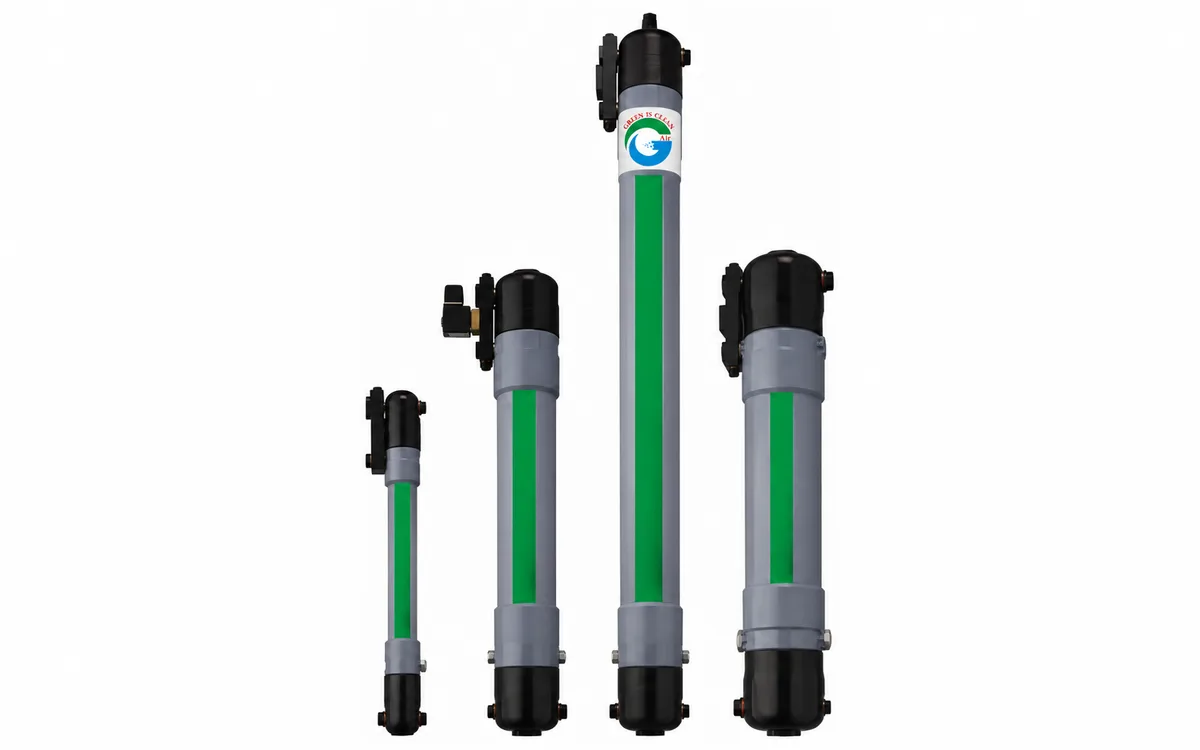
Membrane air dryers
Silent, power-free drying for small flows and point-of-use.
Learn more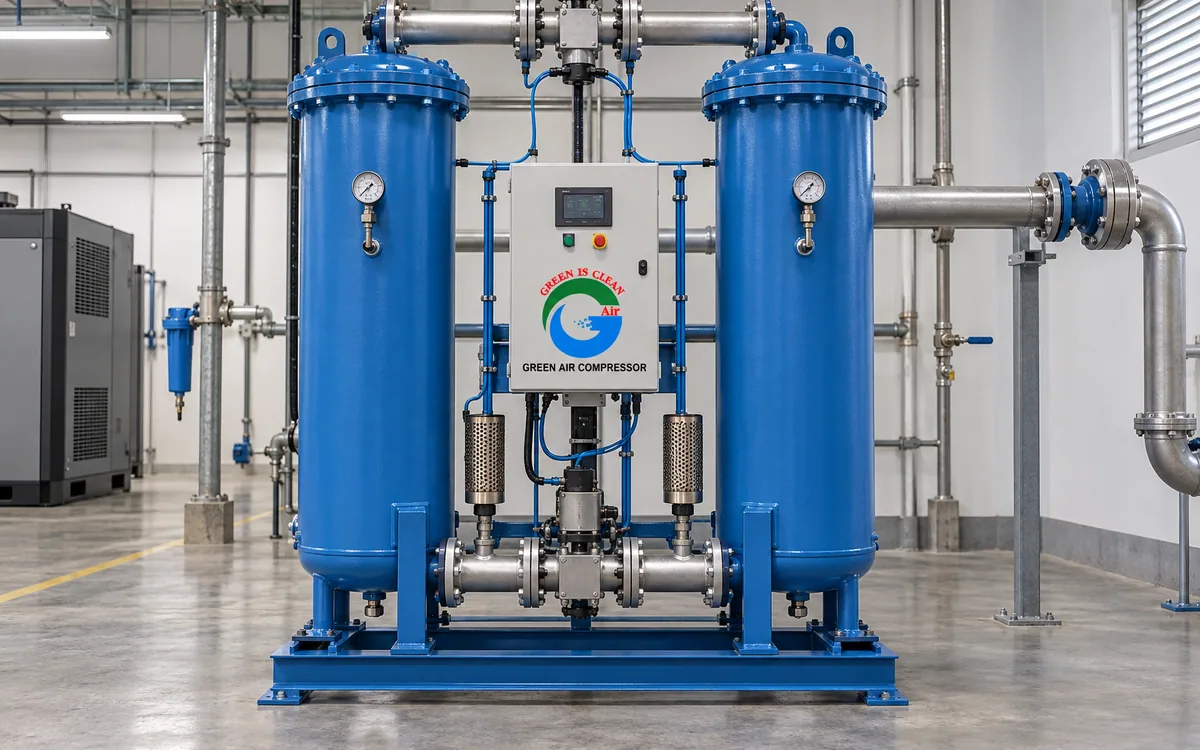
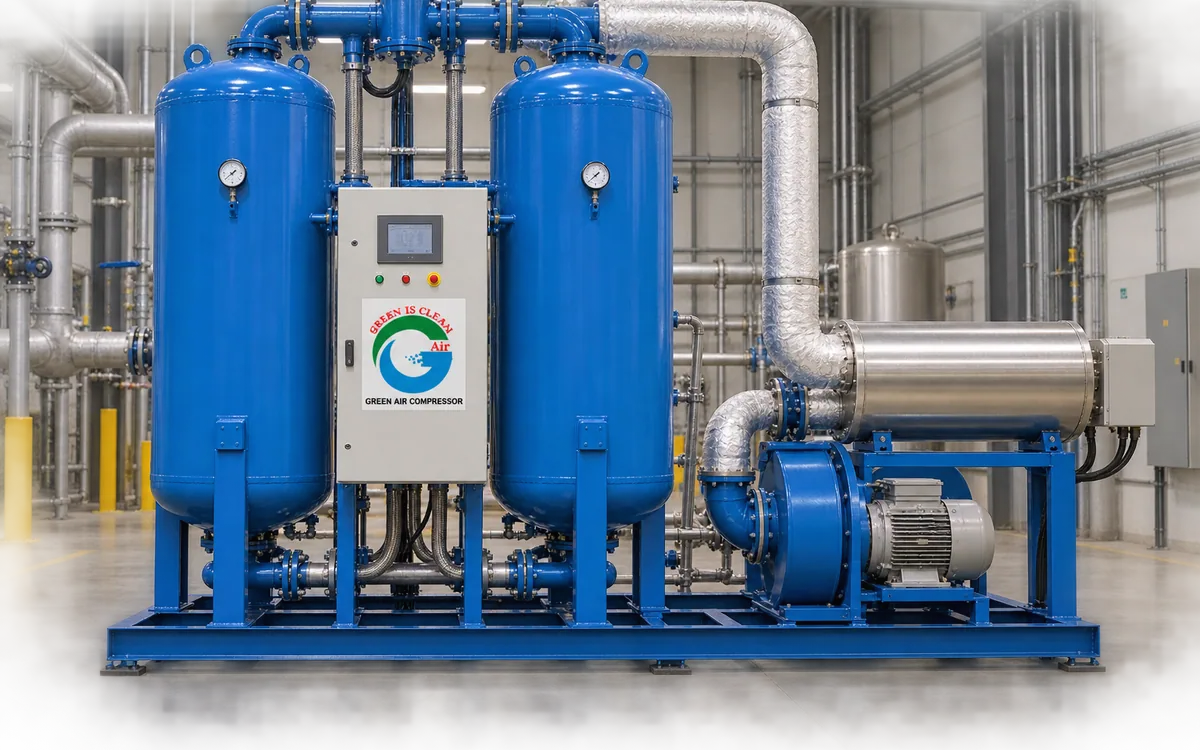
Heatless adsorption dryers
Minus 40 °C dew point with no heater. Simple, reliable, uses purge air.
- Free air delivery
- 1.4 – 80.0 m³/min
Heated and blower purge adsorption dryers
Minus 40 °C with two per cent purge or none at all. For large flows.
Learn more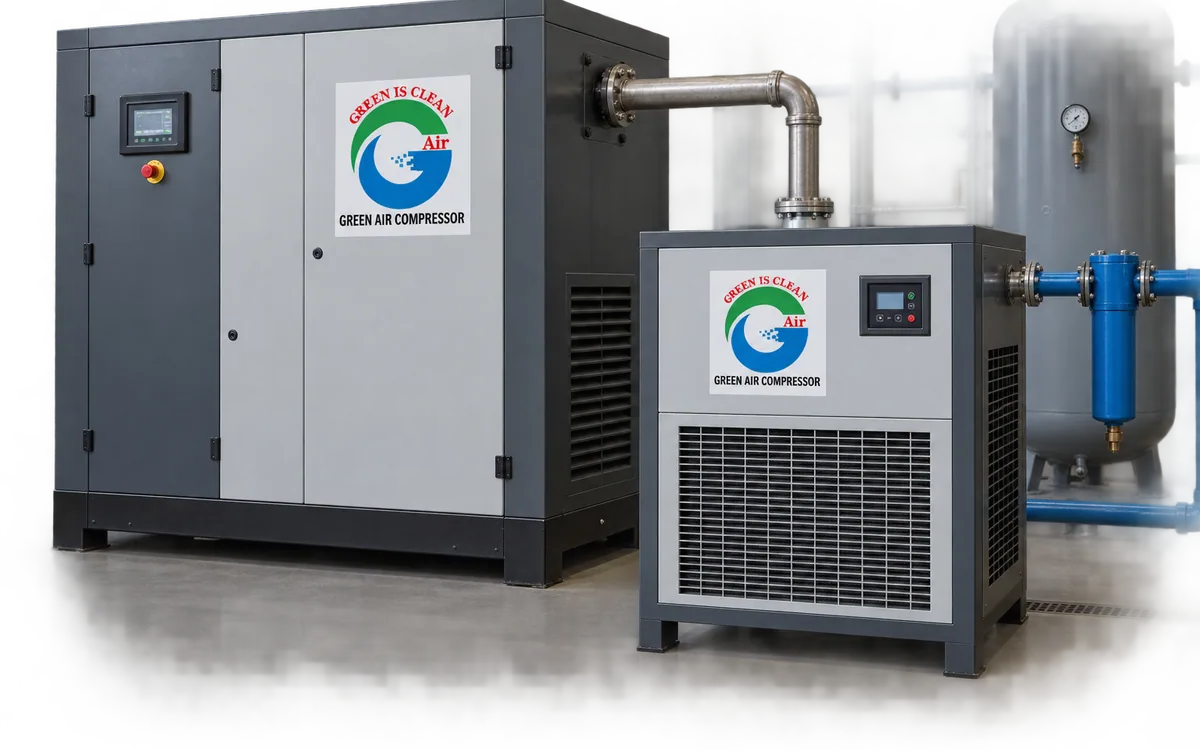
High temperature refrigerated dryers
Takes air straight off the compressor at up to 80 °C, with no pre-cooler.
- Free air delivery
- 1.2 – 65.0 m³/min
- Motor power
- 8 – 355 kW
- Weight
- 40 – 410 kg
Key benefits
Sized for your dew point
We specify to the dew point your process actually needs, which is often less demanding than assumed.
Selected at real ambient
Performance quoted at 45 °C, not at the 25 °C reference that flatters every datasheet.
Correct filtration with it
A dryer without the right pre-filter fails early. We supply the pair.
Which dryer you need
It is decided by the dew point your process requires and nothing else. Refrigerant dryers reach about plus three degrees, which is enough for anything indoors.
Desiccant dryers reach minus forty or minus seventy and are needed where the air goes outside in winter, into a cold store, or into a process that cannot tolerate moisture.
Membrane dryers suit small flows and point of use, especially where there is no power supply or where a moving part would be a problem.
- Dew point requirement decides the type
- Refrigerant to about plus three degrees
- Desiccant to minus forty or minus seventy
- Membrane for small flows and point of use
- Specified at the point of use, not the dryer
- Prefiltration included in the design
- Cycling control where load is light
- Dew point measured, not indicated
What it costs to run
A refrigerant dryer costs electricity. A cycling model switches the circuit off at low load and on a lightly loaded plant that is most of the day.
A desiccant dryer costs purge air, which is compressed air thrown away. Dew point dependent switching cuts that considerably and is worth the difference.
A membrane dryer costs purge air as a fixed share of the flow, which is fine on a small duty and expensive on a large one.
- Refrigerant costs electricity
- Cycling control saves on light loads
- Desiccant costs purge air
- Dew point switching cuts the purge
- Membrane purge is a fixed share of flow
- Pressure drop counted as a cost
- Running cost compared before purchase
- Sized on actual flow, not pipe size
Datasheets in this range
Two pages each: what the machine is, what it is for, and the measured table. Built from this site, so a sheet can never say something the page does not.
Frequently asked questions
Do I really need a dryer?
If your pipework runs anywhere cooler than the compressor discharge, which is everywhere, water will condense inside it. In Karachi, Dubai or Muscat a compressor without a dryer puts litres of water a day into your machines.
What is pressure dew point?
The temperature at which water starts condensing out of the air at working pressure. If your pipework never gets colder than the dew point, you never get liquid water.
Refrigerant or desiccant, which do I need?
Refrigerant gets you +3 °C and covers most factory air. Desiccant gets you −40 °C and is needed if pipework runs outdoors, through a cold store, or feeds instruments and pharmaceutical processes.
How much does a dryer cost to run?
A refrigerant dryer uses 1–2% of the compressor's power. A heatless desiccant dryer consumes 15–20% of your compressed air as purge, which is why the heated and blower-purge designs exist.
How big a dryer do I need?
Size on the compressor's actual delivered flow, then correct for your inlet temperature and ambient. A dryer rated at 25 °C loses roughly a third of its capacity at 45 °C, which is why undersized dryers are so common in the Gulf.
Why is there still water in my line after the dryer?
Usually a failed drain, a blocked condenser, or a dryer sized at 25 °C conditions and installed in a 45 °C plant room. We measure the achieved dew point rather than assuming the dryer works because its light is on.
Where should the dryer go?
After the receiver, not before it. The receiver drops the air temperature and knocks out a large share of the water first, so the dryer sees a smaller load and lasts longer.
How long does desiccant last?
Three to five years with correct pre-filtration and even flow distribution. Oil carry-over from a worn separator is what kills a bed early, usually within eighteen months.
Can a dryer be added to an existing compressor?
Yes, and it is a straightforward retrofit. We size from your compressor's flow and pressure and fit it with the correct pre and after filtration, usually in half a day.
What maintenance does a dryer need?
Drain checks and condenser cleaning at every service, dew point measured and recorded, and on desiccant units a bed condition check. Condenser cleaning is what keeps a refrigerant dryer alive through a Gulf summer.
Related products
Air compressors
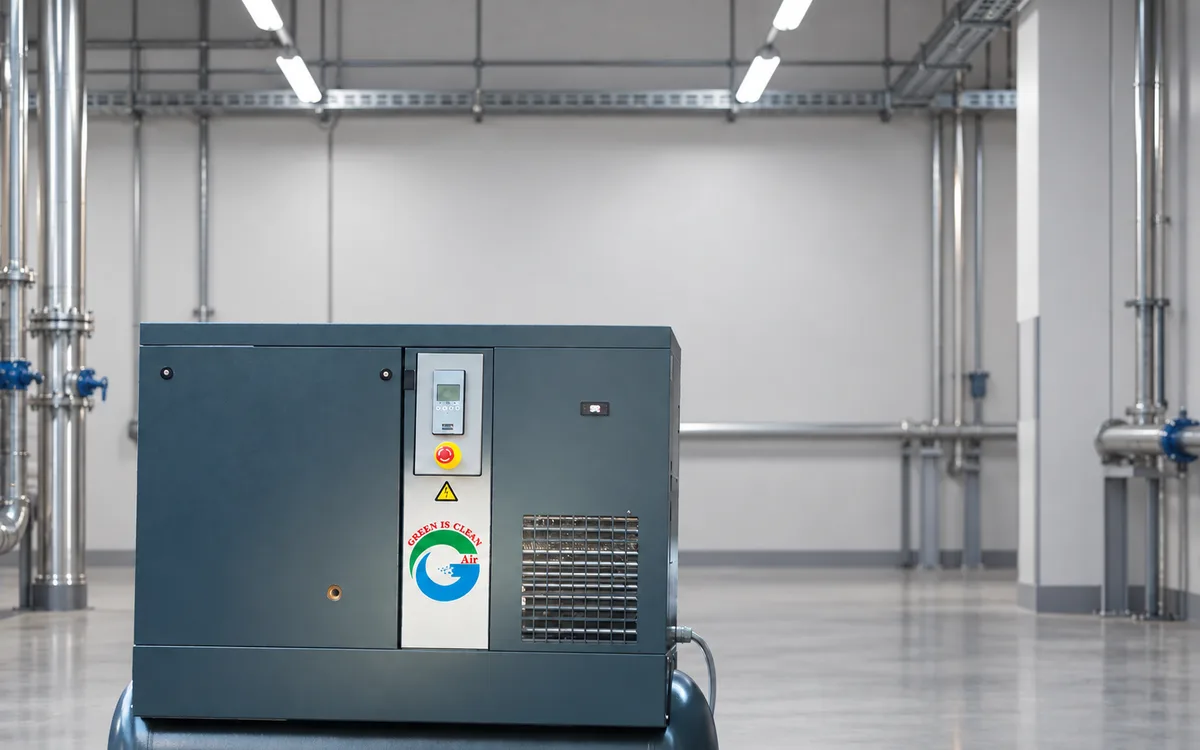
Rotary screw, oil-free and piston compressors from 2.2 to 355 kW.
- Free air delivery
- 0.1 – 109.0 m³/min (9 – 882 cfm)
- Working pressure
- 2 – 1,000 bar g
- Motor power
- 2 – 355 kW
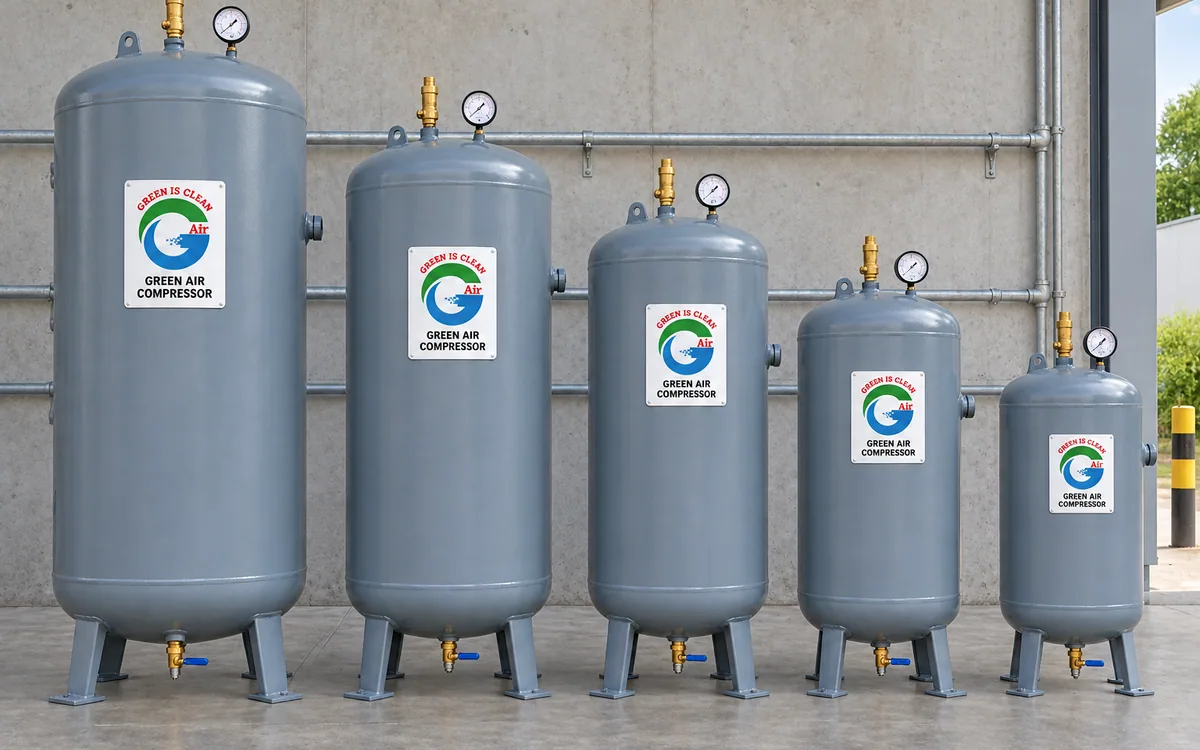
Air receivers and tanks
Storage, separation and the vessel that stops your compressor short cycling.
- Working pressure
- 1 – 13 bar g
- Weight
- 99 – 1,240 kg
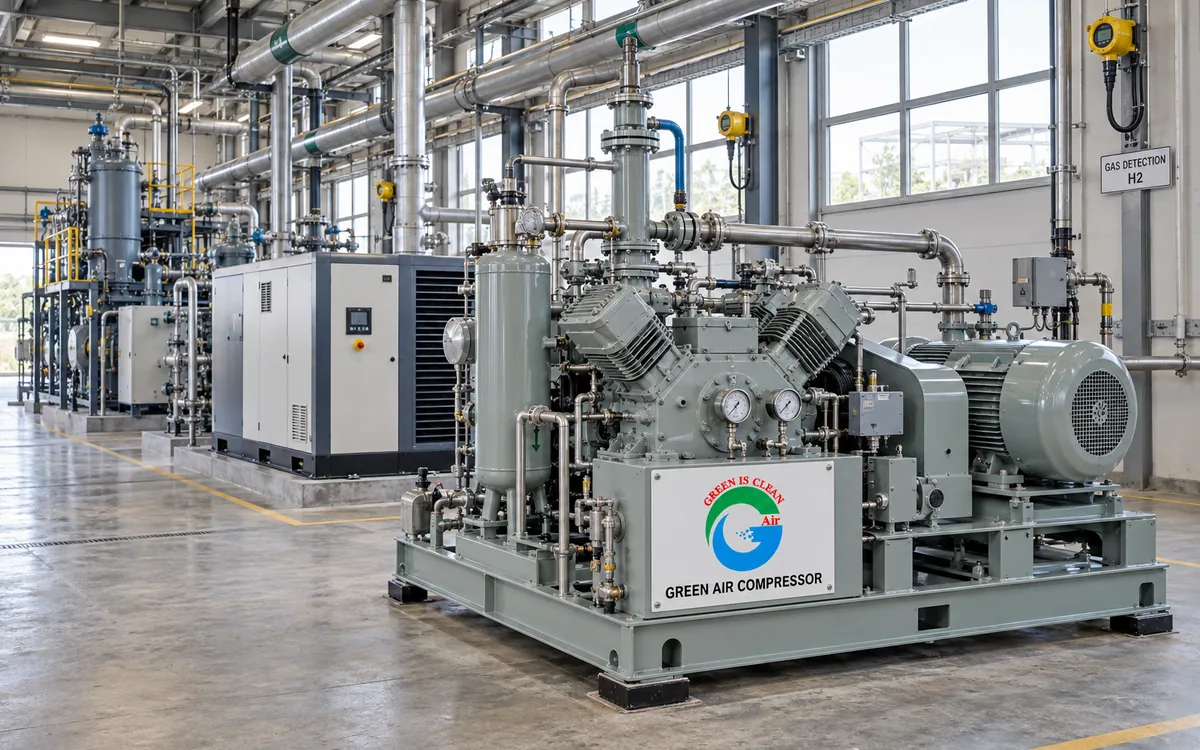
Gas compressors
Nitrogen, oxygen, biogas, LPG, natural gas, ammonia, argon and boil off gas.
- Free air delivery
- 10 – 3,500 Nm³/h
- Working pressure
- 1 – 210 bar g
- Motor power
- 4 – 250 kW
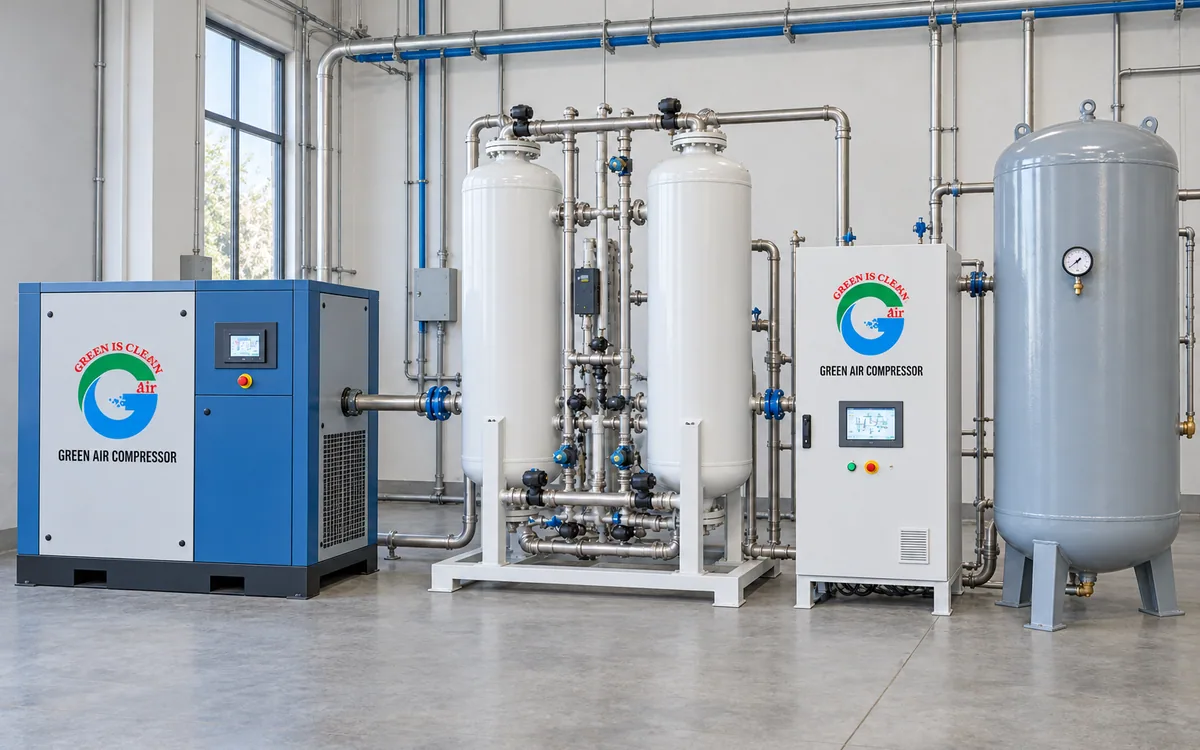
Oxygen and hydrogen generation
Making the gas on site instead of paying for cylinders and deliveries.
- Working pressure
- 4 – 5 bar g
Not sure which model you need?
Send us your air demand, working pressure and running hours. Our engineers will size the machine and send a written recommendation, no cost, no obligation.