
Natural gas compressors
Wellhead, gathering, boosting and fuel gas duties.
Technical data
- Free air delivery
- 10 – 3,400 Nm³/h
- Working pressure
- 1 – 210 bar g
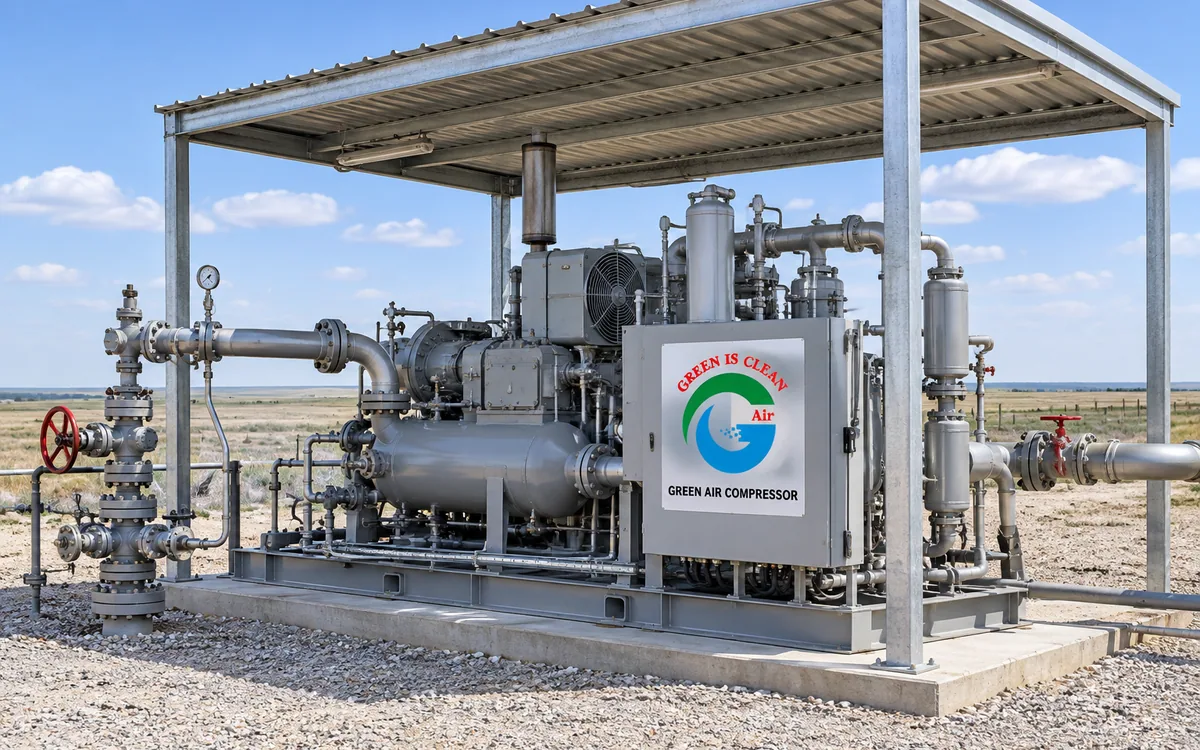
Overview
Natural gas compression covers a wide spread of duties that have little in common except the gas: lifting wellhead pressure into a gathering line, boosting a distribution network, compressing fuel gas for a turbine, or recovering flare gas that would otherwise be burned.
Each of those is a different machine. What they share is that the selection is governed by the gas analysis, the suction and discharge pressures and the area classification, and that none of it is decided from a catalogue page.
Key benefits
Screw, reciprocating or centrifugal
Chosen by pressure ratio and flow rather than by preference. We will tell you which your duty wants.
Wet gas tolerated where needed
Where the gas carries liquids, the machine and the separation upstream of it are specified together.
Flare gas recovery
Gas recovered instead of burned is revenue and a reduced emissions figure at the same time.
Documented for the authority
Design, materials and testing documented to the standard the regulator requires.
Choosing the machine type
Reciprocating machines handle high pressure ratios and modest flows, which is why wellhead and boosting duties usually end up there. They tolerate a changing gas composition well and they can be staged.
Screw machines suit continuous duties with moderate ratios and higher flows, and they tolerate liquid carryover far better than a reciprocating machine does. Where gas is wet, that matters more than efficiency.
Centrifugal machines take over at high flow and modest ratio — pipeline and large gathering duties. Below their range they are the wrong tool and above the others' range they are the only one.
- Reciprocating for high ratio, modest flow
- Screw for continuous duty and wet gas
- Centrifugal for high flow, modest ratio
- Separation upstream specified with the machine
- Staged where the ratio demands it
- Built to the regulator's documentation standard
What we need to quote
Gas compressors are not selected from a catalogue. The gas itself decides the materials, the seals and the safety case, and two plants asking for the same machine on paper often need different builds.
Four answers cover most of it: the gas and its composition, the suction pressure and temperature, the discharge pressure required, and the flow. With those we can size the machine and tell you whether it should be a screw, a reciprocating or a centrifugal.
Then the site questions. Area classification, whether the gas is wet or contains hydrogen sulphide, what the local authority requires, and whether the duty can stop. Those decide the seal arrangement and whether you need one machine or two.
- Gas composition and molecular weight
- Suction pressure and temperature
- Discharge pressure required
- Flow, normal and maximum
- Area classification
- Whether the duty can be interrupted
Model range
- 3 bar g
- 10 Nm³/h
- 18 bar g
- 20 Nm³/h
- 0.5 bar g
- 35 Nm³/h
- 18 bar g
- 40 Nm³/h
- 3 bar g
- 80 Nm³/h
- 25 bar g
- 90 Nm³/h
- 18 bar g
- 100 Nm³/h
- 210 bar g
- 125 Nm³/h
- 22 bar g
- 150 Nm³/h
- 120 bar g
- 200 Nm³/h
- 19 bar g
- 300 Nm³/h
- 25 bar g
- 340 Nm³/h
- 40 bar g
- 350 – 530 Nm³/h
- 40 bar g
- 390 Nm³/h
- 20 bar g
- 415 Nm³/h
- 45 bar g
- 470 Nm³/h
- 60 bar g
- 520 Nm³/h
- 42 bar g
- 600 Nm³/h
- 35 bar g
- 880 Nm³/h
- 45 bar g
- 1,050 Nm³/h
- 6.5 bar g
- 1,500 Nm³/h
- 20 bar g
- 1,540 Nm³/h
- 20 bar g
- 2,000 Nm³/h
- 4 bar g
- 2,900 Nm³/h
- 16 bar g
- 3,400 Nm³/h
Performance to ISO 1217 Annex C at 20 °C inlet, 1 bar(a). Figures are typical and subject to confirmation. Ask us for the certified test report for your selected model.
Frequently asked questions
Which machine type do I need?
It follows from the pressure ratio and the flow. Give us suction, discharge and flow and the answer is usually obvious; we will show you the working.
Can it handle wet gas?
A screw machine tolerates liquid far better than a reciprocating one. Where the gas is wet we specify the separation upstream as part of the package.
Is flare gas recovery worth it?
Almost always, on both revenue and emissions. The payback depends on the volume being flared, and we will calculate it from your figures.
What documentation comes with it?
Design, materials and testing documented to the standard your regulator requires. We say which standard that is before the order rather than afterwards.
Can it be staged?
Yes, and on a high ratio duty it has to be. Staging with intercooling keeps discharge temperature and internal leakage under control.
What about a remote wellhead with no grid power?
Gas engine drive is the usual answer, running on the gas being compressed. We size the engine and the machine together rather than separately.
How is it controlled?
On suction pressure, with recycle and capacity control to hold the wellhead or the line steady. Control philosophy is agreed before design rather than after commissioning.
How long is delivery?
Longer than an air machine because it is built to your conditions. A programme is given with the quotation rather than a stock lead time.
Can you service it on site?
Yes. Our engineers travel and the wear parts for these machines are held rather than ordered when a machine stops.
Does it need a separate building?
Not usually. A weather cover and the correct area classification are more common, and on remote sites a containerised arrangement is often simplest.
Related products
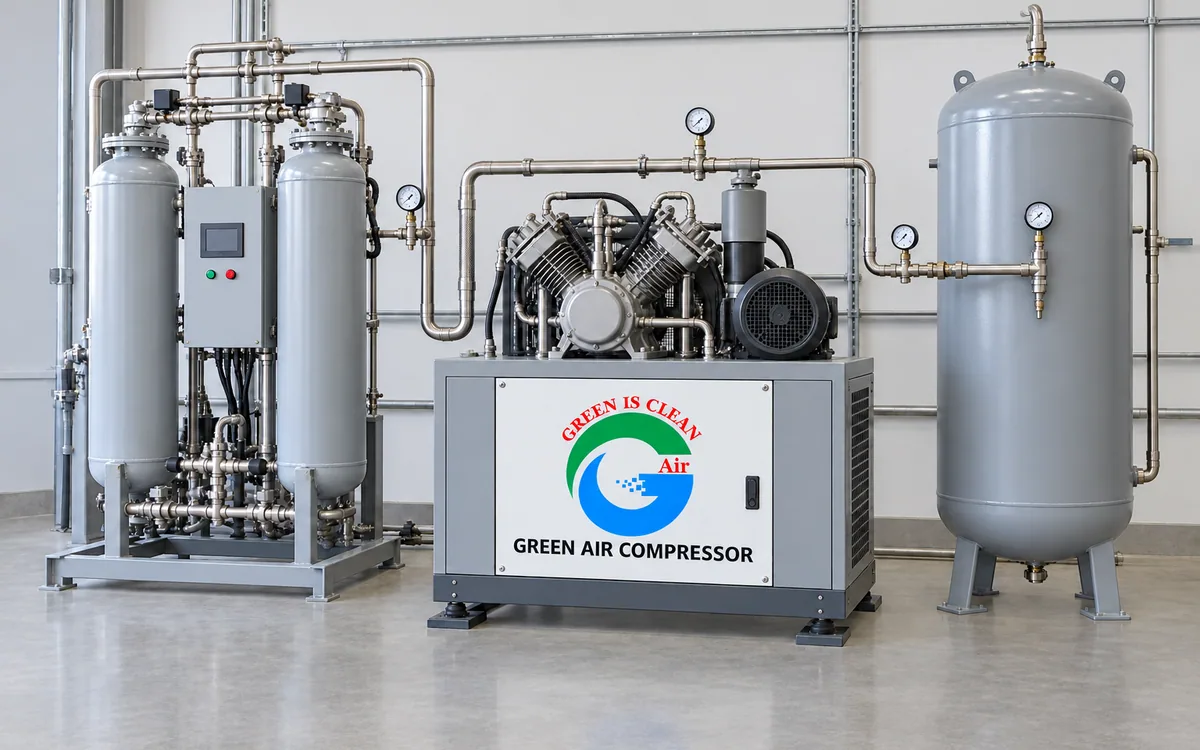
Nitrogen compressors
Boosting and circulating nitrogen for blanketing, purging and process.
- Free air delivery
- 90 – 3,000 Nm³/h
- Working pressure
- 3 – 160 bar g
- Motor power
- 22 – 250 kW
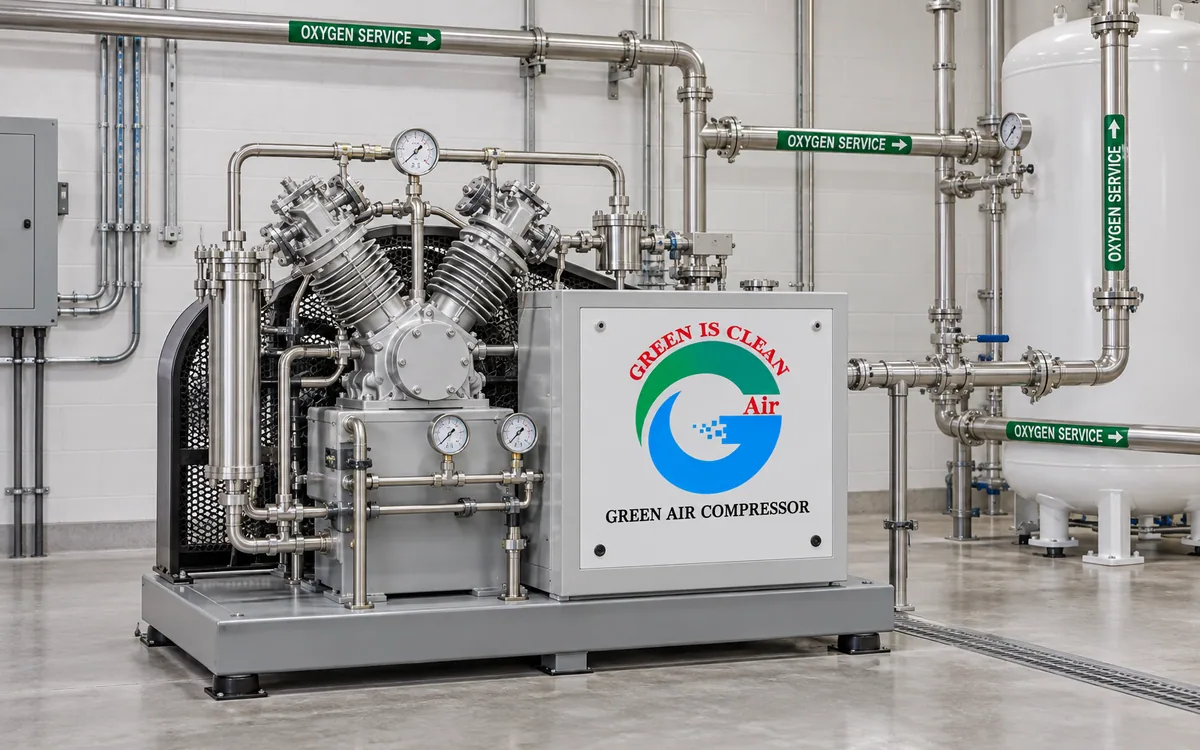
Oxygen compressors
Oil free by necessity, built and cleaned to oxygen service standards.
- Free air delivery
- 30 – 120 Nm³/h
- Working pressure
- 120 – 150 bar g
- Motor power
- 11 – 30 kW
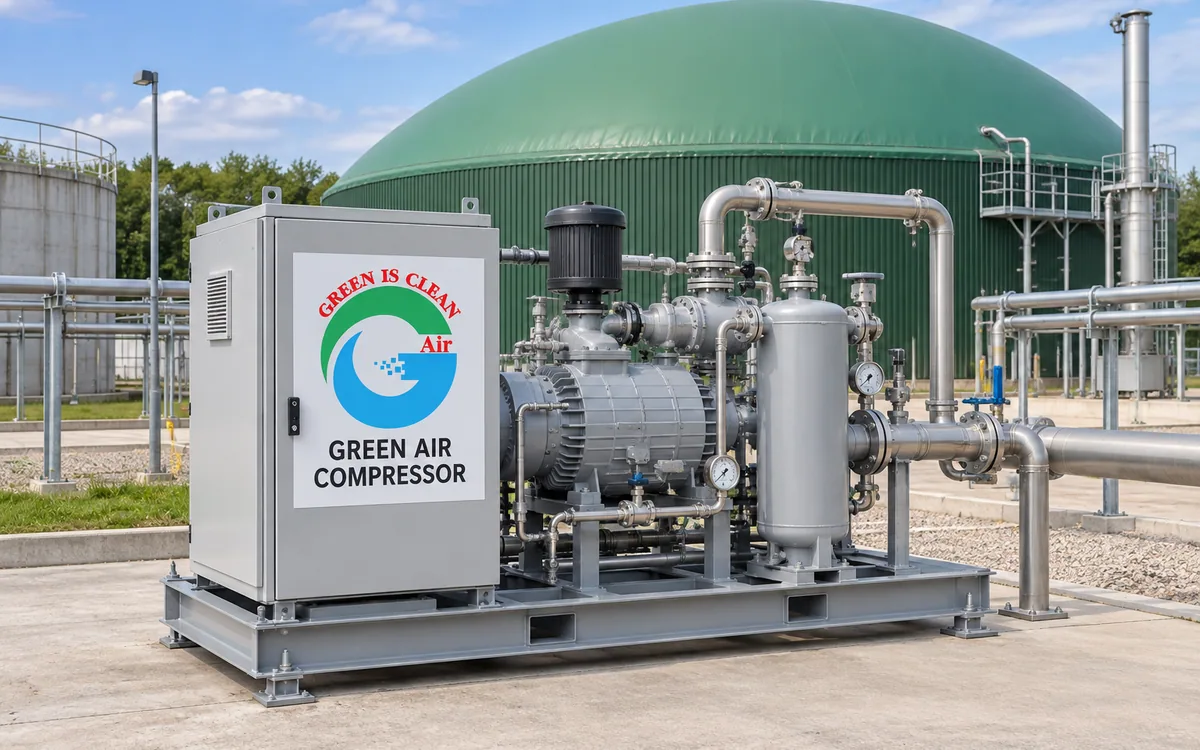
Biogas compressors
Wet, corrosive, variable gas handled without eating the machine.
- Free air delivery
- 50 – 700 Nm³/h
- Working pressure
- 5 – 45 bar g
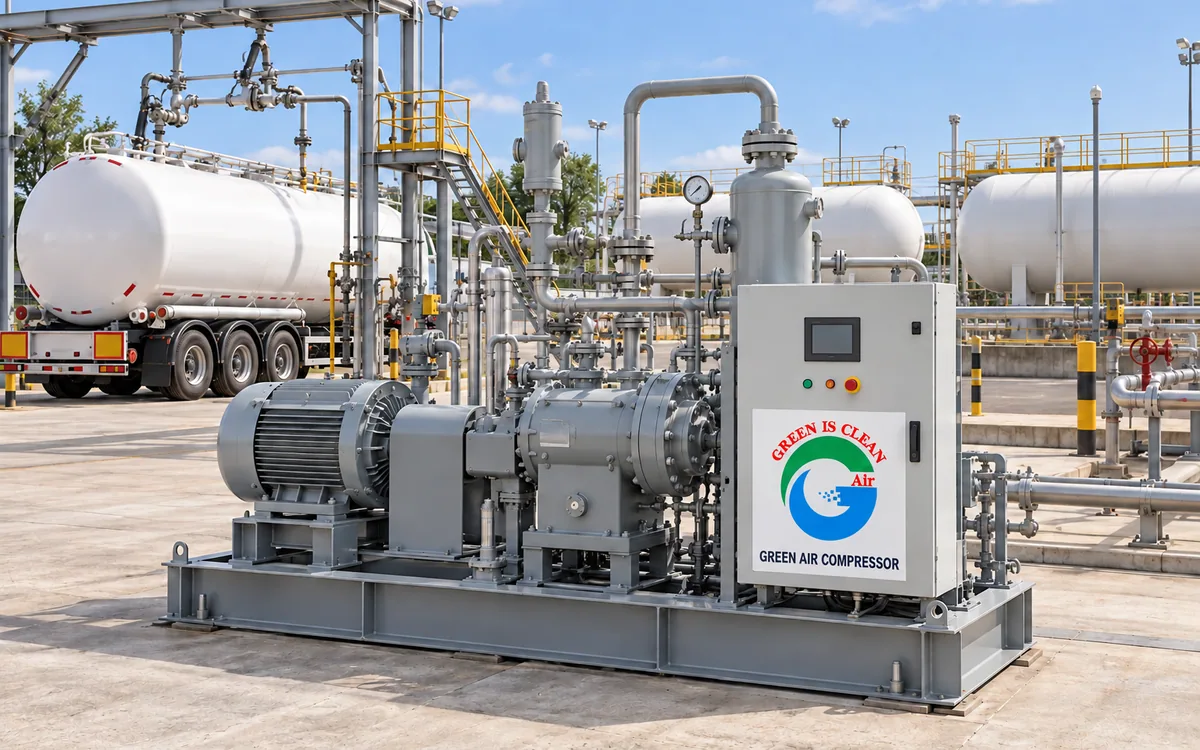
LPG and hydrocarbon gas compressors
Transfer, recovery and vapour handling for propane, butane and mixed gas.
- Working pressure
- 16 bar g
- Motor power
- 4 – 110 kW
Not sure which model you need?
Send us your air demand, working pressure and running hours. Our engineers will size the machine and send a written recommendation, no cost, no obligation.