
Argon and special gas compressors
Recovering and boosting expensive gases without losing them.
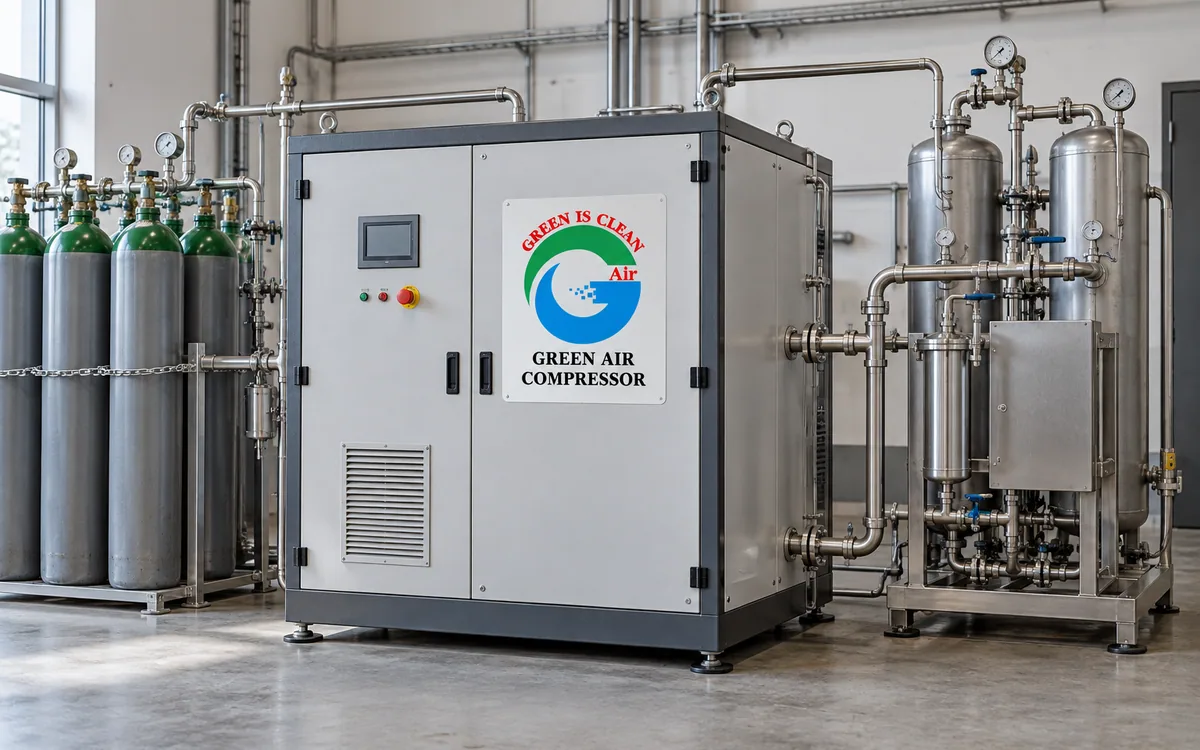
Overview
Argon costs enough that losing it matters. So do helium, xenon and the specialty mixtures used in welding, lighting and semiconductor work — and the machine that handles them is judged first on how little it leaks and how little it contaminates.
These are sealed machines for gases where recovery is the point. Where the gas is expensive enough, a recovery compressor pays for itself against the cylinder bill within a year or two, which is a calculation we are happy to do from your consumption figures.
Key benefits
Sealed against loss
Double seals with buffer gas where the value justifies it. The gas that escapes is the gas you are trying to recover.
No contamination of the gas path
Oil free construction where the recovered gas goes back into the process at purity.
Recovery pays for itself
On argon, recovery against cylinder purchase typically repays the machine inside two years.
Built for the specific gas
Molecular weight changes everything about the selection. Helium and argon are not the same machine.
Why molecular weight decides the machine
A compressor moves volume, but what you pay for is mass. A light gas like helium carries very little mass in a given volume, so a machine sized for air will deliver a fraction of the mass flow on helium and will reach a fraction of the pressure ratio per stage.
The practical consequence is staging. Light gases need more stages to reach the same pressure, and the intercooling between them matters more. A machine repurposed from air service will disappoint on both counts.
Sealing gets harder as the gas gets lighter too. Helium finds leak paths that air never would, which is why the seal arrangement on a helium machine is a different order of thing from an air machine's.
- Staging set by molecular weight
- Sealing arrangement chosen for the gas
- Oil free where purity is returned to process
- Recovery duty sized against consumption
- Buffer gas seals where value justifies
- Purity verified before return to process
What we need to quote
Gas compressors are not selected from a catalogue. The gas itself decides the materials, the seals and the safety case, and two plants asking for the same machine on paper often need different builds.
Four answers cover most of it: the gas and its composition, the suction pressure and temperature, the discharge pressure required, and the flow. With those we can size the machine and tell you whether it should be a screw, a reciprocating or a centrifugal.
Then the site questions. Area classification, whether the gas is wet or contains hydrogen sulphide, what the local authority requires, and whether the duty can stop. Those decide the seal arrangement and whether you need one machine or two.
- Gas composition and molecular weight
- Suction pressure and temperature
- Discharge pressure required
- Flow, normal and maximum
- Area classification
- Whether the duty can be interrupted
Frequently asked questions
Is argon recovery worth doing?
Usually, if you use enough of it. Give us your annual consumption and cylinder price and we will show you the payback before you commit to anything.
Can one machine handle several gases?
Rarely well. Molecular weight drives the staging and the sealing, so a machine good on argon is generally poor on helium.
Does the recovered gas need re-purifying?
Usually yes, and that plant is part of the system. Compression recovers the gas; purification is what makes it usable again.
Why is helium so much harder than argon?
It is far lighter, so a given volume carries very little mass and each stage achieves less ratio. It also finds leak paths that heavier gases never would.
What is a buffer gas seal?
A double seal with an inert gas held between the two faces, so nothing escapes to atmosphere. On an expensive gas it repays itself in recovered product.
Is it oil free?
Where the gas returns to a process at purity, yes. Where it is being compressed into storage for later purification, an oil lubricated machine may be appropriate and cheaper.
How pure does the returned gas have to be?
It follows from the process, not from the compressor. We agree the specification first and then design the recovery and purification to meet it.
Can you retrofit recovery to an existing shop?
Often, yes. The practical questions are where the gas is currently vented and whether it can be collected cleanly, and both are answered by a survey.
How is leakage monitored?
By mass balance rather than by inspection. If the gas going in does not match the gas coming out, the difference is the leak, and that is the number worth tracking.
What is the delivery time?
These are built to order rather than picked from stock, so a programme is given with the quotation rather than a shelf lead time.
Related products
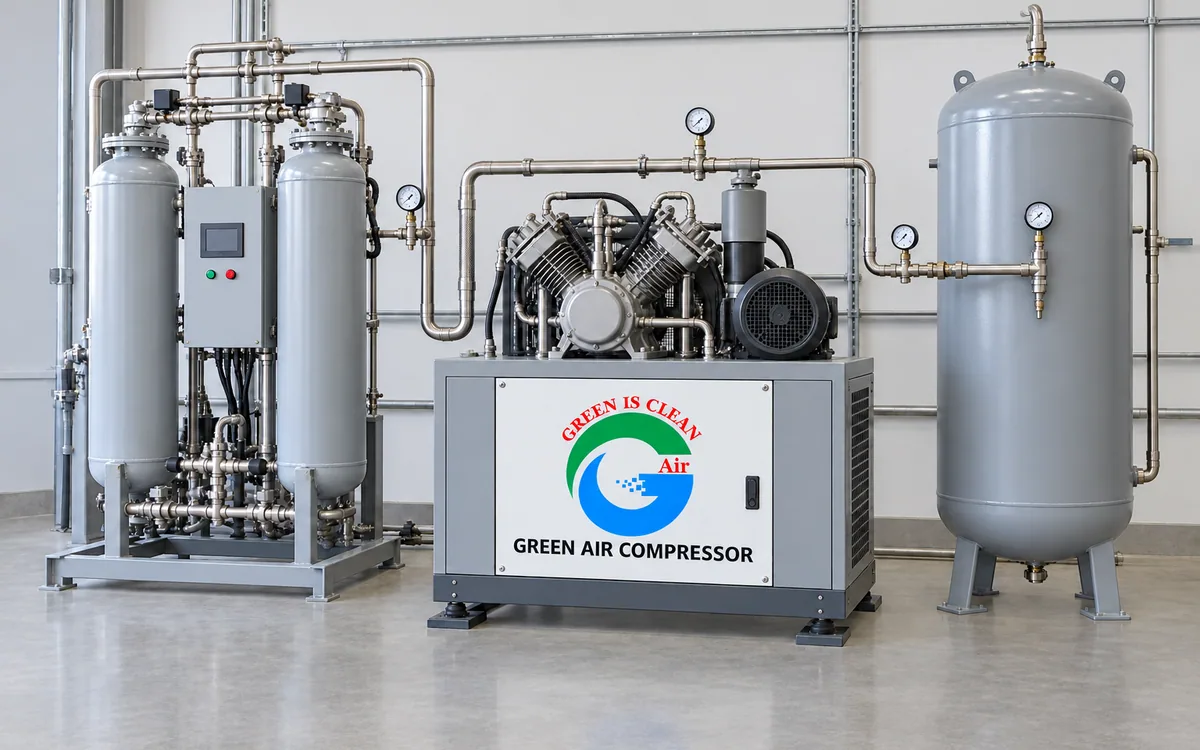
Nitrogen compressors
Boosting and circulating nitrogen for blanketing, purging and process.
- Free air delivery
- 90 – 3,000 Nm³/h
- Working pressure
- 3 – 160 bar g
- Motor power
- 22 – 250 kW
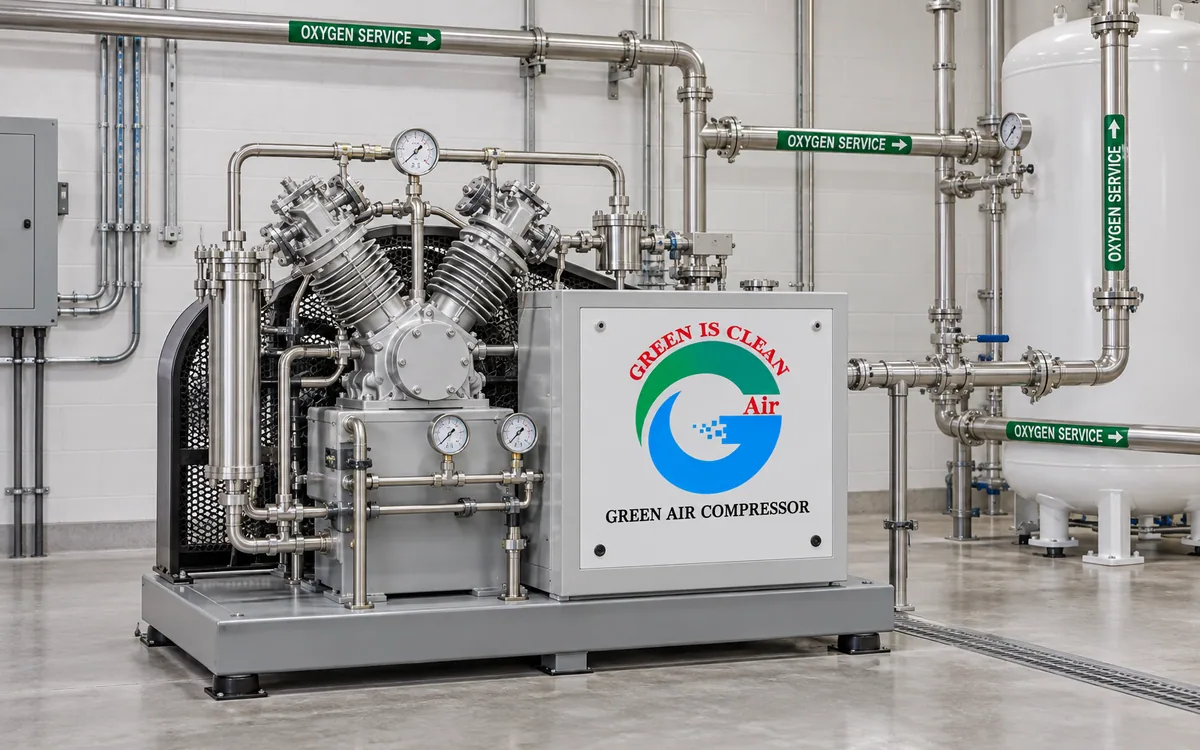
Oxygen compressors
Oil free by necessity, built and cleaned to oxygen service standards.
- Free air delivery
- 30 – 120 Nm³/h
- Working pressure
- 120 – 150 bar g
- Motor power
- 11 – 30 kW
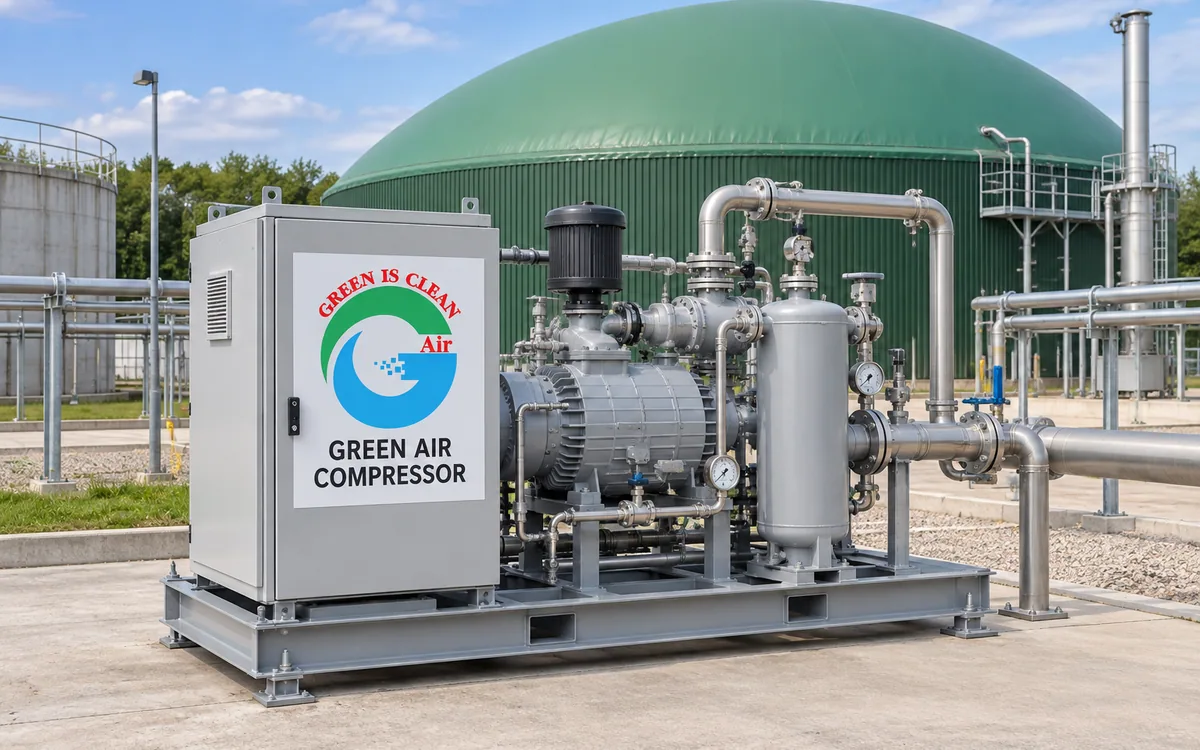
Biogas compressors
Wet, corrosive, variable gas handled without eating the machine.
- Free air delivery
- 50 – 700 Nm³/h
- Working pressure
- 5 – 45 bar g
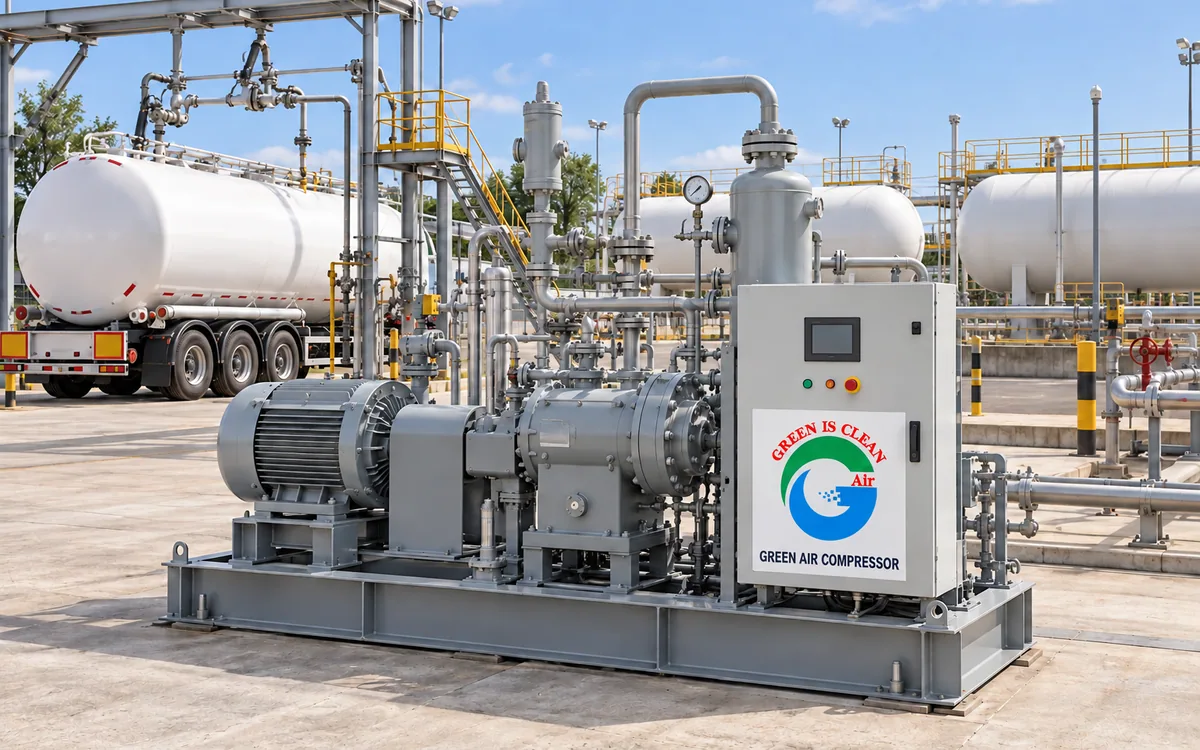
LPG and hydrocarbon gas compressors
Transfer, recovery and vapour handling for propane, butane and mixed gas.
- Working pressure
- 16 bar g
- Motor power
- 4 – 110 kW
Not sure which model you need?
Send us your air demand, working pressure and running hours. Our engineers will size the machine and send a written recommendation, no cost, no obligation.