
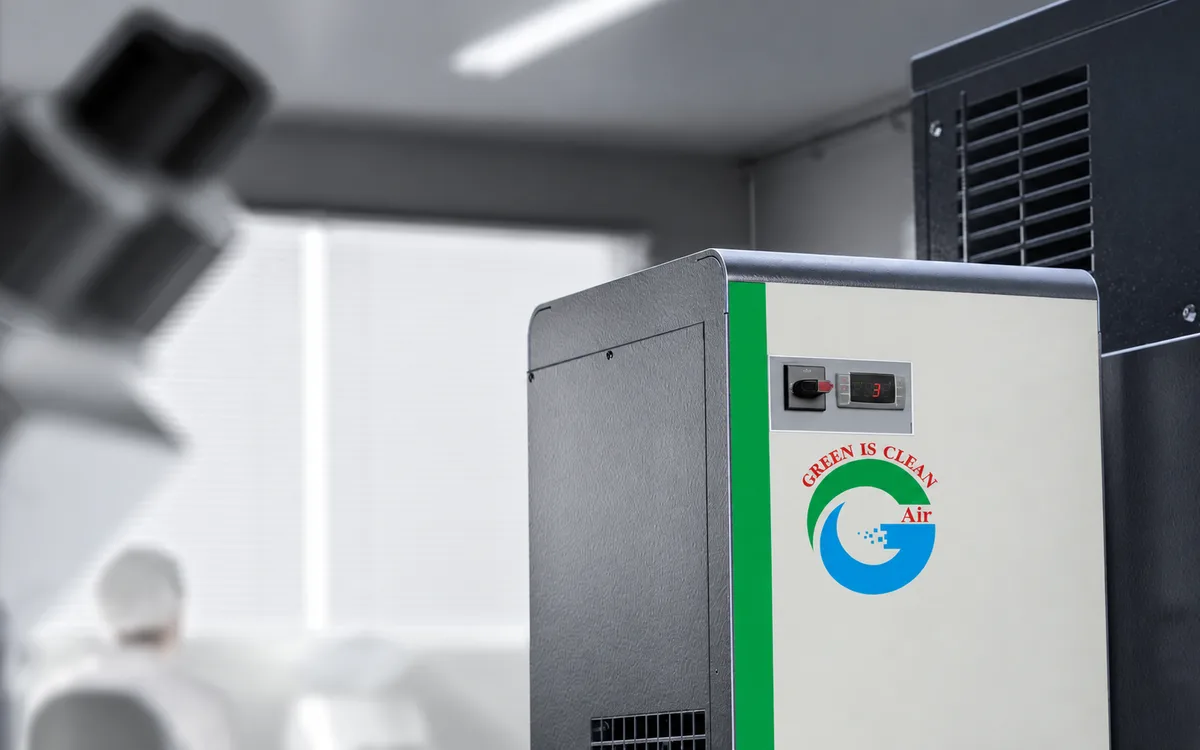
Refrigerant air dryers
The standard, low-cost way to reach a +3 °C pressure dew point.
Technical data
- Free air delivery
- 10.0 – 383.3 m³/min
- Working pressure
- 13 – 16 bar g
- Motor power
- 1 – 32 kW
- Weight
- 134 – 2,410 kg
Overview
A refrigerant dryer chills the compressed air until the water in it condenses, then drains that water away and reheats the air. It is the simplest and cheapest form of drying and it covers the large majority of industrial applications.
It will get you to a pressure dew point of about +3 °C, which means no liquid water in your pipework as long as the pipes do not run somewhere colder than that. For general workshop, packaging and machine air, that is exactly what you need.
Key benefits
Low running cost
Typically 1 – 2% of the compressor's power, versus 15 – 20% for a heatless desiccant dryer.
No consumables
No desiccant beads to replace every three years. Filters and a drain, and that is all.
Cycling control
Cycling models switch the refrigerant circuit off at low load instead of running continuously.
Sized for Gulf ambients
Selected against 45 °C ambient and 45 °C inlet, not the 25 °C figure that makes a datasheet look good.
How it is built
A refrigerant dryer cools the air until the water in it condenses, drains that water away, then warms the air back up using the incoming air. That last step is what stops the pipework downstream sweating and what recovers most of the pressure drop.
The heat exchanger is where the quality is. A generously sized exchanger gives a steady dew point at the pressure drop you were quoted, and a small one gives you the dew point on the datasheet only on a cool day.
Cycling models switch the refrigerant circuit off at low load instead of running it continuously, which is where most of the energy saving on a lightly loaded plant comes from.
- Air to air and air to refrigerant exchangers
- Stable pressure dew point at rated flow
- Low pressure drop across the dryer
- Cycling control on lightly loaded plants
- Sized for high ambient temperatures
- Electronic drain fitted as standard
- No loss drain option
- Refrigerant to current regulations
What the controller does
It shows the pressure dew point rather than an indicator light, because a dew point you can read is a dew point you can prove to an auditor.
On a cycling model it decides when to let the refrigerant circuit rest. On a lightly loaded plant that is most of the day, and it is the whole reason to buy one.
The drain is controlled rather than timed. A timed drain either wastes air or leaves water behind, and both cost more than the drain did.
- Pressure dew point shown, not an indicator lamp
- Cycling control for light loads
- Electronically controlled drain
- Alarm on high dew point
- Service countdown in hours
- Fault history kept on the unit
- Volt free contacts for plant alarms
- Automatic restart after a power failure
Parts and service kits
The service list is short. Condenser cleaning, drain service and a refrigerant check, and the first of those is the one that actually causes failures.
A blocked condenser raises the dew point quietly. The dryer keeps running, the air keeps flowing, and the water goes downstream to the point of use where somebody finds it in a product.
We service dryers on the same visit as the compressor, which is the sensible way to do it and the reason most of our customers put both on one plan.
- Condenser cleaning on the schedule
- Drain service kit
- Refrigerant check and top up
- Dew point verified after service
- Serviced on the same visit as the compressor
- Parts held in local stock
- Fixed price under a service plan
- Replacement drains kept on the van
Model range
- 16 bar g
- 10.00 m³/min
- Weight
- 134 kg
- Dimensions L x W x H
- 720 × 750 × 1360 mm
- 13 bar g
- 13.00 m³/min
- Weight
- 164 kg
- Dimensions L x W x H
- 720 × 750 × 1361 mm
- 13 bar g
- 15.83 m³/min
- Weight
- 168 kg
- Dimensions L x W x H
- 720 × 750 × 1362 mm
- 14 bar g
- 25.00 m³/min
- Weight
- 234 kg
- Dimensions L x W x H
- 806 × 1012 × 1539 mm
- 14 bar g
- 43.33 m³/min
- Weight
- 290 kg
- Dimensions L x W x H
- 806 × 1012 × 1539 mm
- 14 bar g
- 80.00 m³/min
- Weight
- 465 kg
- Dimensions L x W x H
- 880 × 1819 × 1796 mm
- 13 bar g
- 100.00 m³/min
- Weight
- 780 kg
- Dimensions L x W x H
- 1510 × 1500 × 1555 mm
- 13 bar g
- 191.67 m³/min
- Weight
- 1,205 kg
- Dimensions L x W x H
- 2270 × 1590 × 1570 mm
- 13 bar g
- 383.33 m³/min
- Weight
- 2,410 kg
- Dimensions L x W x H
- 4600 × 1590 × 1570 mm
FAD measured to ISO 1217 Edition 4, Annex C and E at 1 bar a intake, 20°C, 0% humidity. Noise measured to ISO 2151 in free field conditions, tolerance ± 3 dB(A). Water-cooled versions of every model are available. Ask us for their sheet.
Frequently asked questions
How does a refrigerant dryer work?
It chills the compressed air until the water in it condenses, drains that water away, then reheats the air on the way out so the pipework does not sweat.
What dew point does it give me?
About +3 °C. That means no liquid water anywhere your pipework stays warmer than that, which covers most indoor factory installations.
Can it freeze?
A correctly controlled one cannot, because it is designed to stop just above 0 °C. If a dryer ices up, the control or the load is wrong, not the technology.
How much power does it use?
One to two percent of the compressor's power. Compared with a heatless desiccant dryer taking 15–20% of your air as purge, it is very cheap to run.
What is a cycling dryer?
One that switches the refrigerant circuit off at low load instead of running continuously. Worth it where the compressor spends much of the day lightly loaded.
Why did mine stop drying in summer?
Almost always a dirty condenser or a dryer sized at 25 °C conditions sitting in a 45 °C plant room. Condenser cleaning is the single most valuable dryer maintenance task in this climate.
Do I need filters with it?
A coalescing filter before it to protect it, and a particulate filter after. Fitting the dryer alone and skipping the pre-filter is how they get contaminated early.
What size do I need?
Rated on the compressor's delivered flow, then corrected for inlet and ambient temperature. A dryer rated at 25 °C loses roughly a third of its capacity at 45 °C.
How long does a refrigerant dryer last?
Ten years or more if the condenser is kept clean and the drain works. The compressor inside it is the same kind used in refrigeration and fails for the same reasons.
Is there any consumable cost?
Almost none: no desiccant to replace, just filters and drain servicing. That is the main reason it is the default choice.
Related products
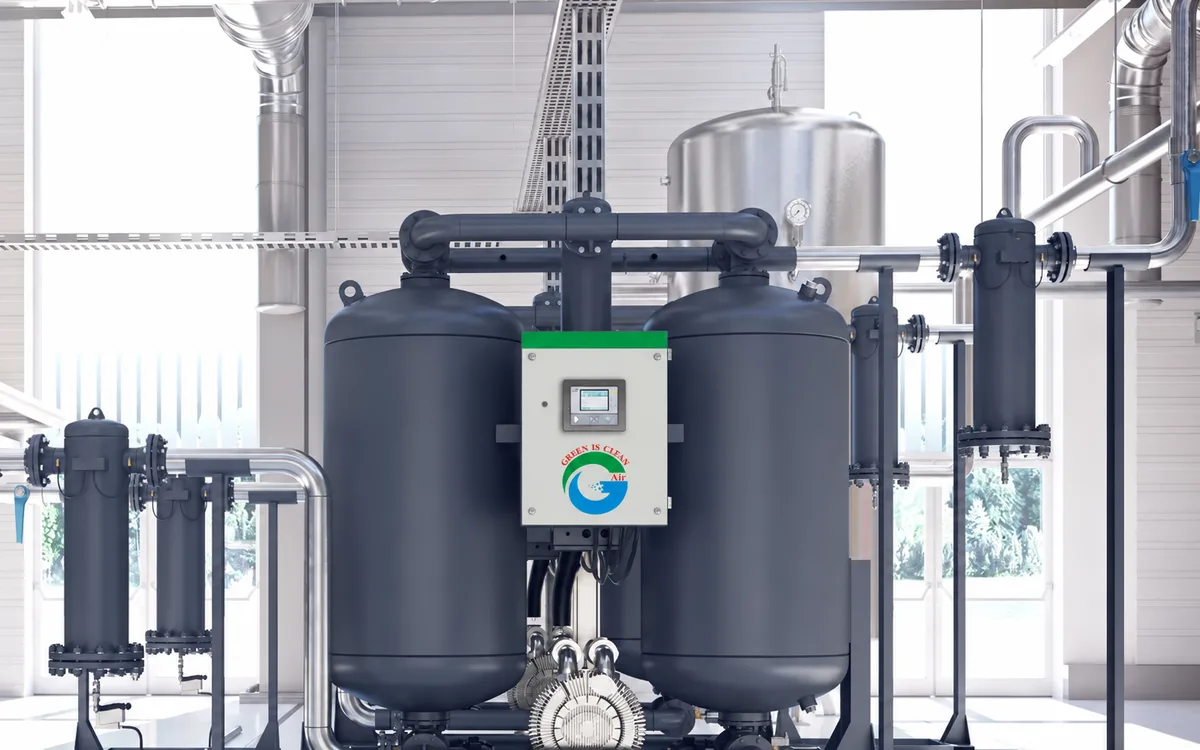
Desiccant air dryers
Dew points down to −70 °C for critical and outdoor pipework.
- Free air delivery
- 6.7 – 141.7 m³/min
- Weight
- 285 – 4,400 kg
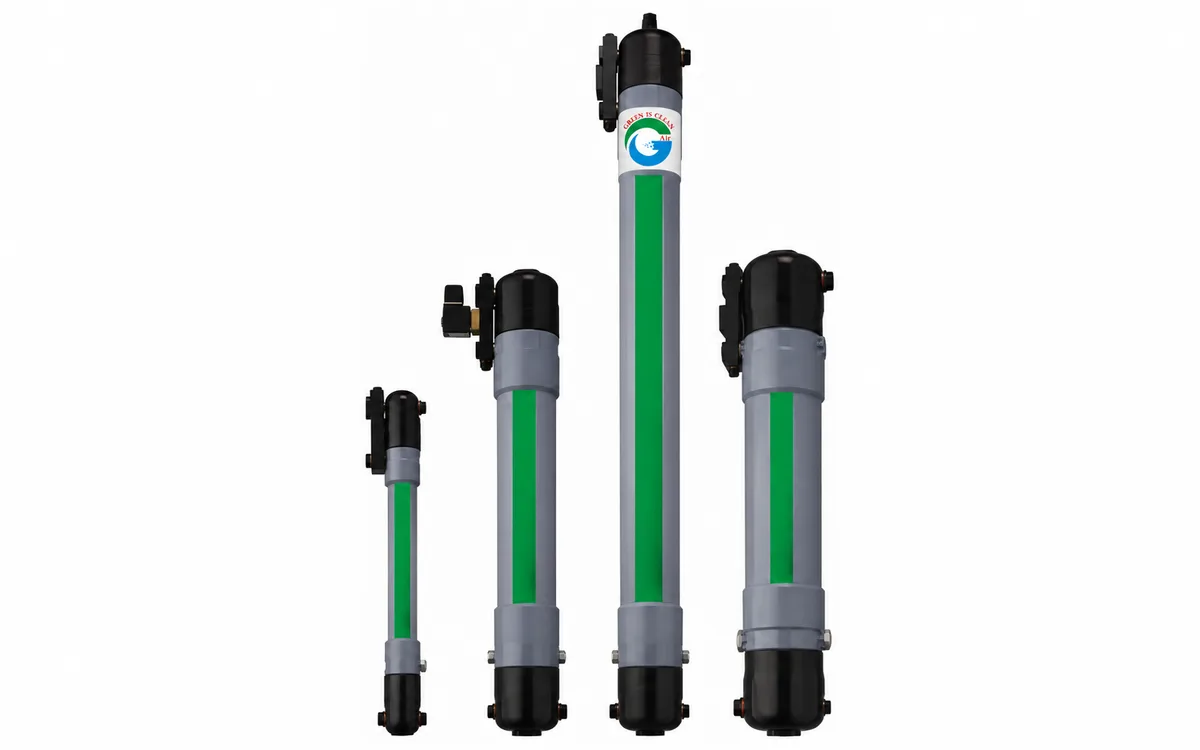
Membrane air dryers
Silent, power-free drying for small flows and point-of-use.
Learn more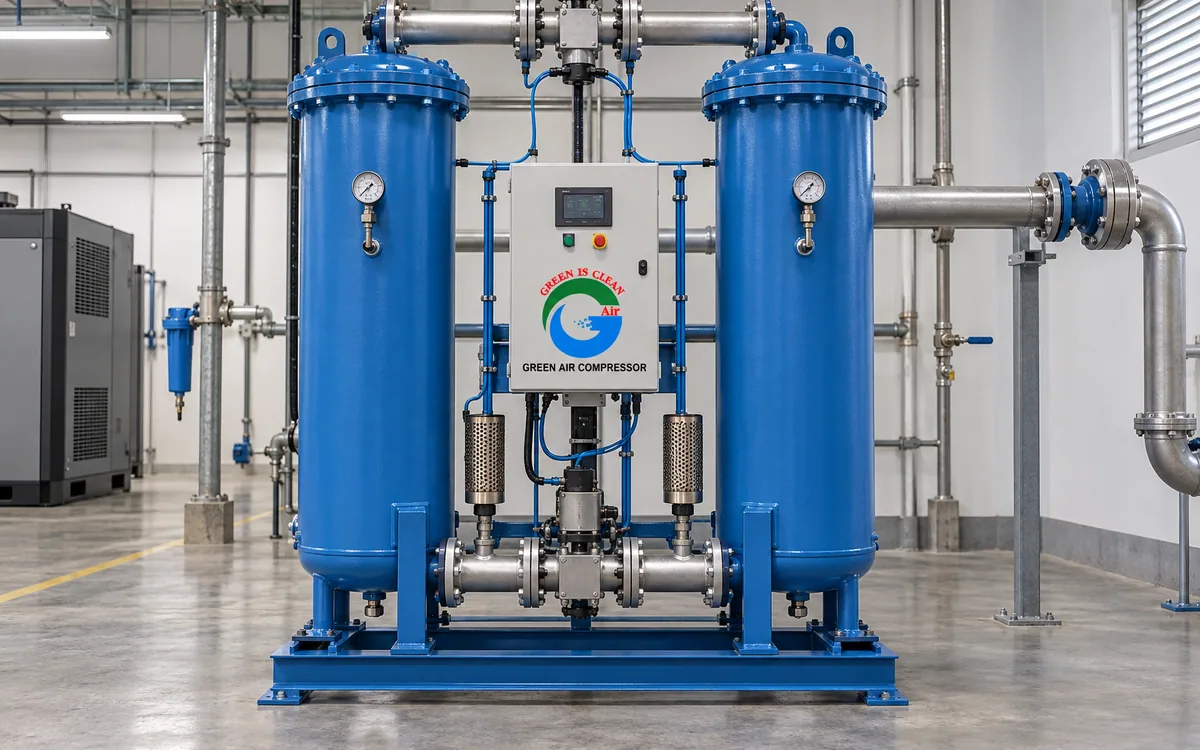
Heatless adsorption dryers
Minus 40 °C dew point with no heater. Simple, reliable, uses purge air.
- Free air delivery
- 1.4 – 80.0 m³/min
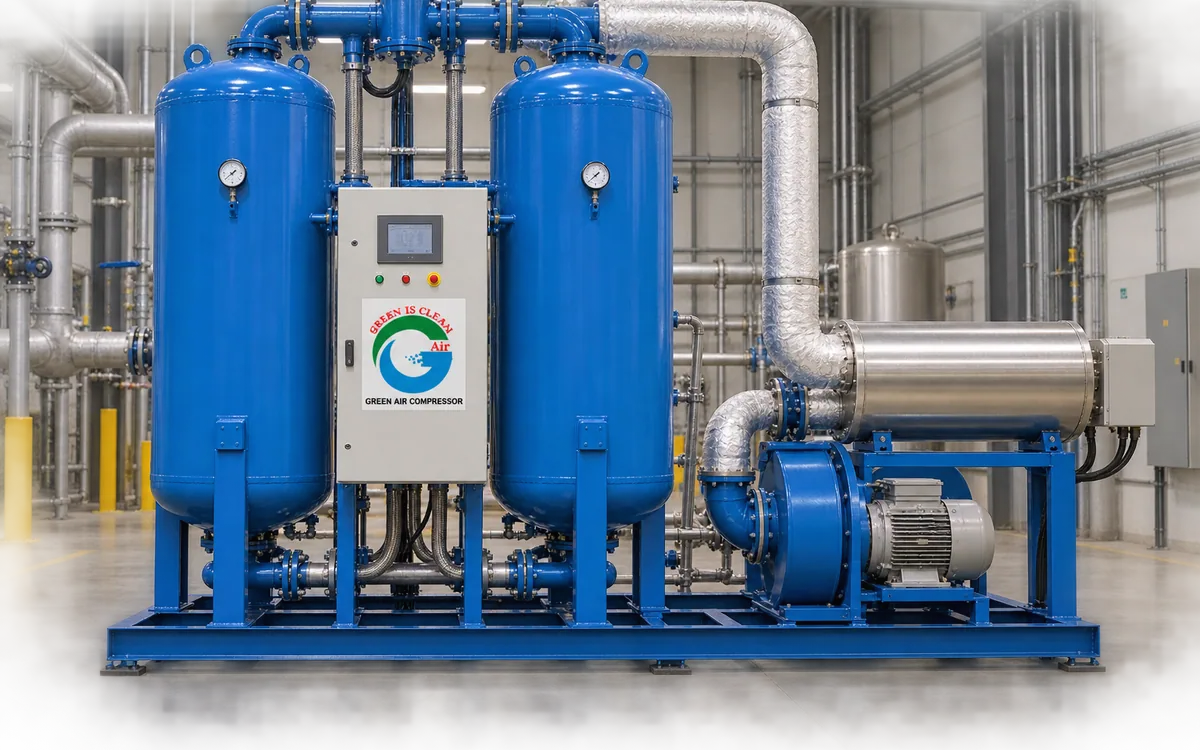
Heated and blower purge adsorption dryers
Minus 40 °C with two per cent purge or none at all. For large flows.
Learn moreNot sure which model you need?
Send us your air demand, working pressure and running hours. Our engineers will size the machine and send a written recommendation, no cost, no obligation.