
Heatless adsorption dryers
Minus 40 °C dew point with no heater. Simple, reliable, uses purge air.
Technical data
- Free air delivery
- 1.4 – 80.0 m³/min
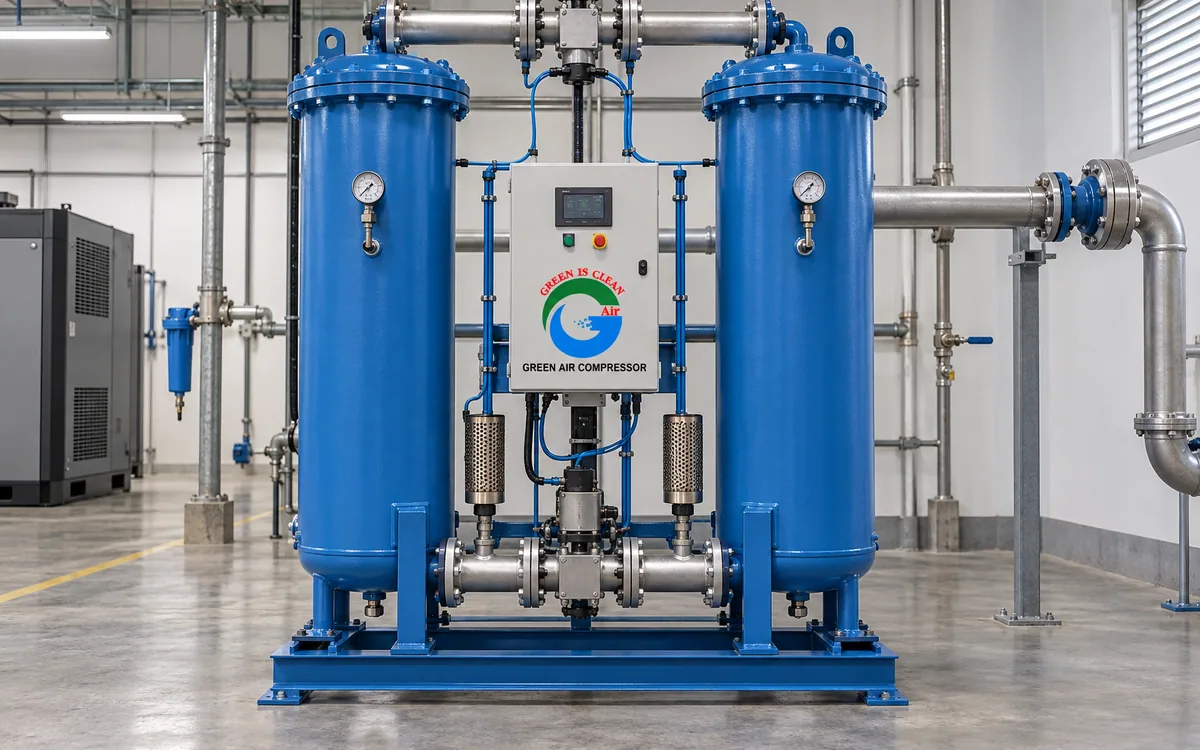
Overview
Two towers of desiccant. One dries the air while the other is regenerated by passing a portion of the already dried air through it at atmospheric pressure, and they swap every few minutes. There is no heater, no control valve on a heater, and very little to go wrong.
The price of that simplicity is the purge: between twelve and eighteen per cent of your compressed air goes to regenerating the offline tower and is then vented. On a small dryer that is a reasonable trade. On a large one it is the reason the heated types exist.
Key benefits
Minus 40 °C as standard
Minus 70 °C available where the process demands it. Far beyond anything a refrigerant dryer can reach.
Nothing to heat
No heater, no heater control and no thermal cycling. It is the most reliable dryer type there is.
Works in any ambient
Unlike a refrigerant dryer, its performance does not fall away when the plant room is hot.
Lowest purchase price
The cheapest desiccant dryer to buy, which on smaller flows outweighs the purge it uses.
What the purge actually costs
Twelve to eighteen per cent of your compressed air, continuously, whenever the dryer is running. On a 55 kW compressor that is roughly 8 kW of electricity going out of a vent, every hour the plant is working.
Which means the choice between a heatless dryer and a heated one is straightforward arithmetic. Below about 15 m³/min the heatless dryer is cheaper overall because the purge is small in absolute terms. Above it, a heated or blower purge dryer repays its extra cost within a year or two.
A dew point demand control is worth having either way. It runs the cycle on actual measured dew point rather than a fixed timer, so on a shift where the air is drier the dryer purges less. On a plant with variable load it typically saves a third of the purge.
- 12 to 18 per cent purge, continuously
- Best value below about 15 m³/min
- Dew point demand control cuts purge substantially
- Minus 40 °C standard, minus 70 °C available
- No heater and no thermal cycling
- Desiccant typically lasts three to five years
Model range
- Free air delivery
- 1.4 m³/min
- Free air delivery
- 1.8 m³/min
- Free air delivery
- 2.6 m³/min
- Free air delivery
- 3.8 m³/min
- Free air delivery
- 5.5 m³/min
- Free air delivery
- 6.9 m³/min
- Free air delivery
- 8.5 m³/min
- Free air delivery
- 10.8 m³/min
- Free air delivery
- 14.5 m³/min
- Free air delivery
- 16.5 m³/min
- Free air delivery
- 19.5 m³/min
- Free air delivery
- 22.5 m³/min
- Free air delivery
- 28.5 m³/min
- Free air delivery
- 36 m³/min
- Free air delivery
- 43 m³/min
- Free air delivery
- 52 m³/min
- Free air delivery
- 63 m³/min
- Free air delivery
- 80 m³/min
Performance to ISO 1217 Annex C at 20 °C inlet, 1 bar(a). Figures are typical and subject to confirmation. Ask us for the certified test report for your selected model.
Frequently asked questions
How long does the desiccant last?
Three to five years on clean, oil free air. On air that is carrying oil it can be months, which is why the filtration ahead of it matters so much.
Is minus 40 °C always necessary?
No, and where a refrigerant dryer at 3 °C would do, we will say so. Desiccant drying costs real money to run and should be specified where it is needed.
Can I reduce the purge?
Yes, with dew point demand control, which is the single best option on this dryer. It often cuts purge by a third on a variable load.
How much purge does it actually use?
Twelve to eighteen per cent of your compressed air, continuously, whenever the dryer is running. On a 55 kW compressor that is roughly 8 kW going out of a vent.
When should I move to a heated dryer instead?
Above about 15 m³/min. Below that the heatless dryer is cheaper overall because the purge is small in absolute terms.
Why does oil kill the desiccant?
Because it coats the beads and blocks the pores that adsorb water. Once that happens the bed cannot be regenerated and has to be replaced.
What filtration does it need in front?
A coalescing filter at minimum, and a carbon filter where oil vapour is present. It is cheaper than replacing a bed and we specify it with the dryer.
How do I know it is working?
A dew point monitor, which we recommend on any desiccant installation. Assuming a dryer is working because it is running is how wet air reaches a process.
Does it lose pressure?
A small amount across the towers and valves, typically under 0.2 bar. That is separate from the purge and both are counted in the running cost.
Can it reach minus 70 °C?
Yes, with a different desiccant fill and a longer cycle. It costs more purge, so it is specified where the process genuinely demands it.
Related products
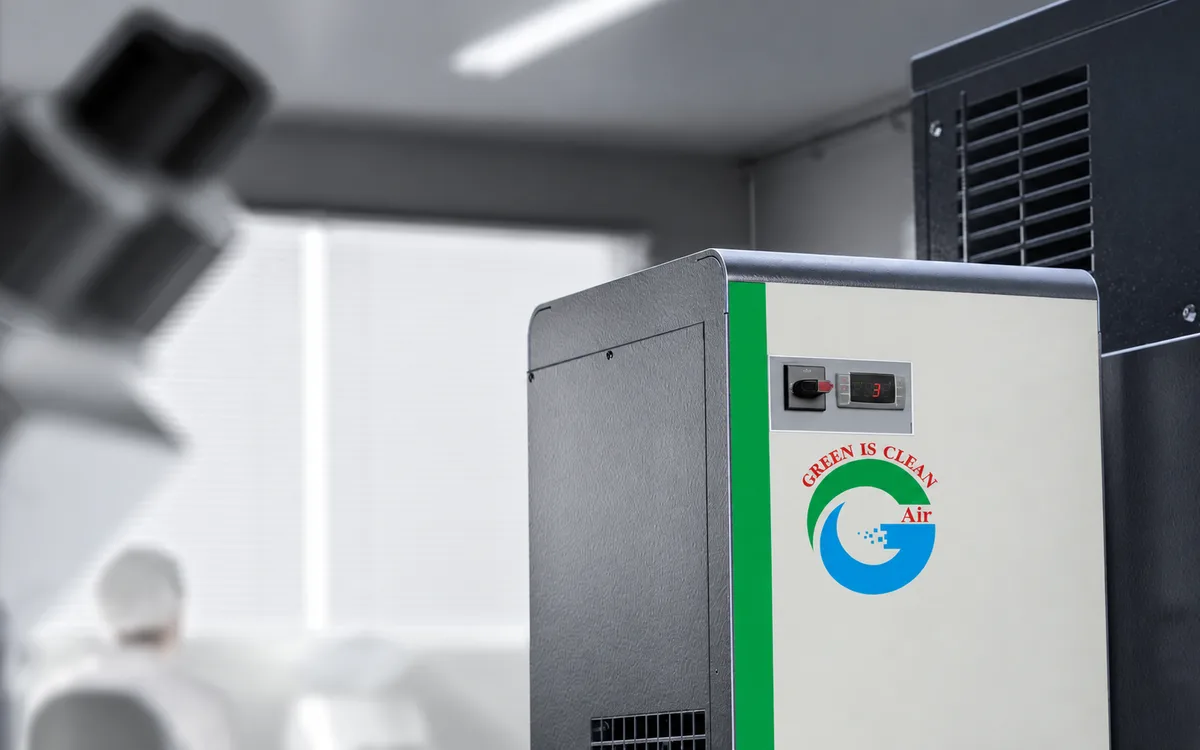
Refrigerant air dryers
The standard, low-cost way to reach a +3 °C pressure dew point.
- Free air delivery
- 10.0 – 383.3 m³/min
- Working pressure
- 13 – 16 bar g
- Motor power
- 1 – 32 kW
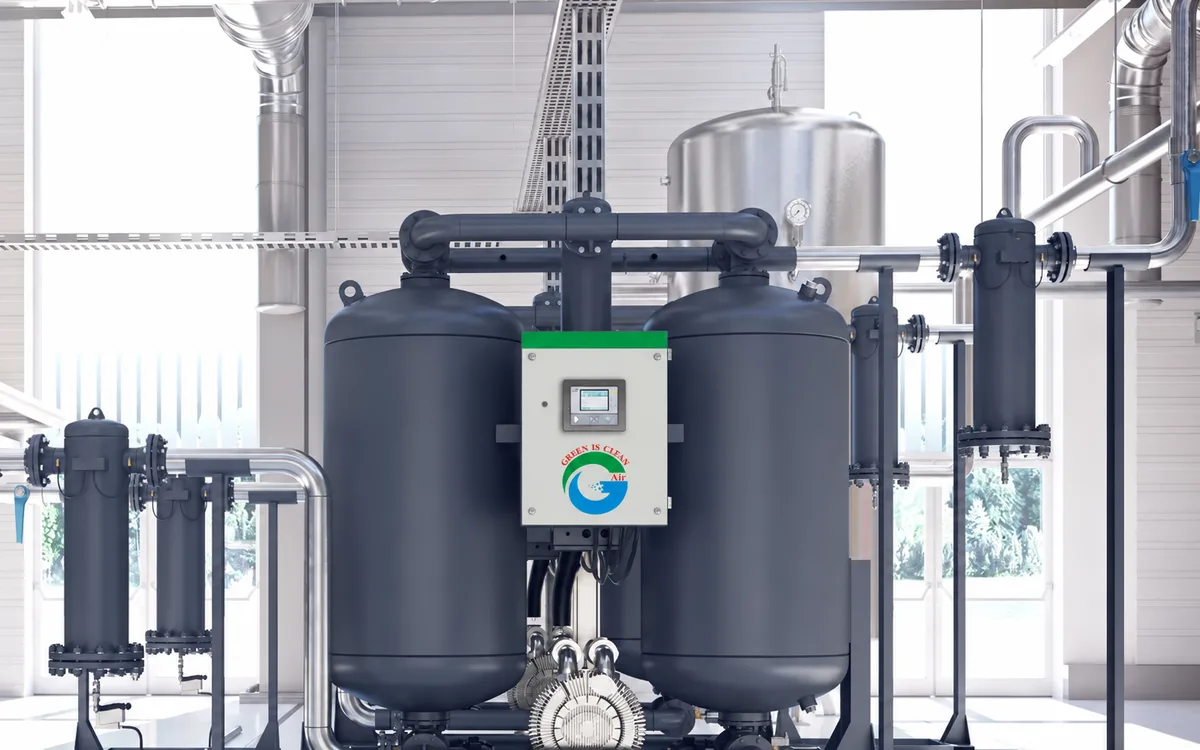
Desiccant air dryers
Dew points down to −70 °C for critical and outdoor pipework.
- Free air delivery
- 6.7 – 141.7 m³/min
- Weight
- 285 – 4,400 kg
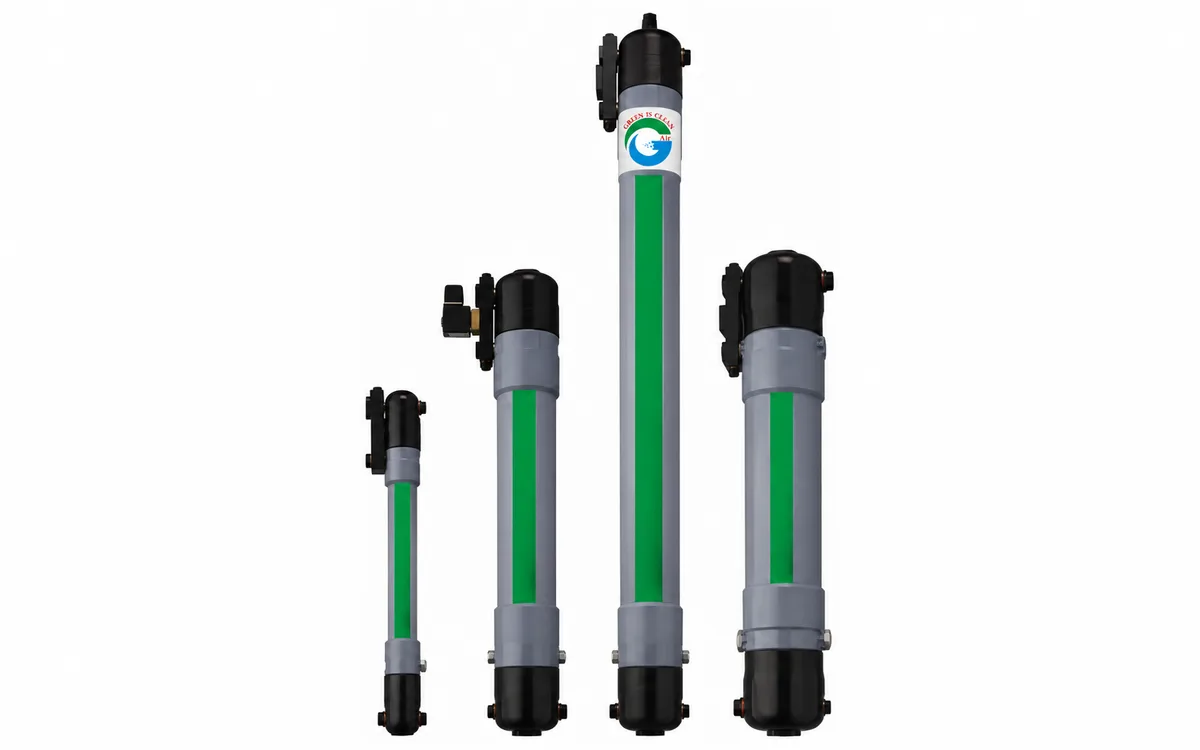
Membrane air dryers
Silent, power-free drying for small flows and point-of-use.
Learn more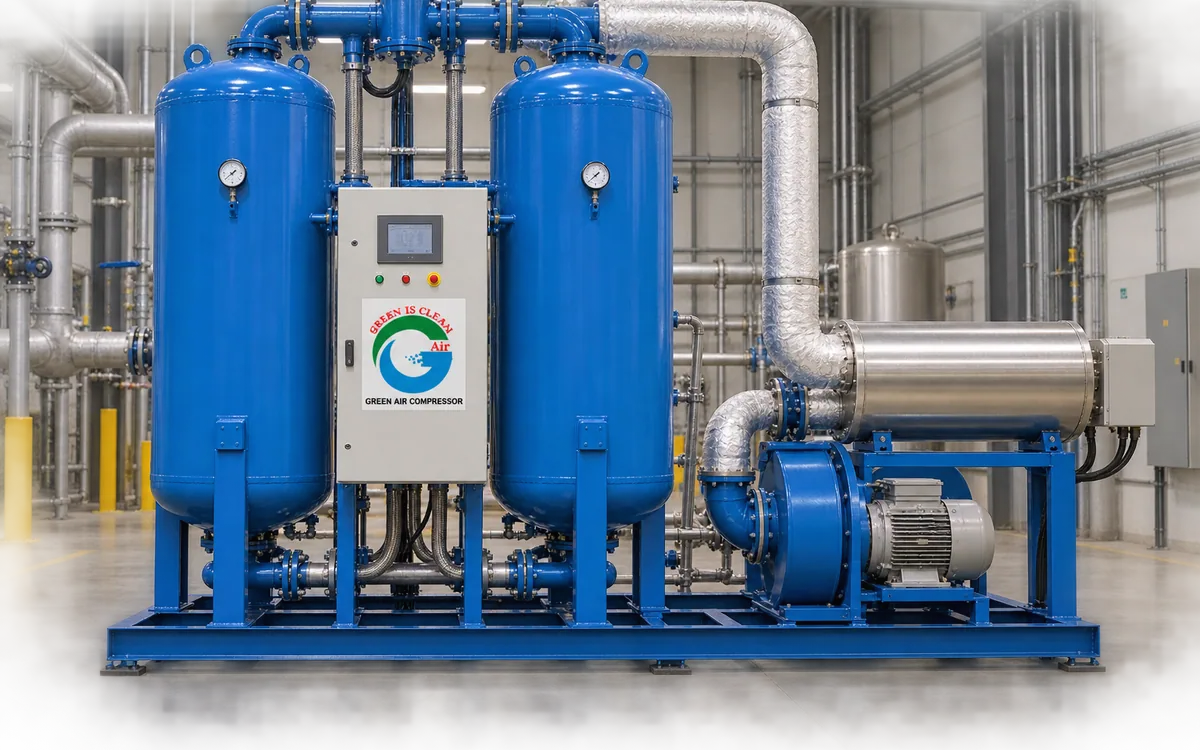
Heated and blower purge adsorption dryers
Minus 40 °C with two per cent purge or none at all. For large flows.
Learn moreNot sure which model you need?
Send us your air demand, working pressure and running hours. Our engineers will size the machine and send a written recommendation, no cost, no obligation.