
90 – 132 kW screw compressors
Plant-room class machines where energy cost dominates.
Technical data
- Free air delivery
- 5.1 – 24.8 m³/min
- Working pressure
- 5 – 13 bar g
- Motor power
- 90 – 132 kW
- Weight
- 2,447 – 2,764 kg
- Noise level
- 72 – 76 dB(A)
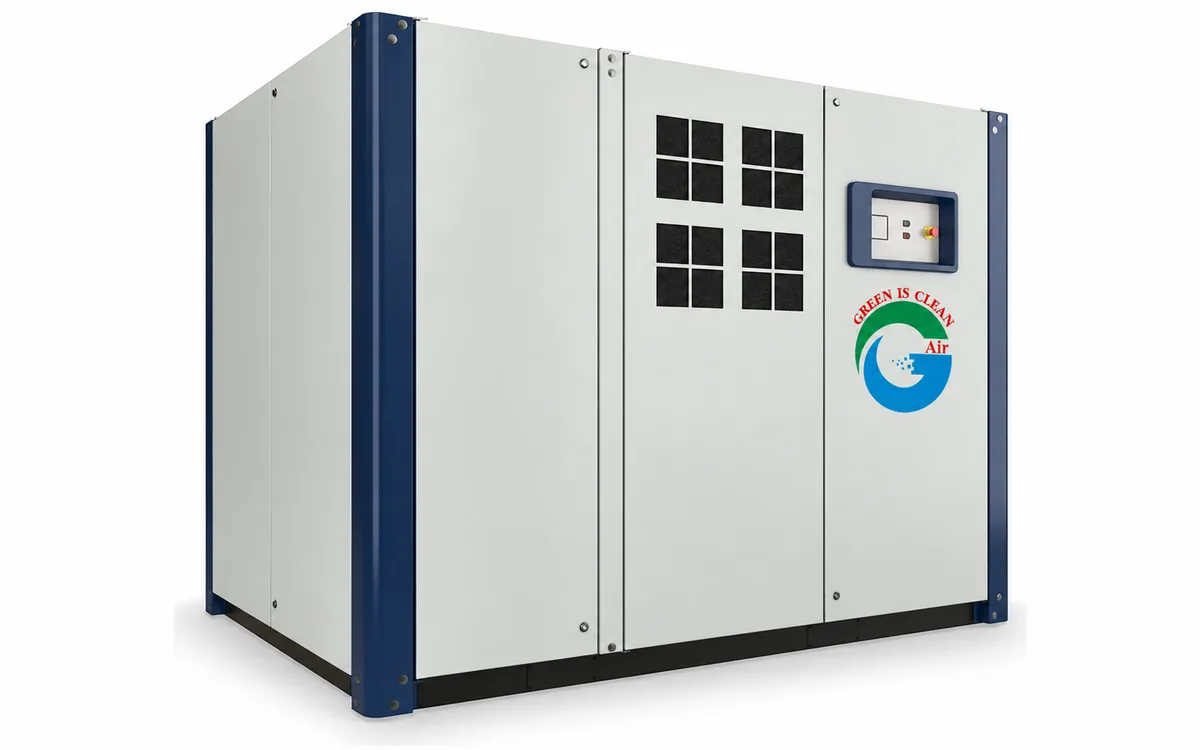
Overview
Above 90 kW, the purchase price of the compressor is a small fraction of what you will spend on it. Over ten years, electricity typically accounts for more than three quarters of the total cost. Everything in this range is designed around that single number.
That means a larger, slower-turning airend, low-loss cooling, and a control system that will not let the machine idle when it should be off. We will also audit your existing pipework, because a leak rate of 20% is very common and no compressor can fix it.
Key benefits
Low specific energy
kW per m³/min is the number to compare, and we publish it at three pressures rather than only the flattering one.
Two-stage option
Two-stage compression at this size lowers specific energy by a further 8 – 12% for plants that run around the clock.
Full-flow heat recovery
Water-cooled variants let you take the entire heat load into a process circuit instead of into the plant room.
Audit before you buy
We fit data loggers for a week and size from measured demand, not from a nameplate total.
How it is built
From ninety kilowatts the compressor is specified with the plant rather than bought from a catalogue. The electrical supply, the cooling and the ring main are all sized at the same time, and we issue the figures that let that happen.
These machines are built two stage as well as single stage. Two stage compresses in two smaller steps with cooling in between, which lowers the temperature each stage has to work at and cuts the energy needed for the same air.
Water cooled versions keep the heat out of the plant room completely. At this power the heat rejected is large enough that it changes the ventilation design of the room, so it is worth deciding early rather than late.
- Single stage and two stage builds
- Air cooled or water cooled on every model
- Intercooling between stages on two stage units
- Full electrical and cooling data issued with the quotation
- Foundation drawings and loadings supplied
- Low vibration, level slab foundation
- Variable speed across the band
- Heat recovery available
What the controller does
Touch screen with the machine state on the home page and trend graphs one level down. At this size the trend is the whole point, because the failures that cost money give weeks of notice to anyone watching.
It sequences a plant room of machines, holds a pressure band rather than a setpoint, and swaps the lead unit so the hours spread evenly instead of piling onto one machine.
A second pressure setting and a shift clock stop the plant paying for full pressure at three in the morning. Remote monitoring is fitted as standard and the data reaches both you and our service desk.
- Touch screen with trends and history
- Sequencing across a plant room
- Pressure band control with lead swap
- Second pressure setting for quiet hours
- Real time clock for shift patterns
- Remote monitoring as standard
- Programmable inputs for remote start and stop
- Automatic restart after a power failure
Parts and service kits
Kits are made up by interval and quoted against the machine's serial number. Air cooled and water cooled builds take different parts, and at this size getting that wrong costs a day.
A service kit holds every wear part for the interval in one box. Filters, separator, seals and O rings are all in there, so the machine goes back together the same day.
We agree a site spares list at commissioning based on how critical the machine is to your process. The items worth holding are the ones with the longest lead time, not the ones used most often.
- Consumables at two thousand hours
- Separator and oil at four thousand
- Major service at eight thousand
- Different kits for air and water cooled builds
- Site spares list agreed at commissioning
- Genuine fluid to the tested specification
- Airend exchange available
- Fixed price under a service plan
Model range
Fixed speed
- 7.5 bar g
- 18.16 m³/min
- 10 bar g
- 15.51 m³/min
- 13 bar g
- 13.52 m³/min
- Noise level
- 73 dB(A)
- Weight
- 2,447 kg
- Dimensions L x W x H
- 2290 × 1327 × 2039 mm
- 7.5 bar g
- 21.60 m³/min
- 10 bar g
- 18.85 m³/min
- 13 bar g
- 16.47 m³/min
- Noise level
- 75 dB(A)
- Weight
- 2,532 kg
- Dimensions L x W x H
- 2290 × 1327 × 2039 mm
- 7.5 bar g
- 24.79 m³/min
- 10 bar g
- 21.51 m³/min
- 13 bar g
- 18.70 m³/min
- Noise level
- 76 dB(A)
- Weight
- 2,764 kg
- Dimensions L x W x H
- 2290 × 1327 × 2039 mm
Variable speed
- 5 – 13 bar g
- 5.20 – 18.16 m³/min
- Noise level
- 72 dB(A)
- Weight
- 2,579 kg
- Dimensions L x W x H
- 2290 × 1327 × 2039 mm
- 5 – 13 bar g
- 5.10 – 21.52 m³/min
- Noise level
- 72 dB(A)
- Weight
- 2,604 kg
- Dimensions L x W x H
- 2290 × 1327 × 2039 mm
- 5 – 13 bar g
- 5.10 – 24.76 m³/min
- Noise level
- 74 dB(A)
- Weight
- 2,655 kg
- Dimensions L x W x H
- 2290 × 1327 × 2039 mm
FAD measured to ISO 1217 Edition 4, Annex C and E at 1 bar a intake, 20°C, 0% humidity. Noise measured to ISO 2151 in free field conditions, tolerance ± 3 dB(A). Water-cooled versions of every model are available. Ask us for their sheet.
Frequently asked questions
What dominates the cost of a machine this size?
Electricity: typically more than three quarters of the ten-year total. Everything in this range is designed around that single number rather than around purchase price.
What is specific energy and why do you publish three figures?
It is kW consumed per m³/min delivered. We publish it at three pressures rather than only the flattering one, because a figure quoted at 7 bar looks much better than the same machine at 8.
Is two-stage worth it at 110 kW?
If the machine runs around the clock, yes. Two-stage compression with intercooling lowers specific energy by a further 8–12%.
Should I go water-cooled here?
Usually. Water cooling takes the heat out of the plant room entirely, which above 90 kW is often the difference between a machine that runs through summer and one that trips.
Do you audit before quoting at this size?
Always, we fit data loggers for a week and size from measured demand, a leak rate of 20% is very common and no compressor can fix it.
How much air does 132 kW deliver?
About 23.6 m³/min (833 cfm) at 8 bar. The variable speed version covers 4.6–24.0 m³/min from 5 to 13 bar.
What does the electrical installation involve?
Dedicated supply, correctly rated switchgear and cable, and coordination with your existing load. We supply full-load and starting figures and work with your electrical contractor.
Can heat recovery handle this much heat?
Water-cooled variants let you take the entire heat load into a process circuit. At 132 kW that is a substantial amount of hot water: enough to matter on any site with a thermal demand.
What foundation does it need?
A level concrete slab sized for the machine's static load. These units are low-vibration so anti-vibration mounts are usually enough. We supply foundation drawings with the order.
How long is delivery at this size?
These are made to order, so allow lead time and plan the electrical and cooling work alongside it. We give a dated programme with the quotation.
Related products
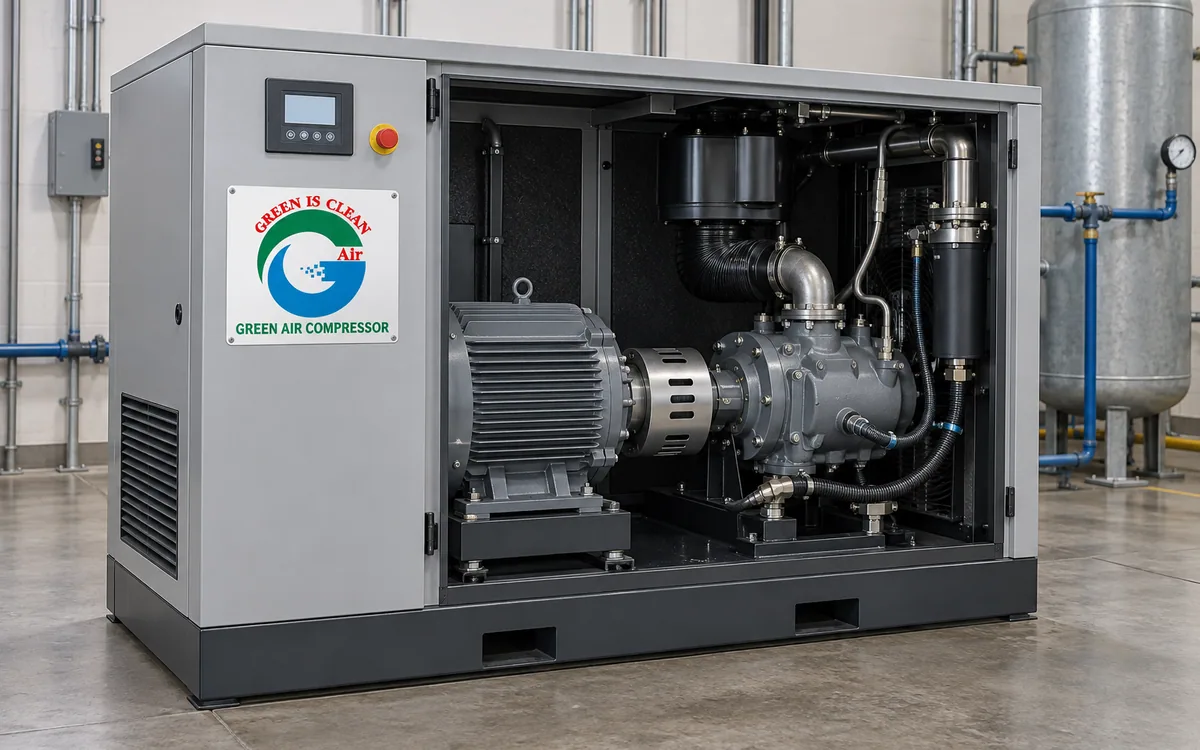
Direct driven screw compressors
Motor coupled straight to the airend. 55 to 250 kW, nothing to slip.
- Free air delivery
- 7.8 – 43.0 m³/min
- Working pressure
- 7 – 13 bar g
- Motor power
- 55 – 250 kW
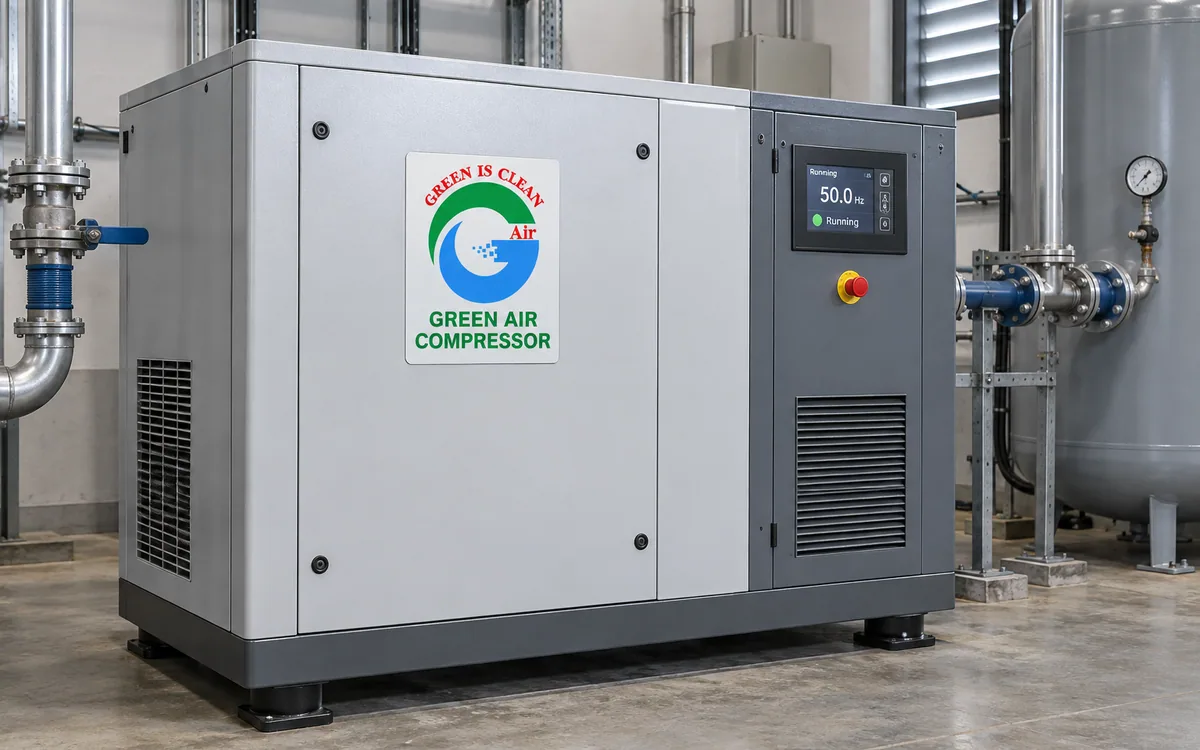
Variable speed screw compressors
The motor follows the demand. 7.5 to 280 kW, 8 to 13 bar g.
- Free air delivery
- 0.3 – 50.0 m³/min
- Working pressure
- 8 – 13 bar g
- Motor power
- 8 – 280 kW
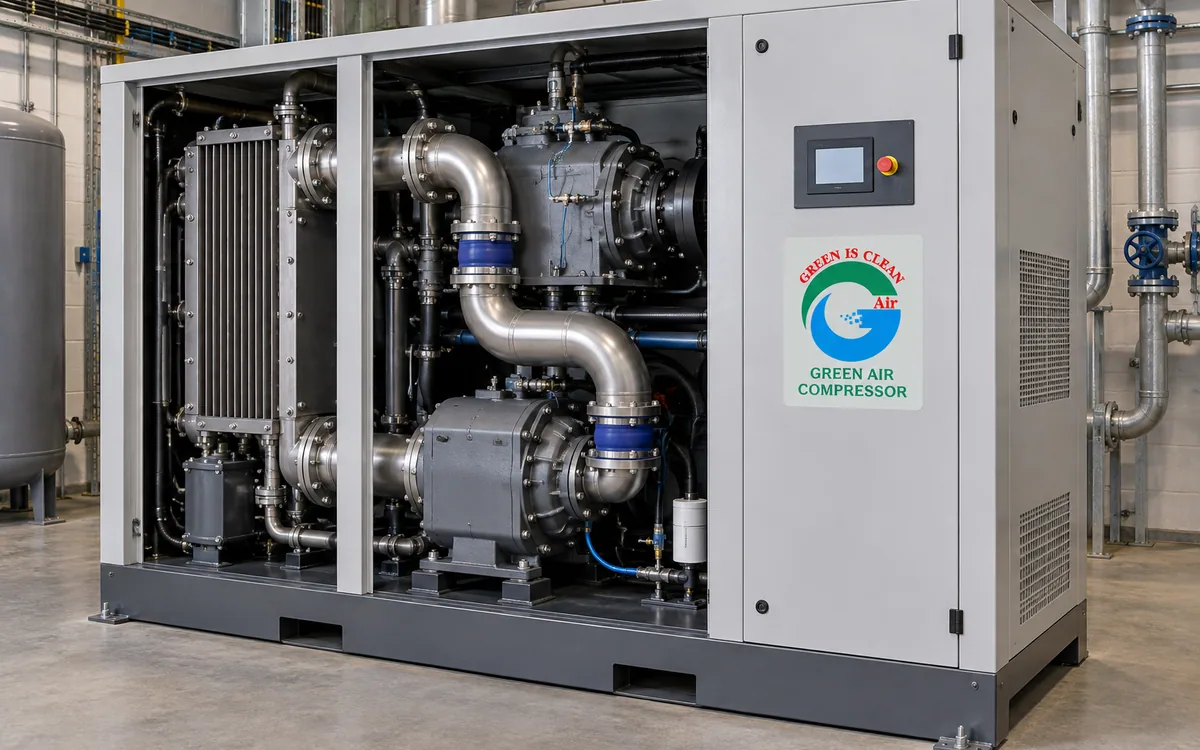
Two stage screw compressors
Compression in two steps. 45 to 500 hp, 4.5 to 12.5 bar g.
- Free air delivery
- 6.6 – 101.3 m³/min
- Working pressure
- 5 – 13 bar g
- Motor power
- 45 – 355 kW
Permanent magnet screw compressors
IE4 and IE5 class motors with variable speed built in. 20 to 500 hp.
- Free air delivery
- 0.3 – 109.0 m³/min
- Working pressure
- 7 – 30 bar g
- Motor power
- 8 – 55 kW
Not sure which model you need?
Send us your air demand, working pressure and running hours. Our engineers will size the machine and send a written recommendation, no cost, no obligation.