
LPG and hydrocarbon gas compressors
Transfer, recovery and vapour handling for propane, butane and mixed gas.
Technical data
- Working pressure
- 16 bar g
- Motor power
- 4 – 110 kW
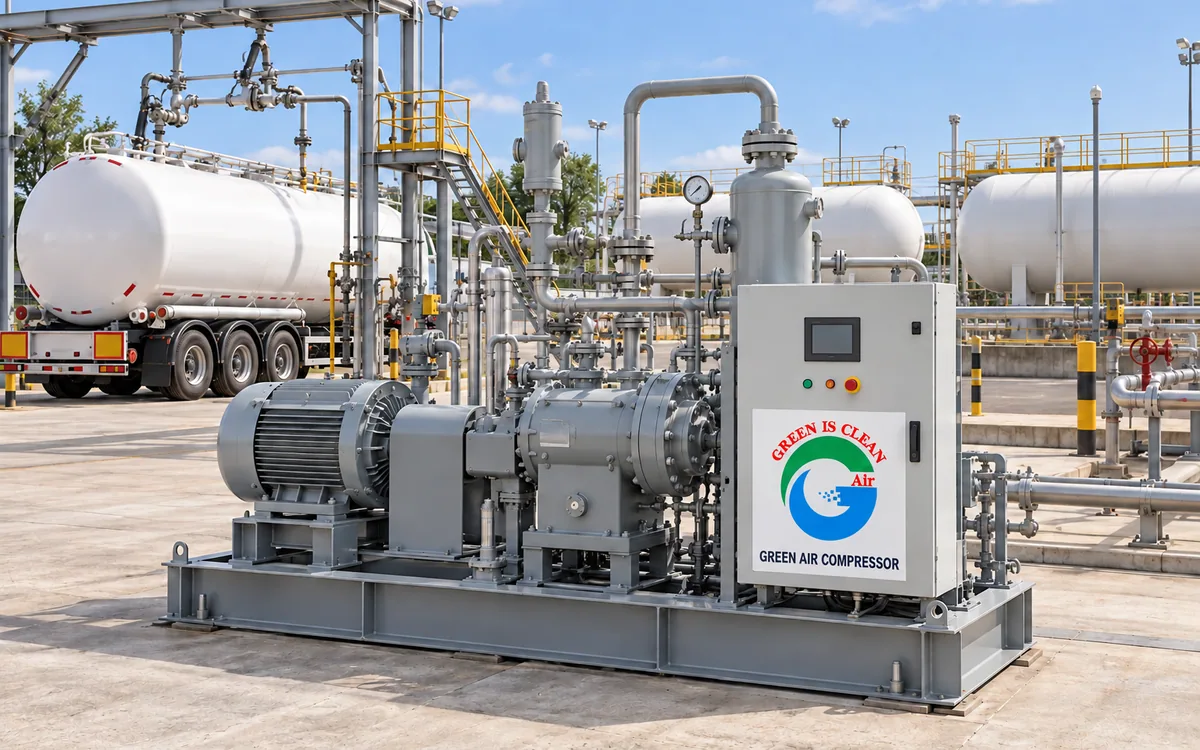
Overview
Moving LPG between vessels, recovering vapour from a tank that is being filled, or emptying a road tanker down to its heel all need a compressor rather than a pump, because what is being moved is vapour.
These are machines built for a flammable gas in a classified area. The construction, the driver, the instrumentation and the protection are all governed by that, and they are specified against the site's area classification rather than chosen from a range.
Key benefits
Built for classified areas
Drivers, instruments and electrical equipment selected to the zone the machine will stand in.
Vapour recovery as standard duty
Recovering vapour during filling is both a loss reduction and, increasingly, a legal requirement.
Tanker emptying to the heel
Takes a road or rail tanker down further than a liquid pump can, which is product recovered rather than returned.
Sealed against loss
Seal arrangement chosen for a gas where leakage is a safety matter before it is a commercial one.
Where a compressor beats a pump
A liquid pump moves the liquid and stops when the liquid stops, leaving a tanker with a heel of product and a vessel full of vapour. A compressor moves the vapour, which is how the last of the product is recovered and how the receiving vessel's pressure is managed.
In practice most installations use both: a pump for bulk transfer and a compressor for vapour balance and for stripping out the last of the load. The compressor is also what recovers vapour during filling instead of venting it.
The safety case drives everything else. Area classification, the driver type, the instrumentation and the shutdown logic are settled before the machine is selected, not afterwards.
What we need to quote
Gas compressors are not selected from a catalogue. The gas itself decides the materials, the seals and the safety case, and two plants asking for the same machine on paper often need different builds.
Four answers cover most of it: the gas and its composition, the suction pressure and temperature, the discharge pressure required, and the flow. With those we can size the machine and tell you whether it should be a screw, a reciprocating or a centrifugal.
Then the site questions. Area classification, whether the gas is wet or contains hydrogen sulphide, what the local authority requires, and whether the duty can stop. Those decide the seal arrangement and whether you need one machine or two.
- Gas composition and molecular weight
- Suction pressure and temperature
- Discharge pressure required
- Flow, normal and maximum
- Area classification
- Whether the duty can be interrupted
Model range
- 16 bar g
- —
- Dimensions L x W x H
- 1000 × 710 × 865 mm
- 16 bar g
- —
- Dimensions L x W x H
- 1000 × 710 × 865 mm
- 16 bar g
- —
- Dimensions L x W x H
- 1000 × 710 × 865 mm
- 16 bar g
- —
- Dimensions L x W x H
- 1000 × 710 × 865 mm
- 16 bar g
- —
- Dimensions L x W x H
- 1450 × 800 × 1300 mm
- 16 bar g
- —
- Dimensions L x W x H
- 1000 × 710 × 865 mm
- 16 bar g
- —
- Dimensions L x W x H
- 1000 × 710 × 865 mm
- 16 bar g
- —
- Dimensions L x W x H
- 1000 × 710 × 865 mm
- 16 bar g
- —
- Dimensions L x W x H
- 1860 × 1680 × 930 mm
- 16 bar g
- —
- Dimensions L x W x H
- 1400 × 900 × 1180 mm
- 16 bar g
- —
- Dimensions L x W x H
- 1400 × 900 × 1180 mm
- 16 bar g
- —
- Dimensions L x W x H
- 1400 × 900 × 1180 mm
- 16 bar g
- —
- Dimensions L x W x H
- 1400 × 900 × 1180 mm
- 16 bar g
- —
- Dimensions L x W x H
- 1400 × 900 × 1180 mm
- 16 bar g
- —
- Dimensions L x W x H
- 2000 × 1700 × 1400 mm
- 16 bar g
- —
- Dimensions L x W x H
- 2000 × 1700 × 1400 mm
- 16 bar g
- —
- Dimensions L x W x H
- 2000 × 1700 × 1400 mm
FAD measured to ISO 1217 Edition 4, Annex C and E at 1 bar a intake, 20°C, 0% humidity. Noise measured to ISO 2151 in free field conditions, tolerance ± 3 dB(A). Water-cooled versions of every model are available. Ask us for their sheet.
Frequently asked questions
Why not just use a pump?
A pump moves liquid. It cannot recover vapour or strip a tanker down to its heel, and both of those are product you have already paid for.
What area classification does it need?
That is a property of your site, not of the machine. Tell us the zone and we specify the driver, the instruments and the protection to suit it.
Can it handle mixed gas?
Yes, but composition changes the selection. Give us the range of compositions the plant actually sees rather than a nominal one.
How much product does vapour recovery actually save?
It depends on your throughput and your vapour pressure. On a busy loading rack it is usually a large number and we calculate it from your figures.
Is vapour recovery a legal requirement?
Increasingly, and it varies by country. We state what applies where the plant is rather than assuming your local rule matches the neighbouring one.
Can it empty a road tanker completely?
Down to its heel, which is much further than a liquid pump reaches. That last portion is product recovered rather than returned to the depot.
What drives it?
An electric motor suited to the zone, or a hydraulic or air drive where the classification demands it. That decision comes from the safety case, not from preference.
How is it protected?
Gas detection, high and low pressure trips, temperature protection and a defined shutdown logic, specified with the machine rather than added afterwards.
What maintenance does it need?
A published schedule with seals and valves as the routine items. Seals matter more here than on an air machine because leakage is a safety event.
Can you commission it?
Yes, with our own engineers, and we train your operators as part of the supply rather than leaving a manual on the panel.
Related products
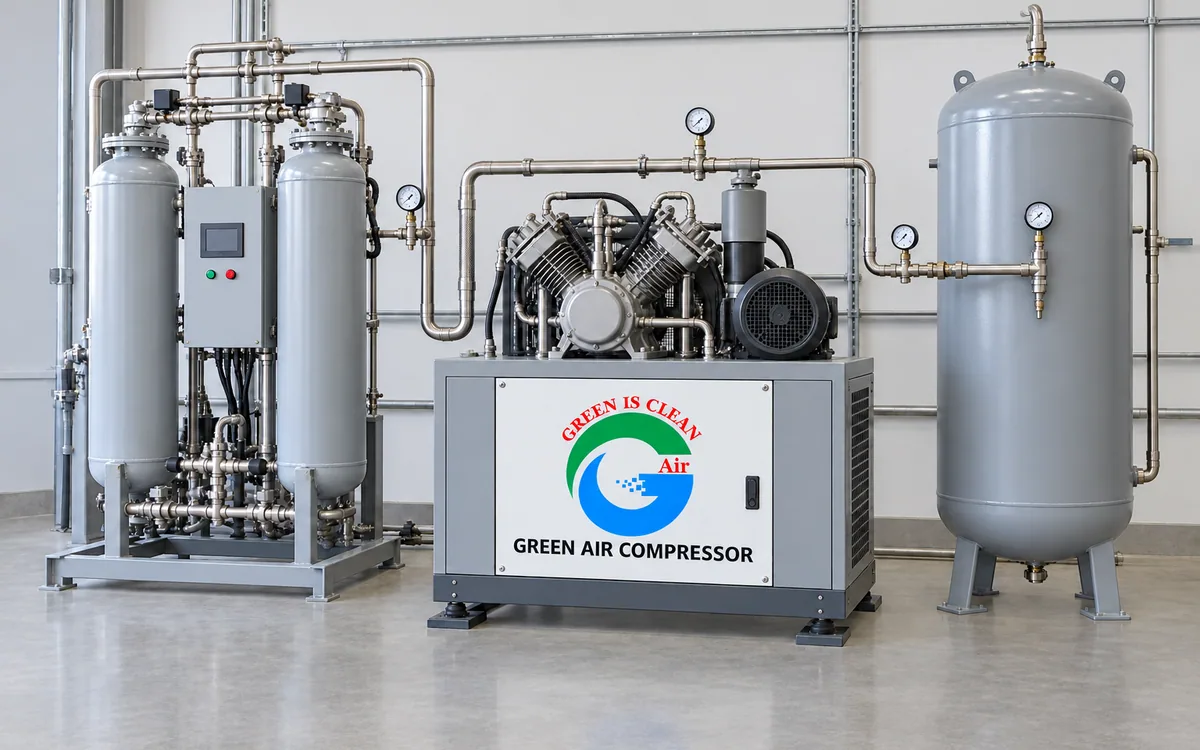
Nitrogen compressors
Boosting and circulating nitrogen for blanketing, purging and process.
- Free air delivery
- 90 – 3,000 Nm³/h
- Working pressure
- 3 – 160 bar g
- Motor power
- 22 – 250 kW
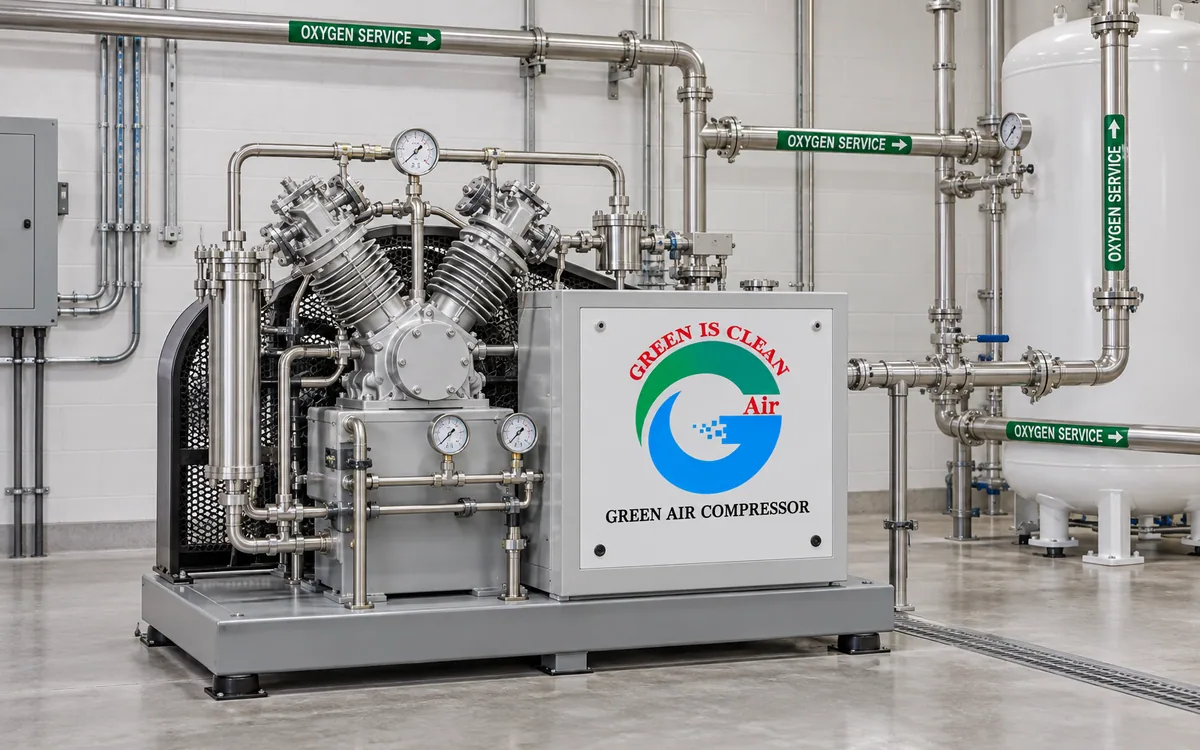
Oxygen compressors
Oil free by necessity, built and cleaned to oxygen service standards.
- Free air delivery
- 30 – 120 Nm³/h
- Working pressure
- 120 – 150 bar g
- Motor power
- 11 – 30 kW
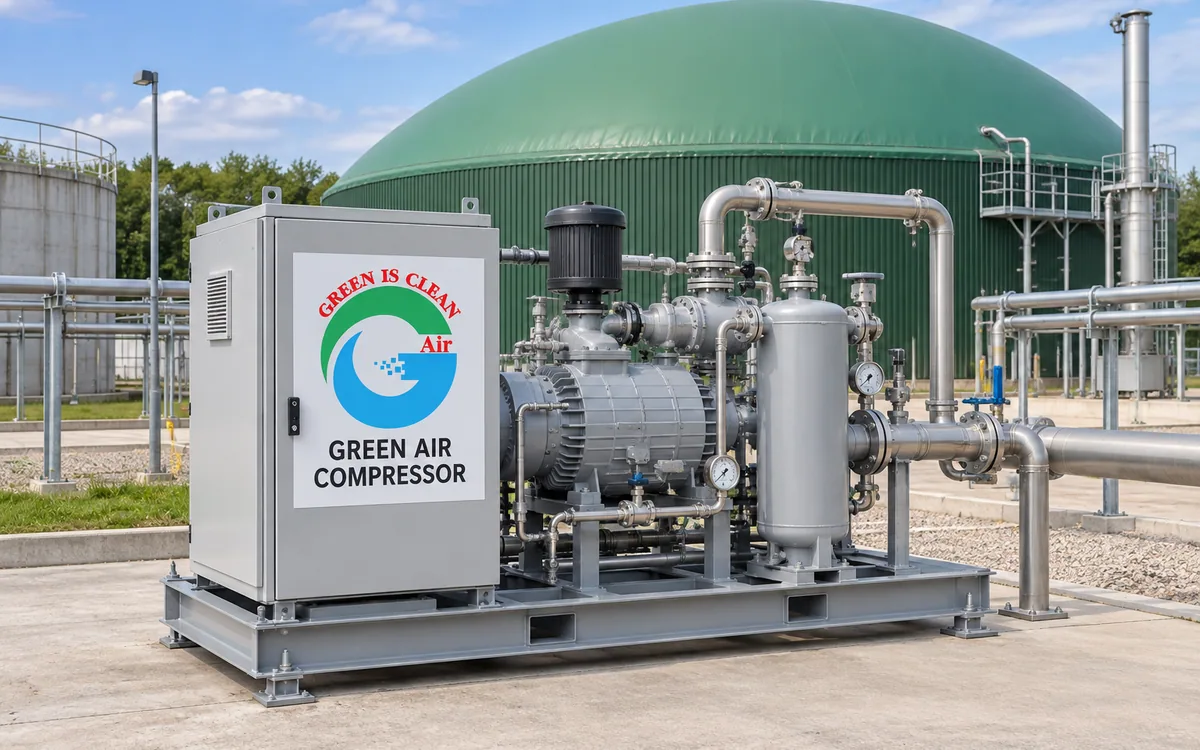
Biogas compressors
Wet, corrosive, variable gas handled without eating the machine.
- Free air delivery
- 50 – 700 Nm³/h
- Working pressure
- 5 – 45 bar g
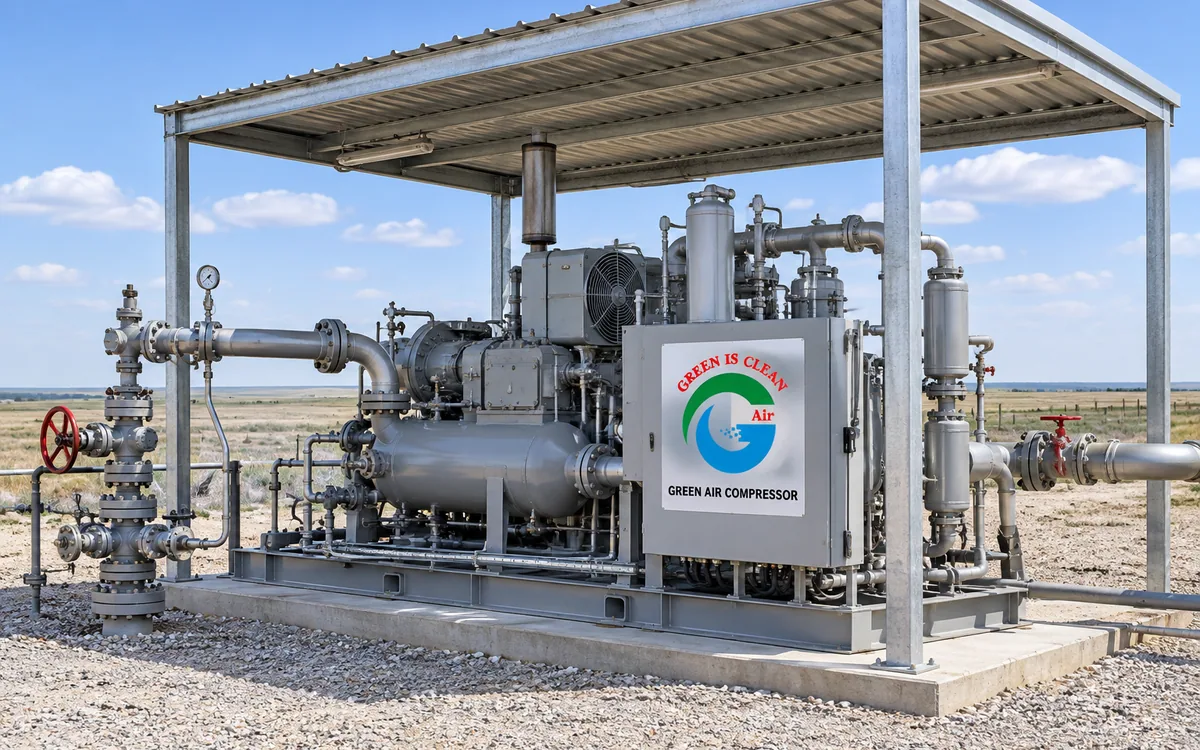
Natural gas compressors
Wellhead, gathering, boosting and fuel gas duties.
- Free air delivery
- 10 – 3,400 Nm³/h
- Working pressure
- 1 – 210 bar g
Not sure which model you need?
Send us your air demand, working pressure and running hours. Our engineers will size the machine and send a written recommendation, no cost, no obligation.