
Biogas compressors
Wet, corrosive, variable gas handled without eating the machine.
Technical data
- Free air delivery
- 50 – 700 Nm³/h
- Working pressure
- 5 – 45 bar g
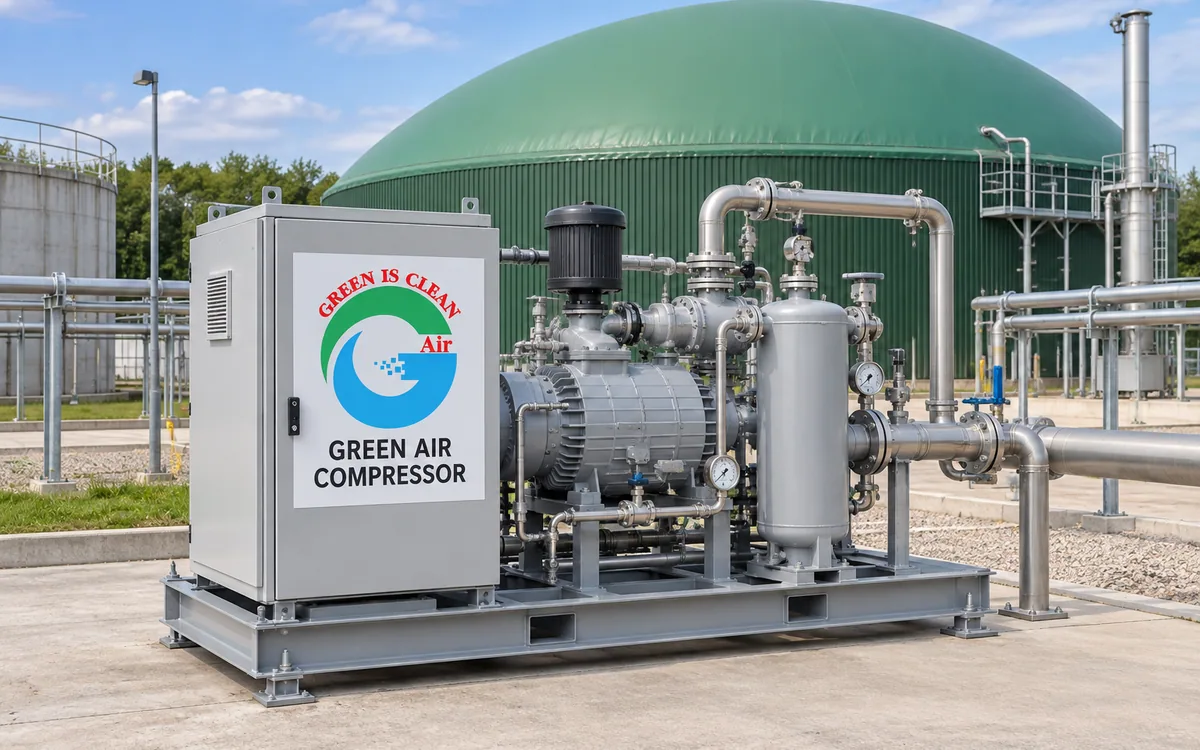
Overview
Biogas is roughly sixty per cent methane, forty per cent carbon dioxide, saturated with water, and carrying hydrogen sulphide. That last component is the problem: with water present it makes an acid that will destroy an ordinary compressor's internals in months.
A biogas machine is therefore built around corrosion rather than around pressure. Stainless wetted parts, seal materials chosen for H2S, condensate removed before it can sit anywhere, and a gas path that tolerates a composition that changes as the digester does.
Key benefits
Built for hydrogen sulphide
Wetted parts and seals chosen for wet, sour gas rather than adapted from an air machine.
Tolerates a changing gas
Digester output varies with feedstock and temperature. The machine is selected for that range, not for one analysis.
Condensate handled
Water removed where it forms rather than left to collect where it corrodes.
Sized with the upgrading plant
Whether the gas goes to a CHP engine, a grid injection skid or a boiler changes the specification considerably.
What the gas does to a machine
Hydrogen sulphide plus water makes a weak acid. It attacks carbon steel, it attacks copper alloys quickly, and it embrittles some elastomers. On a machine not built for it the first symptom is usually a seal, and the second is the airend.
The other thing biogas does is vary. A digester fed on a different feedstock this month produces a different gas, and a machine selected at one composition can be well off its curve at another. We select against the range, not the average.
Where the gas is going matters too. A CHP engine wants modest pressure and tolerates some moisture; a grid injection plant wants it dry, clean and at line pressure. Those are different machines.
- Stainless wetted parts
- Seals selected for H2S service
- Condensate drained at every low point
- Selected across the digester's real range
- Matched to CHP, boiler or grid injection
- Area classification addressed in the design
What we need to quote
Gas compressors are not selected from a catalogue. The gas itself decides the materials, the seals and the safety case, and two plants asking for the same machine on paper often need different builds.
Four answers cover most of it: the gas and its composition, the suction pressure and temperature, the discharge pressure required, and the flow. With those we can size the machine and tell you whether it should be a screw, a reciprocating or a centrifugal.
Then the site questions. Area classification, whether the gas is wet or contains hydrogen sulphide, what the local authority requires, and whether the duty can stop. Those decide the seal arrangement and whether you need one machine or two.
- Gas composition and molecular weight
- Suction pressure and temperature
- Discharge pressure required
- Flow, normal and maximum
- Area classification
- Whether the duty can be interrupted
Model range
- 16 bar g
- 50 Nm³/h
- 16 bar g
- 120 Nm³/h
- 4.5 bar g
- 280 Nm³/h
- 45 bar g
- 350 Nm³/h
- 45 bar g
- 500 Nm³/h
- 45 bar g
- 700 Nm³/h
Performance to ISO 1217 Annex C at 20 °C inlet, 1 bar(a). Figures are typical and subject to confirmation. Ask us for the certified test report for your selected model.
Frequently asked questions
Does the gas need cleaning first?
Usually yes. Removing bulk H2S and water before the compressor extends its life considerably, and it is cheaper than building that tolerance into the machine.
What if the gas composition changes?
It will. We select against the range the digester actually produces across the year rather than a single analysis from one day.
Can it feed a grid injection plant?
Yes, but that duty needs dry, clean gas at line pressure and it is a different specification from feeding a CHP engine. Tell us the destination first.
Why does H2S do so much damage?
With water present it forms a weak acid. It attacks carbon steel, eats copper alloys quickly and embrittles some elastomers, usually showing up first at a seal.
What are the wetted parts made of?
Stainless steel, with seals selected for sour service. Adapting an air machine by changing the seals alone does not survive a digester.
How is the condensate handled?
Drained at every low point, where it forms, rather than left to collect where it corrodes. It is a design decision, not an installation afterthought.
Is it explosion protected?
It is specified to your site's area classification, which decides the driver, the instruments and the electrical equipment. That is settled before selection.
What pressure do I need for a CHP engine?
Modest, typically under a bar or two, and the engine builder states it. Grid injection is a different question and needs line pressure and dry gas.
How often does it need servicing?
More often than an air machine, because the gas is aggressive. The schedule is published and the parts are held locally rather than ordered from Europe.
Can you supply the upgrading plant too?
We supply the compression and work with the upgrading supplier on the interface. Getting those two specified together is what stops a plant underperforming.
Related products
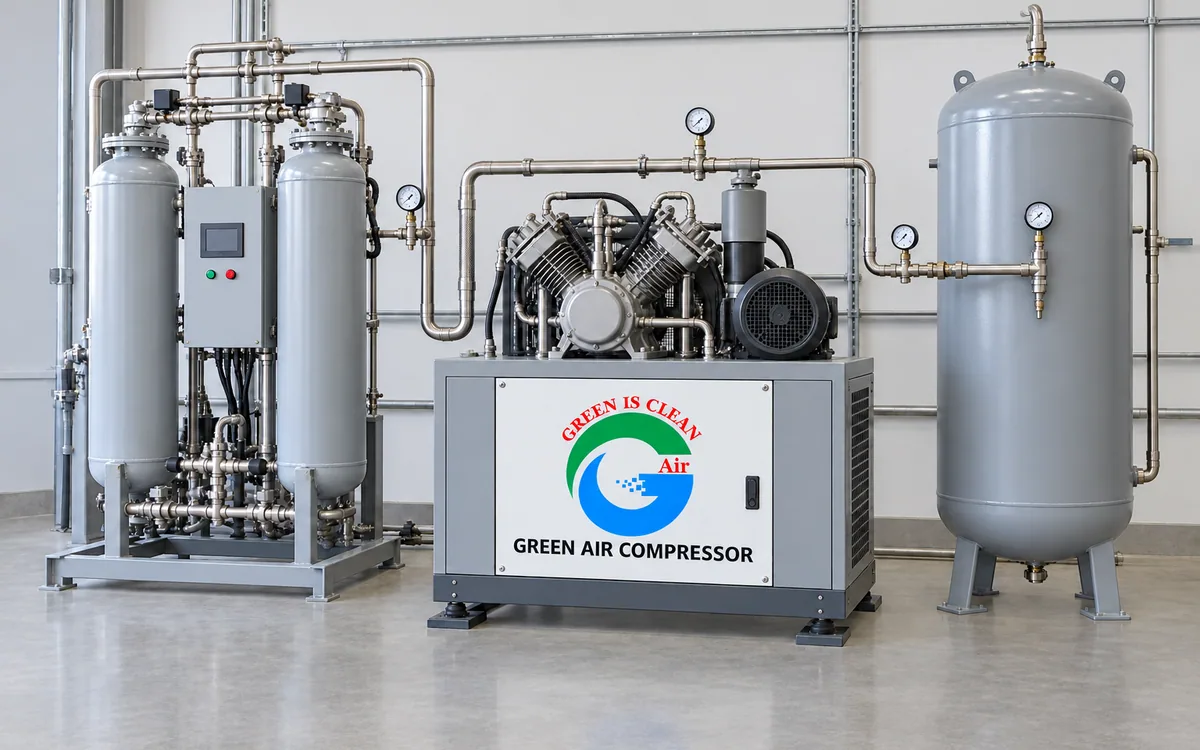
Nitrogen compressors
Boosting and circulating nitrogen for blanketing, purging and process.
- Free air delivery
- 90 – 3,000 Nm³/h
- Working pressure
- 3 – 160 bar g
- Motor power
- 22 – 250 kW
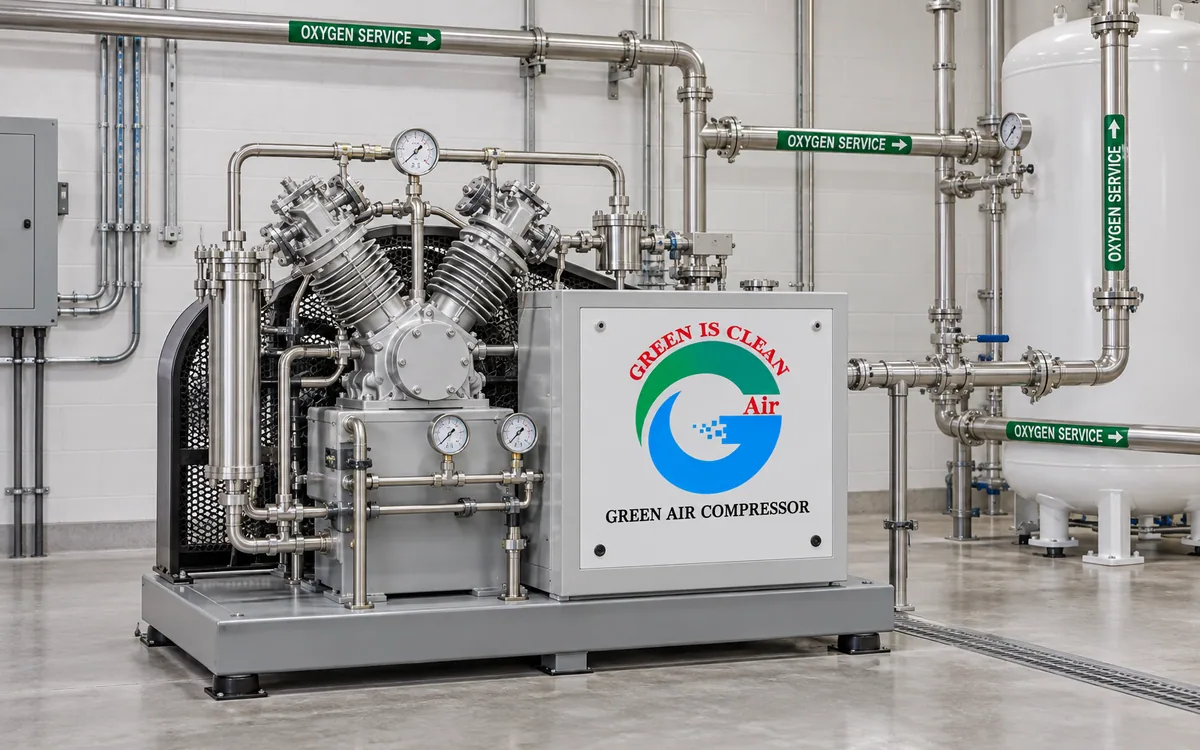
Oxygen compressors
Oil free by necessity, built and cleaned to oxygen service standards.
- Free air delivery
- 30 – 120 Nm³/h
- Working pressure
- 120 – 150 bar g
- Motor power
- 11 – 30 kW
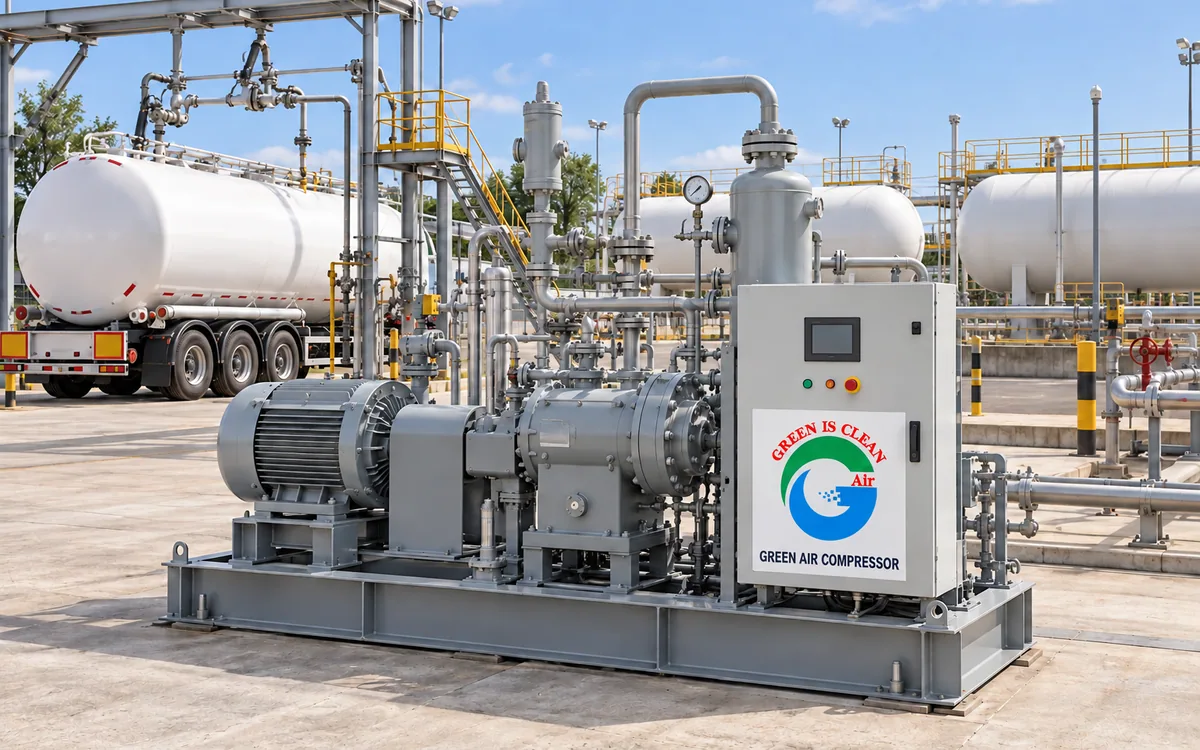
LPG and hydrocarbon gas compressors
Transfer, recovery and vapour handling for propane, butane and mixed gas.
- Working pressure
- 16 bar g
- Motor power
- 4 – 110 kW
Natural gas compressors
Wellhead, gathering, boosting and fuel gas duties.
- Free air delivery
- 10 – 3,400 Nm³/h
- Working pressure
- 1 – 210 bar g
Not sure which model you need?
Send us your air demand, working pressure and running hours. Our engineers will size the machine and send a written recommendation, no cost, no obligation.