
Fixed speed liquid ring vacuum pumps
The pump that does not mind if your process is wet and dirty.
Technical data
- Working pressure
- 33 – 160 bar g
- Motor power
- 2 – 447 kW
- Weight
- 37 – 8,930 kg
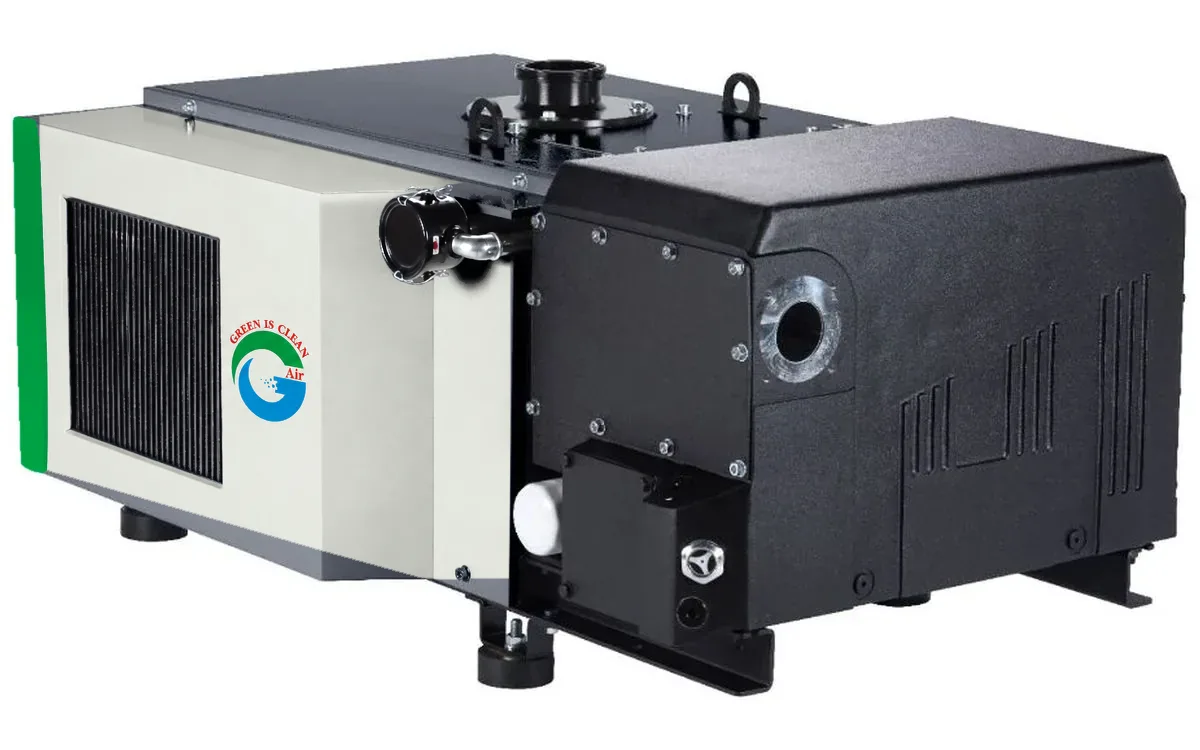
Overview
A ring of liquid spinning inside the housing does the sealing and the compressing. Because the pumping element is liquid, the pump can swallow water, vapour, slugs of condensate and a fair amount of dirt without any damage.
That is why liquid ring pumps dominate paper mills, sugar plants, chemical works and anywhere a process throws liquid at the vacuum system.
Key benefits
Handles liquid carry-over
Slugs of condensate pass straight through. No other pump type tolerates this.
Isothermal compression
The liquid absorbs the heat, so the pump runs cool and is safe on flammable vapour.
Very few wearing parts
One rotating assembly with generous clearances.
Closed-loop options
Recirculation systems available where sealing water cost or disposal is an issue.
How it is built
A ring of liquid spinning inside the housing does the sealing and the compressing. Because the pumping element is a liquid, the pump can swallow water, vapour and slugs that would stop a dry pump within minutes.
There is no dry rubbing contact anywhere and no oil in the gas path. The gas is cooled and washed as it passes through, which is why this design survives duties nothing else will take.
Materials are chosen for the process rather than for the catalogue. On corrosive duty the whole wetted path is specified, not just the impeller.
- Liquid ring seals and compresses
- Takes water, vapour and slugs
- No dry contact and no oil in the gas path
- Gas cooled and washed in passing
- Once through, partial or closed recovery
- Corrosion resistant materials available
- Very tolerant of difficult processes
- Continuous duty rated
Controls and monitoring
Seal liquid flow and temperature are the two readings a liquid ring pump lives on, and they are the two most often left unmonitored.
Loss of seal liquid damages the pump quickly, so it is interlocked rather than merely alarmed. The pump stops instead of running dry.
Vacuum level and motor load complete the picture. Together they show whether the pump is still doing the duty it was selected for.
- Seal liquid flow and temperature monitored
- Loss of seal liquid interlocked, not just alarmed
- Vacuum level and motor load shown
- Recovery system condition monitored
- High temperature alarm
- Service countdown in hours
- Volt free contacts for plant alarms
- Remote monitoring available
Parts and service
Seals, bearings and the wetted parts, with the interval set by the process rather than by the calendar. Two identical pumps on different duties do not wear alike.
Water quality decides life on this design. Scale and solids in the seal liquid wear the pump far faster than the process gas ever will, which is why the recovery system is part of the service.
We record achieved vacuum and motor load at every visit, so a decline is a number rather than an impression.
- Seal and bearing kits by interval
- Intervals set by the process
- Recovery system serviced with the pump
- Seal liquid quality checked
- Achieved vacuum recorded at every service
- Corrosion resistant spares where fitted
- Held in local stock
- Fixed price under a service plan
Model range
- 33 mbar
- 31 m³/h
- Weight
- 37 kg
- Dimensions L x W x H
- 369 x 200 x 250 mm
- 33 mbar
- 65 m³/h
- Weight
- 77 kg
- Dimensions L x W x H
- 664 x 250 x 320 mm
- 33 mbar
- 120 m³/h
- Weight
- 92 kg
- Dimensions L x W x H
- 568 x 330 x 347 mm
- 33 mbar
- 144 m³/h
- Weight
- 112 kg
- Dimensions L x W x H
- 564 x 330 x 374 mm
- 33 mbar
- 239 m³/h
- Weight
- 145 kg
- Dimensions L x W x H
- 635 x 365 x 402 mm
- 33 mbar
- 400 m³/h
- Weight
- 183 kg
- Dimensions L x W x H
- 958 x 300 x 472 mm
- 150 mbar
- 500 m³/h
- Weight
- 159 kg
- Dimensions L x W x H
- 857 x 300 x 520 mm
- 33 mbar
- 770 m³/h
- Weight
- 278 kg
- Dimensions L x W x H
- 1166 x 400 x 470 mm
- 160 mbar
- 8900 m³/h
- Weight
- 3880 kg
- Dimensions L x W x H
- 2370 x 1330 x 1865 mm
- 33 mbar
- 1380 m³/h
- Weight
- 600 kg
- Dimensions L x W x H
- 1432 x 610 x 750 mm
- 33 mbar
- 2000 m³/h
- Weight
- 770 kg
- Dimensions L x W x H
- 1682 x 610 x 750 mm
- 160 mbar
- 19100 m³/h
- Weight
- 8930 kg
- Dimensions L x W x H
- 2732 x 1785 x 2560 mm
- 130 mbar
- 3400 – 3800 m³/h
- Weight
- 2030 kg
- Dimensions L x W x H
- 1665 x 800 x 1400 mm
- 130 mbar
- 4400 – 5100 m³/h
- Weight
- 2150 kg
- Dimensions L x W x H
- 1790 x 800 x 1400 mm
FAD measured to ISO 1217 Edition 4, Annex C and E at 1 bar a intake, 20°C, 0% humidity. Noise measured to ISO 2151 in free field conditions, tolerance ± 3 dB(A). Water-cooled versions of every model are available. Ask us for their sheet.
Frequently asked questions
How does a liquid ring pump work?
An off-centre impeller spins a ring of liquid, usually water, inside the casing. The moving liquid forms the sealing and compression surface.
What makes it different?
There is no dry rubbing contact and no oil. Because the gas is cooled and washed by the liquid, it copes with things that destroy other pumps.
What can it handle that others cannot?
Wet, dirty, corrosive and vapour-laden gas. If your process carries slugs of liquid or condensable vapour, this is usually the right technology.
What vacuum does it reach?
Limited by the vapour pressure of the service liquid: about 33 mbar with water at 20 °C. Colder water gives deeper vacuum, warmer water less.
Why does water temperature matter so much?
Because the water boils in the pump if the vacuum approaches its vapour pressure. A rise of a few degrees can visibly lose you vacuum.
How much water does it use?
Once-through systems use a lot. Partial or full recirculation with a heat exchanger cuts that dramatically and is normal on new installations.
Can it use something other than water?
Yes, oil or a process-compatible liquid where water would react or contaminate. The choice affects both vacuum level and materials.
What maintenance does it need?
Very little mechanically: seals, bearings and impeller clearance. The real maintenance is water quality, because scale and fouling do the damage.
Is it efficient?
Less efficient than dry technologies in energy terms. You accept that in exchange for tolerating gas that would wreck anything else.
Where is it most used?
Paper, sugar, food, chemical processing, power station condenser evacuation and anywhere the gas is genuinely wet.
Related products
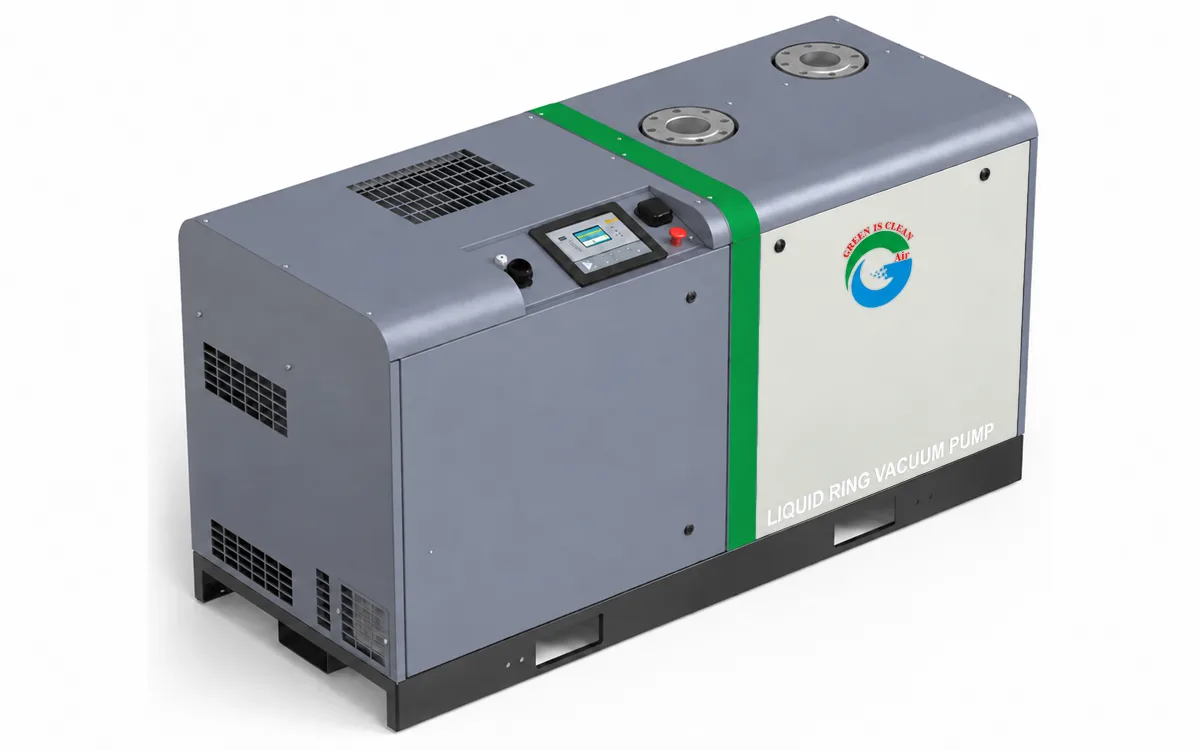
Not sure which model you need?
Send us your air demand, working pressure and running hours. Our engineers will size the machine and send a written recommendation, no cost, no obligation.