
Vacuum pump repair and overhaul
Workshop rebuild with test certificate, or exchange from stock.
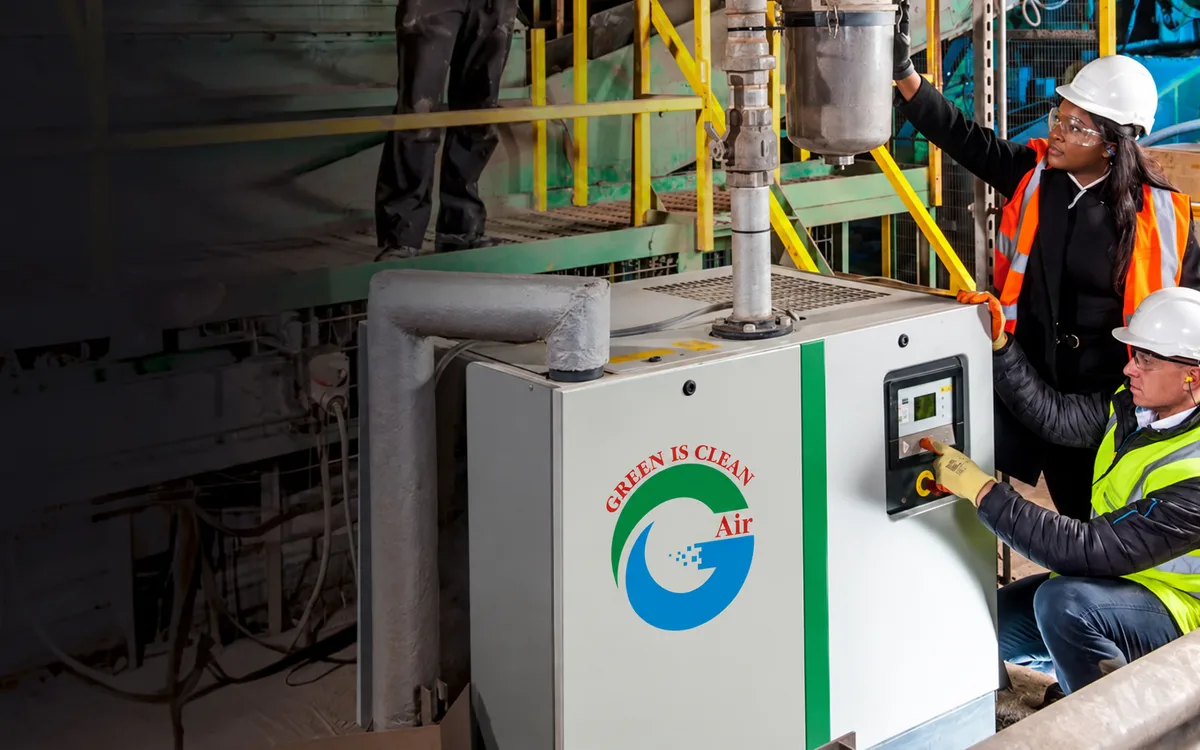
Overview
A vacuum pump that has lost performance usually has not failed, it has drifted. Clearances open up, seals harden, the oil degrades and the ultimate pressure quietly slips from 0.1 mbar to 2 mbar. The process starts running slower and nobody connects the two.
We strip, measure, rebuild and performance-test pumps in our own workshops, and issue a test certificate showing the ultimate pressure achieved. Where downtime cannot be tolerated, we send an exchange pump from stock first.
Key benefits
Measured, not guessed
Every rebuild is tested for ultimate pressure and pumping speed, with a certificate to prove it.
Exchange units available
A rebuilt pump goes out before yours comes in, so the process does not stop.
All makes handled
We rebuild other manufacturers' pumps, not only our own.
Fixed price after inspection
You get a firm quotation after strip-down, before any work is done.
How a repair runs
Routine work is done on site. Overhauls come to the workshop, because a pump that has been overhauled has to be tested properly and a plant room is not the place for that.
We say which is needed before we start rather than discovering it halfway through. A stripped pump on a bench is a bad moment to be having that conversation.
Every overhauled pump leaves with a pump down curve and an ultimate pressure figure, measured on that pump rather than quoted from a catalogue.
- Routine work on site, overhauls in the workshop
- Which is needed is agreed before starting
- Pump down curve measured after overhaul
- Ultimate pressure recorded per pump
- Exchange pumps available to avoid downtime
- Works on other makes as well as ours
- Quoted before the work begins
- Warranty on the overhaul
Why it failed
A vacuum pump rarely fails without warning. Ultimate pressure drifting, longer pump down times and a rising temperature all come first.
The report says what we found and what caused it. Process carry over, wrong oil and a missing inlet filter account for most of what we see.
The service interval is adjusted in light of the cause rather than simply restarted, because repeating the same schedule will repeat the same failure.
- Cause identified, not just the failure
- Process carry over checked
- Oil specification verified
- Inlet protection reviewed
- Interval adjusted after a failure
- Warning signs explained from the data
- Return at our cost if the fault repeats
- Records kept against the serial number
Exchange rather than wait
Where the process cannot stop we fit an exchange pump and overhaul yours into the pool. The plant is running in days rather than weeks.
Exchange units are tested before they ship and the test result travels with them.
For critical duties we will hold an exchange unit against your site, so the swap is same day rather than same week.
- Exchange pump fitted, yours overhauled after
- Running in days rather than weeks
- Every exchange unit tested before despatch
- Test result supplied with the unit
- Unit held against site on critical duty
- Fitted and commissioned by our engineers
- Performance verified after fitting
- Warranty on the exchange
Frequently asked questions
Do you repair pumps you did not supply?
Yes, we repair the major makes of rotary vane, claw, screw, roots and liquid ring pumps regardless of who sold them.
How do you decide repair or replace?
We strip, inspect and quote against the cost of a new unit. If a repair is more than about 60% of replacement, we say so plainly.
How long does a repair take?
Typically one to three weeks depending on parts. We give the date when we quote, and if parts slip we tell you rather than let you find out.
Can you work on site?
For minor work, yes. Full overhauls go to the workshop because a clean bench and proper test equipment are what make a repair reliable.
Is the repaired pump tested?
Always, ultimate vacuum, pumping speed, temperature and noise are measured and reported, so you get evidence rather than a promise.
What warranty do you give?
Twelve months on parts and labour for a full overhaul, with the test data supplied so there is a baseline for any later claim.
Can you handle contaminated pumps?
Yes, with the correct declaration from you first. Tell us what the pump has been exposed to. That is a safety requirement for our technicians, not a formality.
Do you offer an exchange unit?
For common models, yes. A factory-rebuilt exchange gets you running in days rather than weeks and the old unit becomes ours.
What causes most of the failures you see?
Contaminated oil, blocked inlet filters and running outside the rated pressure range. All three are avoidable with a service schedule.
Do you report why it failed?
Yes, in writing. A repair that does not tell you the cause simply arranges the next failure at your expense.
Related products
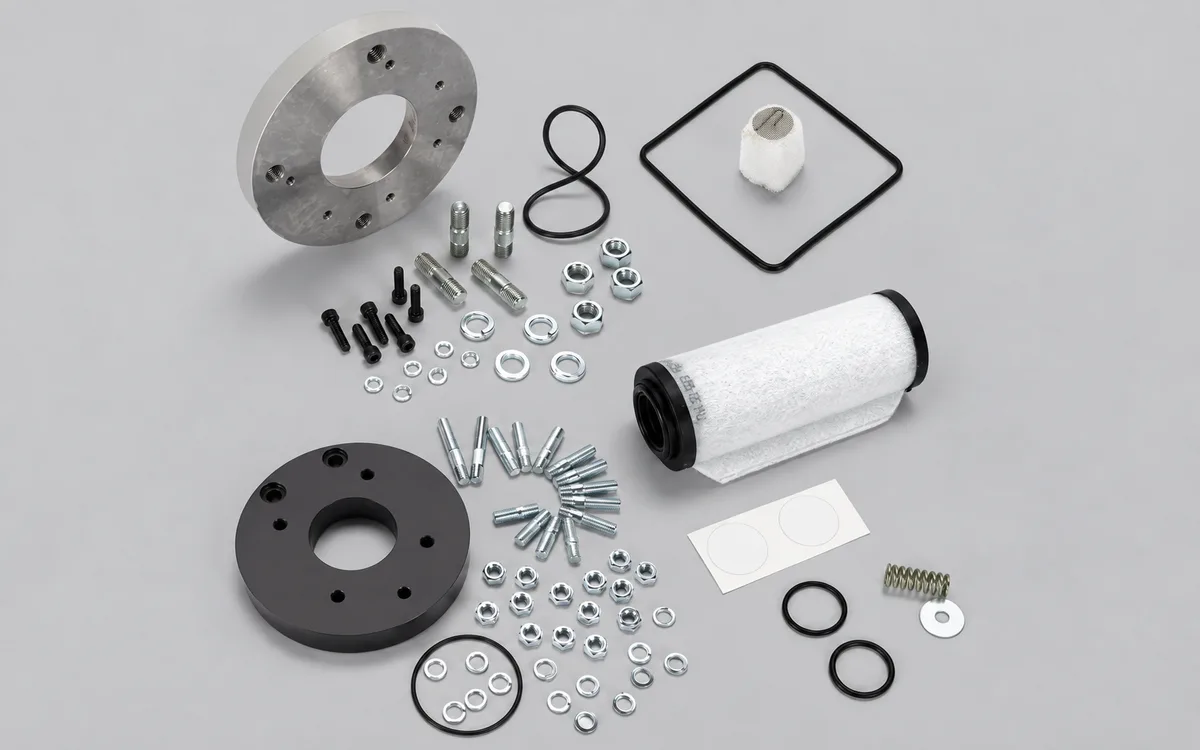
Vacuum pump parts
Genuine vanes, seals, bearings and service kits held in stock.
Learn more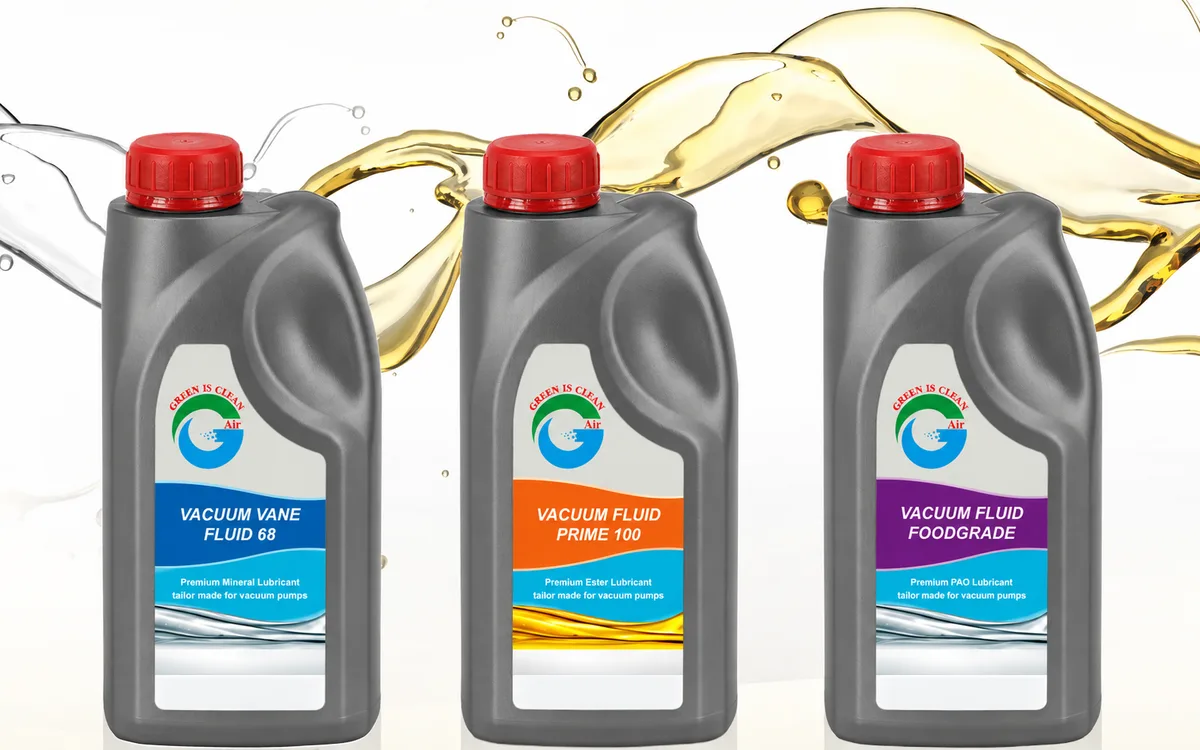
Vacuum pump oil
Mineral, synthetic and chemical-resistant fluids, correctly matched.
Learn more
Vacuum pump service contracts
Planned maintenance at a fixed annual cost.
Learn more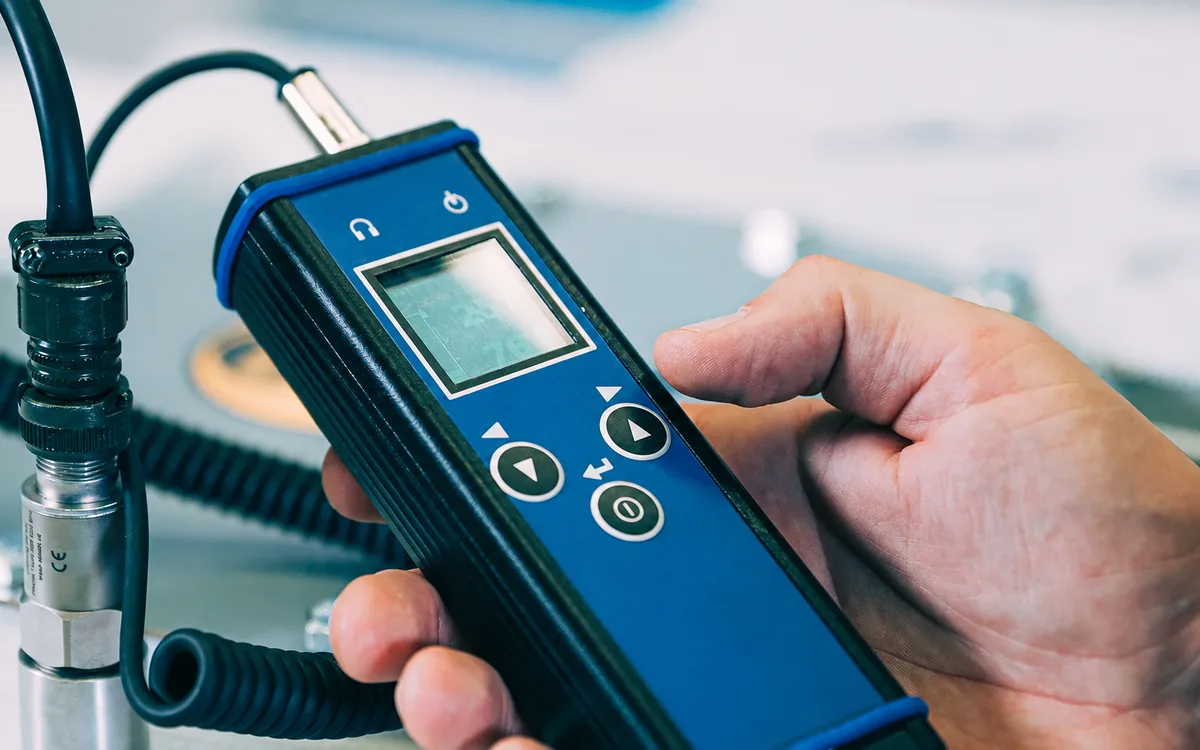
Vacuum system health check
Measure what your system is actually doing before you spend money.
Learn moreNot sure which model you need?
Send us your air demand, working pressure and running hours. Our engineers will size the machine and send a written recommendation, no cost, no obligation.