
Oil-sealed rotary piston pumps
Heavy, tolerant pumps for dirty and demanding process duty.
Technical data
- Working pressure
- 10 – 1,000 bar g
- Motor power
- 3 – 90 kW
- Weight
- 180 – 1,053 kg
Overview
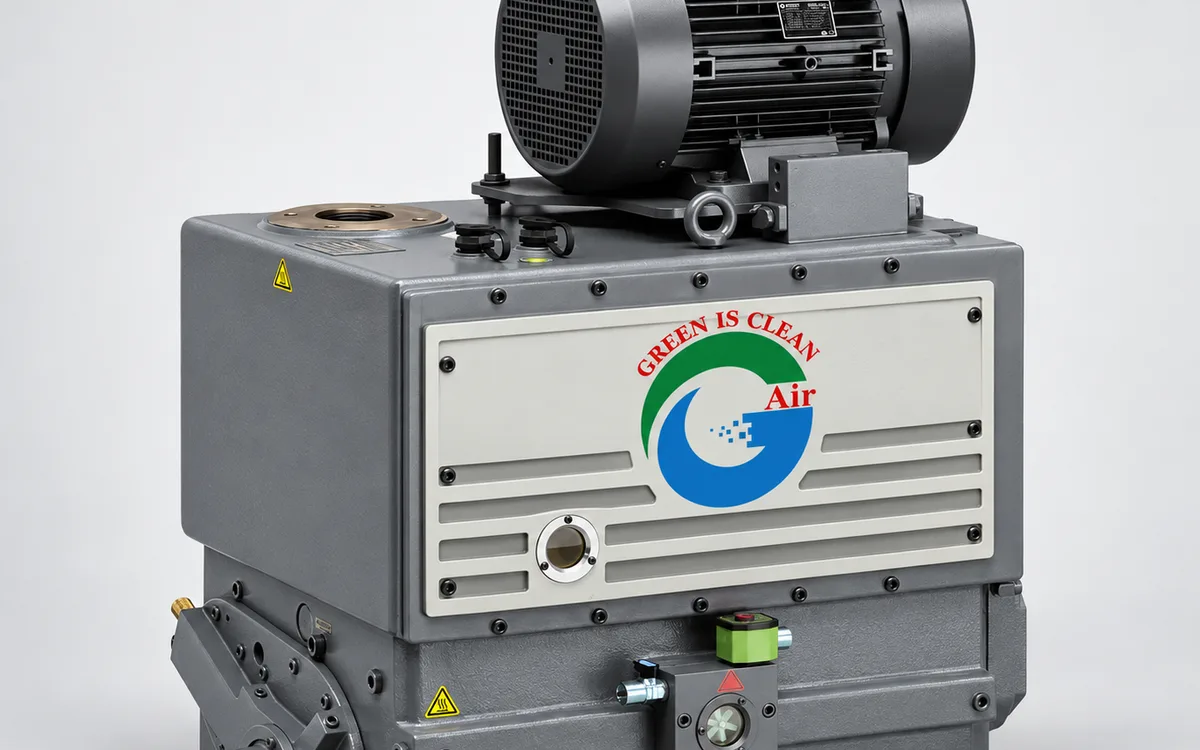
Rotary piston pumps are the heavy industrial option. They are physically large, robustly built and remarkably tolerant of dust, particulates and process carry-over that would destroy a vane pump inside a month.
Where a process is dirty and has to run continuously (vacuum furnaces, metallurgy, salt drying), a rotary piston pump is often the only sensible answer.
Key benefits
Tolerates contamination
Handles dust and particulate carry-over that would wreck a vane pump.
Built for continuous duty
Heavy cast construction with a very long service life.
High pumping speed at low pressure
Maintains speed in the pressure range where lighter pumps fall away.
Rebuildable indefinitely
Designed to be overhauled repeatedly rather than replaced.
How it is built
A piston driven by an eccentric sweeping gas through the chamber, sealed by oil. It is a heavier and more tolerant machine than a vane pump and it is chosen where the duty is dirty or difficult.
The moving parts are large and slow, which is why these pumps survive processes that would finish a vane pump in months.
They are built to be overhauled rather than replaced. On a continuous process that is a very different economic picture from a pump bought to be thrown away.
- Piston and eccentric, sealed by oil
- Large slow moving parts
- Tolerant of dirty and difficult duty
- Built to be overhauled
- Deep ultimate vacuum
- Gas ballast for vapour handling
- Air cooled or water cooled
- Long service life on continuous duty
Controls and monitoring
Vacuum level, hours, oil condition and temperature. On a pump of this size the temperature trend is as informative as anything on the panel.
Oil analysis is worth doing rather than just looking at the sight glass. What is in the oil tells you what the process is doing to the pump long before performance drops.
Alarms on temperature, loss of vacuum and mist filter blockage, with contacts for the plant system.
- Vacuum level and running hours
- Oil analysis rather than a sight glass check
- Temperature trended
- Gas ballast for wet processes
- Mist filter blockage indicated
- Service countdown in hours
- Volt free contacts for plant alarms
- Remote monitoring available
Parts and service
Filters, seals and the scheduled wear items, quoted against the serial number and the process. Two identical pumps on different duties do not take the same interval.
A vacuum pump rarely fails without warning. Ultimate pressure drifting, a longer pump down time and a rising temperature all appear first, which is why those three are measured at every visit.
We test after service rather than simply finishing. The pump down curve and the ultimate pressure achieved go on the report, so you know what you have rather than what was intended.
- Filter and seal kits by interval
- Intervals set by the process, not the calendar
- Ultimate pressure tested after every service
- Pump down curve recorded
- Confirmed against your serial number
- Held in local stock
- Workshop overhaul where testing is needed
- Fixed price under a service plan
Model range
- +1000 mbar
- 152 – 535 m³/h
- Weight
- 180 / 295 kg
- Dimensions L x W x H
- 1082 x 800 x 1157 mm
- 10 mbar with ejector
- 83 m³/h
- Weight
- 600 kg
- Dimensions L x W x H
- 1300 x 1300 x 1900 mm
- +1000 mbar
- 480 – 808 m³/h
- -500 mbar
- 480 – 822 m³/h
- Weight
- 197 / 312 kg
- Dimensions L x W x H
- 1082 x 800 x 1157 mm
- 10 mbar with ejector
- 240 m³/h
- Weight
- 700 kg
- Dimensions L x W x H
- 1400 x 1300 x 2300 mm
- -500 mbar
- 698 – 1330 m³/h
- Weight
- 346 / 535 kg
- Dimensions L x W x H
- 1302 x 1050 x 1269 mm
- +1000 mbar
- 1258 – 1793 m³/h
- -500 mbar
- 1258 – 1907 m³/h
- Weight
- 372 / 561 kg
- Dimensions L x W x H
- 1302 x 1050 x 1269 mm
- 10 mbar with ejector
- 510 m³/h
- Weight
- 900 kg
- Dimensions L x W x H
- 1600 x 1400 x 2500 mm
- +800 mbar
- 900 – 3100 m³/h
- -500 mbar
- 900 – 3100 m³/h
- Dimensions L x W x H
- 1732 x 1900 x 1570 mm
- +1000 mbar
- 2650 – 3972 m³/h
- -500 mbar
- 2650 – 3992 m³/h
- Weight
- 750 / 1053 kg
- Dimensions L x W x H
- 1732 x 1450 x 1760 mm
- 10 mbar with ejector
- 710 m³/h
- Weight
- 950 kg
- Dimensions L x W x H
- 1600 x 1400 x 2500 mm
FAD measured to ISO 1217 Edition 4, Annex C and E at 1 bar a intake, 20°C, 0% humidity. Noise measured to ISO 2151 in free field conditions, tolerance ± 3 dB(A). Water-cooled versions of every model are available. Ask us for their sheet.
Frequently asked questions
What is a rotary piston pump?
A heavy, slow-running oil-sealed pump where an eccentric piston sweeps the chamber. Built for punishment rather than for finesse.
What makes it different from a vane pump?
There are no sliding vanes to wear or break. It tolerates dust, particulates and rough industrial conditions that would destroy a vane pump.
Where is it used?
Heat treatment, furnaces, metallurgy, freeze drying and large chamber pump-down, heavy industrial work with dirty processes.
What vacuum does it reach?
Around 0.5 mbar single stage, lower in two stages. Comparable with a vane pump but with far greater tolerance for contamination.
How long do they last?
Decades. These are genuinely long-life machines and it is common to find them running twenty or thirty years after installation.
Are they noisy?
Yes, and heavy, and they need a solid base. They are plant-room machines, not something to site next to an office wall.
What maintenance do they need?
Oil changes and periodic bearing and seal work. Simple, robust and forgiving, provided the oil is monitored.
Can they take particulates?
Better than almost anything else in this class, with correct inlet filtration. That tolerance is precisely why they are still specified.
Are they efficient?
Less so than modern dry technologies. You are trading energy efficiency for robustness, and on the right process that is a fair trade.
Should we replace ours?
Only if the running cost or the oil handling genuinely justifies it. Many of these pumps owe nobody anything and will outlast their replacements.
Related products
Not sure which model you need?
Send us your air demand, working pressure and running hours. Our engineers will size the machine and send a written recommendation, no cost, no obligation.