
7.5 – 22 kW screw compressors
The workhorse range for most small and medium factories.
Technical data
- Free air delivery
- 0.4 – 3.7 m³/min
- Working pressure
- 8 – 13 bar g
- Motor power
- 8 – 22 kW
- Weight
- 205 – 386 kg
- Noise level
- 67 – 71 dB(A)
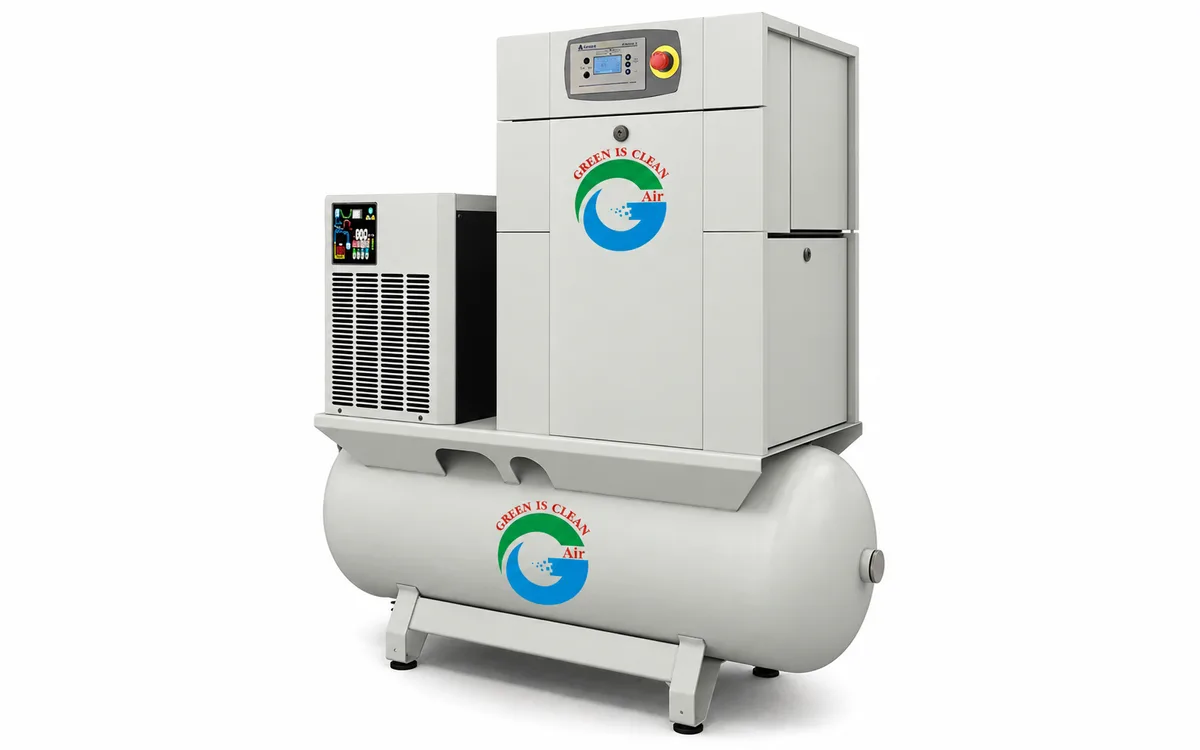
Overview
If you are running a general engineering shop, a small textile unit or a bottling line, this is almost certainly the band you are in. It is also where the difference between a fixed-speed and a variable-speed machine starts to show up on the electricity bill.
Every GAC-S unit in this range is available as a fixed-speed machine or as a GAC-SV variable-speed machine. Where air demand swings during the day, and it nearly always does, the variable-speed version typically cuts compressed air energy use by 25 to 35%.
Key benefits
Direct drive, no belts
Motor and airend are coupled directly. Nothing to re-tension, nothing slipping quietly and wasting 5% of your power.
Variable speed where it pays
The GAC-SV motor tracks demand instead of blowing air off-load. Payback on the price difference is usually 14 to 24 months at two shifts.
Built for hot climates
Rated for 46 °C ambient as standard, with a high-ambient package to 52 °C for uncooled plant rooms in the Gulf.
Everything in one cabinet
Optional integrated dryer and line filters mean one delivery, one installation and one point of service.
How it is built
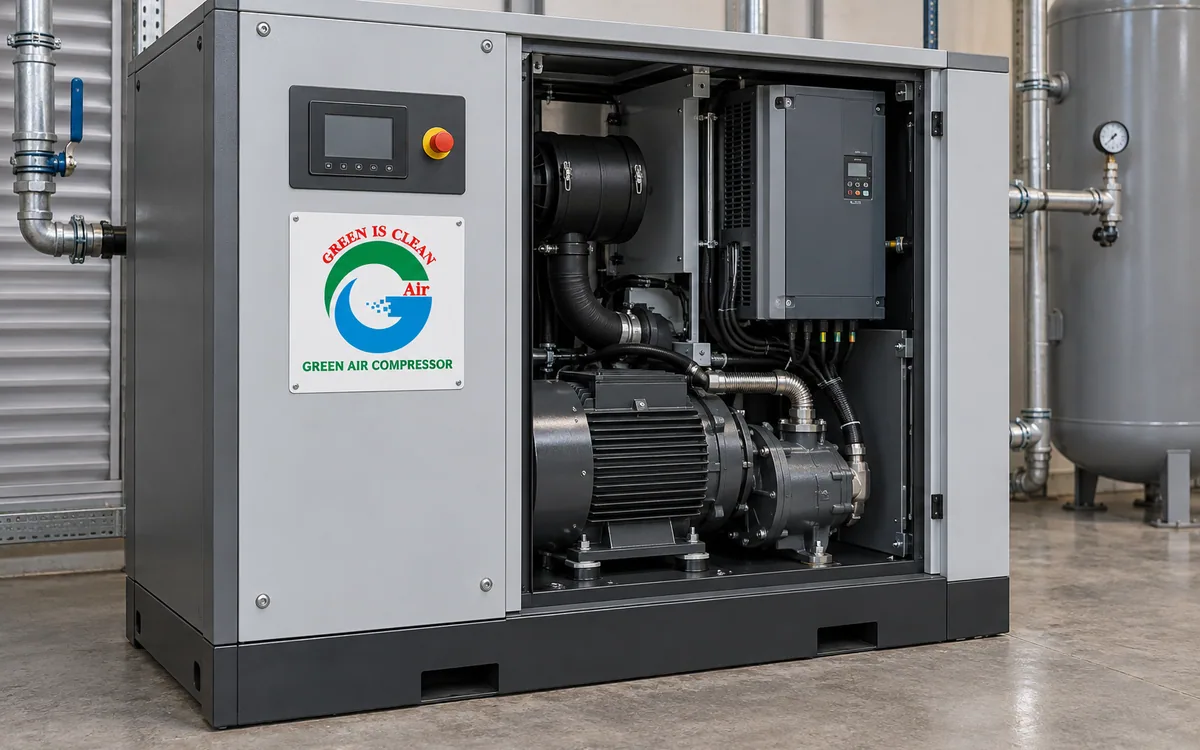
This is the size band most factories actually buy, so it is built to be left alone. The airend is direct driven, the cooler is oversized for hot climates, and the electrics are rated for the ambient the machine will really see rather than a laboratory figure.
Cooling air is drawn in low and pushed out high, so the machine is not breathing its own hot exhaust when it sits against a wall. In a Gulf plant room in August that single detail decides whether a compressor runs all day or trips at two in the afternoon.
Panels come off without tools and the service points are grouped on one side. An engineer can do a full service standing in one place, which is why these machines tend to get serviced properly.
- Direct drive airend, no belt losses
- Cooler sized for high ambient temperatures
- Cooling air in low and out high
- Service points grouped on one side
- Tool free panels
- Rated for one hundred per cent duty
- Star delta starting as standard
- Variable speed available across the band
What the controller does
The controller holds the machine at a pressure band rather than a single number, so it is not loading and unloading every few seconds when demand is light. That alone is worth several per cent on the electricity bill.
Running hours, load percentage, discharge temperature and the service countdown are on the home screen. Trend data is what an engineer reads, because a discharge temperature that has been climbing for three weeks shows on a graph long before it trips the machine.
It will run two machines in sequence and swap the lead unit on a timer, so both age evenly instead of one doing all the work while the other sits as an expensive spare.
- Pressure band control rather than a single setpoint
- Running hours and load percentage
- Discharge temperature trend
- Service countdown in hours
- Sequencing for two machines with lead swap
- Scheduled start and stop by shift pattern
- Fault history log
- Remote monitoring available
Parts and service kits
Kits are made up by interval. Air and oil filters with an oil sample at two thousand hours, then the separator, the oil change and a cooler clean at four thousand, then a full performance check and a motor regrease at eight thousand.
The separator is the part most often bought on price and most often regretted. A cheap element raises the pressure drop across the vessel, and you pay for that difference in power every hour the machine runs.
Everything in the kit is to the specification the machine was performance tested on, including the fluid. Mixing fluids is the commonest cause of separator failure we get called out to, and it is completely avoidable.
- Two thousand hour consumable kit
- Four thousand hour separator and oil kit
- Eight thousand hour major service
- Genuine separator to the tested pressure drop
- Compressor fluid to the original specification
- Oil analysis included with the kit
- Local stock in every country we trade in
- Priced in advance on a service plan
Model range
Fixed speed
- 8 bar g
- 0.99 m³/min
- 10 bar g
- 0.97 m³/min
- 13 bar g
- 0.80 m³/min
- Noise level
- 70 dB(A)
- Weight
- 205 kg
- Dimensions L x W x H
- 667 × 630 × 1050 mm
- 8 bar g
- 1.58 m³/min
- 10 bar g
- 1.39 m³/min
- 13 bar g
- 1.14 m³/min
- Noise level
- 70 dB(A)
- Weight
- 219 kg
- Dimensions L x W x H
- 667 × 630 × 1050 mm
- 7.5 bar g
- 2.70 m³/min
- 10 bar g
- 2.26 m³/min
- 13 bar g
- 1.80 m³/min
- Noise level
- 70 dB(A)
- Weight
- 335 kg
- Dimensions L x W x H
- 787 × 698 × 1202 mm
- 7.5 bar g
- 3.25 m³/min
- 10 bar g
- 2.74 m³/min
- 13 bar g
- 2.34 m³/min
- Noise level
- 71 dB(A)
- Weight
- 361 kg
- Dimensions L x W x H
- 787 × 698 × 1202 mm
- 7.5 bar g
- 3.65 m³/min
- 10 bar g
- 3.21 m³/min
- 13 bar g
- 2.61 m³/min
- Noise level
- 71 dB(A)
- Weight
- 367 kg
- Dimensions L x W x H
- 787 × 698 × 1202 mm
Variable speed
- 8 bar g
- 0.46 – 0.98 m³/min
- 10 bar g
- 0.43 – 0.95 m³/min
- 13 bar g
- 0.45 – 0.77 m³/min
- Noise level
- 67 dB(A)
- Weight
- 225 kg
- Dimensions L x W x H
- 667 × 630 × 1050 mm
- 8 bar g
- 0.52 – 1.56 m³/min
- 10 bar g
- 0.51 – 1.39 m³/min
- 13 bar g
- 0.49 – 1.07 m³/min
- Noise level
- 67 dB(A)
- Weight
- 234 kg
- Dimensions L x W x H
- 667 × 630 × 1050 mm
- 7.5 bar g
- 0.92 – 2.60 m³/min
- 10 bar g
- 0.86 – 2.18 m³/min
- 13 bar g
- 0.83 – 1.67 m³/min
- Noise level
- 67 dB(A)
- Weight
- 365 kg
- Dimensions L x W x H
- 787 × 698 × 1202 mm
- 7.5 bar g
- 1.33 – 3.05 m³/min
- 10 bar g
- 1.28 – 2.62 m³/min
- 13 bar g
- 1.22 – 2.20 m³/min
- Noise level
- 68 dB(A)
- Weight
- 381 kg
- Dimensions L x W x H
- 787 × 698 × 1202 mm
- 7.5 bar g
- 1.04 – 3.54 m³/min
- 10 bar g
- 0.93 – 3.15 m³/min
- 13 bar g
- 0.90 – 2.66 m³/min
- Noise level
- 69 dB(A)
- Weight
- 386 kg
- Dimensions L x W x H
- 787 × 698 × 1202 mm
FAD measured to ISO 1217 Edition 4, Annex C and E at 1 bar a intake, 20°C, 0% humidity. Noise measured to ISO 2151 in free field conditions, tolerance ± 3 dB(A). Water-cooled versions of every model are available. Ask us for their sheet.
Frequently asked questions
Why is this the most common size band?
Because it covers the air demand of most small and medium factories: general engineering, small textile units, packaging and bottling lines all land here.
How much air does 7.5 kW give me?
About 1.1 m³/min (39 cfm) at 8 bar. A 22 kW machine gives around 3.6 m³/min (127 cfm).
Is variable speed worth it in this band?
Usually yes, because demand in a factory this size almost always swings. Payback is typically 14–24 months on two shifts. On a constantly loaded duty it may never pay and we will say so.
Should I get the integrated dryer version?
If you have the floor space either way, the integrated version is simpler, one delivery, one installation, one service visit and matched sizing between compressor and dryer.
Direct drive or belt drive?
Direct. There is nothing to re-tension and nothing slipping quietly and wasting around 5% of your power, which a worn belt does without ever announcing itself.
What electrical supply does a 22 kW machine need?
Three phase with star-delta starting as standard. We give the full-load and starting currents with the quotation so your electrician can size cable and protection properly.
Will it cope with a 46 °C plant room?
As standard, yes. Above that specify the high-ambient package, which is rated to 52 °C for rooms with no mechanical ventilation.
How big a receiver do I need?
Six to ten litres per cfm. A 15 kW machine at 83 cfm wants roughly a 500–800 litre receiver to stop it short-cycling.
Can I run two of these instead of one bigger machine?
Often a better arrangement. Two 11 kW machines with sequencing give you redundancy and better part-load efficiency than one 22 kW that spends half its life unloaded.
What are the service intervals?
Air and oil filters plus oil sample at 2,000 hours. Separator, oil change and cooler clean at 4,000. Full performance check and motor regrease at 8,000.
Related products
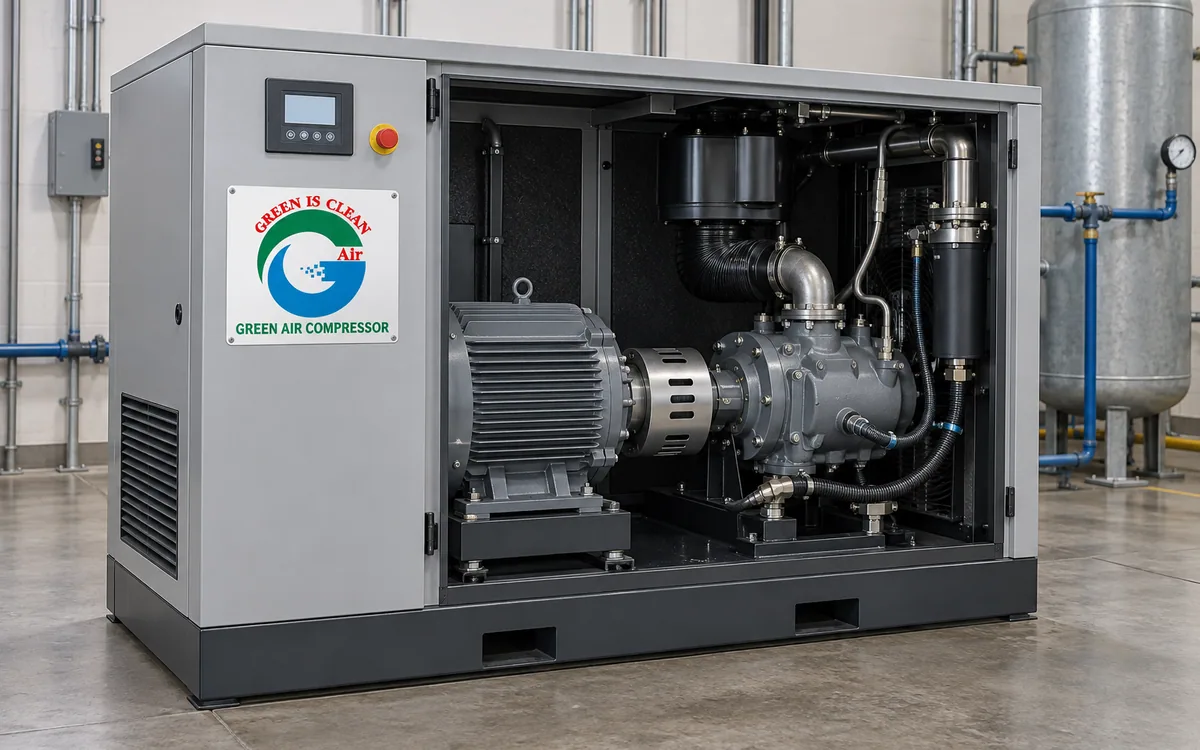
Direct driven screw compressors
Motor coupled straight to the airend. 55 to 250 kW, nothing to slip.
- Free air delivery
- 7.8 – 43.0 m³/min
- Working pressure
- 7 – 13 bar g
- Motor power
- 55 – 250 kW
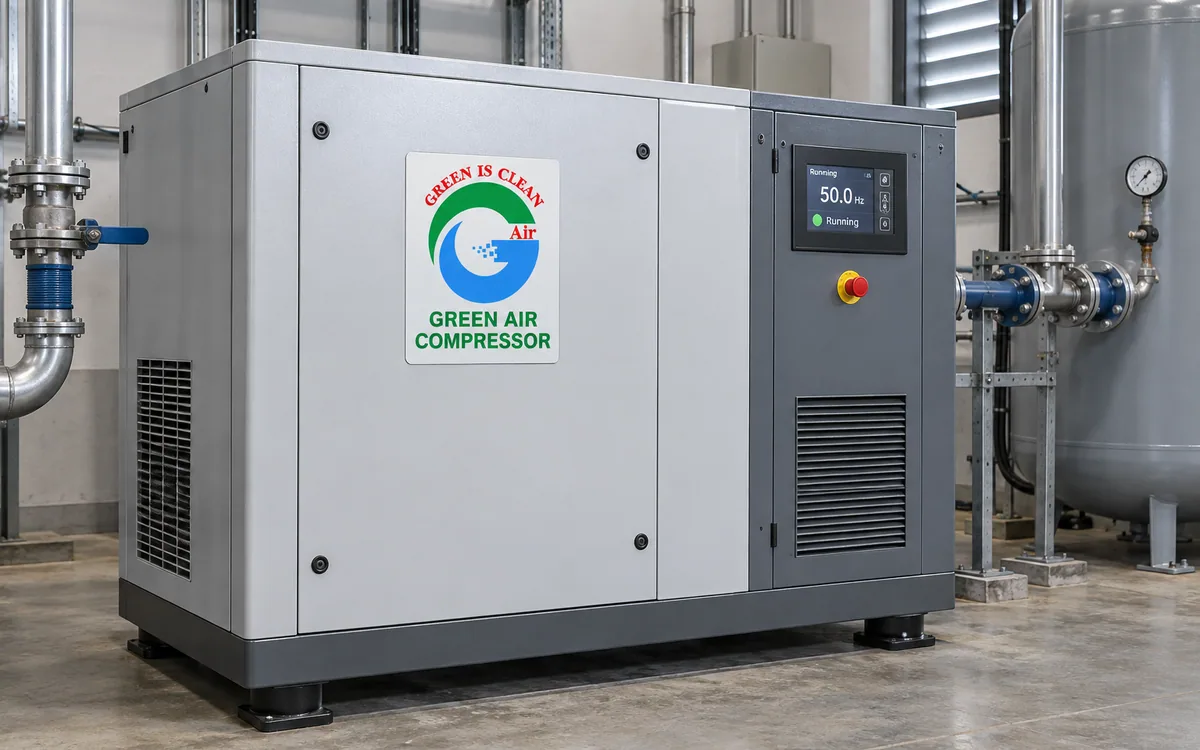
Variable speed screw compressors
The motor follows the demand. 7.5 to 280 kW, 8 to 13 bar g.
- Free air delivery
- 0.3 – 50.0 m³/min
- Working pressure
- 8 – 13 bar g
- Motor power
- 8 – 280 kW
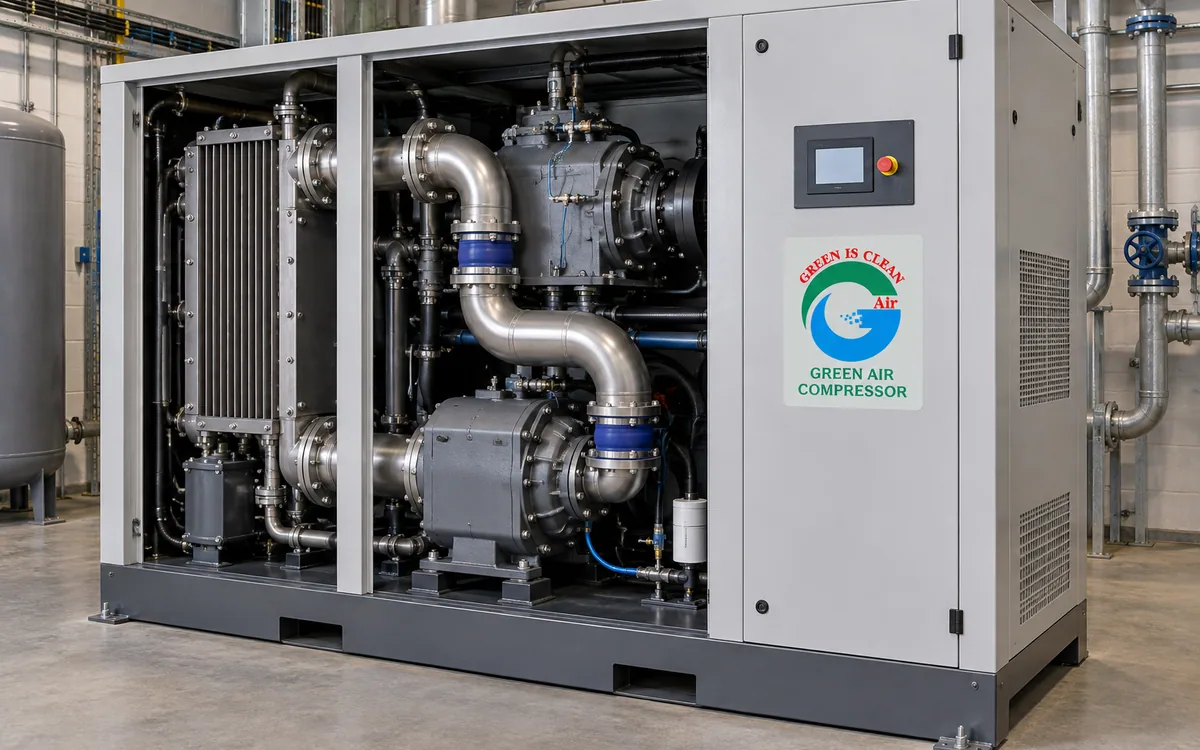
Two stage screw compressors
Compression in two steps. 45 to 500 hp, 4.5 to 12.5 bar g.
- Free air delivery
- 6.6 – 101.3 m³/min
- Working pressure
- 5 – 13 bar g
- Motor power
- 45 – 355 kW
Permanent magnet screw compressors
IE4 and IE5 class motors with variable speed built in. 20 to 500 hp.
- Free air delivery
- 0.3 – 109.0 m³/min
- Working pressure
- 7 – 30 bar g
- Motor power
- 8 – 55 kW
Not sure which model you need?
Send us your air demand, working pressure and running hours. Our engineers will size the machine and send a written recommendation, no cost, no obligation.