
55 – 75 kW screw compressors
High-flow machines for continuous, multi-shift production.
Technical data
- Free air delivery
- 1.6 – 13.5 m³/min
- Working pressure
- 5 – 13 bar g
- Motor power
- 55 – 75 kW
- Weight
- 950 – 1,110 kg
- Noise level
- 69 – 71 dB(A)
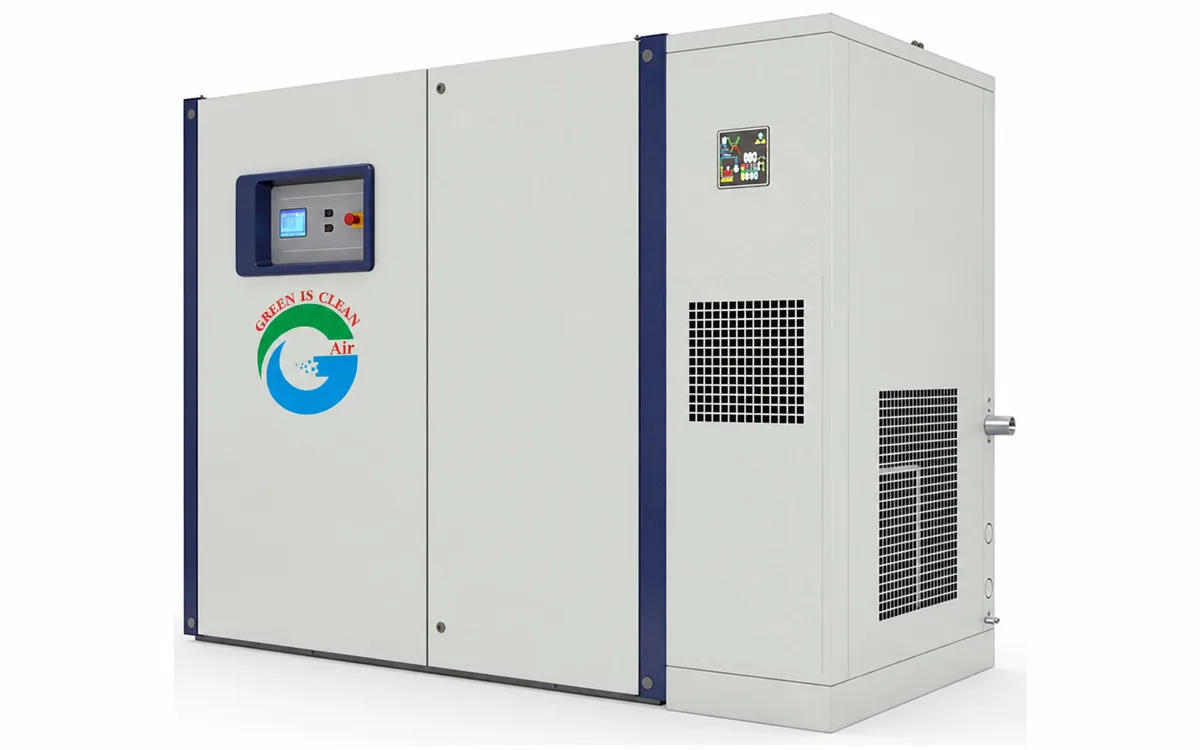
Overview
Machines in this band rarely run alone. They usually sit in a plant room with a second compressor and a controller deciding which one leads. Getting that arrangement right matters more than the specification of any single unit.
We size this range around the whole room: base load on a fixed-speed machine, trim on a variable-speed machine, and a sequencer that rotates the lead so both units age evenly rather than one wearing out first.
Key benefits
Designed to run in pairs
Multi-machine sequencing is built in. No external control panel, no extra wiring cabinet.
Larger cooler surface
Oversized aftercooler keeps discharge temperature down in 45 °C plant rooms, which is what actually protects the oil and the separator.
IE4 motors as standard
Premium efficiency motors, not an upgrade option. Two to three percent of a 75 kW bill is not a rounding error.
Ten-year airend programme
Scheduled airend inspection and exchange keeps a known-good unit on your floor instead of a gamble.
How it is built
This is continuous duty plant. The airend runs slowly, the oil charge is large enough to carry heat away without working hard, and the cooler is sized so the machine is not sitting at its temperature limit on the hottest day of the year.
Both air cooled and water cooled builds are made. Water cooling keeps the heat out of the plant room entirely, which in a Gulf summer is often the difference between a machine that runs and one that trips at the same time every afternoon.
Access is designed for the engineer. Panels lift off, the service points are grouped, and the oil and separator can be changed without disturbing pipework.
- Slow running airend built for continuous duty
- Large oil charge for stable temperature
- Air cooled or water cooled on every model
- Service points grouped for quick access
- Low vibration, level slab foundation
- Star delta standard, soft start optional
- Variable speed across the band
- Heat recovery available
What the controller does
Pressure, load, hours, discharge temperature and service countdown on one screen, with trend graphs one level down. The trend is what matters at this size, because a machine this big rarely fails without weeks of warning.
It will sequence several compressors, swap the lead unit on a timer so they age evenly, and hold the system at a pressure band rather than chasing a single number.
Remote monitoring is fitted as standard. The same figures reach your phone and our service desk, so the conversation about a rising temperature happens before the stoppage rather than after it.
- Pressure band control across several machines
- Lead machine swap on a timer
- Discharge temperature and load trends
- Service countdown in hours
- Scheduled start and stop by shift
- Remote monitoring as standard
- Fault history kept on the machine
- Automatic restart after a power failure
Parts and service kits
Kits are built by interval and confirmed against the serial number, because air cooled and water cooled machines of the same model take different parts.
The separator is the part that quietly costs money. A higher pressure drop across the vessel is paid for in power every hour the machine runs, and at seventy five kilowatts that is a number worth caring about.
Compressor fluid is supplied to the specification the machine was tested on. Mixing fluids is the most common cause of separator failure we attend, and it is entirely avoidable.
- Consumable kit at two thousand hours
- Separator and oil kit at four thousand
- Major service at eight thousand
- Cooler clean included on water cooled builds
- Genuine separator to the tested pressure drop
- Fluid to the original specification
- Confirmed against your serial number
- Local stock in every country we trade in
Model range
Fixed speed
- 7.5 bar g
- 11.10 m³/min
- 10 bar g
- 10.00 m³/min
- 13 bar g
- 8.90 m³/min
- Noise level
- 71 dB(A)
- Weight
- 1,110 kg
- Dimensions L x W x H
- 1448 × 968 × 1806 mm
- 8 bar g
- 13.20 m³/min
Variable speed
- 5 – 10 bar g
- 1.60 – 10.50 m³/min
- 6 – 10 bar g
- 2.50 – 11.07 m³/min
- 6 – 13 bar g
- 2.50 – 10.94 m³/min
- Noise level
- 70 dB(A)
- Weight
- 950 kg
- Dimensions L x W x H
- 1448 × 968 × 1806 mm
- 5 – 13 bar g
- 2.80 – 13.50 m³/min
FAD measured to ISO 1217 Edition 4, Annex C and E at 1 bar a intake, 20°C, 0% humidity. Noise measured to ISO 2151 in free field conditions, tolerance ± 3 dB(A). Water-cooled versions of every model are available. Ask us for their sheet.
Frequently asked questions
Should I run one machine or two at this size?
Almost always two. A fixed-speed machine on base load with a variable speed machine trimming gives redundancy and better part-load efficiency than one large unit.
What does sequencing do?
It decides which machine leads and rotates the lead so both age evenly, instead of one wearing out while the other sits idle. It is built in: no external control panel needed.
Why does cooler size matter so much here?
Because discharge temperature is what protects the oil and the separator. An oversized aftercooler is what keeps a 75 kW machine within limits in a 45 °C plant room.
Are IE4 motors worth it?
At this size, yes. Two to three percent of a 75 kW bill running two shifts is a meaningful annual figure, which is why IE4 is standard here rather than an upgrade.
How much air do I get?
About 9.8 m³/min (346 cfm) at 55 kW and 13.2 m³/min (466 cfm) at 75 kW, both at 8 bar.
What is the airend exchange programme?
Scheduled inspection and a rebuilt exchange unit at interval, so you put a known-good airend on the floor instead of gambling on how much life is left in the old one.
Do I need a bigger receiver for two machines?
Usually one properly sized receiver serves both. Six to ten litres per cfm of combined output, positioned so both machines feed it.
What supply do two 75 kW machines need?
Size the supply for both running plus the starting current of whichever starts last. We provide the figures so the switchgear is specified once, correctly.
Can I add a third machine later?
Yes, the controller sequences up to six machines, so the plant room can grow without replacing the control system.
How do I compare two quotations at this size?
On specific energy, kW per m³/min at your working pressure, measured to ISO 1217. Purchase price is a small share of what you will actually spend.
Related products
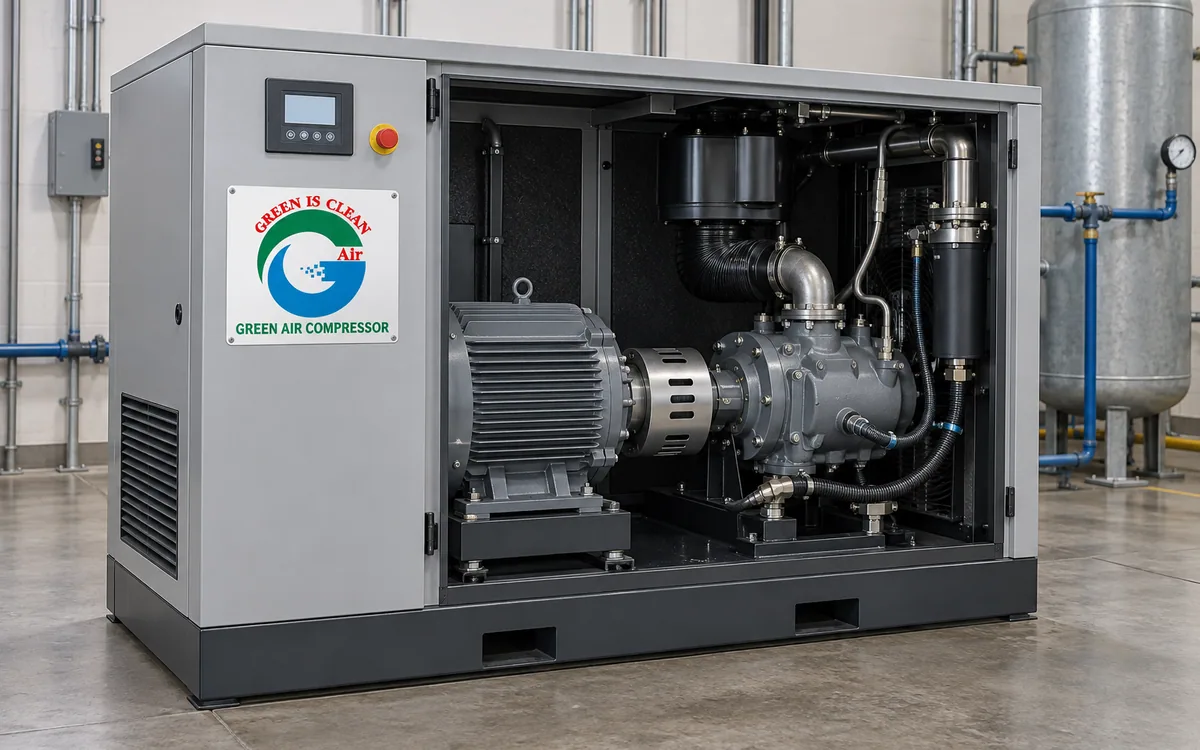
Direct driven screw compressors
Motor coupled straight to the airend. 55 to 250 kW, nothing to slip.
- Free air delivery
- 7.8 – 43.0 m³/min
- Working pressure
- 7 – 13 bar g
- Motor power
- 55 – 250 kW
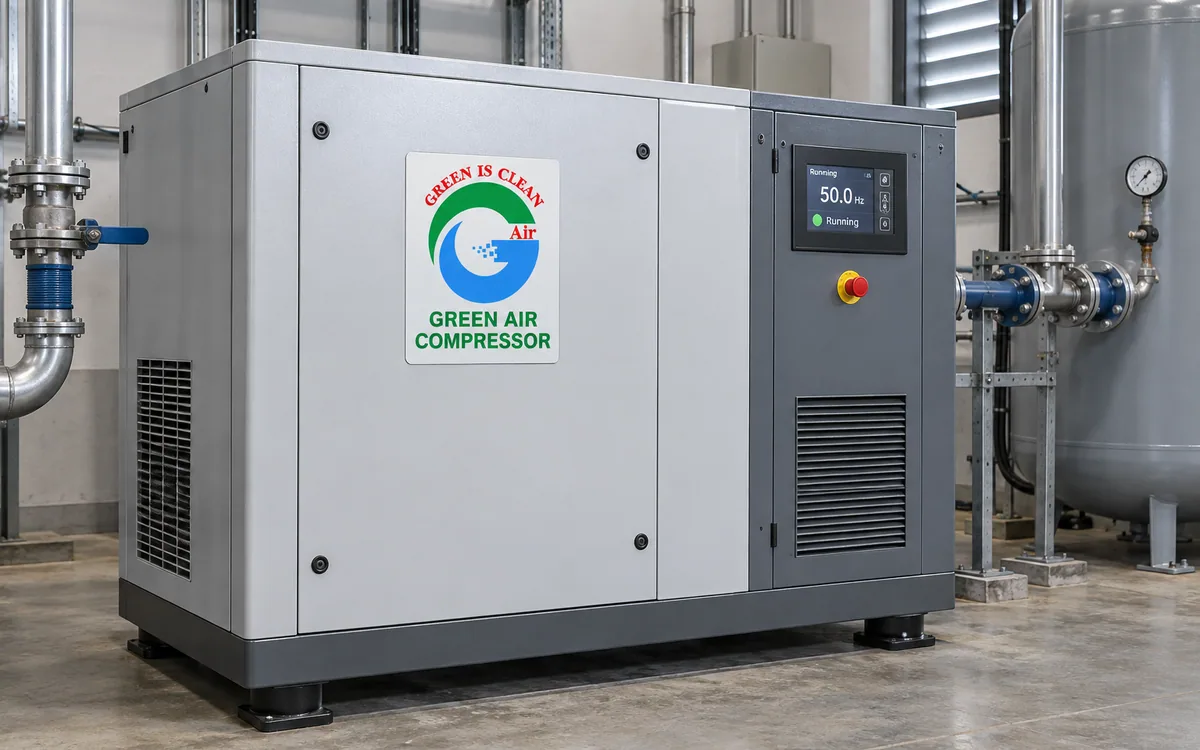
Variable speed screw compressors
The motor follows the demand. 7.5 to 280 kW, 8 to 13 bar g.
- Free air delivery
- 0.3 – 50.0 m³/min
- Working pressure
- 8 – 13 bar g
- Motor power
- 8 – 280 kW
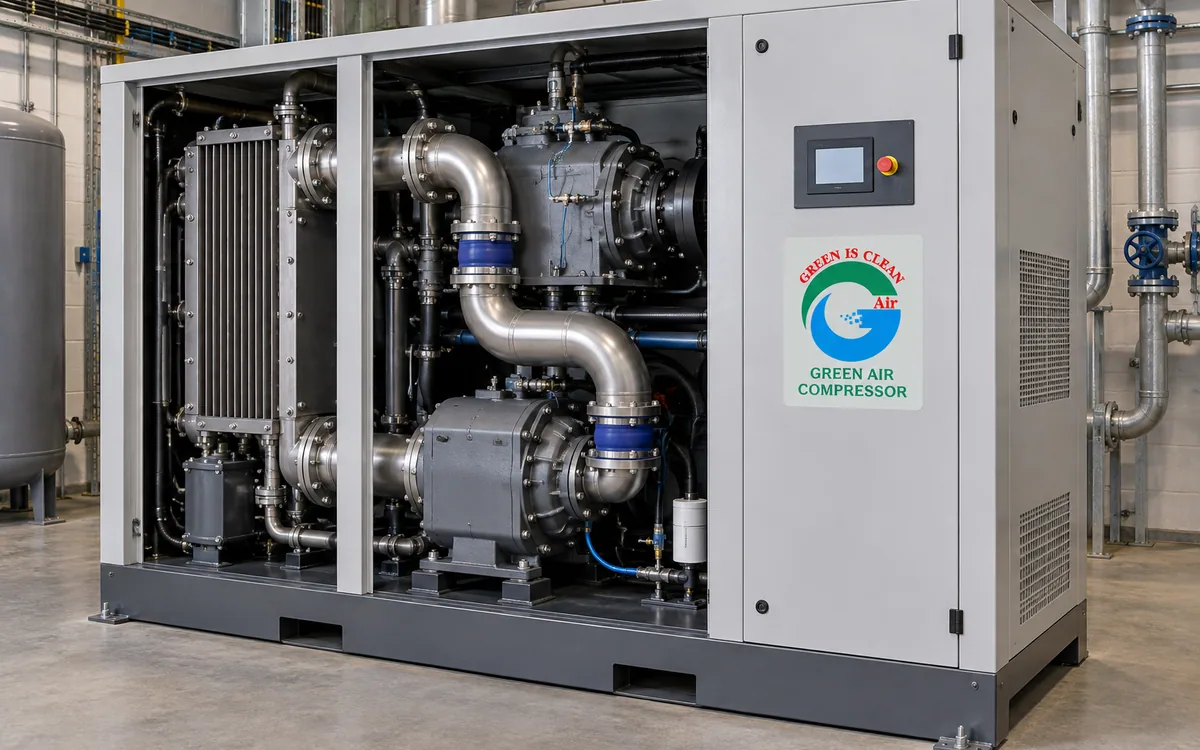
Two stage screw compressors
Compression in two steps. 45 to 500 hp, 4.5 to 12.5 bar g.
- Free air delivery
- 6.6 – 101.3 m³/min
- Working pressure
- 5 – 13 bar g
- Motor power
- 45 – 355 kW
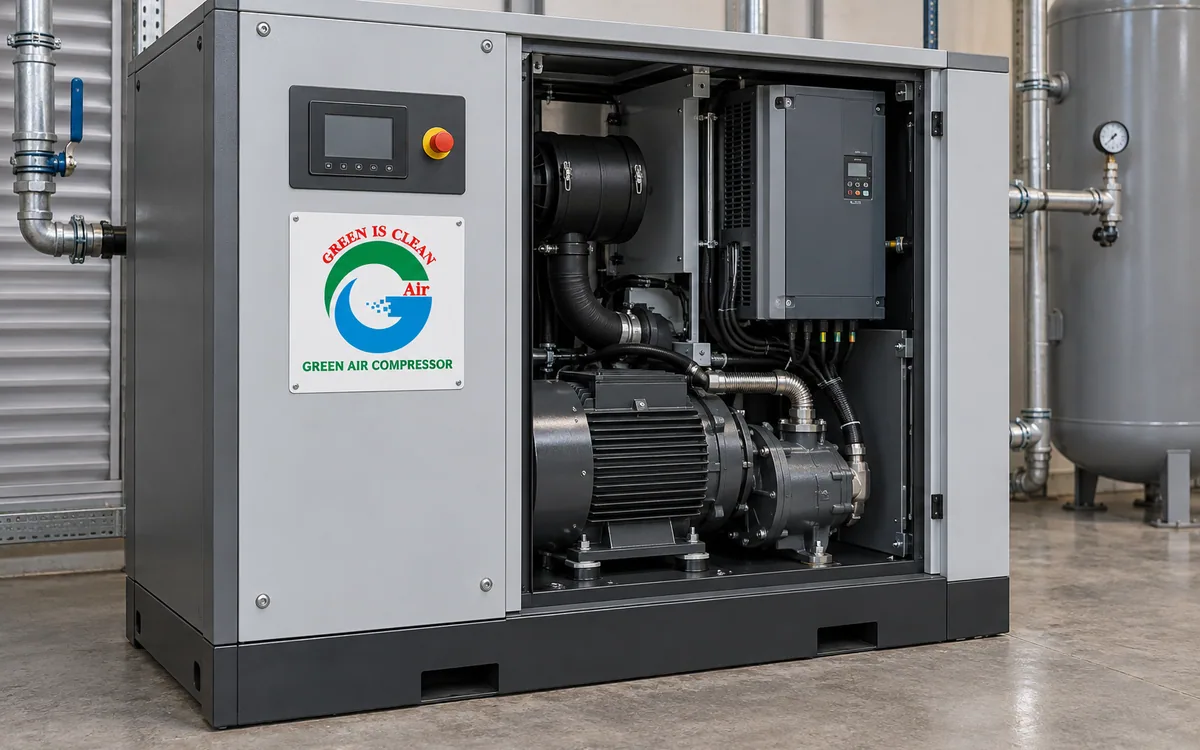
Permanent magnet screw compressors
IE4 and IE5 class motors with variable speed built in. 20 to 500 hp.
- Free air delivery
- 0.3 – 109.0 m³/min
- Working pressure
- 7 – 30 bar g
- Motor power
- 8 – 55 kW
Not sure which model you need?
Send us your air demand, working pressure and running hours. Our engineers will size the machine and send a written recommendation, no cost, no obligation.