
Remote connectivity and monitoring
See pump condition and get warned before a failure.
Overview
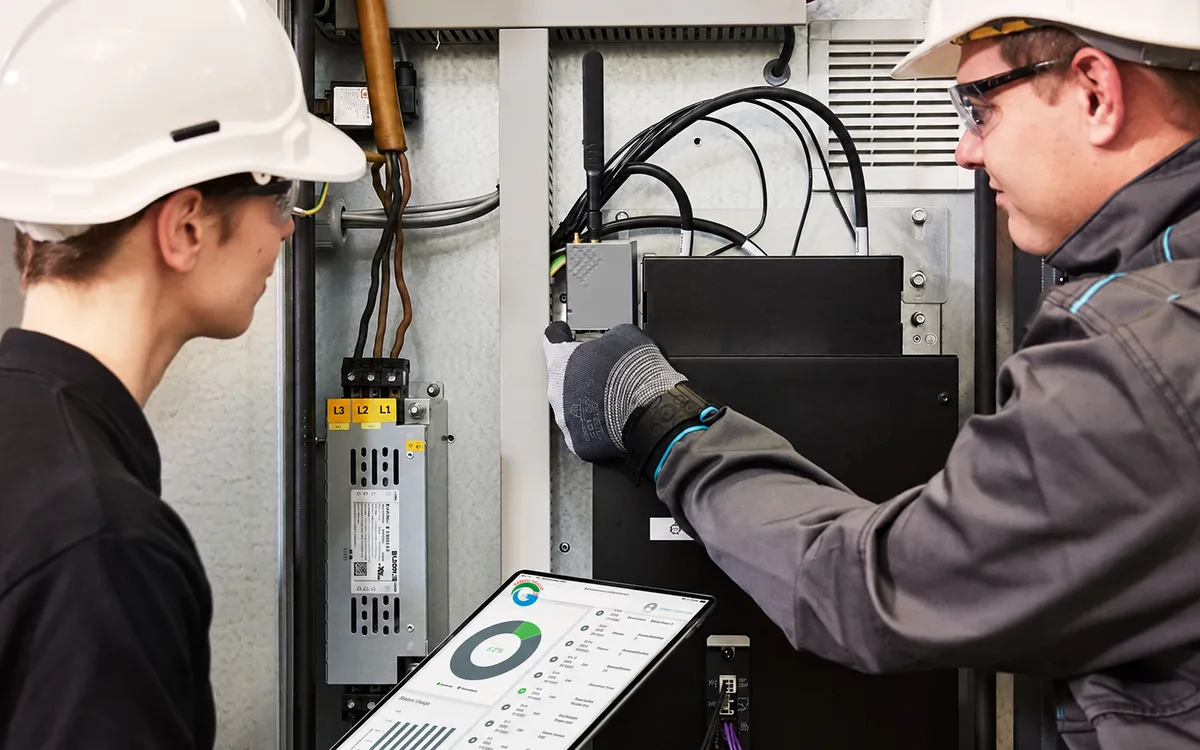
A monitoring module on each pump reports running hours, temperature, power draw and vacuum level continuously. Trends show up long before an alarm does, a bearing temperature drifting up over three weeks is a service visit, not a breakdown.
You see the same dashboard we do, so nothing about the condition of your equipment is hidden behind a service contract.
Key benefits
Warning, not alarm
Trend analysis flags a developing problem weeks before it stops the pump.
Service by condition
Intervals set by how the machine is actually running, not by a fixed calendar.
Shared dashboard
You see everything we see. No hidden data.
Works on existing pumps
Retrofit modules available for installed equipment, including other makes.
What it watches
Ultimate pressure, pump down time, running hours, temperature and power. Those five together describe a vacuum pump completely enough to predict most of what goes wrong with it.
The point is the trend rather than the reading. A single measurement tells you very little and a curve over six weeks tells you nearly everything.
Alerts go to you and to the engineer who covers your area at the same time, which is usually how a problem becomes a planned visit instead of a stoppage.
- Ultimate pressure and pump down time
- Running hours, temperature and power
- Trends rather than single readings
- Alerts to you and to our engineer together
- Thresholds set to your process
- Works on most pumps, new or existing
- Retrofit sensors where needed
- No plant network access required
Fitting it to what you already have
The pump does not need to be modern. It needs somewhere to fit a gauge and a probe, and most pumps have both.
We fit the sensors during a normal service visit rather than as a separate project, which keeps the cost and the disruption down.
Data goes out over a mobile connection so your IT department does not have to be involved, which is usually a relief to everybody.
- Retrofits to existing pumps
- Fitted during a normal service visit
- Mobile connection, no plant network needed
- No IT project required
- Sensors supplied and calibrated
- Works across mixed makes
- Data kept and exportable
- Thresholds tuned after the first month
What it changes
Servicing stops being a calendar exercise. Visits happen when the data says they are needed, which is sometimes sooner and quite often later.
Problems become planned work. A pump drifting towards its limit is dealt with on a Tuesday rather than at three in the morning on a Sunday.
And the record exists. For a regulated process the continuous record is worth having on its own.
- Visits driven by data, not the calendar
- Intervals often lengthen, not shorten
- Problems dealt with as planned work
- Continuous record for regulated processes
- Evidence for validation and audit
- Fewer emergency call outs
- Reports issued monthly
- Included with higher service tiers
Frequently asked questions
What does remote monitoring actually watch?
Vacuum level, temperature, motor current, running hours and alarms: continuously, on every connected pump, without anyone walking the plant.
What can it tell us that a monthly walk cannot?
What happens at 3 a.m. Most degradation shows up as a drift over weeks, and nobody standing in front of a pump for two minutes will ever see it.
Does it prevent breakdowns?
It gives warning. Rising temperature, falling vacuum and climbing current usually appear days or weeks before a failure, and that is enough time to plan.
How is it connected?
Sensors to a gateway, then over your network or a mobile connection. We work with your IT rather than around them.
Is our data safe?
It is your data. Outbound connection only, encrypted, and we will sign whatever your IT policy requires before anything is installed.
Do we see it too?
Yes, through a dashboard and alerts to your own team. It is not a system that only we can read.
Can it work on older pumps?
Usually yes, with retrofit sensors. The pump does not need to be modern. It just needs somewhere to fit a gauge and a probe.
What do you do with the alerts?
We review them and contact you with a recommendation, not just a notification. An alert nobody acts on is worse than no alert.
Does it save money?
Through avoided downtime and better-planned service, usually yes. On a production-critical pump, one prevented stoppage typically covers several years of monitoring.
What does it cost?
A one-off installation and a modest monthly fee per pump, and it is included at the higher contract levels.
Related products
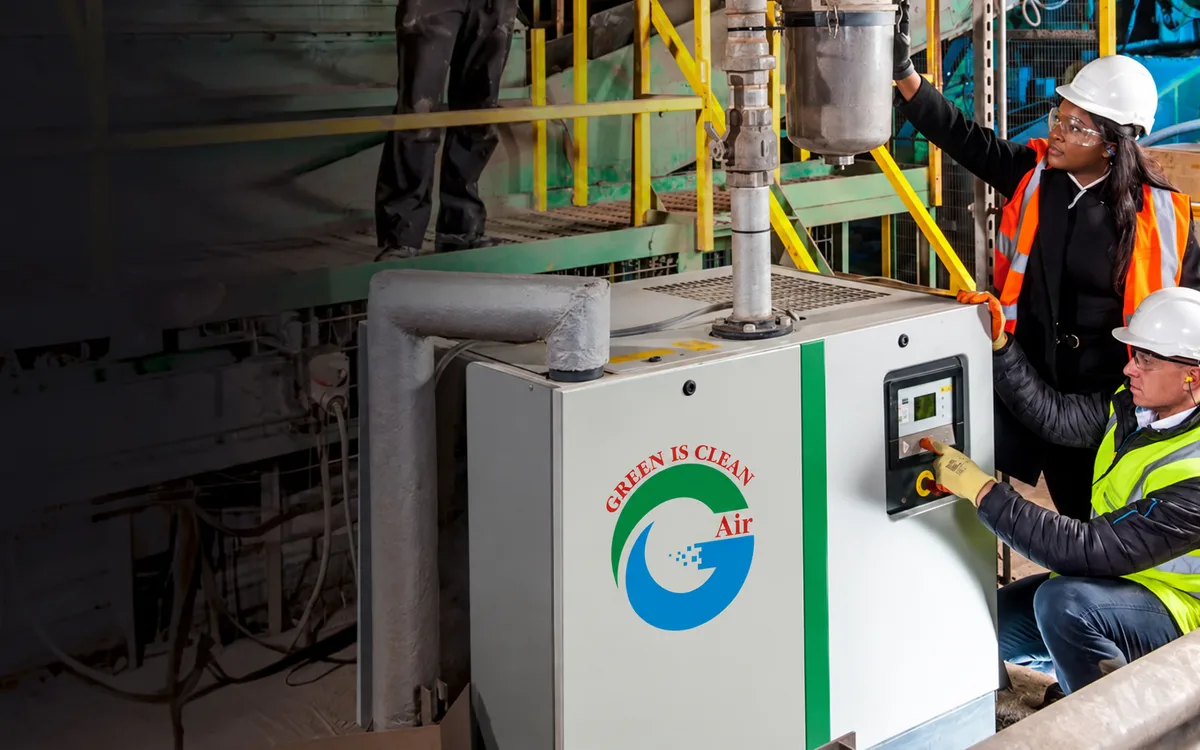
Vacuum pump repair and overhaul
Workshop rebuild with test certificate, or exchange from stock.
Learn more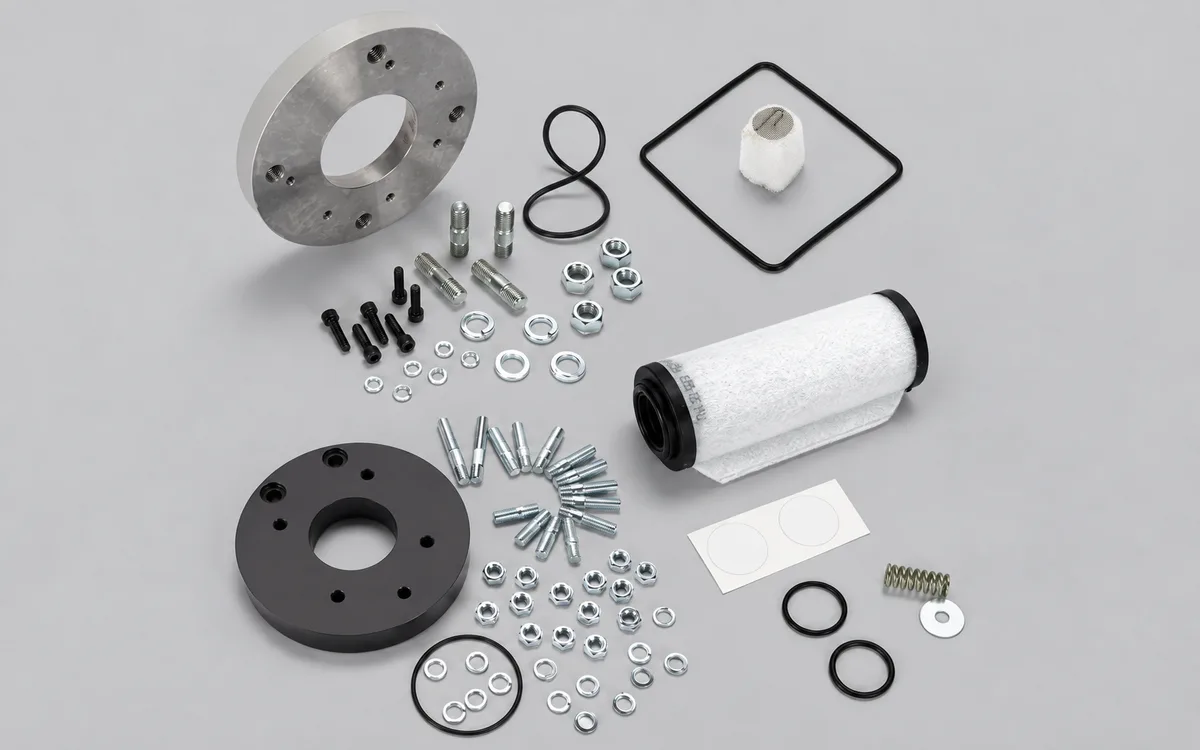
Vacuum pump parts
Genuine vanes, seals, bearings and service kits held in stock.
Learn more
Vacuum pump oil
Mineral, synthetic and chemical-resistant fluids, correctly matched.
Learn more
Vacuum pump service contracts
Planned maintenance at a fixed annual cost.
Learn moreNot sure which model you need?
Send us your air demand, working pressure and running hours. Our engineers will size the machine and send a written recommendation, no cost, no obligation.