
Oxygen and hydrogen generation
Making the gas on site instead of paying for cylinders and deliveries.
Overview
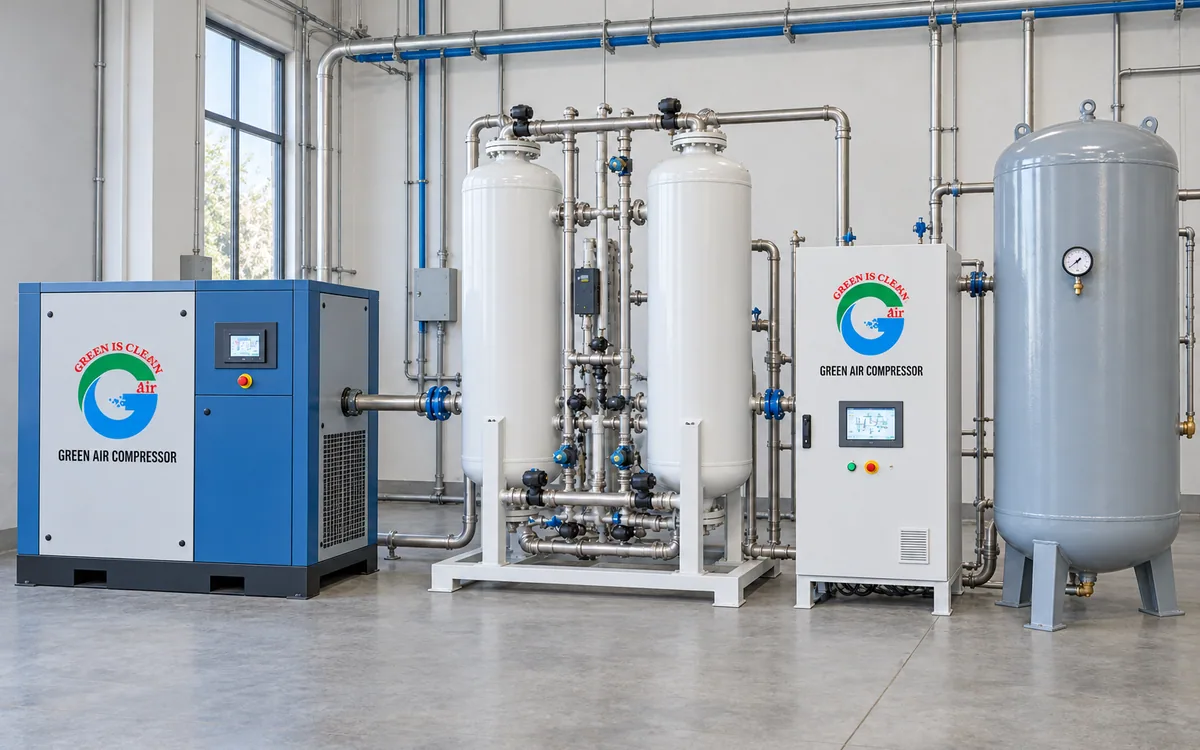
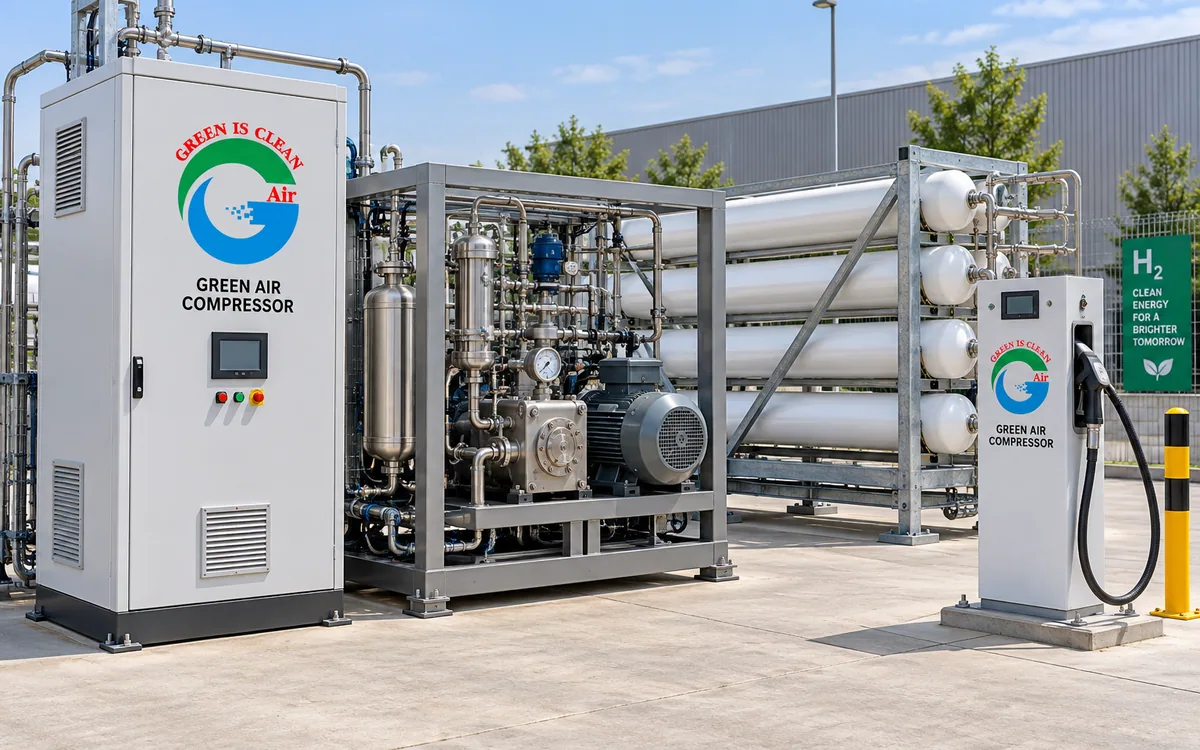
Gas bought in cylinders carries a large charge for transport and rental that has nothing to do with the gas. A site using it continuously can usually make it instead, from compressed air or from water and electricity.
The generator is the visible part. The compressor, the dryer and the filtration feeding it decide what comes out, which is why we size the whole chain rather than quoting the generator alone.
In this range
Key benefits
No deliveries, no cylinder rental
On a continuous user those two charges are usually most of the bill, and neither of them is gas.
Produced on demand
No stored inventory to manage, no running out between deliveries, and no cylinders standing around a plant.
The air supply is part of the plant
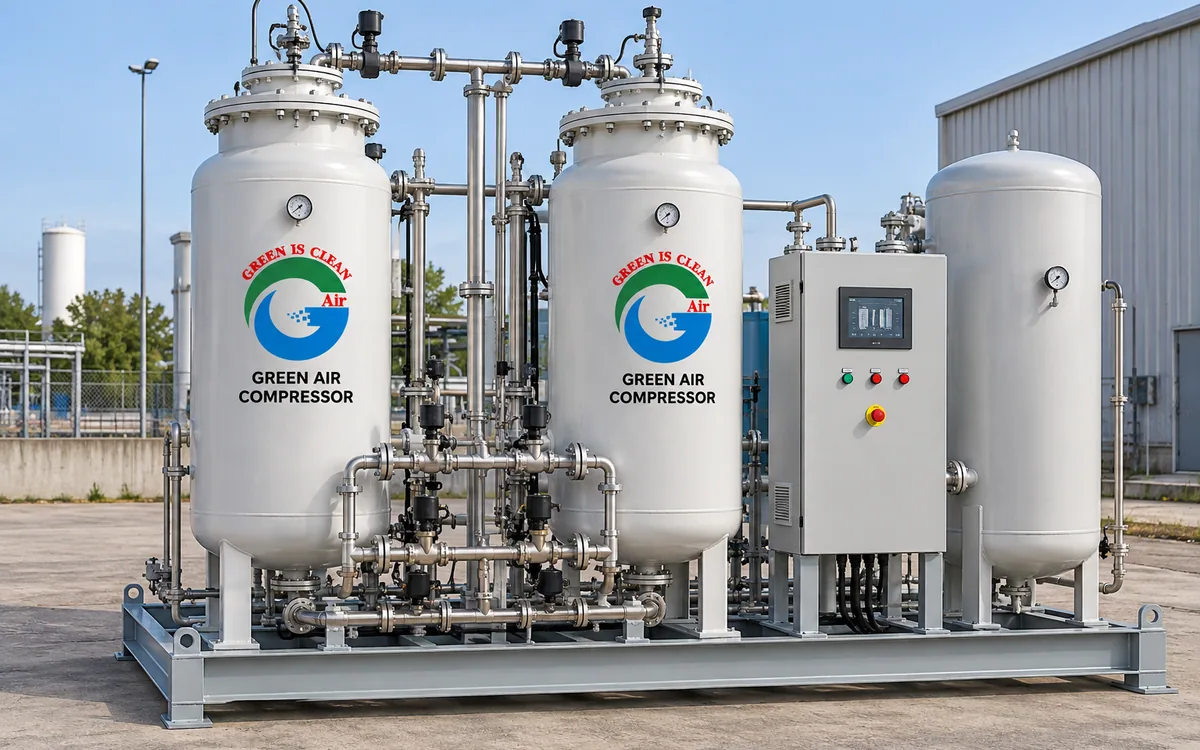
A generator's output depends on the air feeding it, so the compressor, dryer and filtration are sized with it rather than after it.
Payback calculated first
From your consumption and your cylinder price, before you commit to anything. On low or occasional use we will tell you it does not pay.
When making it beats buying it
Volume and continuity decide it. A site drawing gas steadily through the working day repays a generator quickly; a site using a cylinder a week never will, and no amount of arithmetic changes that.
Purity is the second question. Pressure swing adsorption gives around 95 per cent oxygen and up to 99.999 per cent nitrogen, which covers most industrial duties. Anything beyond that is a different process and a different conversation, and for medical breathing gas the regulatory requirements sit on top of the technical ones.
Then the air. Every one of these plants runs on compressed air, and a generator fed with wet or dirty air will underperform its datasheet and eventually kill its own adsorbent bed. That is why we quote the chain rather than the box.
- Continuous use repays, occasional use does not
- Around 95 per cent oxygen from PSA
- Up to 99.999 per cent nitrogen
- Higher purity needs a different process
- Air quality sets what comes out
- Buffer storage smooths the demand
- Adsorbent lasts years on clean dry air
- Payback shown from your own figures
What we need to size it
The gas, the purity you actually need, the flow at normal and at peak, and the pressure at the point of use. Those four answers size the generator and the buffer between them.
Then what you pay today. Cylinder price, rental, delivery charges and how many you get through in a month. That is the other half of the payback and it is the half most suppliers leave out of the proposal.
Purity is worth pressing on. Specifying 99.999 per cent nitrogen where 99.5 would do can double the size of the plant, and a great many specifications carry a number nobody has ever questioned.
Datasheets in this range
Two pages each: what the machine is, what it is for, and the measured table. Built from this site, so a sheet can never say something the page does not.
Frequently asked questions
How quickly does a generator pay for itself?
It depends entirely on how much you use and what you pay per cylinder. Give us both and we will calculate it before you commit rather than quoting an average.
What purity can I get?
Around 95 per cent for oxygen from PSA, and up to 99.999 per cent for nitrogen. Above those you are into a different process.
Does the adsorbent need replacing?
Not often. It is not consumed by the process and lasts many years on clean dry air. Wet air is what kills a bed, which is why the dryer is part of the plant.
Can I keep cylinders as a backup?
Yes, and on a critical duty you should. A small cylinder bank with an automatic changeover covers a generator outage and costs very little to hold.
Why does the air supply matter so much?
Because the generator's output depends on the quality and pressure of the air feeding it. A generator on wet or dirty air will never reach its datasheet.
How much buffer storage do I need?
Enough that the generator runs steadily at its best purity instead of chasing a swinging demand. We size it from your demand profile.
Is the purity in my specification really necessary?
Often not. Specifying 99.999 per cent nitrogen where 99.5 would do can double the size of the plant, and it is worth questioning before you buy.
What is the running cost?
Electricity for the compressor, essentially. There is no consumable gas and no delivery charge, which is the whole argument for generating.
How long does it take to reach purity from cold?
A few minutes to an hour depending on the plant and the purity. On a critical duty the buffer and the cylinder backup cover that period.
Can you supply the compressor as well?
Yes, and we prefer to, because sizing the compressor, dryer, filtration and generator together is the only way the chain actually matches.
Related products
Air compressors
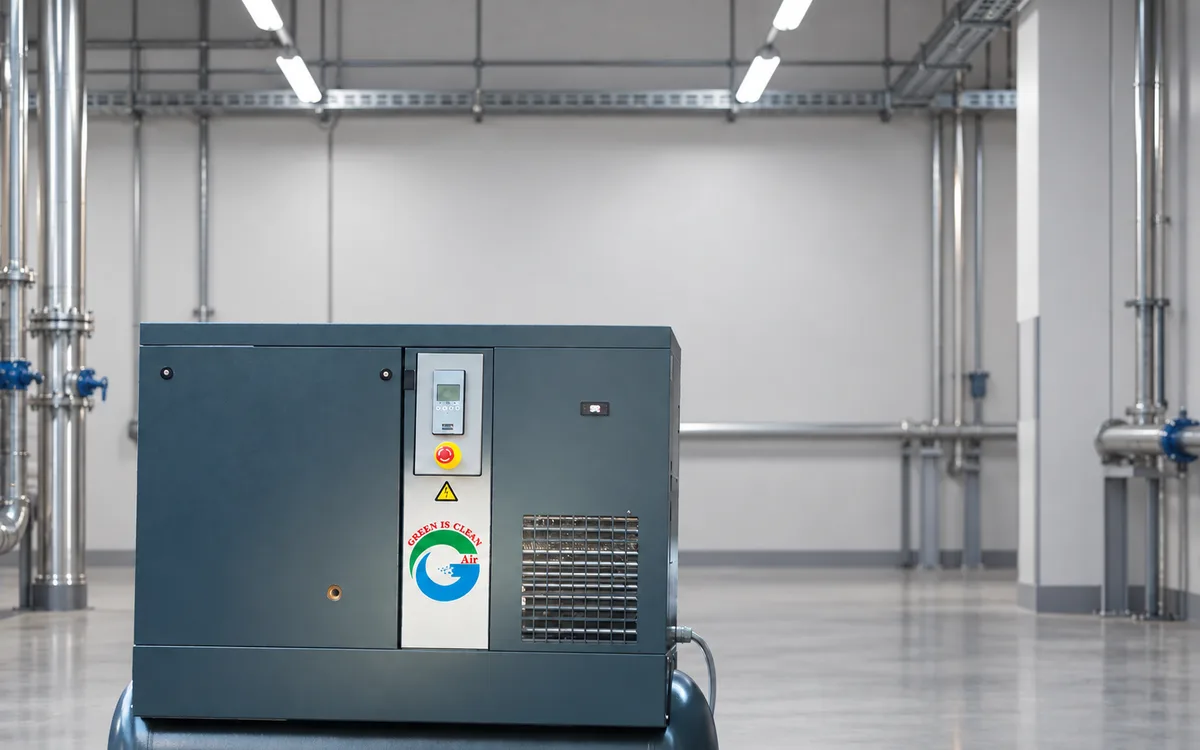
Rotary screw, oil-free and piston compressors from 2.2 to 355 kW.
- Free air delivery
- 0.1 – 109.0 m³/min (9 – 882 cfm)
- Working pressure
- 2 – 1,000 bar g
- Motor power
- 2 – 355 kW
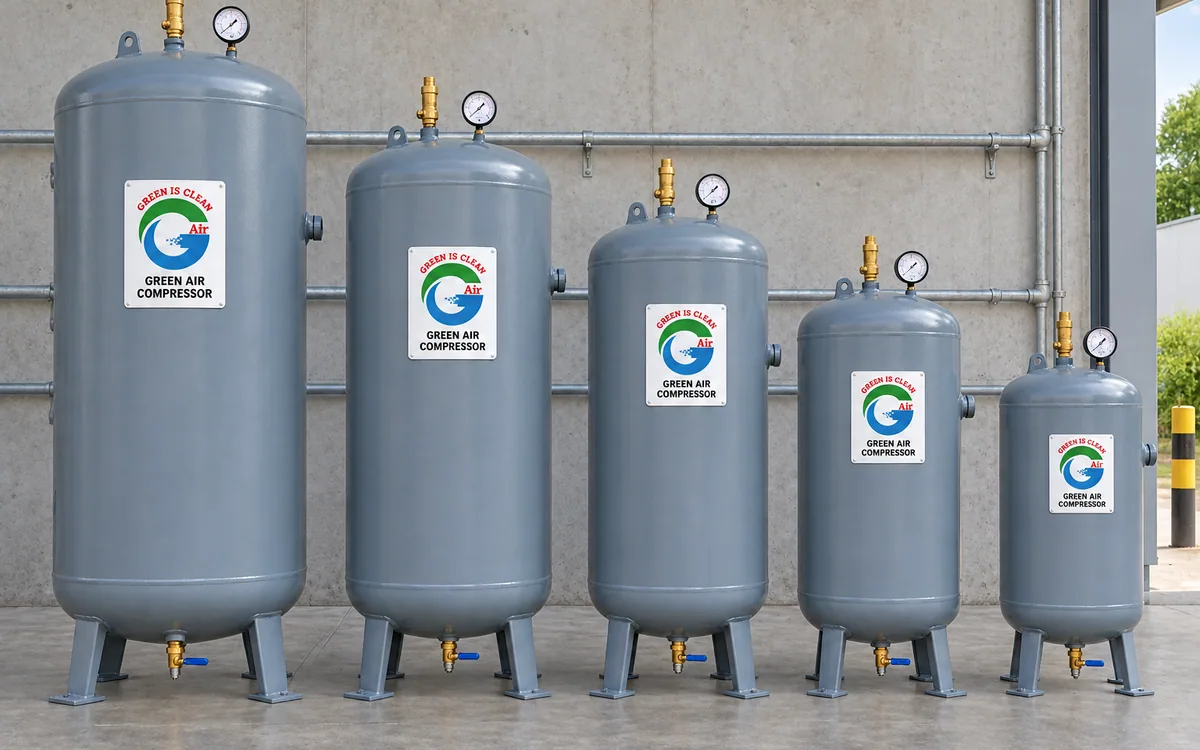
Air receivers and tanks
Storage, separation and the vessel that stops your compressor short cycling.
- Working pressure
- 1 – 13 bar g
- Weight
- 99 – 1,240 kg
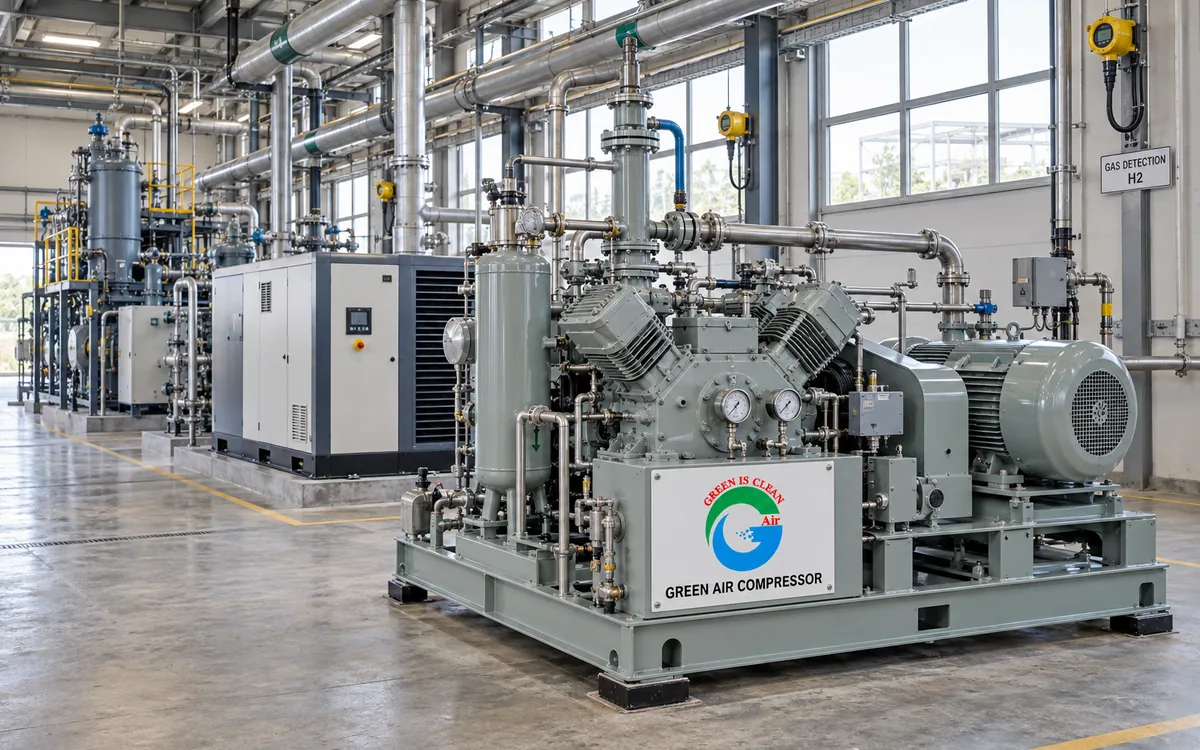
Gas compressors
Nitrogen, oxygen, biogas, LPG, natural gas, ammonia, argon and boil off gas.
- Free air delivery
- 10 – 3,500 Nm³/h
- Working pressure
- 1 – 210 bar g
- Motor power
- 4 – 250 kW
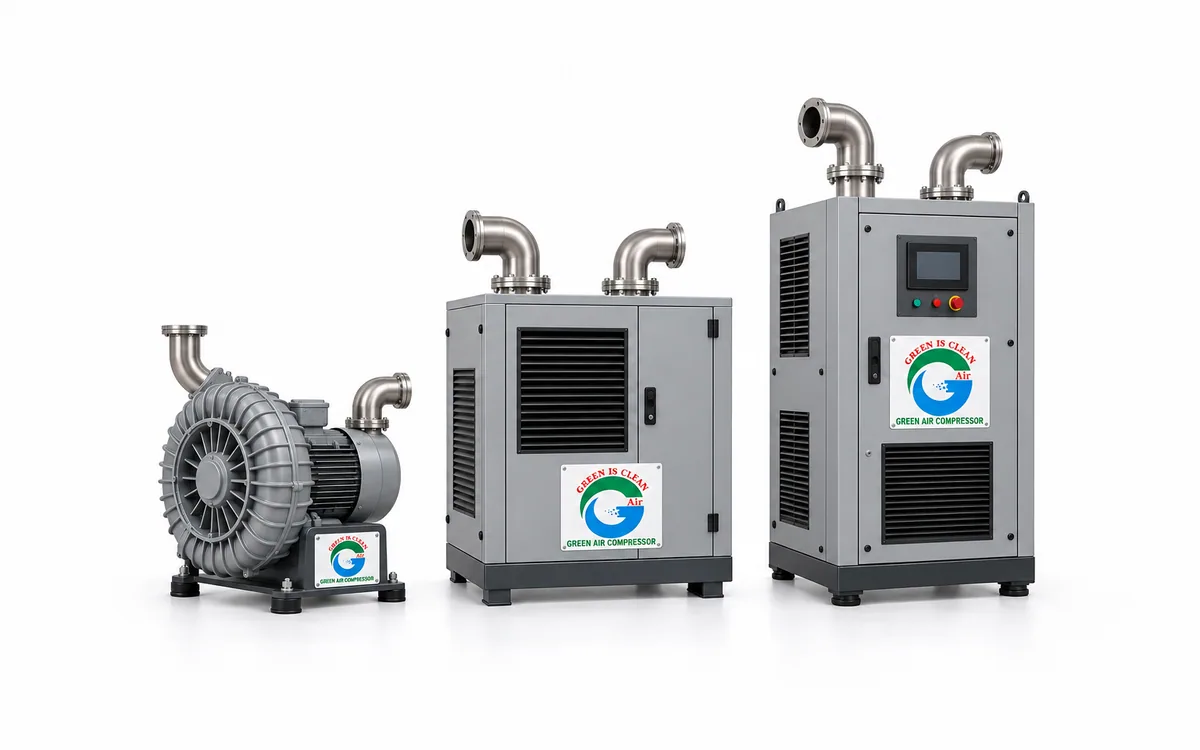
Air blowers
High-volume, low-pressure air for aeration and conveying.
- Free air delivery
- 12.6 – 418.0 m³/min
- Working pressure
- 1 – 1,100 bar g
- Motor power
- 22 – 450 kW
Not sure which model you need?
Send us your air demand, working pressure and running hours. Our engineers will size the machine and send a written recommendation, no cost, no obligation.