
Heated and blower purge adsorption dryers
Minus 40 °C with two per cent purge or none at all. For large flows.
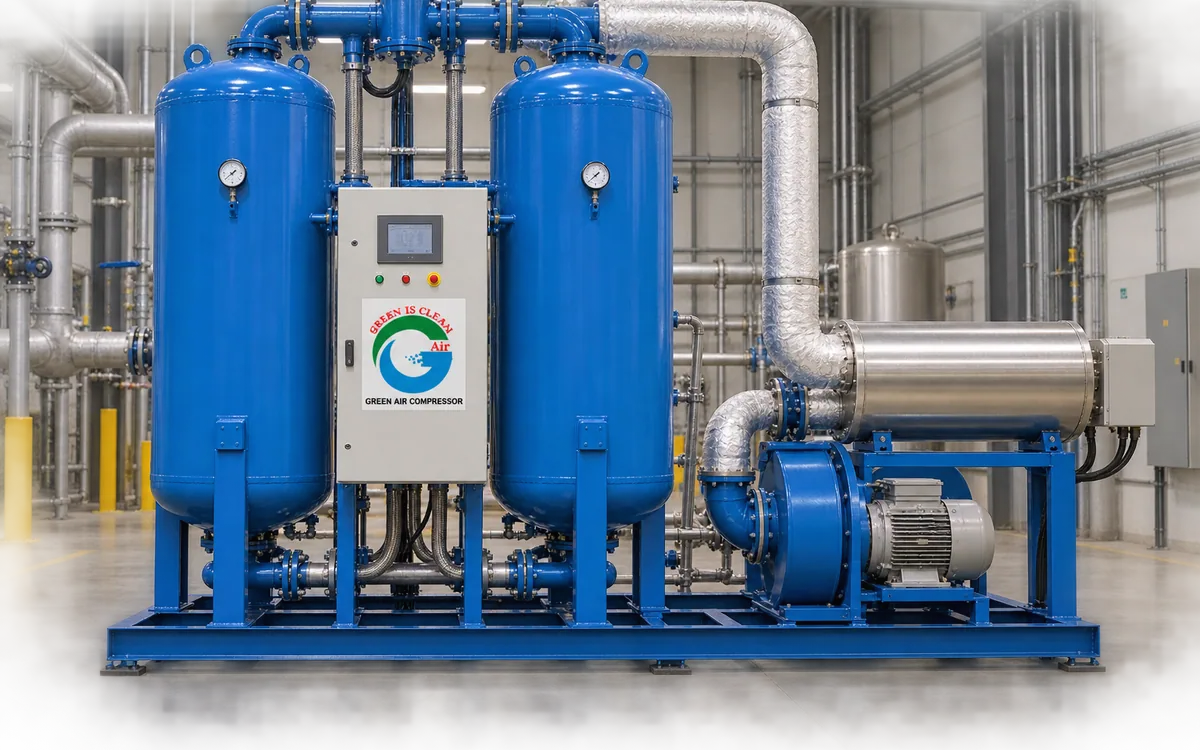
Overview
Above roughly 15 m³/min, the twelve to eighteen per cent purge a heatless dryer takes stops being a detail and becomes one of the larger items on the compressed air bill. A heated dryer attacks that directly: it warms the regenerating tower so the desiccant releases its water without needing nearly as much air to carry it away.
A blower purge dryer goes further. It regenerates with ambient air pushed through by a blower and heated, so it uses essentially none of your compressed air at all — the machine costs more and repays it quickly at scale.
Key benefits
Two per cent purge, or none
Heated types use around two per cent against the heatless twelve to eighteen. Blower purge types use none of your compressed air.
Repays itself at scale
Above about 15 m³/min the purge saved is worth more than the extra the machine costs, usually inside two years.
Same dew point
Minus 40 °C as standard, and minus 70 °C where the process demands it. The performance is not the trade.
Zero loss on blower purge
Regeneration air comes from the atmosphere. Nothing you compressed is vented.
Heated, blower purge or blast regeneration
A heated purge dryer still uses a little of your compressed air — around two per cent — to carry the released moisture out of the tower. It is simpler than a blower machine and cheaper, and on mid range flows it is usually the right answer.
A blower purge dryer uses ambient air instead, drawn by its own blower and heated. It uses none of your compressed air, but it adds a blower and a heater to maintain, and it draws its own electricity.
A blast regeneration dryer is the third arrangement: the heated regeneration air is blown through and then the tower is cooled rapidly before it comes back on line, which avoids the dew point spike that some heated dryers show at changeover. Where the process cannot tolerate that spike, this is the type to specify.
- Heated purge, about 2 per cent of compressed air
- Blower purge, none of your compressed air
- Blast regeneration avoids the changeover spike
- All reach minus 40 °C, minus 70 °C available
- Dew point demand control on all types
- Worth it above roughly 15 m³/min
Technical data
- Air handling capacity
- 22 – 260 Nm³/min
- Pressure dew point
- −20 °C to −60 °C
- Regeneration
- Ambient air drawn by a blower and heated, so no compressed air is spent purging
Frequently asked questions
Heated or blower purge?
Blower purge saves more and costs more. The crossover depends on your flow and your electricity price, and we show the calculation on your own figures.
What is the changeover dew point spike?
A short rise in dew point when a freshly regenerated tower comes online still warm. Blast regeneration cools the tower first, which removes it.
Do these need more maintenance?
More than a heatless dryer, yes — there is a heater and sometimes a blower. Against that, the purge saving is large and continuous.
How much purge does a heated dryer use?
Around two per cent of your compressed air, against twelve to eighteen on a heatless machine. A blower purge machine uses none of it.
Where is the crossover point?
Around 15 m³/min as a rule of thumb, but it moves with your electricity price and running hours. We calculate it rather than quoting the rule.
Does the heater fail often?
It is the part with the shortest life on these machines, and it is a stocked item. Element condition is monitored so a failure is detected rather than discovered.
Can I retrofit demand control?
Usually yes, and it is often the cheapest improvement available on an existing installation. It needs a dew point sensor and a controller change.
Does the blower add much noise?
Some, and it is enclosed. Where the dryer stands in an occupied area we state the figure and specify attenuation if it matters.
What dew point do they reach?
Minus 40 °C as standard and minus 70 °C where the process demands it. Performance is the same as a heatless machine; the difference is the purge.
Is the desiccant the same?
Broadly, but regeneration temperature affects its life. We specify the fill for the regeneration method rather than using one type everywhere.
Related products
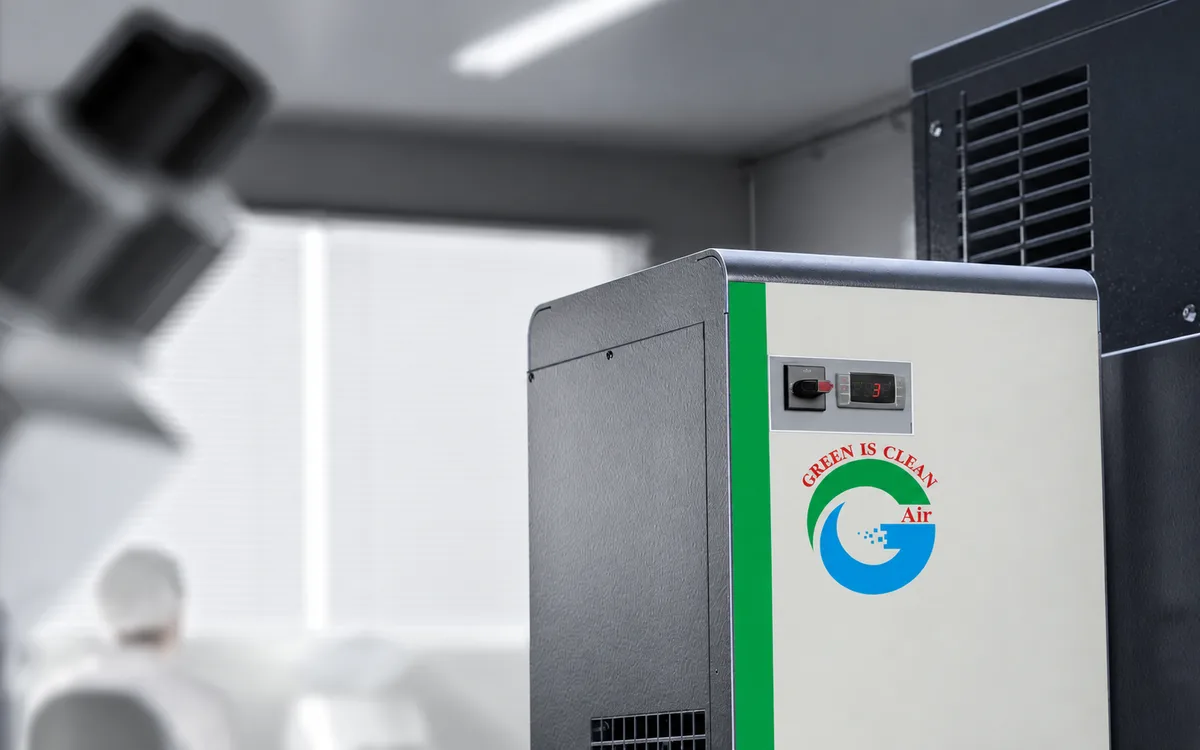
Refrigerant air dryers
The standard, low-cost way to reach a +3 °C pressure dew point.
- Free air delivery
- 10.0 – 383.3 m³/min
- Working pressure
- 13 – 16 bar g
- Motor power
- 1 – 32 kW
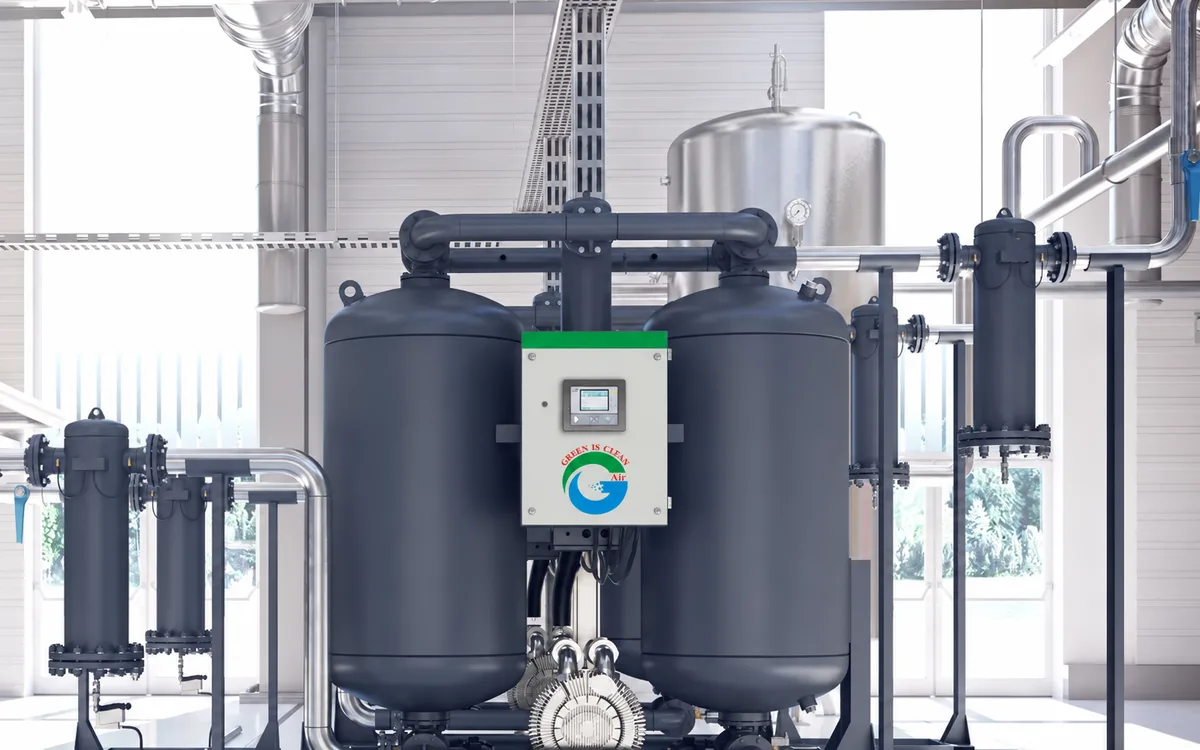
Desiccant air dryers
Dew points down to −70 °C for critical and outdoor pipework.
- Free air delivery
- 6.7 – 141.7 m³/min
- Weight
- 285 – 4,400 kg
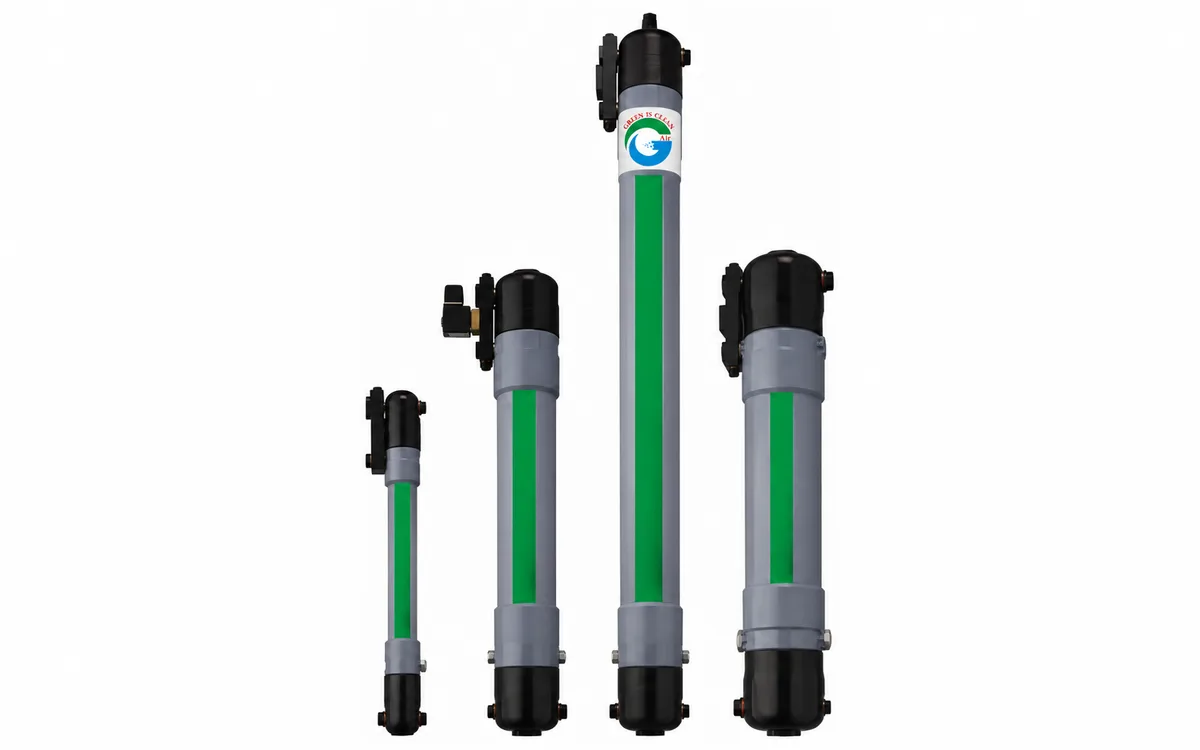
Membrane air dryers
Silent, power-free drying for small flows and point-of-use.
Learn more
Heatless adsorption dryers
Minus 40 °C dew point with no heater. Simple, reliable, uses purge air.
- Free air delivery
- 1.4 – 80.0 m³/min
Not sure which model you need?
Send us your air demand, working pressure and running hours. Our engineers will size the machine and send a written recommendation, no cost, no obligation.