
Laser cutting air compressors
Clean dry air at 13 to 16 bar, specified for the cutting head rather than the plant.
Technical data
- Free air delivery
- 8.5 – 25.0 m³/min
- Working pressure
- 20 – 30 bar g
- Motor power
- 90 – 250 kW
- Weight
- 2,750 – 4,500 kg
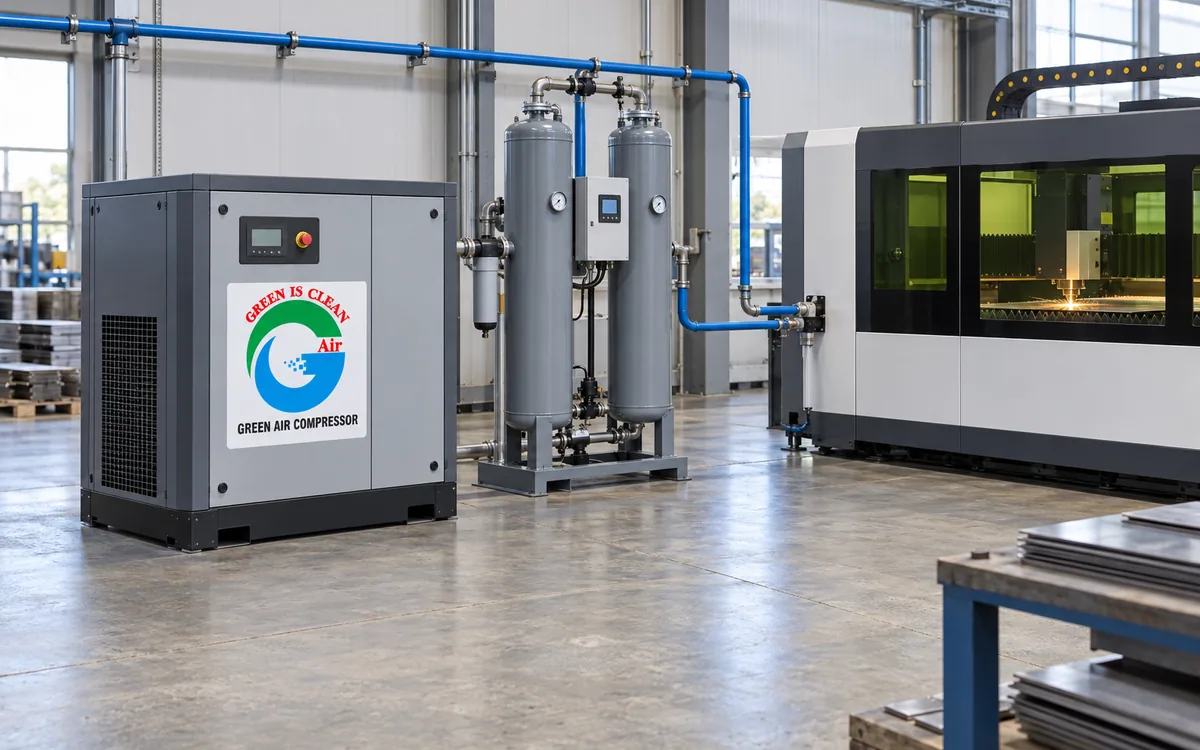
Overview
A fibre laser will cut mild steel with compressed air instead of nitrogen, and the saving is large — no cylinders, no tank rental, no deliveries. What it will not tolerate is wet or oily air, because the first thing contaminated assist gas does is coat the protective lens, and the second thing it does is scrap the cut.
So a laser cutting package is not really a compressor purchase, it is an air quality purchase. Pressure to 16 bar, a pressure dew point well below anything the workshop will ever see, and filtration down to the point where the lens stays clean between planned changes.
Key benefits
13 to 16 bar at the head
Specified at the cutting head, not at the compressor, so pipe losses are accounted for rather than discovered later.
Dew point sized for the workshop
Refrigerant drying is not enough for an assist gas line. We specify desiccant where the duty needs it.
Lens protection is the point
Filtration to the class the head requires. A lens is not expensive once; it is expensive every week.
Cheaper than bottled gas
Mild steel cutting on compressed air removes the cylinder bill entirely. For stainless we size a nitrogen generator instead.
Air or nitrogen
Mild steel up to about 6 mm cuts well on clean compressed air, and that is where the money is saved. The oxygen in the air actually assists the cut on carbon steel.
Stainless steel and aluminium are a different matter. Cutting them with air leaves an oxidised edge that has to be cleaned before welding or painting, so those materials want nitrogen — and a nitrogen generator running off the same compressor is almost always cheaper than cylinders within two years.
Most shops end up with both: compressed air for carbon steel and generated nitrogen for everything else, off one compressor. That is the arrangement we size for unless you tell us the shop only ever cuts one material.
- Compressed air for mild steel to about 6 mm
- Nitrogen for stainless and aluminium
- One compressor can feed both
- Dew point specified for the assist line
- Filtration to protect the lens
- Pressure quoted at the head, not the machine
Model range
- 20 bar g
- 9.2 m³/min
- Weight
- 2,750 kg
- Dimensions L x W x H
- 2466 × 1900 × 1918 mm
- 25 bar g
- 8.5 m³/min
- Weight
- 2,750 kg
- Dimensions L x W x H
- 2466 × 1900 × 1918 mm
- 20 bar g
- 11.6 m³/min
- Weight
- 2,900 kg
- Dimensions L x W x H
- 2466 × 1900 × 1918 mm
- 25 bar g
- 9.7 m³/min
- Weight
- 2,900 kg
- Dimensions L x W x H
- 2466 × 1900 × 1918 mm
- 20 bar g
- 13.0 m³/min
- Weight
- 3,200 kg
- Dimensions L x W x H
- 2466 × 1900 × 1918 mm
- 25 bar g
- 11.8 m³/min
- Weight
- 3,200 kg
- Dimensions L x W x H
- 2466 × 1900 × 1918 mm
- 30 bar g
- 10.5 m³/min
- Weight
- 3,200 kg
- Dimensions L x W x H
- 2466 × 1900 × 1918 mm
- 25 bar g
- 15.5 m³/min
- Weight
- 3,850 kg
- Dimensions L x W x H
- 2850 × 1950 × 1950 mm
- 20 bar g
- 21.0 m³/min
- Weight
- 4,200 kg
- Dimensions L x W x H
- 2980 × 2100 × 1950 mm
- 25 bar g
- 18.8 m³/min
- Weight
- 4,200 kg
- Dimensions L x W x H
- 2980 × 2100 × 1950 mm
- 20 bar g
- 25.0 m³/min
- Weight
- 4,500 kg
- Dimensions L x W x H
- 3250 × 2250 × 2050 mm
- 25 bar g
- 22.0 m³/min
- Weight
- 4,500 kg
- Dimensions L x W x H
- 3250 × 2250 × 2050 mm
FAD measured to ISO 1217 Edition 4, Annex C and E at 1 bar a intake, 20°C, 0% humidity. Noise measured to ISO 2151 in free field conditions, tolerance ± 3 dB(A). Water-cooled versions of every model are available. Ask us for their sheet.
Frequently asked questions
What pressure does my laser need?
Most fibre lasers want 13 to 16 bar at the head. Ask the machine builder for the figure at the head and the flow at maximum thickness, and we will size from those two numbers.
Will a refrigerant dryer be enough?
Usually not for the assist gas line. A refrigerant dryer holds about 3 °C dew point, and a workshop that gets colder than that at night will condense water in the pipe.
Can I cut stainless with air?
You can, but the edge oxidises and needs cleaning before any further work. For stainless, nitrogen gives the clean edge and a generator pays for itself against cylinders quickly.
How much does it save against bottled gas?
On mild steel it removes the cylinder bill entirely. The figure depends on your cutting hours and your gas price, and we calculate it from both.
Why does the lens matter so much?
Because contaminated assist gas coats it first and scraps the cut second. A lens is not expensive once; it is expensive every week.
What filtration class do I need?
It follows from what the head requires. We specify the class and the filter train with the compressor rather than leaving it to be added later.
Should the pressure be measured at the head or the compressor?
At the head, always. Pipe losses between the two are real and quoting at the compressor is how a system ends up short of pressure at the cut.
Can one compressor feed both air and a nitrogen generator?
Yes, and that is the usual arrangement: compressed air for carbon steel and generated nitrogen for stainless and aluminium, off one machine.
How big a receiver do I need?
Enough to cover the peak draw of a cut without the compressor chasing it. We size it from the machine's duty cycle rather than a rule of thumb.
What happens if the air is wet?
Lens damage, poor edge quality and, at worst, a cracked lens mid job. It is the failure mode that makes laser air a quality purchase rather than a compressor purchase.
Related products
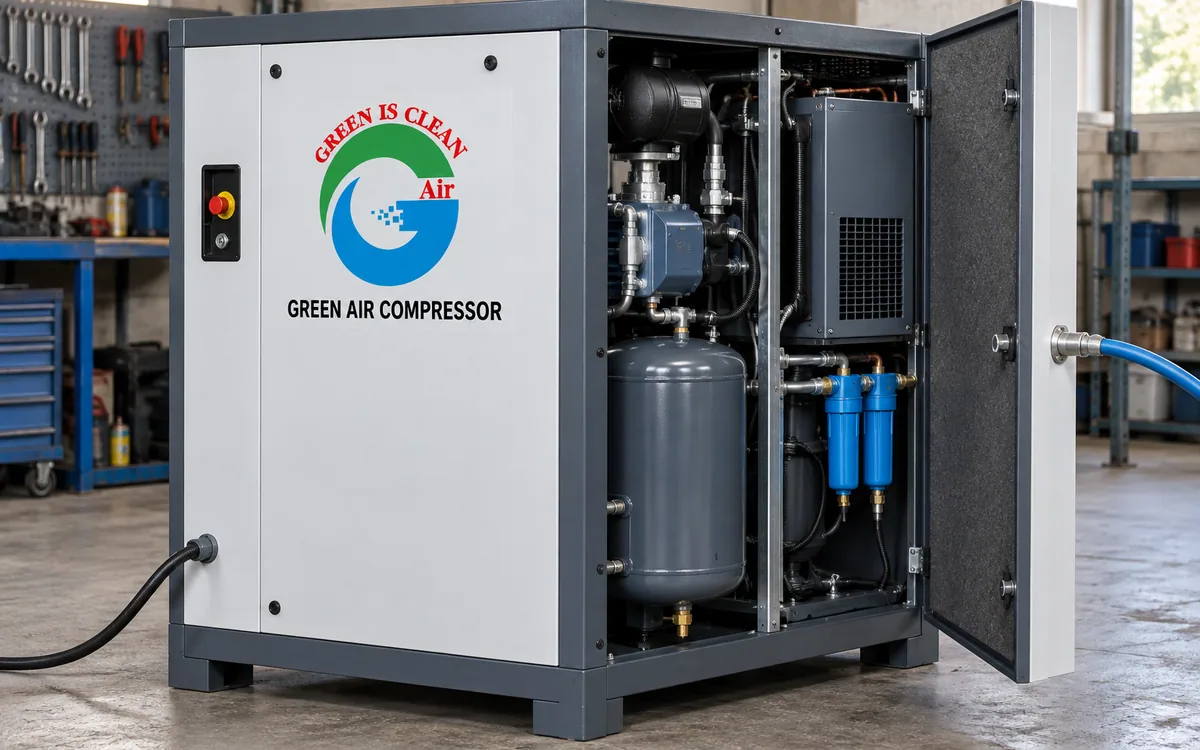
Four in one integrated compressors
Compressor, dryer, filters and receiver in one cabinet. 4 to 18 kW.
- Free air delivery
- 0.3 – 3.0 m³/min
- Working pressure
- 7 – 13 bar g
- Motor power
- 4 – 18 kW
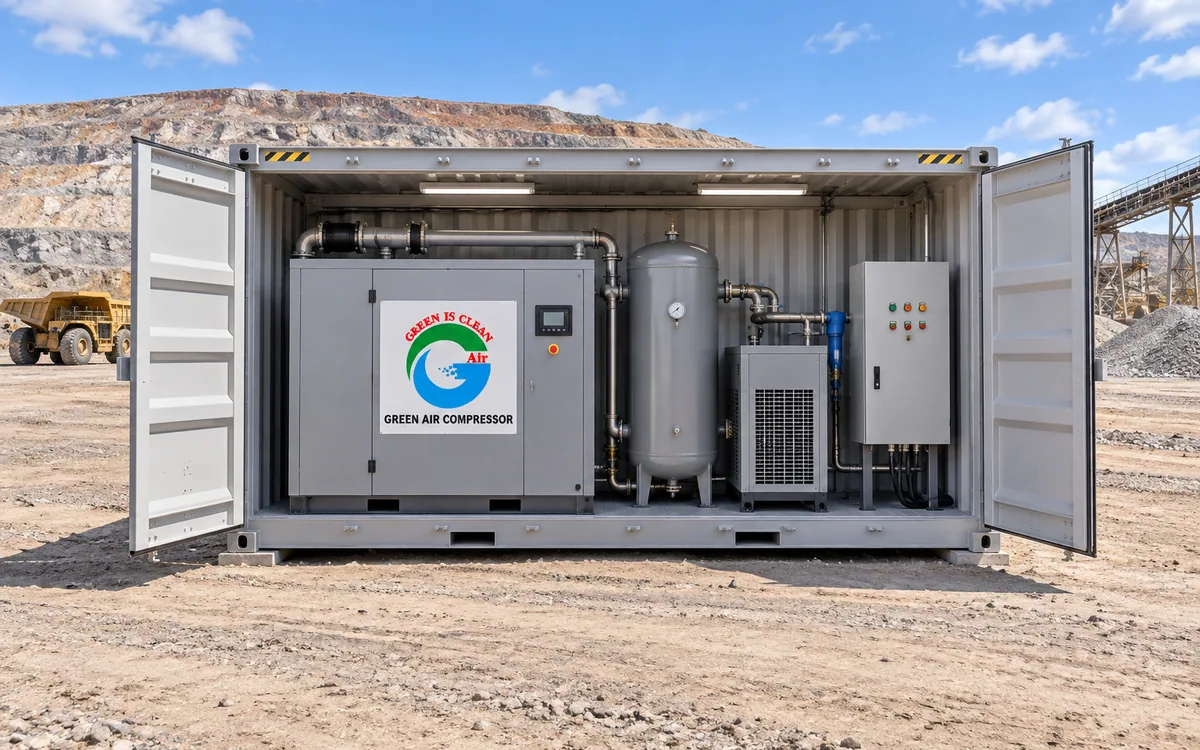
Containerised air compressors
A complete air station inside a shipping container. Ready to run on site.
Learn more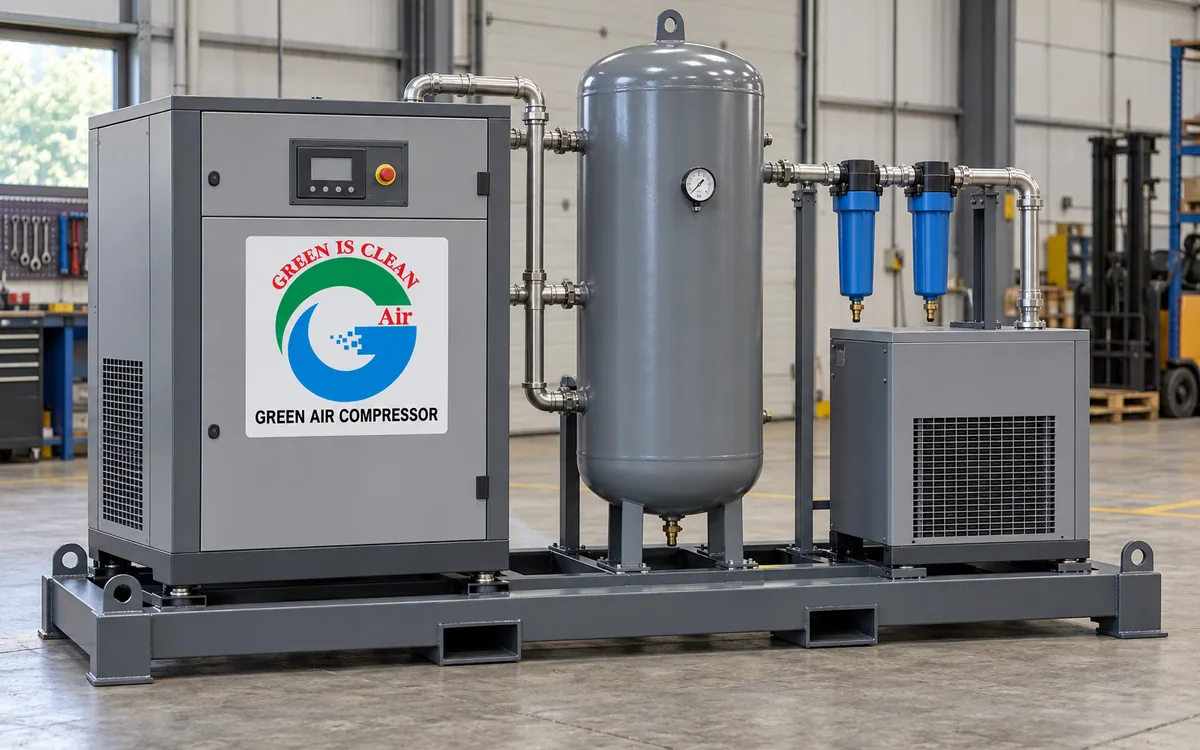
Skid mounted air compressors
The whole air system on one steel frame, piped and wired, ready to bolt down.
Learn more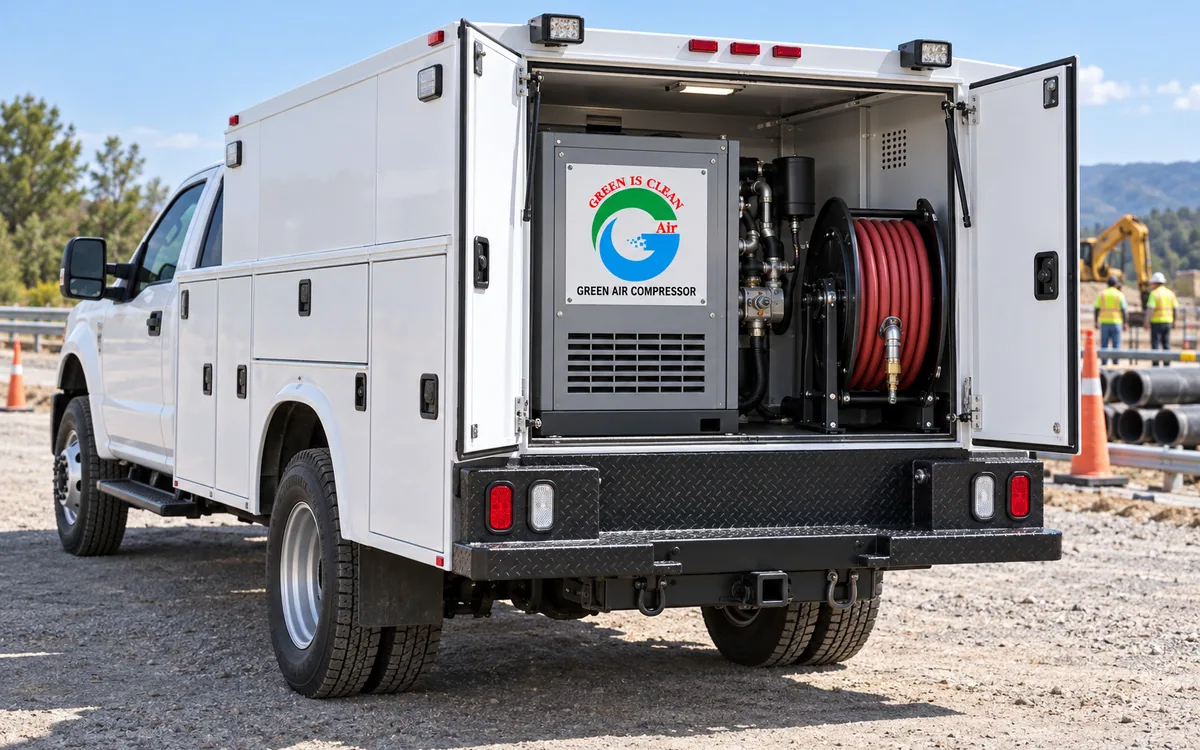
Truck mounted air compressors
A compressor and its power on a vehicle chassis, for service fleets and utilities.
- Free air delivery
- 7.1 – 13.6 m³/min
- Working pressure
- 10 – 25 bar g
- Motor power
- 23 – 42 kW
Not sure which model you need?
Send us your air demand, working pressure and running hours. Our engineers will size the machine and send a written recommendation, no cost, no obligation.