
Oil-sealed rotary vane pumps
The workhorse vacuum pump, deep vacuum at low cost.
Technical data
- Working pressure
- 1 bar g
- Motor power
- 8 – 19 kW
- Weight
- 385 – 1,000 kg
- Noise level
- 72 – 74 dB(A)
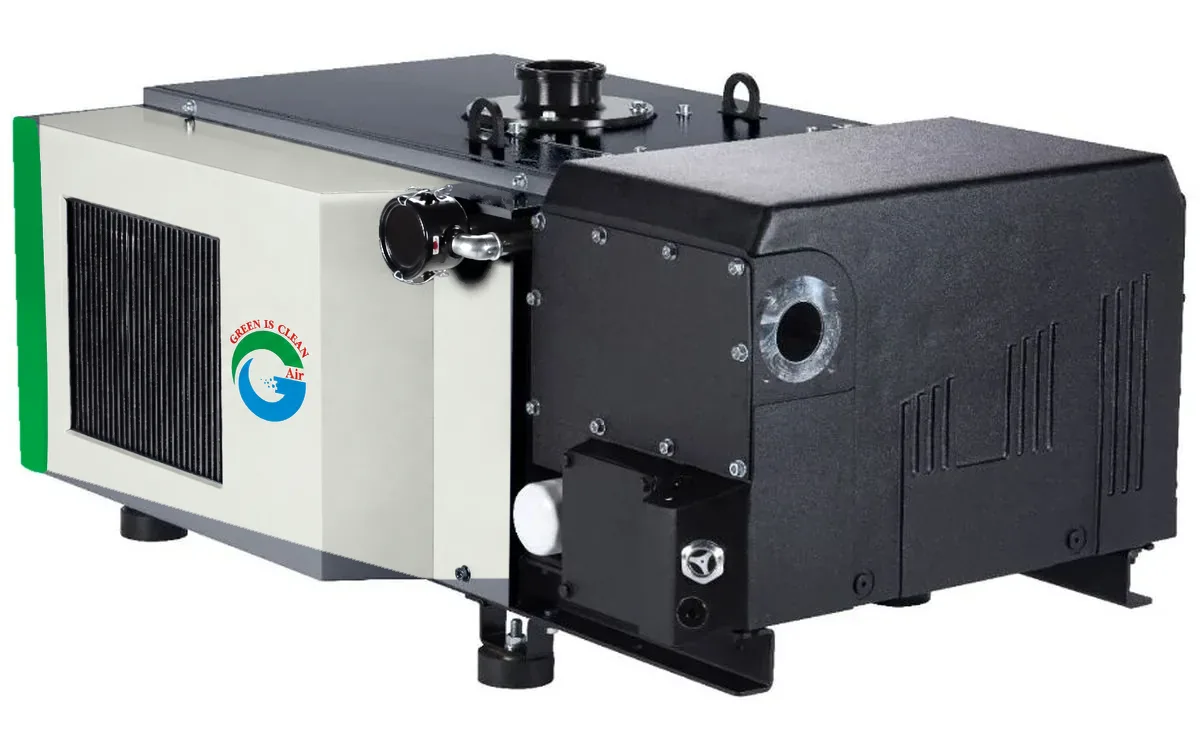
Overview
Oil seals the clearances, lubricates the vanes and carries away heat. That combination gets you a deep vacuum from a relatively cheap and compact machine, which is why oil-sealed rotary vane pumps are still the most widely used industrial vacuum pump in the world.
The trade-off is the oil: it has to be changed, it has to be filtered on the exhaust, and it will be attacked by aggressive process vapours. Where the duty is clean, this is the most cost-effective pump you can buy.
Key benefits
Deep vacuum, low price
Down to 0.1 mbar from a compact and inexpensive machine.
Quiet and smooth
Oil damping makes these among the quietest industrial vacuum pumps.
Gas ballast for moisture
Handles a degree of water vapour without the oil emulsifying.
Repairable, everywhere
The most widely supported vacuum pump type. Parts and knowledge are available in every market.
How it is built
Vanes sliding in a rotor with oil sealing the clearances. The oil does three jobs at once. It seals, it lubricates and it carries heat away, which is why this design reaches a deep vacuum at a modest price.
The cost of that is an oil circuit to look after and an exhaust mist filter to catch what the oil leaves behind. Both are simple and both are the whole of the maintenance.
Gas ballast lets the pump handle a certain amount of vapour by admitting air during compression, which is what keeps water out of the oil on a wet process.
- Oil sealed vanes for deep vacuum
- Oil seals, lubricates and cools
- Gas ballast for vapour handling
- Exhaust mist filter fitted
- Low purchase cost
- Deep ultimate vacuum
- Air cooled
- Single and two stage versions
Controls and monitoring
Vacuum level, hours and oil condition. Oil condition is the one that is usually neglected and it is the one that decides the life of the pump.
Milky oil means water is condensing inside the pump, and the pump is being destroyed while somebody looks at it. Run with gas ballast open, change the oil, and deal with the source.
Alarms on high temperature and loss of vacuum, with a mist filter blockage indicator, because a blocked filter raises the crankcase pressure and pushes oil out.
- Vacuum level and running hours
- Oil condition checked and recorded
- Gas ballast for wet processes
- Mist filter blockage indicated
- High temperature alarm
- Service countdown in hours
- Volt free contacts for plant alarms
- Remote monitoring available
Parts and service
Filters, seals and the scheduled wear items, quoted against the serial number and the process. Two identical pumps on different duties do not take the same interval.
A vacuum pump rarely fails without warning. Ultimate pressure drifting, a longer pump down time and a rising temperature all appear first, which is why those three are measured at every visit.
We test after service rather than simply finishing. The pump down curve and the ultimate pressure achieved go on the report, so you know what you have rather than what was intended.
- Filter and seal kits by interval
- Intervals set by the process, not the calendar
- Ultimate pressure tested after every service
- Pump down curve recorded
- Confirmed against your serial number
- Held in local stock
- Workshop overhaul where testing is needed
- Fixed price under a service plan
Model range
- 0.5 mbar
- 190 m³/h
- Noise level
- 72 dB(A)
- Weight
- 385 kg
- Dimensions L x W x H
- 1320 x 740 x 1160 mm
- 0.5 mbar
- 300 m³/h
- Noise level
- 73 dB(A)
- Weight
- 440 kg
- Dimensions L x W x H
- 1320 x 740 x 1160 mm
- 0.5 mbar
- 480 m³/h
- Noise level
- 73 dB(A)
- Weight
- 930 kg
- Dimensions L x W x H
- 1640 x 950 x 1240 mm
- 0.5 mbar
- 760 m³/h
- Noise level
- 74 dB(A)
- Weight
- 1000 kg
- Dimensions L x W x H
- 1640 x 950 x 1240 mm
FAD measured to ISO 1217 Edition 4, Annex C and E at 1 bar a intake, 20°C, 0% humidity. Noise measured to ISO 2151 in free field conditions, tolerance ± 3 dB(A). Water-cooled versions of every model are available. Ask us for their sheet.
Frequently asked questions
How does an oil-sealed vane pump work?
Vanes sweep an eccentric rotor and oil seals the clearances. That oil film is what lets it reach a far deeper vacuum than a dry vane pump.
What vacuum can it reach?
Around 0.5 mbar single stage and down to 0.001 mbar in two stages. It is the workhorse of deep industrial vacuum.
Why is it still so widely used?
Low purchase price, deep vacuum and decades of proven service. Where oil in the exhaust is acceptable it is hard to beat on cost.
What is gas ballast for?
It admits a little air during compression so vapour leaves with the exhaust instead of condensing in the oil. On any wet process it is essential, not optional.
Why does my oil turn milky?
Water condensing in it. Run with gas ballast open, change the oil, and address the source. Milky oil is destroying the pump while you look at it.
How often should the oil change?
Every 500 to 3,000 hours depending on process. Clean dry duty is at the long end. Wet or chemical duty can be far shorter.
Does the exhaust need a filter?
Yes. Without an exhaust mist filter you are putting oil mist into the workroom air, which is both a housekeeping and a health issue.
Can it handle chemicals?
With chemical-resistant oil and materials, some. For aggressive chemistry a dry screw pump is usually the correct answer instead.
What is the commonest cause of failure?
Contaminated oil, every time. Vanes, bearings and seals nearly all fail downstream of oil that should have been changed.
Is it worth switching to dry?
Where oil waste, contamination or exhaust mist matter, yes. Where none of them matter, this pump is often still the sensible choice, and we will say so.
Related products
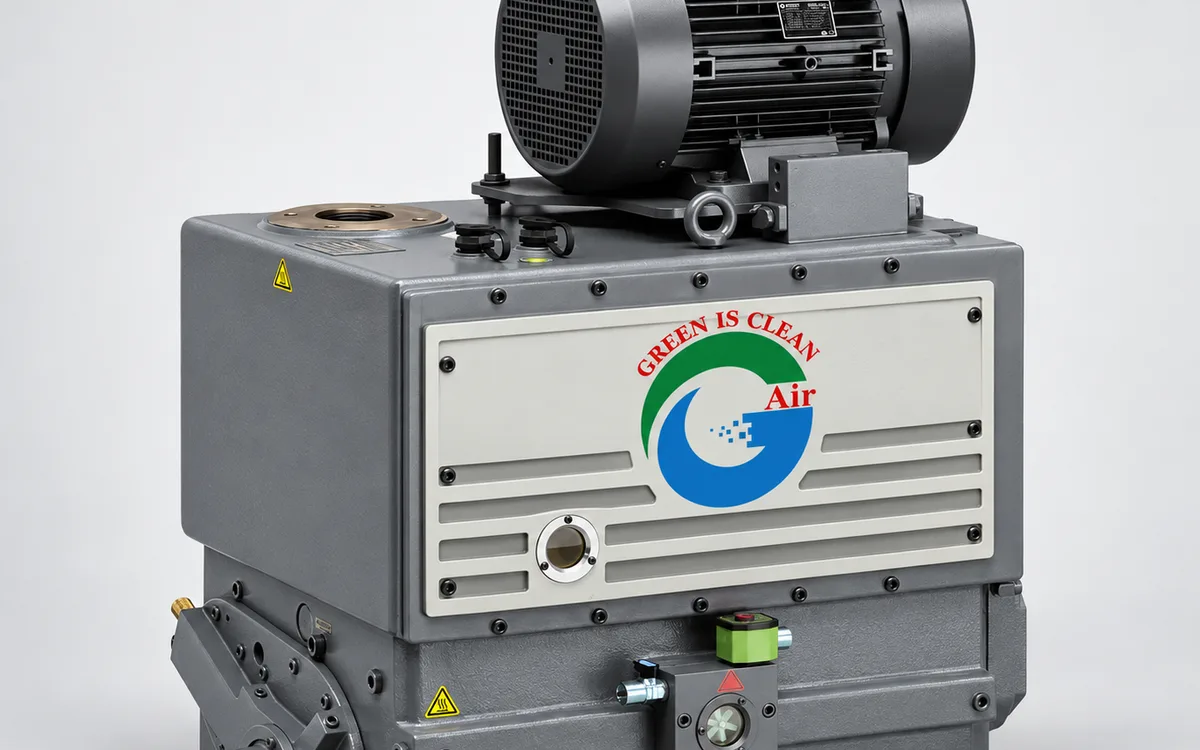
Oil-sealed rotary piston pumps
Heavy, tolerant pumps for dirty and demanding process duty.
- Working pressure
- 10 – 1,000 bar g
- Motor power
- 3 – 90 kW
- Weight
- 180 – 1,053 kg
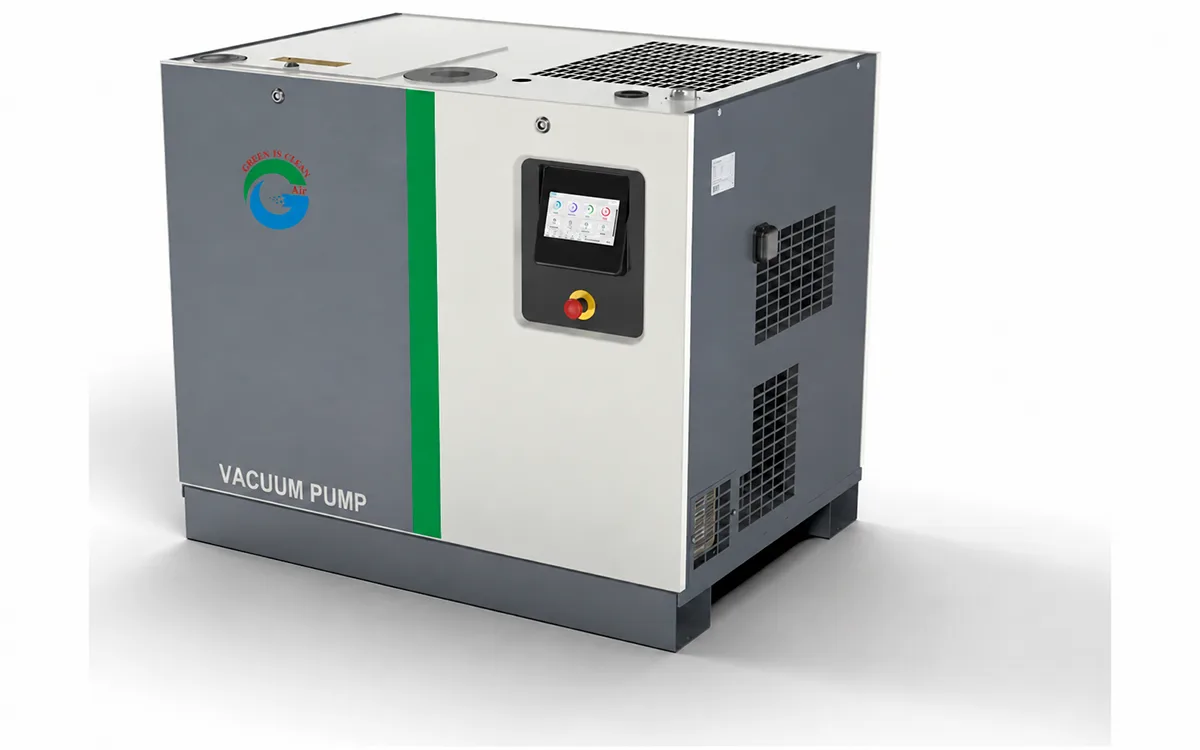
Oil-sealed screw vacuum pumps
High capacity and deep vacuum for demanding chemical duty.
- Working pressure
- 0 bar g
- Motor power
- 11 – 22 kW
Not sure which model you need?
Send us your air demand, working pressure and running hours. Our engineers will size the machine and send a written recommendation, no cost, no obligation.