
Mechanical booster pumps
Roots boosters that multiply the speed of a backing pump.
Technical data
- Working pressure
- 20 – 85 bar g
- Motor power
- 2 – 19 kW
- Weight
- 146 – 825 kg
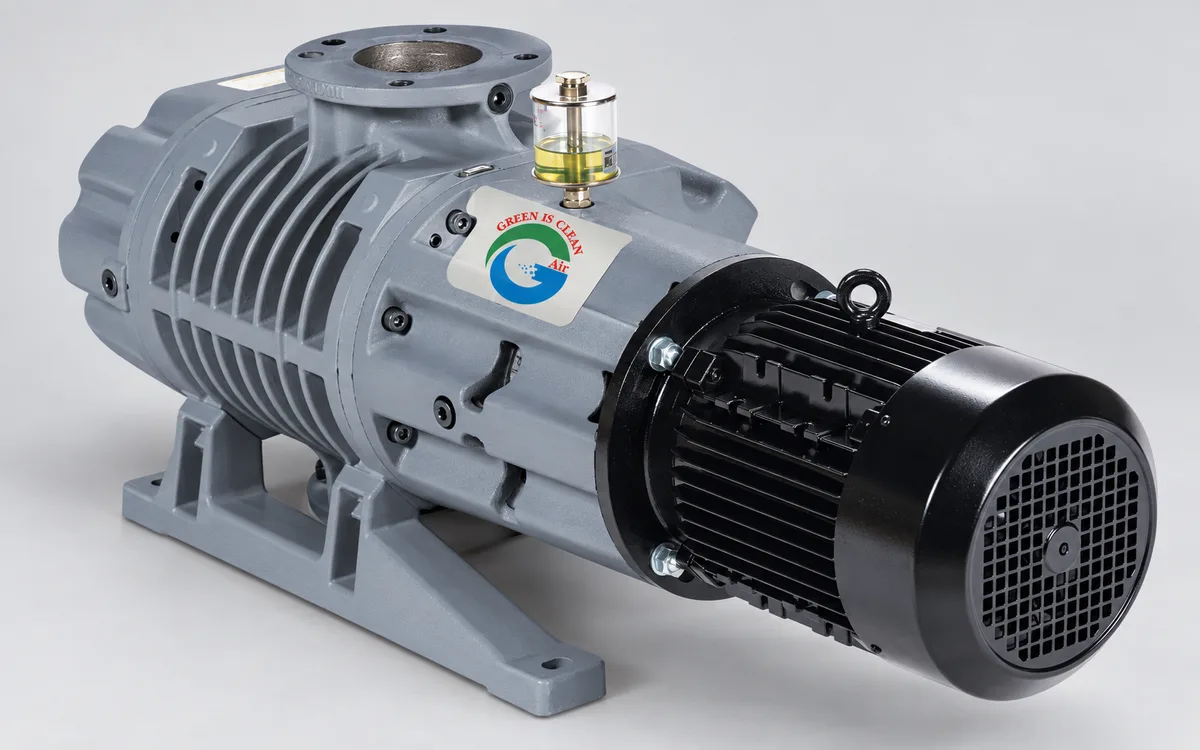
Overview
A booster does not create vacuum on its own. It sits on top of a backing pump and dramatically increases the pumping speed in the pressure range where the backing pump has become slow.
The result is that a vessel which took forty minutes to pump down now takes eight, using less total installed power than simply buying a much larger backing pump.
Key benefits
Much faster pump-down
Cycle times cut by a factor of three to five on typical vessel evacuation duties.
Less installed power
A booster plus a small backing pump uses less energy than one oversized pump.
Deeper ultimate vacuum
Extends the achievable vacuum of the backing pump by an order of magnitude or more.
Matched sets supplied
We size booster and backing pump together against your chamber volume and target time.
How it is built
A booster does not work on its own. It sits above a backing pump and multiplies what that pump can do, taking the system to a deeper vacuum and getting there faster.
Two lobes turn without contact, so there is nothing rubbing and nothing to wear in the chamber. The gears and bearings sit outside the pumped gas.
Sizing is a pair calculation. The booster and the backing pump have to suit each other, and a mismatched pair either overloads or achieves nothing.
- Fitted above a backing pump
- Deeper vacuum and faster pump down
- Non contacting lobes
- Gears and bearings outside the pumped gas
- Sized as a pair with the backing pump
- Air cooled or water cooled
- Variable speed available
- Corrosion resistant versions
Controls and monitoring
The control question is when to start the booster. Too early overloads it, and the controller handles that by watching the pressure rather than a timer.
Motor load, inlet pressure and temperature are all shown. Motor load on a booster is the reading that tells you the pair is matched.
Alarms on overload, high temperature and backing pump failure, because a booster running without its backing pump is a booster damaging itself.
- Booster started on pressure, not a timer
- Motor load and inlet pressure displayed
- Backing pump failure interlocked
- Overload and temperature alarms
- Variable speed follows the process
- Service countdown in hours
- Volt free contacts for plant alarms
- Remote monitoring available
Parts and service
Filters, seals and the scheduled wear items, quoted against the serial number and the process. Two identical pumps on different duties do not take the same interval.
A vacuum pump rarely fails without warning. Ultimate pressure drifting, a longer pump down time and a rising temperature all appear first, which is why those three are measured at every visit.
We test after service rather than simply finishing. The pump down curve and the ultimate pressure achieved go on the report, so you know what you have rather than what was intended.
- Filter and seal kits by interval
- Intervals set by the process, not the calendar
- Ultimate pressure tested after every service
- Pump down curve recorded
- Confirmed against your serial number
- Held in local stock
- Workshop overhaul where testing is needed
- Fixed price under a service plan
Model range
- 85 mbar
- 300 m³/h
- Weight
- 146 kg
- Dimensions L x W x H
- 904 x 352 x 422 mm
- 85 mbar
- 600 m³/h
- Weight
- 146 kg
- Dimensions L x W x H
- 917 x 352 x 422 mm
- 50 mbar
- 620 m³/h
- Weight
- 150 kg
- Dimensions L x W x H
- 32.5 x 12.4 x 19.5
- 50 mbar
- 840 m³/h
- Weight
- 200 kg
- Dimensions L x W x H
- 35.6 x 12.4 x 19.5
- 50 mbar
- 840 m³/h
- Weight
- 150 kg
- Dimensions L x W x H
- 28.6 x 12.8 x 10.6
- 53 mbar
- 1260 m³/h
- Weight
- 290 kg
- Dimensions L x W x H
- 1094 x 470 x 353 mm
- 50 mbar
- 1555 m³/h
- Weight
- 250 kg
- Dimensions L x W x H
- 41.9 x 12.4 x 19.5
- 53 mbar
- 1920 m³/h
- Weight
- 300 kg
- Dimensions L x W x H
- 1114 x 470 x 398 mm
- 50 mbar
- 2435 m³/h
- Weight
- 300 kg
- Dimensions L x W x H
- 36.5 x 15.4 x 12.6
- 20 mbar
- 2585 m³/h
- Weight
- 390 kg
- Dimensions L x W x H
- 1356 x 502 x 458 mm
- 53 mbar
- 2540 m³/h
- Weight
- 520 kg
- Dimensions L x W x H
- 1286 x 568 x 503 mm
- 25 mbar
- 5400 m³/h
- Weight
- 690 kg
- Dimensions L x W x H
- 1443 x 690 x 510 mm
- 30 mbar
- 2700-6480 m³/h
- Weight
- 810 kg
- Dimensions L x W x H
- 1716 x 589 x 490
- 25 mbar
- 2700-8100 m³/h
- Weight
- 825 kg
- Dimensions L x W x H
- 1716 x 589 x 490
FAD measured to ISO 1217 Edition 4, Annex C and E at 1 bar a intake, 20°C, 0% humidity. Noise measured to ISO 2151 in free field conditions, tolerance ± 3 dB(A). Water-cooled versions of every model are available. Ask us for their sheet.
Frequently asked questions
What is a mechanical booster?
A roots-type pump fitted ahead of a backing pump. It cannot exhaust to atmosphere by itself, but it multiplies the speed of the pump behind it.
Why fit one?
To pump down a large chamber quickly, or to hold a deeper vacuum than the backing pump could reach on its own. Speed and depth together.
How much difference does it make?
It can multiply pumping speed several times over in the pressure range where the backing pump is slowing down. On a large chamber that is hours saved.
How is it sized against the backing pump?
By a ratio, typically between four and ten to one. Get the ratio wrong and the booster overheats or simply does not help.
When should it switch on?
Below a set crossover pressure, controlled automatically. Running a booster at atmospheric pressure overloads and overheats it quickly.
Is it oil-free in the gas path?
Yes, the rotors never touch, and lubrication is confined to the gear and bearing ends. That is true regardless of what the backing pump uses.
What maintenance does it need?
Gear oil, bearings and seals. Very little else, because there is no wearing contact in the pumping chamber.
What usually goes wrong?
Overheating from running above the crossover pressure, and debris from the process. Both are control and filtration matters, not machine faults.
Can it be added to our existing system?
Often yes, provided the backing pump has the capacity and the control can be arranged properly. We assess before recommending.
Does it save energy?
It usually does overall, because the system reaches its working pressure faster and spends less time at high load. We can measure your cycle to confirm.
Related products
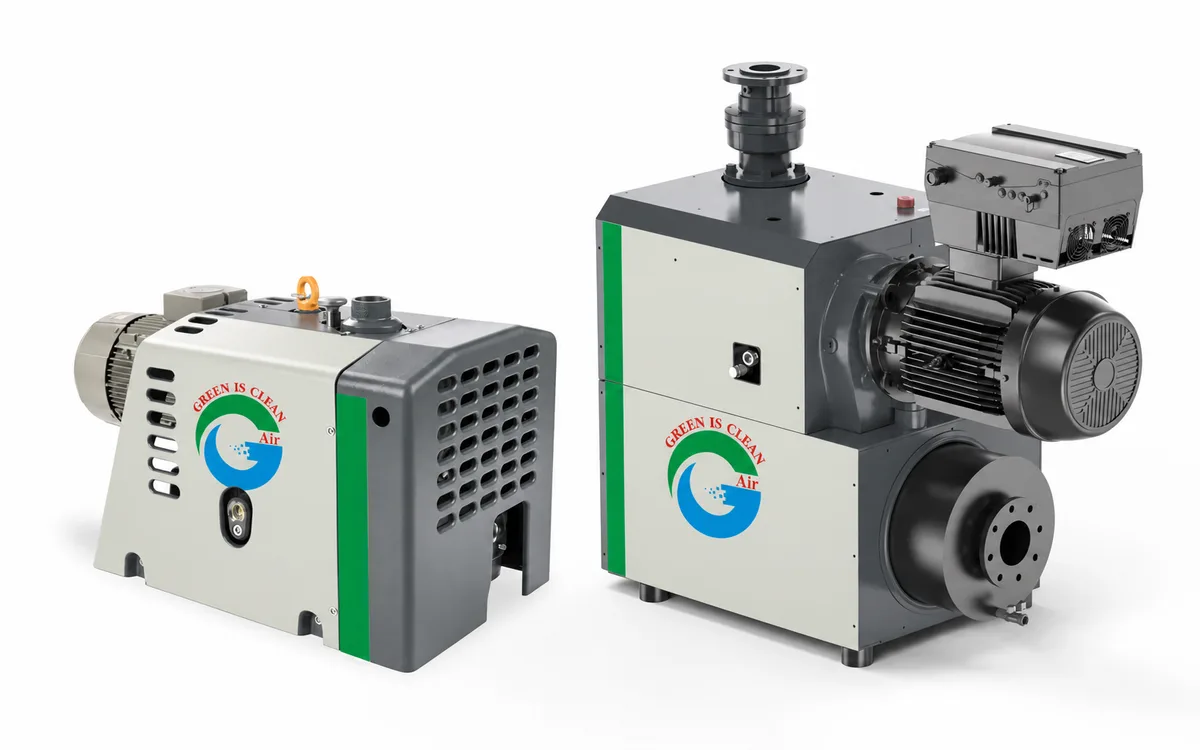
Dry claw vacuum pumps
Contact-free claw rotors for continuous, oil-free rough vacuum.
- Working pressure
- 20 – 450 bar g
- Motor power
- 1 – 25 kW
- Weight
- 7 – 950 kg
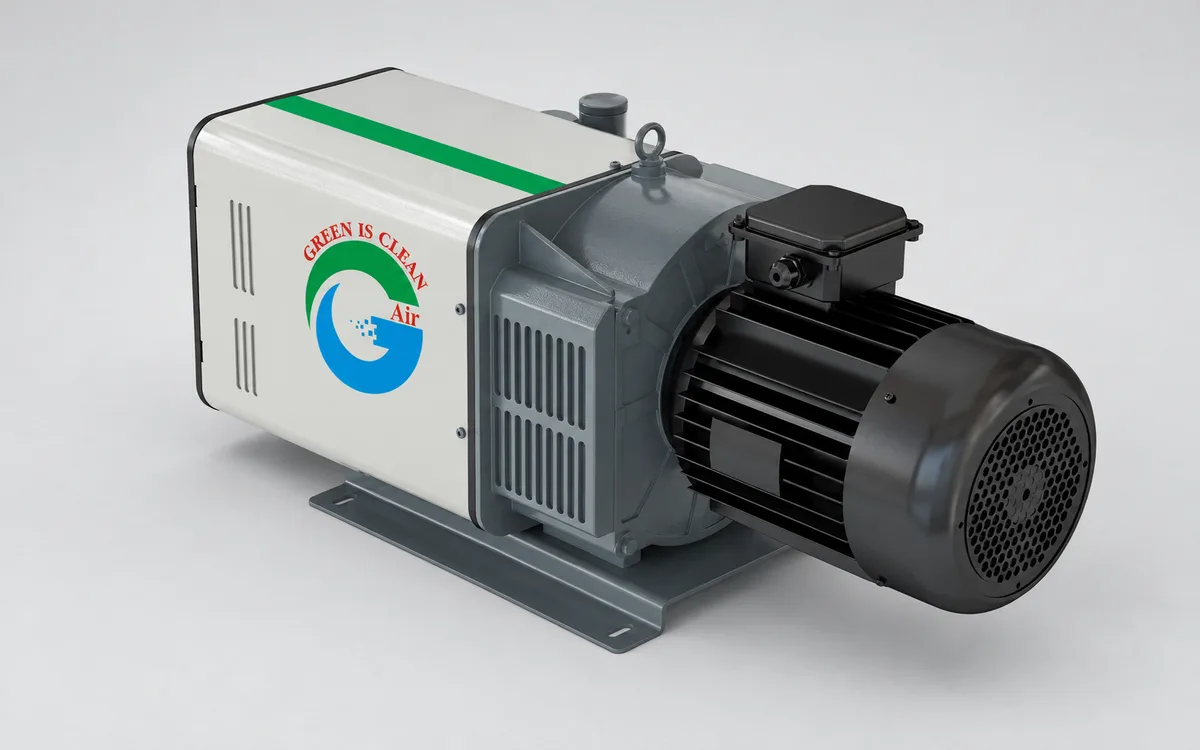
Dry rotary vane vacuum pumps
Simple, compact oil-free pumps for light and intermittent duty.
- Working pressure
- 100 – 150 bar g
- Motor power
- 0 – 8 kW
- Weight
- 5 – 140 kg
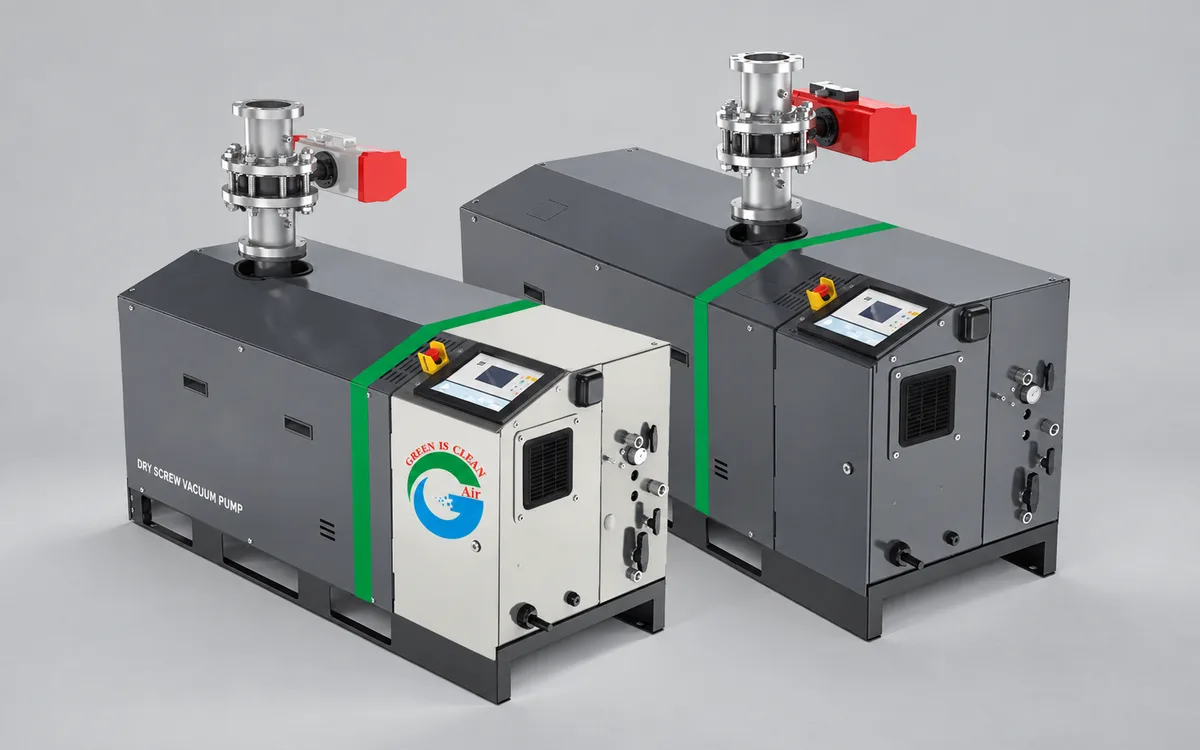
Dry screw vacuum pumps
Deep, dry vacuum that tolerates vapour and process carry-over.
- Working pressure
- 0 – 20 bar g
- Motor power
- 4 – 63 kW
- Weight
- 250 – 2,750 kg
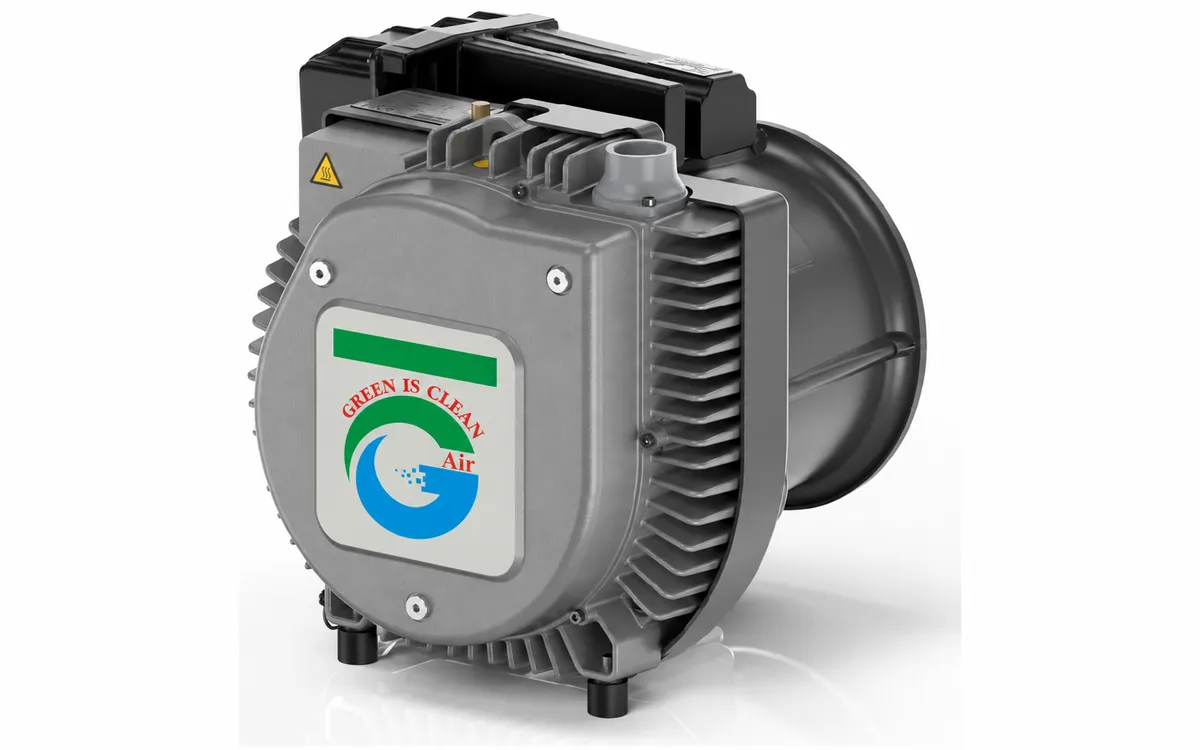
Dry scroll vacuum pumps
Quiet, clean pumps for laboratories and analytical instruments.
- Free air delivery
- 42 – 59 cfm
- Working pressure
- 2 bar g
- Motor power
- 2 – 2 kW
Not sure which model you need?
Send us your air demand, working pressure and running hours. Our engineers will size the machine and send a written recommendation, no cost, no obligation.