
Dry claw vacuum pumps
Contact-free claw rotors for continuous, oil-free rough vacuum.
Technical data
- Working pressure
- 20 – 450 bar g
- Motor power
- 1 – 25 kW
- Weight
- 7 – 950 kg
- Noise level
- 73 dB(A)
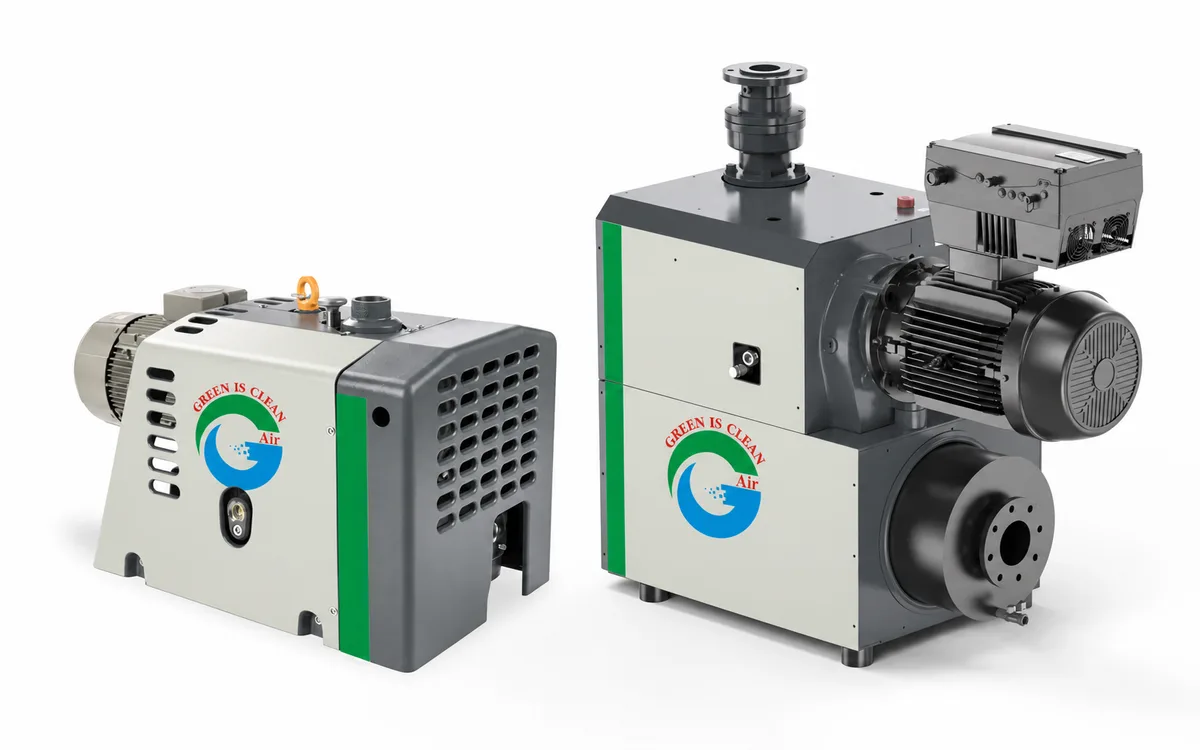
Overview
Two claw-shaped rotors turn in opposite directions without ever touching each other or the housing. Nothing rubs, so nothing wears, and there is no oil or water in the pumping chamber at all.
For packaging lines, food handling and general factory vacuum that runs all day, this is usually the lowest total cost option. There is no oil to change, no water to supply and very little to go wrong.
Key benefits
No contact, no wear
Rotors never touch. The wearing parts are the bearings and the shaft seals, and nothing else.
No oil, no water
No lubricant in the chamber, no sealing water supply and no effluent to deal with.
Low energy at part load
Variable speed versions track demand instead of drawing air through a relief valve.
Long service intervals
Typically 20,000 hours between major service on a clean duty.
How it is built
Two claw shaped rotors turn in opposite directions without ever touching each other or the housing. Nothing rubs, so there is nothing to lubricate in the pumping chamber and nothing to wear in normal service.
The clearance between the claws is held by manufacturing accuracy and by the gears that time them. That is the whole design, and it is why a claw pump keeps its performance for years rather than drifting.
Because there is no oil in the chamber there is no oil mist to deal with, no oil changes to schedule and no contaminated oil to dispose of.
- Claw rotors that never touch
- No oil in the pumping chamber
- No oil mist and no oil disposal
- Performance held over years
- Air cooled, no water needed
- Continuous duty rated
- Low running cost on clean duty
- Variable speed available
Controls and monitoring
Vacuum level, motor load, running hours and temperature. On a dry pump the temperature is the reading that matters, because there is no oil carrying heat away.
Variable speed lets the pump follow the process instead of holding full vacuum against a valve, which on a packaging line is where most of the saving is.
Alarms on high temperature and on loss of vacuum, available as volt free contacts for the plant system.
- Vacuum level and motor load displayed
- Temperature monitored and alarmed
- Variable speed follows the process
- Running hours and service countdown
- Volt free contacts for plant alarms
- Remote monitoring available
- Fault history kept on the pump
- Automatic restart after a power failure
Parts and service
Filters, seals and the scheduled wear items, quoted against the serial number and the process. Two identical pumps on different duties do not take the same interval.
A vacuum pump rarely fails without warning. Ultimate pressure drifting, a longer pump down time and a rising temperature all appear first, which is why those three are measured at every visit.
We test after service rather than simply finishing. The pump down curve and the ultimate pressure achieved go on the report, so you know what you have rather than what was intended.
- Filter and seal kits by interval
- Intervals set by the process, not the calendar
- Ultimate pressure tested after every service
- Pump down curve recorded
- Confirmed against your serial number
- Held in local stock
- Workshop overhaul where testing is needed
- Fixed price under a service plan
Model range
- 450 mbar
- 18 m³/h
- Noise level
- 73 dB(A)
- Weight
- 6.5 kg
- Dimensions L x W x H
- 329.5 x 120 x 199 mm
- 60 mbar
- 95 m³/h
- Weight
- 155 kg
- Dimensions L x W x H
- 977 x 416 x 410 mm
- 40 mbar
- 175 m³/h
- Weight
- 160 kg
- Dimensions L x W x H
- 997 x 416 x 410 mm
- 150 mbar
- 345 m³/h
- Weight
- 300 kg
- Dimensions L x W x H
- 940 x 500 x 650 mm
- 200 mbar
- 470 m³/h
- Weight
- 495 kg
- Dimensions L x W x H
- 1195 x 580 x 795 mm
- 200 mbar
- 600 m³/h
- Weight
- 550 kg
- Dimensions L x W x H
- 1200 x 580 x 795 mm
- 60 mbar
- 135 m³/h
- Weight
- 180 kg
- Dimensions L x W x H
- 1010 x 430 x 410 mm
- 60 mbar
- 75 m³/h
- Weight
- 180 kg
- Dimensions L x W x H
- 970 x 430 x 410 mm
- 60 mbar
- 175 m³/h
- Weight
- 195 kg
- Dimensions L x W x H
- 1050 x 430 x 410 mm
- 200 mbar
- 1150 m³/h
- Weight
- 950 kg
- Dimensions L x W x H
- 1620 x 715 x 1210 mm
- 100 mbar
- 290 m³/h
- Weight
- 290 kg
- Dimensions L x W x H
- 1065 x 515 x 450 mm
- 60 mbar
- 190 m³/h
- Weight
- 270 kg
- Dimensions L x W x H
- 1100 x 515 x 450 mm
- 200 mbar
- 600 m³/h
- Weight
- 325 kg
- Dimensions L x W x H
- 1310 x 515 x 545 mm
- 20 mbar
- 60 m³/h
- Weight
- 135 kg
- Dimensions L x W x H
- 940 x 415 x 370 mm
FAD measured to ISO 1217 Edition 4, Annex C and E at 1 bar a intake, 20°C, 0% humidity. Noise measured to ISO 2151 in free field conditions, tolerance ± 3 dB(A). Water-cooled versions of every model are available. Ask us for their sheet.
Frequently asked questions
How does a claw pump work?
Two claw-shaped rotors turn in opposite directions without ever touching each other or the housing. No contact means no lubricant in the pumped gas.
What vacuum level does it reach?
Typically down to around 100 to 150 mbar absolute in a single stage, which covers the majority of industrial packaging and handling work.
Why choose claw over oil-sealed?
No oil, no oil changes, no oil mist in the exhaust and no oily condensate to dispose of. On a food or packaging site that is decisive.
Is it more efficient?
Usually, because there is no oil to circulate and no oil drag. Direct comparison at your own duty point is what we run before quoting.
What maintenance does it need?
Gearbox oil, bearings and inlet filtration. There is nothing in the pumping chamber that wears, which is the whole point of the design.
Can it handle vapour?
Better than oil-sealed pumps, because there is no oil to contaminate. Heavy condensable loads still need a knockout pot or gas ballast.
Is it noisy?
There is a characteristic tone, addressed by the standard silencer. Packaged units are acceptable in most production areas.
Can several be run as a system?
Yes, and a centralised claw system with sequencing usually beats a pump at every machine. It also moves the noise and heat out of the production hall.
How long do they last?
Many years: there is no rubbing contact at all. Failures normally come from debris entering the inlet, which good filtration prevents.
What can it not do?
It cannot reach deep vacuum on its own. Below about 100 mbar you need a booster or a different technology, and we will say so.
Related products
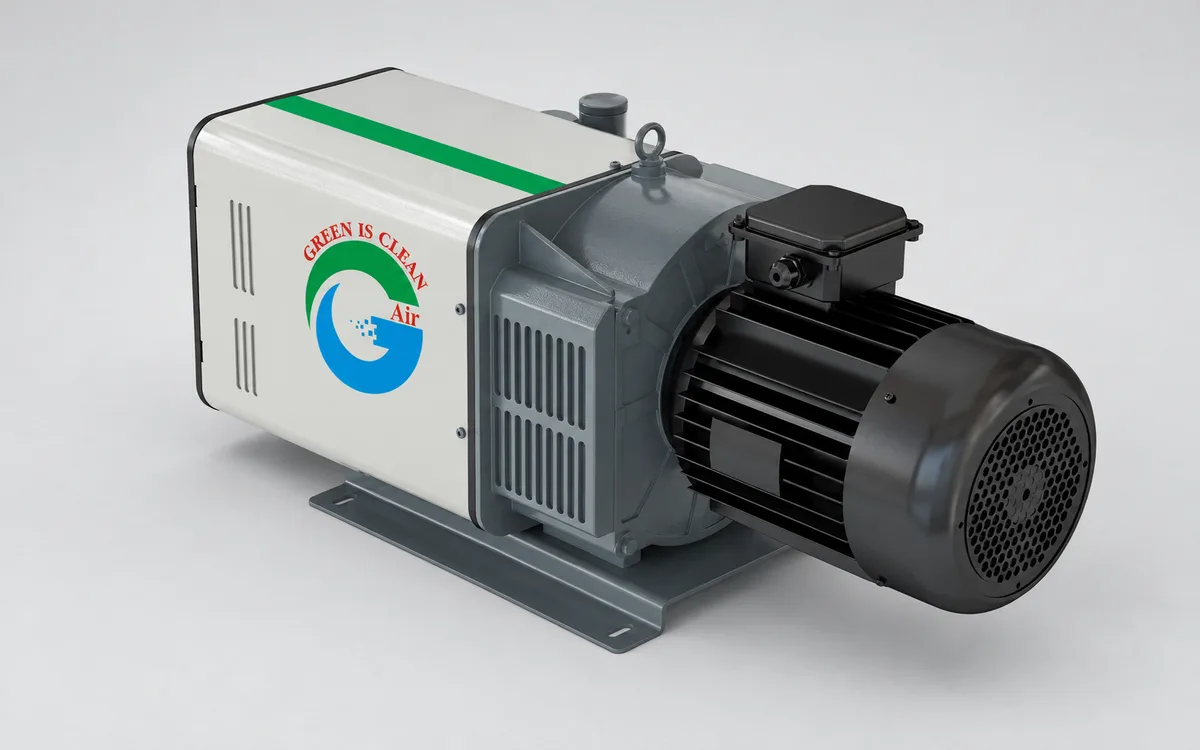
Dry rotary vane vacuum pumps
Simple, compact oil-free pumps for light and intermittent duty.
- Working pressure
- 100 – 150 bar g
- Motor power
- 0 – 8 kW
- Weight
- 5 – 140 kg
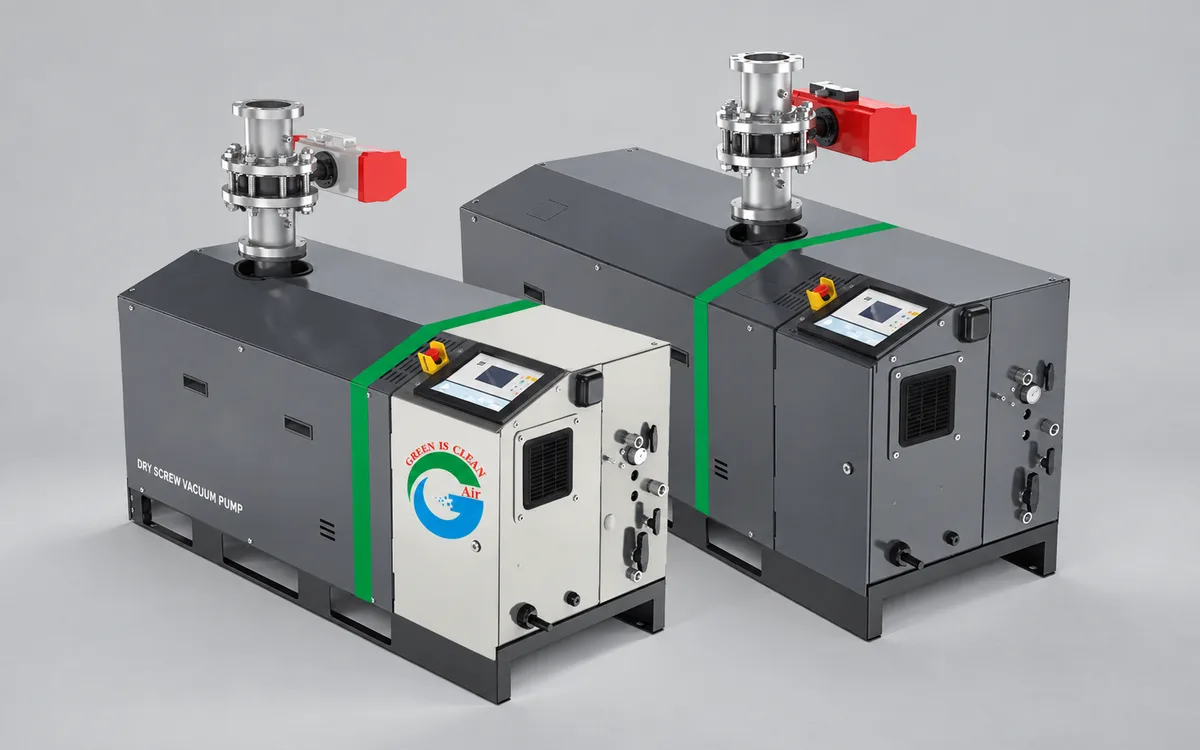
Dry screw vacuum pumps
Deep, dry vacuum that tolerates vapour and process carry-over.
- Working pressure
- 0 – 20 bar g
- Motor power
- 4 – 63 kW
- Weight
- 250 – 2,750 kg
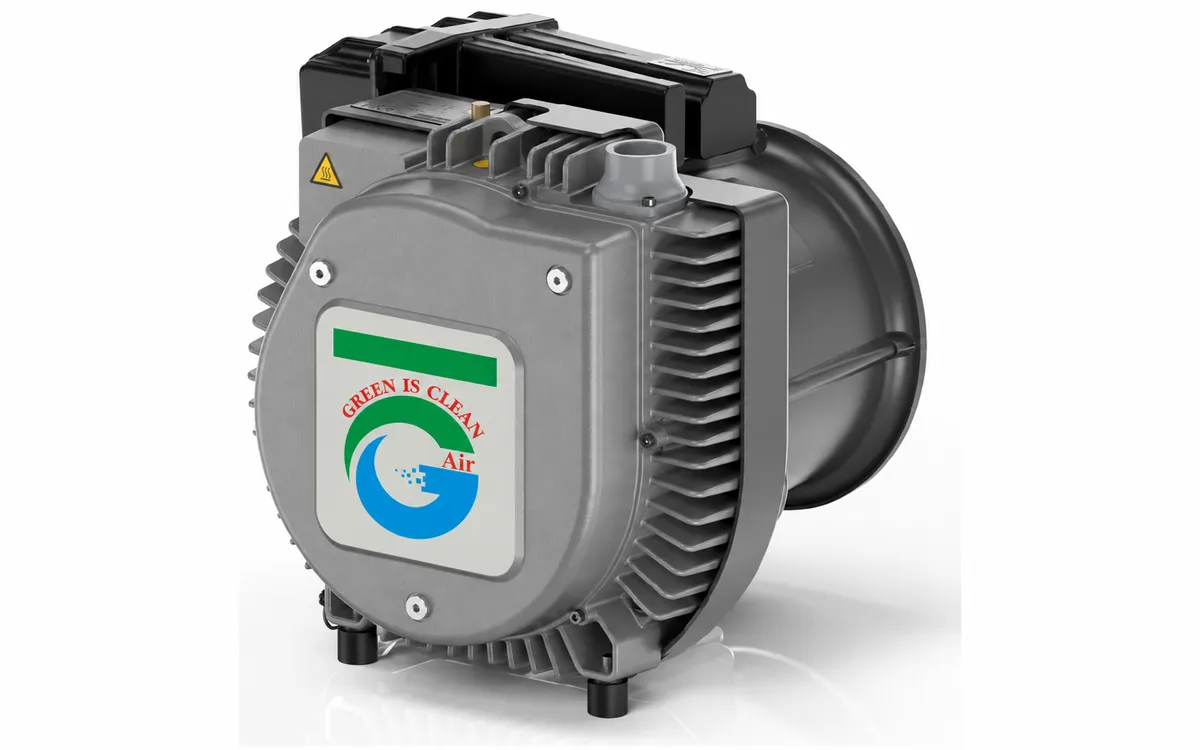
Dry scroll vacuum pumps
Quiet, clean pumps for laboratories and analytical instruments.
- Free air delivery
- 42 – 59 cfm
- Working pressure
- 2 bar g
- Motor power
- 2 – 2 kW
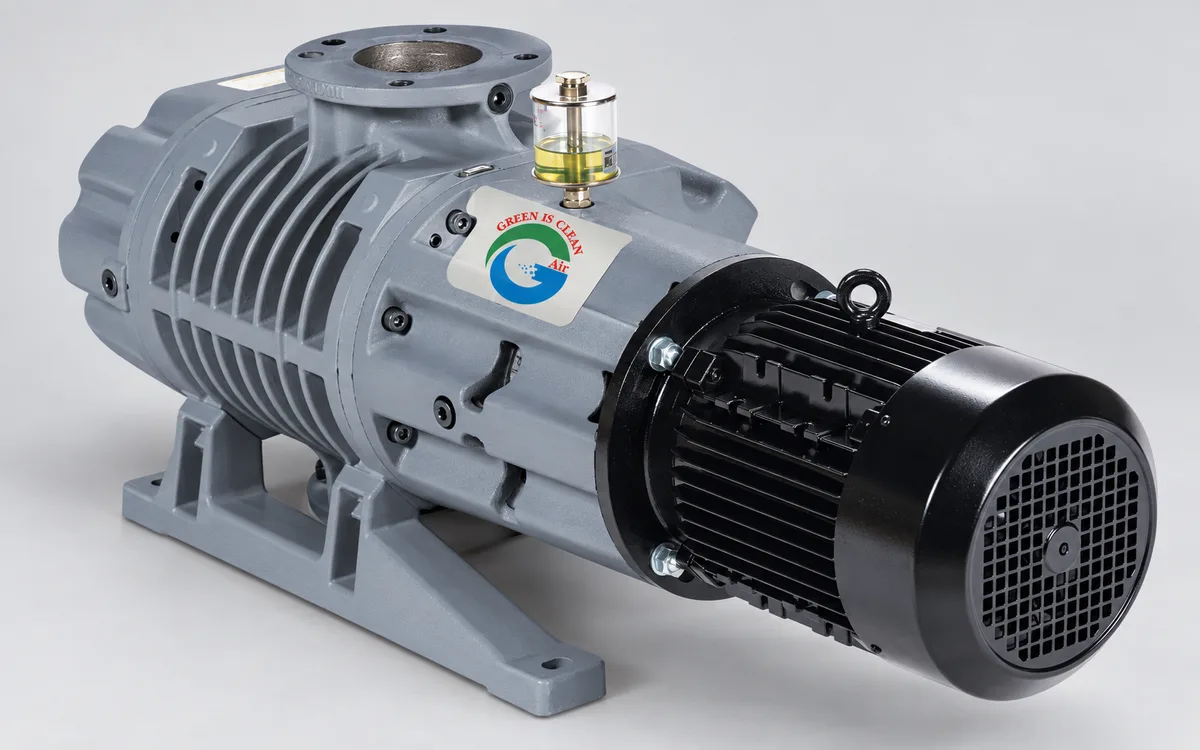
Mechanical booster pumps
Roots boosters that multiply the speed of a backing pump.
- Working pressure
- 20 – 85 bar g
- Motor power
- 2 – 19 kW
- Weight
- 146 – 825 kg
Not sure which model you need?
Send us your air demand, working pressure and running hours. Our engineers will size the machine and send a written recommendation, no cost, no obligation.