
Electric portable compressors
Zero-emission site air where a power supply is available.
Technical data
- Free air delivery
- 1.5 – 5.0 m³/min (124 – 177 cfm)
- Working pressure
- 5 – 12 bar g
- Motor power
- 30 kW
- Weight
- 750 kg
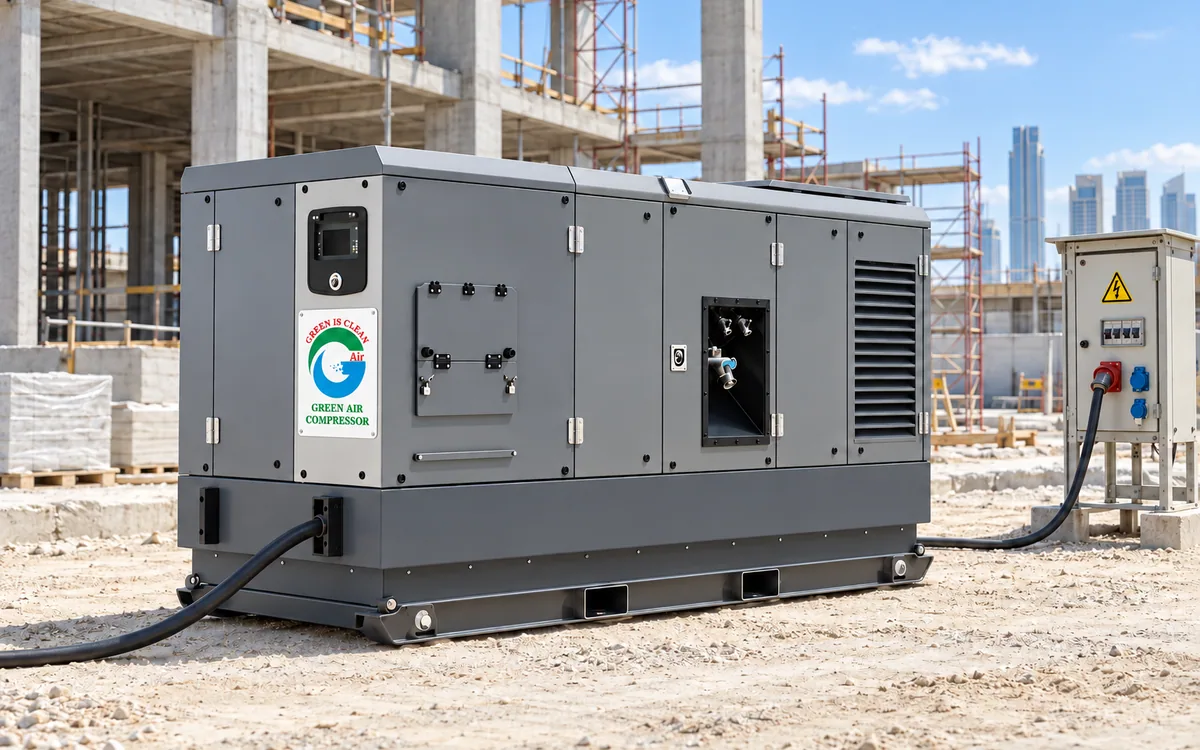
Overview
Inside a tunnel, in a basement, in a food plant during a shutdown or on a night job in a residential area, a diesel engine is a problem: exhaust fumes, noise and, increasingly, a site rule that bans it outright.
An electric portable compressor is the same rugged skid or trailer machine with an electric motor instead. No exhaust, far less noise, and no refuelling.
Key benefits
No exhaust emissions
Usable indoors, in tunnels and in enclosed spaces where a diesel unit cannot be run.
Much quieter
Typically 15 dB(A) below an equivalent diesel machine: the difference between allowed and not allowed on a night job.
Lower running cost
Electricity is cheaper per unit of air than diesel in every market we serve.
Same rugged build
Site-rated canopy, lifting eye and forklift pockets, built for the same abuse.
How it is built
The same portable format as the diesel machines but driven by an electric motor, for the places an engine cannot go. Indoors, in tunnels, on night work, and anywhere a site rule bans exhaust.
Without an engine the machine is quieter, lighter and shorter, and there is nothing to refuel. It is also cheaper per unit of air wherever a supply exists.
The chassis and canopy are the same site built items as the diesel range, so handling, lifting and servicing are all familiar to a crew that already runs them.
- Electric drive, no exhaust and no refuelling
- Quieter than the equivalent diesel unit
- Lower cost per unit of air where a supply exists
- Same chassis and canopy as the diesel range
- 110 V site safe versions on the small range
- Three phase on the larger units
- Suitable for indoor and tunnel work
- Road tow or skid mounted
On site controls and telemetry
Pressure, running hours, load and active faults on the panel, with the same telemetry module as the diesel machines for whoever manages the fleet.
Because there is no fuel to log, the useful fleet numbers here are hours, load percentage and location. Hours against load is what tells a hire desk whether a machine is sized right for the job it is on.
Starting current matters on a site supply, so the machine starts soft and the panel reports the supply it is seeing.
- Pressure, hours, load and faults on the panel
- Same fleet telemetry as the diesel range
- Hours against load percentage
- Location and movement alerts
- Soft starting for site supplies
- Supply voltage and phase reported
- Service countdown per machine
- One list for the whole fleet
Parts and service kits
The service list is shorter than a diesel machine because there is no engine. Airend consumables, the intake filter and the electrical checks.
That shorter list is a real part of the cost comparison and it is often left out. A machine with no engine service and no fuel is cheaper to keep as well as cheaper to run.
Kits are boxed by interval and held in local stock, and we service these on site alongside the diesel units in the same fleet.
- Airend consumable kits by interval
- No engine service and no fuel handling
- Intake filters sized for dusty sites
- Electrical safety checks included
- Serviced alongside the diesel fleet
- Held in local stock
- Service on site
- Fixed price under a service plan
Model range
- 12 bar g
- 3.5 m³/min (124 cfm)
- Weight
- 750 kg
- 7 bar g
- 5.0 m³/min (177 cfm)
- Weight
- 750 kg
- 5 – 12 bar g
- 1.5 – 5.0 m³/min
- Weight
- 750 kg
FAD measured to ISO 1217 Edition 4, Annex C and E at 1 bar a intake, 20°C, 0% humidity. Noise measured to ISO 2151 in free field conditions, tolerance ± 3 dB(A). Water-cooled versions of every model are available. Ask us for their sheet.
Frequently asked questions
When is an electric portable the right choice?
Indoors, in tunnels, in urban night work, and anywhere site power already exists. No exhaust, much less noise, and lower running cost.
How does the running cost compare?
Electricity is normally cheaper per cubic metre than diesel, and there is no refuelling labour. On a long project the difference is substantial.
What supply does it need?
Three-phase at the rated voltage with adequate cable sizing. Voltage drop on a long site cable is the commonest cause of trouble, not the machine.
Can it run from a generator?
Yes, if the generator is sized for the starting current. A soft starter or variable speed drive makes this far easier and smaller.
Is it as tough as a diesel unit?
The chassis and canopy are built for site work. What it does not tolerate is a poor supply: electrical protection matters more here than on a diesel.
How mobile is it?
Skid, trolley or towable depending on size. Most are moved by forklift or crane rather than towed on the road.
What maintenance does it need?
Much less than a diesel: no engine, so oil, filters and separator only. Electrical inspection replaces engine servicing.
Can I get oil-free?
Yes, where the work needs clean air, tunnelling instrumentation, food sites and some tank work. Tell us the air quality class you need.
Is it available with variable speed?
Yes, and on varying site demand it saves considerably. It also reduces starting current, which helps on a weak supply.
Can it be hired?
Yes, with the correct cable, distribution and protection, which we supply as part of the package rather than leaving to the site.
Related products
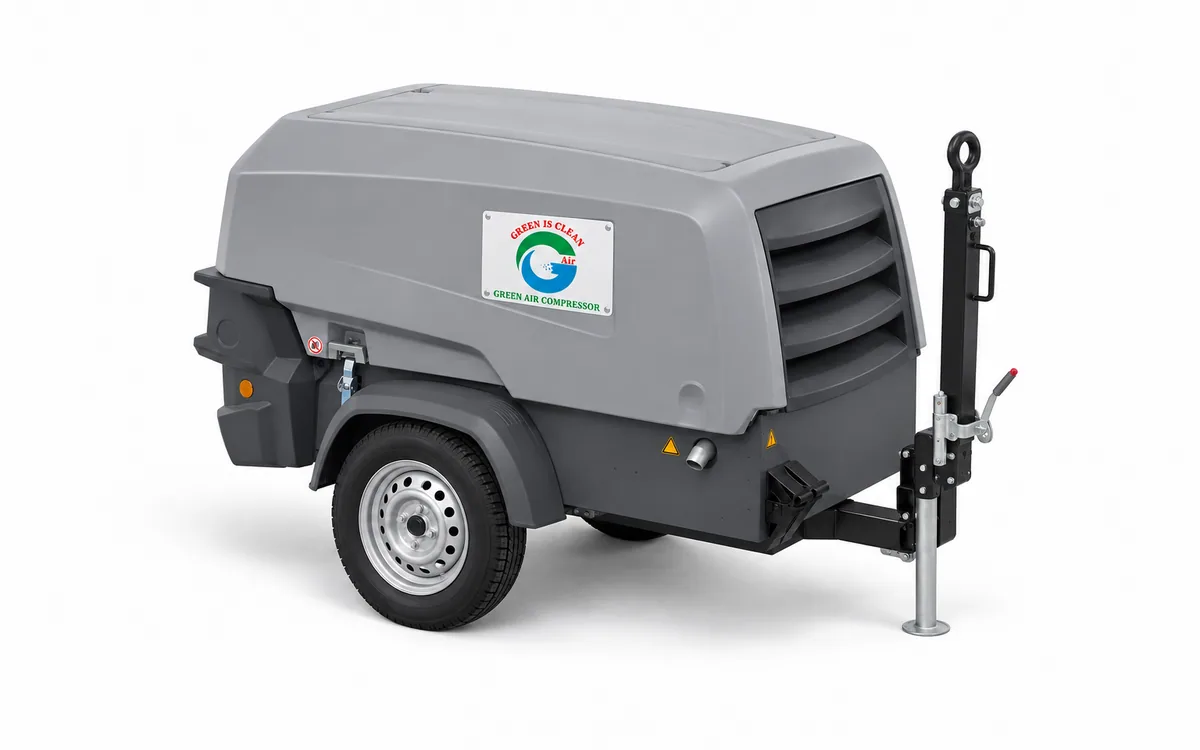
Diesel portable compressors
Towable diesel units for sites with no power supply.
- Free air delivery
- 3.0 – 10.5 m³/min (106 – 371 cfm)
- Working pressure
- 5 – 14 bar g
- Motor power
- 35 – 90 kW
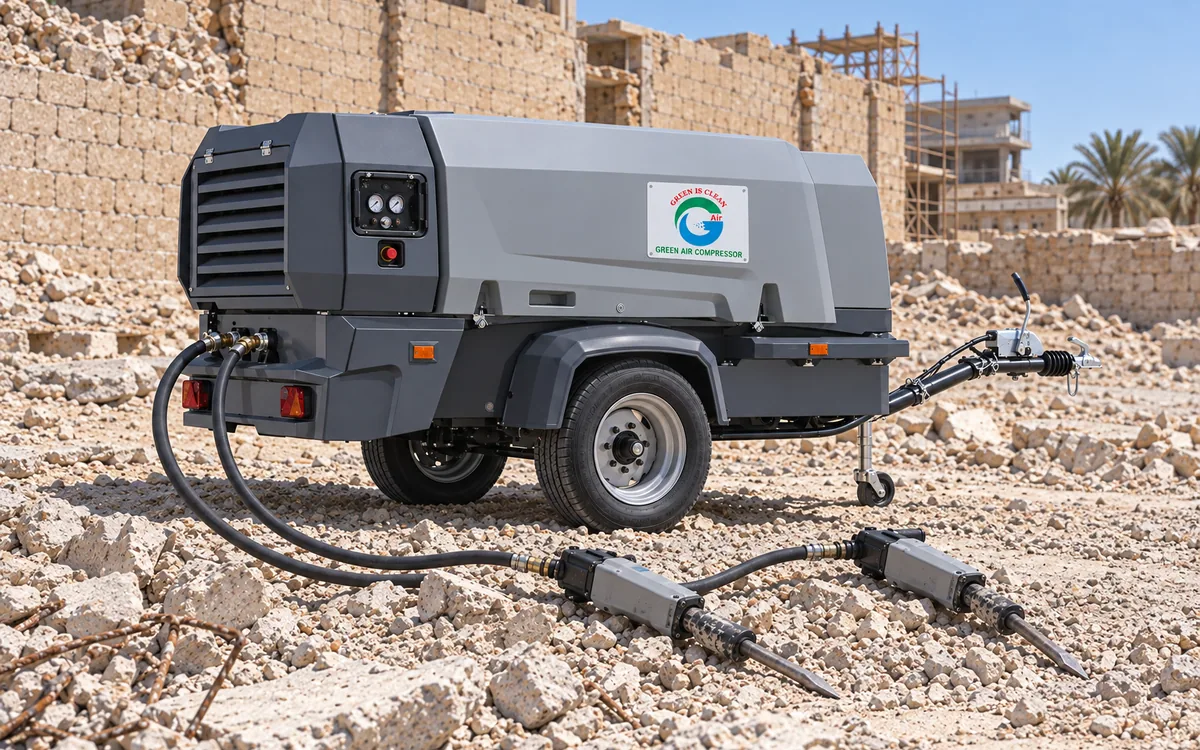
Medium portable diesel compressors
185 to 400 cfm, the general-purpose site range.
- Free air delivery
- 5.5 – 10.0 m³/min (194 – 353 cfm)
- Working pressure
- 5 – 14 bar g
- Motor power
- 55 – 90 kW
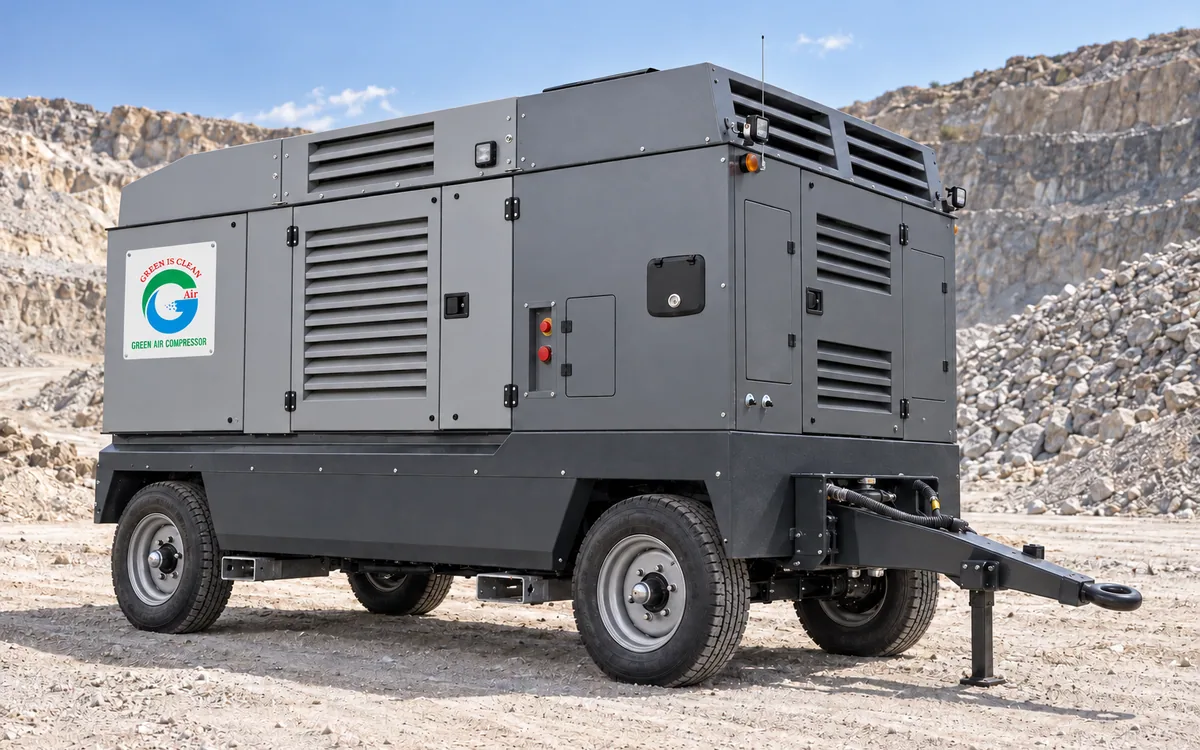
Large portable diesel compressors
650 to 1600 cfm for drilling, blasting and pipeline work.
- Free air delivery
- 11.0 – 27.0 m³/min (388 – 954 cfm)
- Working pressure
- 5 – 24 bar g
- Motor power
- 90 – 224 kW
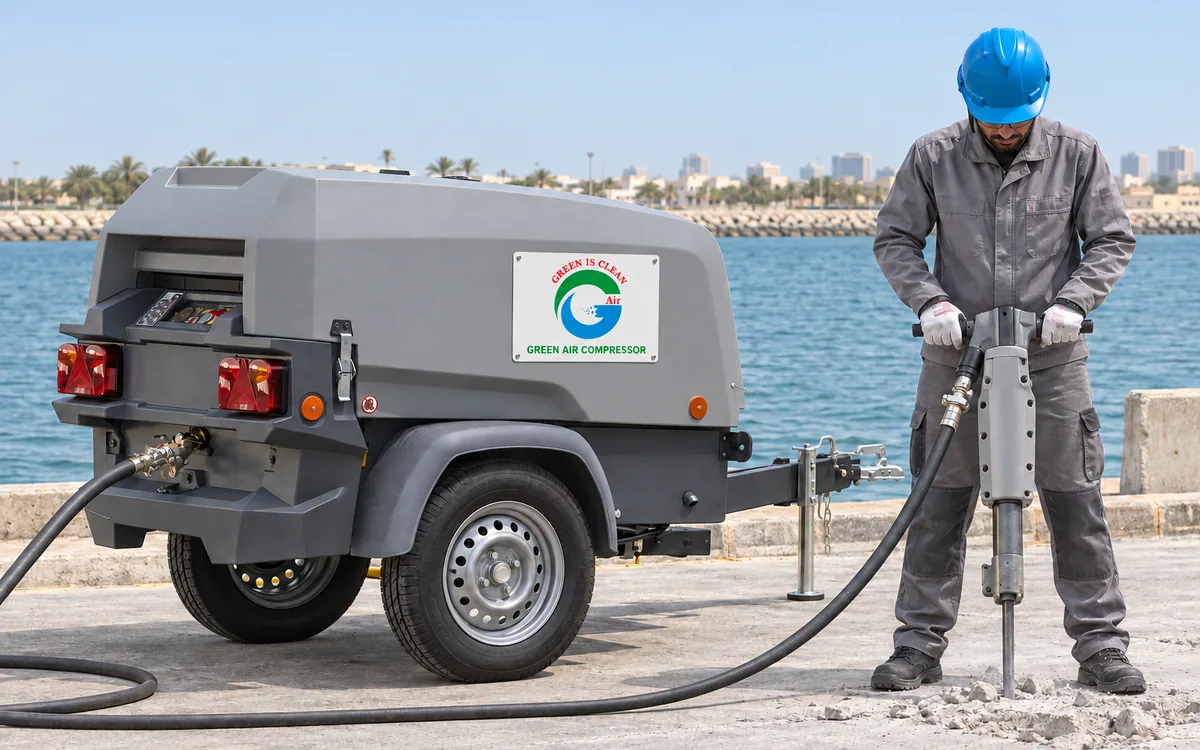
Ready-to-go compressor range
Standard specification machines held in stock for immediate delivery.
Learn moreNot sure which model you need?
Send us your air demand, working pressure and running hours. Our engineers will size the machine and send a written recommendation, no cost, no obligation.